Vulvovaginal Candidiasis: Causes, Symptoms, and Treatment
Complete guide to vulvovaginal candidiasis: understanding symptoms, diagnosis, and effective treatment options.
Vulvovaginal Candidiasis: A Comprehensive Clinical Overview
Vulvovaginal candidiasis (VVC), commonly known as a yeast infection or thrush, is one of the most prevalent gynecological conditions affecting women worldwide. An estimated 75% of women will experience at least one episode of vulvovaginal candidiasis during their lifetime, with 40-45% experiencing two or more episodes. This fungal infection causes significant discomfort and affects quality of life, yet remains highly treatable with appropriate management. Understanding the underlying mechanisms, clinical presentation, diagnostic approaches, and treatment options is essential for healthcare providers and patients alike.
Etiology and Pathophysiology
Candida albicans is the causative organism in the majority of vulvovaginal candidiasis cases, accounting for approximately 80-90% of infections. However, non-albicans Candida (NAC) species are increasingly recognized as significant pathogens, particularly in recurrent and complicated cases. These alternative species include Candida glabrata, Candida tropicalis, Candida krusei, Candida parapsilosis, and Candida guilliermondii.
The development of vulvovaginal candidiasis involves a complex interplay between fungal virulence factors and host defense mechanisms. Candida species normally colonize the vagina as part of the normal flora but can shift from a commensal state to a pathogenic state under specific conditions. Multiple factors promote or induce this transition, including:
- Disruption of local vaginal defense mechanisms
- Antibiotic use that disrupts normal bacterial flora
- Elevated serum glucose levels and diabetes
- Hormonal fluctuations related to estrogen levels
- Immunosuppression and HIV infection
- Genetic polymorphisms affecting immune response
- Sexual activity and trauma
- Psychosocial stress
- Allergic reactions and sensitization
In most healthy women with uncomplicated VVC, no identifiable precipitating factors are apparent, suggesting that individual susceptibility and vaginal microbiome composition play crucial roles in disease development.
Clinical Presentation and Symptoms
The clinical presentation of vulvovaginal candidiasis is characterized by a constellation of symptoms affecting the vulva and vagina. Common symptoms include vaginal pruritus (itching), vulvar soreness, dyspareunia (painful intercourse), external dysuria (burning during urination), and abnormal vaginal discharge. Notably, none of these symptoms is specific to VVC, as they may occur in other gynecological conditions, making accurate diagnosis essential.
Physical examination findings in uncomplicated vulvovaginal candidiasis typically reveal:
- Vulvar erythema (redness) and edema (swelling)
- Fissures and excoriations of the vulvar skin
- Thick, curdy, white vaginal discharge resembling cottage cheese
- Swelling of the labia minora
- External dysuria and vulvar pain
In severe vulvovaginal candidiasis, the clinical presentation becomes more pronounced, with extensive vulvar erythema, significant edema, marked excoriation, and extensive fissure formation. Severe cases are associated with lower clinical response rates to standard short-course antifungal therapy and require more intensive treatment approaches.
Classification: Uncomplicated vs. Complicated VVC
Vulvovaginal candidiasis is clinically classified into uncomplicated and complicated forms, which guides treatment decisions and prognostic expectations.
Uncomplicated VVC refers to sporadic episodes of infection in immunocompetent women with normal anatomy and physiology. These infections typically respond well to short-duration antifungal therapy and account for the majority of VVC cases. Women with uncomplicated VVC generally have mild-to-moderate symptoms and respond favorably to standard treatment regimens.
Related Stories



Complicated VVC encompasses several clinical scenarios:
- Severe vulvovaginal candidiasis with extensive tissue damage
- Recurrent vulvovaginal candidiasis (RVVC), defined as ≥4 episodes within 12 months
- VVC in immunocompromised patients (HIV/AIDS, chemotherapy, immunosuppressive therapy)
- VVC caused by non-albicans Candida species
- VVC in pregnant women
- VVC in patients with poorly controlled diabetes
Recurrent vulvovaginal candidiasis can be either idiopathic (occurring without identifiable cause) or secondary, related to frequent antibiotic use, diabetes, or other underlying host factors. Notably, the pathogenesis of recurrent VVC remains poorly understood, and the majority of affected women have no apparent predisposing or underlying conditions.
Diagnostic Approaches
Accurate diagnosis of vulvovaginal candidiasis combines clinical assessment with laboratory confirmation. A diagnosis of Candida vaginitis is clinically indicated by the presence of external dysuria, vulvar pruritus, pain, swelling, and redness, along with characteristic signs including vulvar edema, fissures, excoriations, and thick curdy vaginal discharge.
Laboratory diagnostic methods include:
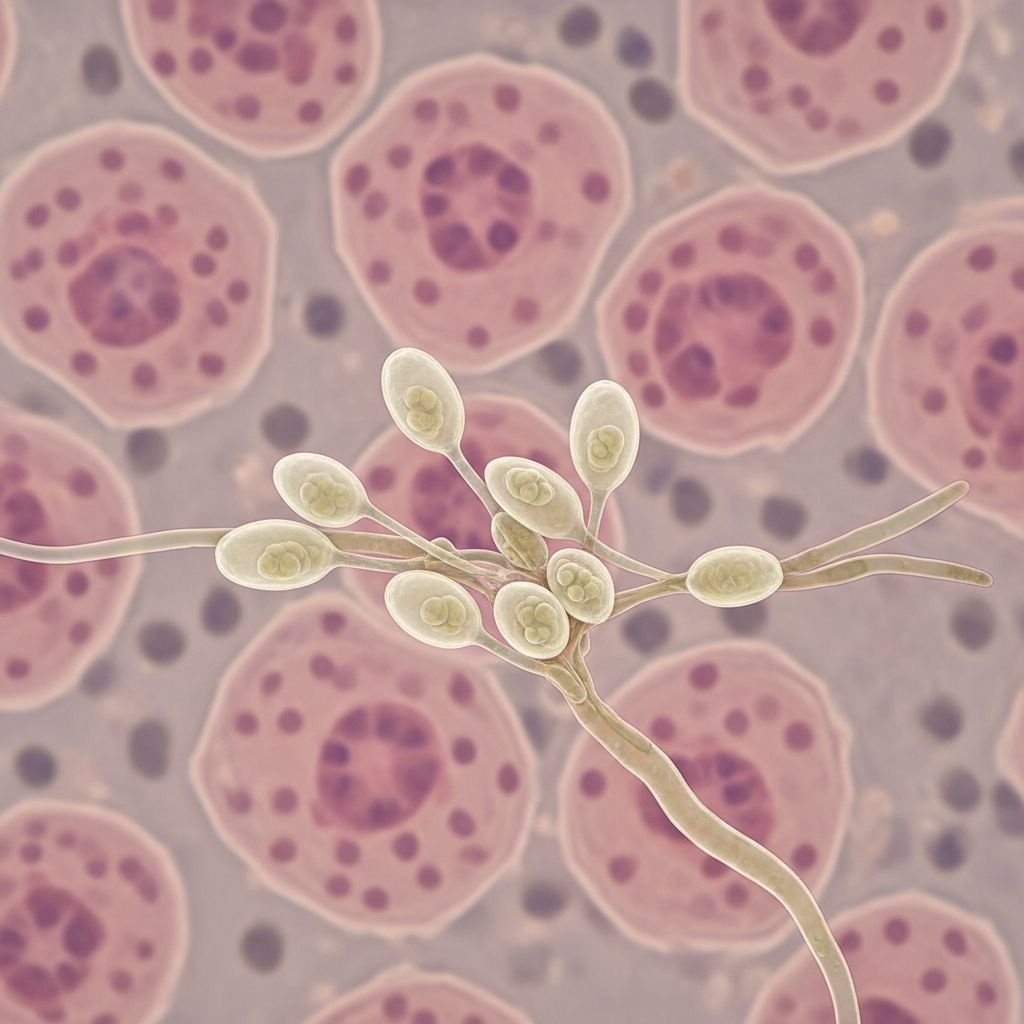
- Wet mount microscopy: Demonstrates hyphae and blastospores under high magnification, with high specificity when positive
- Fungal culture: Identifies the specific Candida species and allows antifungal susceptibility testing, particularly important for recurrent or non-responsive cases
- Gram stain: Can visualize fungal elements, though sensitivity is lower than wet mount
- PCR-based testing: Emerging technology offering higher sensitivity and species identification
- Vaginal pH: Typically normal (≤4.5) in VVC, helping differentiate from bacterial vaginosis or trichomoniasis
Species identification becomes particularly important when treating recurrent or severe infections, as non-albicans Candida species often demonstrate reduced susceptibility to commonly used azole antifungals. Culture-based identification guides therapeutic decisions and helps predict treatment response.
Treatment of Uncomplicated Vulvovaginal Candidiasis
Uncomplicated vulvovaginal candidiasis responds promptly to multiple treatment options, with 1-day, 3-day, and 7-day regimens all demonstrating efficacy. Treatment can be administered via topical or oral routes, with patient preference, convenience, and contraindications guiding the selection.
Topical antifungal options include:
- Imidazoles: clotrimazole, miconazole, tioconazole
- Triazoles: terconazole
- Standard regimens: 1-7 days of intravaginal application
Oral antifungal options include:
- Fluconazole 150 mg single oral dose (most convenient option)
- Itraconazole 200 mg twice daily for 1 day
- Alternative regimens for specific populations
Fluconazole remains the first-line treatment for vulvovaginal candidiasis, improving quality of life in 96% of women. The convenience of single-dose oral therapy makes it preferred by many patients, though some require or prefer topical agents.
Treatment of Recurrent Vulvovaginal Candidiasis
Recurrent vulvovaginal candidiasis (RVVC) requires more intensive and prolonged treatment strategies compared to uncomplicated cases. Most episodes of recurrent VVC caused by C. albicans respond well to short-duration oral or topical azole therapy, but longer duration of initial therapy is recommended to achieve mycologic remission before initiating maintenance antifungal regimens.
Intensive initial therapy options include:
- 7-14 days of topical azole therapy
- Oral fluconazole: 100 mg, 150 mg, or 200 mg every third day for a total of 3 doses (days 1, 4, and 7)
Maintenance antifungal therapy follows successful initial treatment and includes:
- First-line: Fluconazole 150 mg weekly for 6 months
- Second-line alternatives: Clotrimazole 500 mg weekly or clotrimazole 200 mg twice weekly
Maintenance therapy significantly reduces recurrence rates and improves quality of life. However, even 63% of women experience ongoing infections after completing maintenance therapy, indicating that some cases remain challenging despite optimized treatment. Recurrent vulvovaginal candidiasis caused by non-albicans Candida species may require alternative antifungal agents or combination therapy, as conventional antimycotic therapies are not as effective against these organisms as against C. albicans.
Treatment of Severe Vulvovaginal Candidiasis
Severe vulvovaginal candidiasis, characterized by extensive vulvar erythema, edema, excoriation, and fissure formation, is associated with lower clinical response rates among patients treated with short courses of topical or oral therapy. These cases require more intensive therapeutic approaches.
Recommended treatment regimens for severe VVC include:
- 7-14 days of topical azole therapy
- OR: Oral fluconazole 150 mg in two sequential oral doses, with the second dose administered 72 hours after the initial dose
- Combination topical and oral therapy for particularly resistant cases
The extended duration of therapy allows for complete resolution of extensive tissue damage and reduces the likelihood of recurrence.
Novel and Alternative Treatment Options
Emerging antifungal agents offer new therapeutic possibilities, particularly for refractory and recurrent cases. Recent treatment options include oteseconazole and ibrexafungerp, which represent advances in vulvovaginal candidiasis management. These novel agents may offer improved efficacy in cases resistant to conventional azole therapy.
Voriconazole, a broad-spectrum azole, has demonstrated efficacy in treating refractory vulvovaginal candidiasis, either as monotherapy or in combination with topical agents. In clinical studies, voriconazole alone or combined with topical agents proved effective in managing refractory VVC, with side effects generally being mild and transient.
Management of Non-Albicans Candida Species
The increasing prevalence of non-albicans Candida infections (particularly in recurrent VVC, where NAC species comprise 10-20% of cases) necessitates species-specific treatment approaches. Correct identification is essential because non-albicans Candida species often demonstrate resistance or significantly decreased susceptibilities to commonly used azole treatments.
Species such as Candida glabrata frequently demonstrate reduced azole susceptibility, requiring alternative treatment strategies. Management may include:
- Higher doses or extended-duration azole therapy
- Alternative antifungal classes (polyenes, echinocandins)
- Combination antifungal therapy
- Non-pharmacologic interventions
Antifungal susceptibility testing guides optimal therapeutic selection for these difficult-to-treat infections.
Differential Diagnosis
Several conditions present with similar symptoms to vulvovaginal candidiasis and must be excluded through careful history, examination, and laboratory testing. Important differential diagnoses include:
- Bacterial vaginosis: Characterized by gray discharge with fishy odor, elevated pH (>4.5), positive amine test, and clue cells on microscopy
- Trichomoniasis: Presents with frothy discharge, dyspareunia, and motile trophozoites on wet mount
- Vulvar vestibulitis: Focal vestibular erythema with tenderness on palpation; negative fungal culture and microscopy
- Irritant dermatitis: Negative fungal testing with normal pH; history of irritant exposure
- Contact dermatitis and allergic reactions
Accurate differential diagnosis prevents unnecessary antifungal therapy and ensures appropriate management of non-fungal conditions.
Prevention and Patient Education
While not all cases of vulvovaginal candidiasis are preventable, certain measures may reduce recurrence risk:
- Judicious use of antibiotics; avoid unnecessary broad-spectrum agents
- Maintenance of normal vaginal pH and flora
- Avoidance of douching and irritant products
- Wearing breathable cotton underwear
- Prompt treatment of diabetes and maintenance of normal glucose levels
- Management of immunosuppressive conditions
- Safe sexual practices and partner communication
Frequently Asked Questions
Q: Is vulvovaginal candidiasis a sexually transmitted infection?
A: VVC is not typically classified as a sexually transmitted infection. While Candida can be transmitted sexually, it colonizes the vagina naturally. Sexual transmission from partners is uncommon, and treatment of male partners is not generally recommended unless the partner develops symptoms of candidal balanitis.
Q: Can vulvovaginal candidiasis be prevented?
A: While complete prevention is not always possible, risk reduction includes avoiding unnecessary antibiotics, maintaining vaginal health, controlling diabetes, wearing breathable clothing, and avoiding irritant products. However, even with preventive measures, some women experience recurrent infections due to host factors beyond their control.
Q: Why do some women experience recurrent vulvovaginal candidiasis?
A: The pathogenesis of recurrent VVC remains poorly understood. While factors like antibiotic use, diabetes, and immunosuppression contribute in some cases, the majority of women with recurrent VVC have no apparent predisposing conditions, suggesting individual susceptibility and complex host-pathogen interactions play critical roles.
Q: Are over-the-counter antifungal treatments effective?
A: Over-the-counter topical azoles are effective for uncomplicated vulvovaginal candidiasis. However, self-diagnosis may be inaccurate, leading to treatment of non-fungal conditions. Women with recurrent infections, severe symptoms, or underlying conditions should consult healthcare providers for proper evaluation and treatment.
Q: How long does treatment typically take?
A: Uncomplicated VVC may resolve with single-dose fluconazole or 1-7 days of topical therapy. Recurrent cases require 7-14 days of intensive initial therapy followed by 6 months of maintenance treatment. Severe infections typically require 7-14 days of intensive therapy.
Q: Can vulvovaginal candidiasis affect pregnancy?
A: VVC is common during pregnancy due to hormonal changes. While it causes maternal discomfort, uncomplicated VVC does not typically harm the fetus. However, treatment during pregnancy should use topical azoles rather than oral medications when possible, and healthcare providers should guide management decisions.
References
- Vulvovaginal Candidiasis (VVC) – STI Treatment Guidelines — Centers for Disease Control and Prevention (CDC). 2024. https://www.cdc.gov/std/treatment-guidelines/candidiasis.htm
- Treatment of Vulvovaginal Candidiasis—An Overview of Guidelines and Novel Treatment Options — National Center for Biotechnology Information (NCBI/PMC). 2023. https://pmc.ncbi.nlm.nih.gov/articles/PMC10455317/
- Diagnosis and Treatment of Vulvovaginal Candidiasis — OB/GYN Project. 2018. https://www.obgproject.com/2018/12/20/diagnosis-and-treatment-of-vulvovaginal-candidiasis/
- Candidiasis (Yeast Infection) – Fact Sheets — World Health Organization (WHO). https://www.who.int/news-room/fact-sheets/detail/candidiasis-(yeast-infection)
Similar Articles








Read full bio of Sneha Tete