Wall Balls Workout Benefits: 5 Key Perks For Full-Body Power
Discover how wall balls build full-body strength, boost cardio endurance, and enhance explosiveness for peak performance.
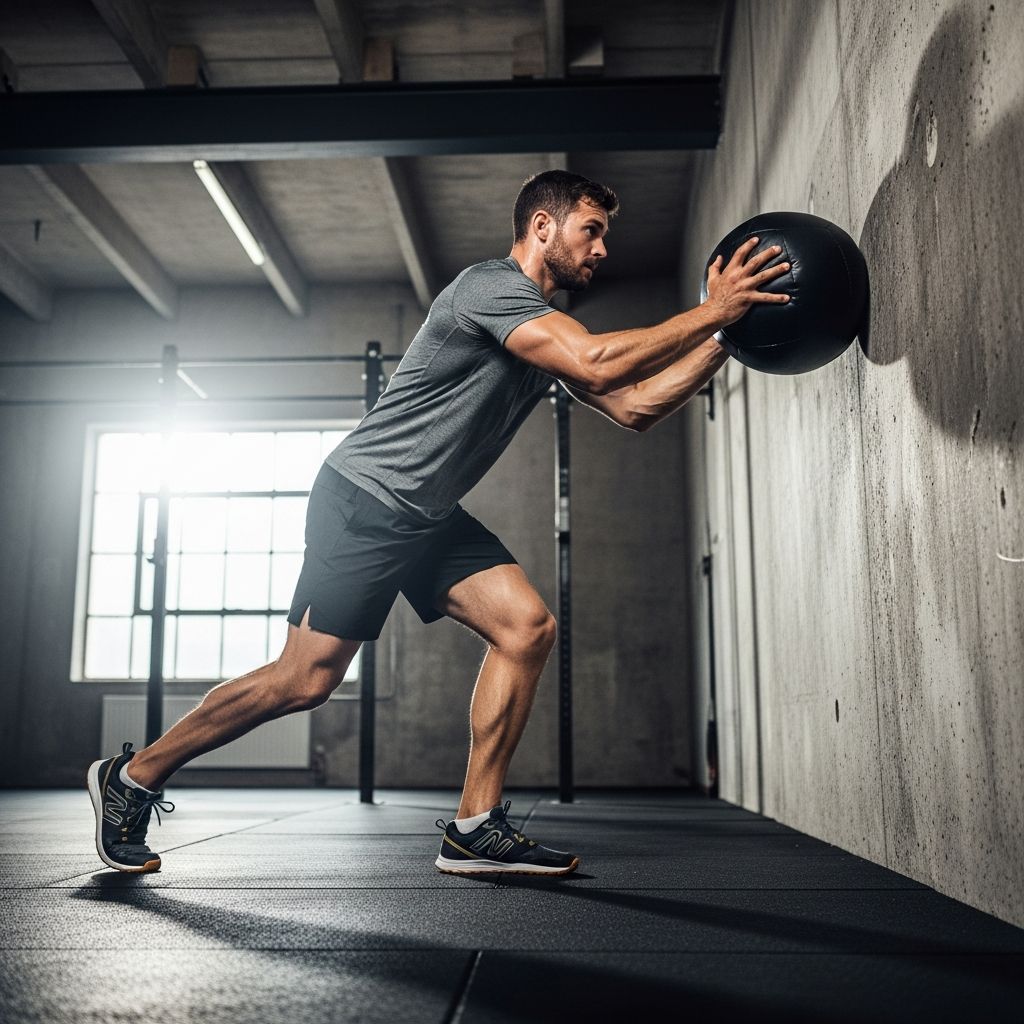
Wall balls are a powerhouse exercise in high-intensity interval training (HIIT), CrossFit, and functional fitness routines, combining a deep squat with an explosive overhead throw. This dynamic movement engages nearly every major muscle group while spiking heart rate for superior calorie burn and endurance gains.
What Are Wall Balls?
The wall ball exercise merges a front squat and overhead press into one fluid, explosive motion. You squat down holding a medicine ball at chest level, then drive upward to throw the ball against a wall target—typically 9-10 feet high—before catching it and repeating. This full-body challenge builds strength, power, and stamina, making it a staple in workouts like HYROX and CrossFit WODs.
Originating from CrossFit, wall balls mimic real-world functional movements, such as lifting and throwing objects overhead, which translates to better everyday performance and athletic prowess. The exercise demands coordination between lower-body drive, core stability, and upper-body power, creating a metabolic conditioning ‘secret weapon’ for cardiovascular fitness.
Muscles Worked by Wall Balls
Wall balls target a comprehensive array of muscles, promoting balanced development and muscular endurance. Key areas include:
- Lower body: Quadriceps, hamstrings, glutes—powered by the deep squat phase for leg strength and power.
- Core: Abs, obliques, lower back—essential for stability during the catch and throw.
- Upper body: Shoulders (deltoids), triceps, chest—for the explosive press and catch.
- Back and posterior chain: Engaged for posture and momentum transfer.
Studies on similar medicine ball exercises confirm activation across quads, hamstrings (like barbell squats), and shoulders (like presses), making wall balls a true compound movement.
Key Benefits of Wall Balls
1. Full-Body Workout
As a compound exercise, wall balls work multiple joints and muscle groups simultaneously, fostering overall strength and endurance. Research on medicine ball training shows improvements in full-body power through movements like twists, bends, and throws. Unlike isolated exercises, this holistic engagement prepares the body for varied demands, such as HYROX events. Personal accounts from 30-day challenges note enhanced core stability and balance from repeated full-range reps.
2. Improves Cardiovascular Fitness
The high-intensity, repetitive nature elevates heart rate and oxygen consumption, boosting cardiorespiratory endurance. A study on 14 participants using medicine ball intervals (slams, passes) showed significant heart rate increases and improved oxygen delivery efficiency. CrossFit emphasizes wall balls for broader cardio stimulus than steady-state activities like running. One user reported a resting heart rate drop from 70 to 65 BPM after 30 days, signaling better fitness. Wall balls also burn substantial calories due to full-body involvement at high reps.
3. Builds Explosiveness and Power
The squat-to-throw mechanic develops explosive power, crucial for sports and HIIT. A 12-week study on 21 women found medicine ball throws improved bench and shoulder press power. Another trial enhanced leg explosiveness in female athletes. Proper form emphasizes leg drive over arm fatigue, training repeated power output with lighter loads for speed. This functional explosiveness aids in jumps, sprints, and other dynamic activities.
4. Enhances Coordination and Balance
Timing the throw and catch hones hand-eye coordination and motor skills. Studies show medicine ball routines with lunges and squats improve static/dynamic balance in adults and children. A 30-day challenge participant noted rapid coordination gains, reducing wobbles during catches. Core demands for upright posture further stabilize the body.
Related Stories



5. Develops Functional Strength and Mobility
Wall balls replicate real-life actions, enhancing functional fitness for daily tasks and sports. Research on 69 students showed medicine ball training superior in practical tests like shuttle runs, jumps, and flexibility. Deep squats improve ankle/hip mobility, benefiting running stride and squat depth. The full range of motion (ROM) from low squat to full extension promotes joint health and athleticism.
How to Do Wall Balls Properly
Mastering form prevents injury and maximizes gains. Follow these steps:
- Stand facing a wall, feet shoulder-width, gripping a medicine ball at chest height (palms up).
- Squat deeply (hips below knees), keeping chest up and elbows high.
- Explode upward through heels, extending hips/knees/ankles while pressing the ball overhead to hit a 9-10 ft target.
- Catch the ball at chest level in a front squat, absorbing impact with bent knees.
- Repeat for reps; aim for 8-20 per set based on fitness level.
Beginner tips: Start with 4-6 lb ball, focus on squat depth over height. Common errors include shallow squats or arm-dominant throws—drive from legs.
Wall Ball Variations
Progress or modify with these options:
- Side wall balls: Rotate torso to throw sideways, targeting obliques (10 reps/side).
- Single-leg wall balls: Balance on one leg for advanced stability.
- Zercher wall balls: Hold ball in elbow crooks for core emphasis.
- Thruster combo: Pair with barbell for heavier loads.
Adjust weight (women: 10-14 lb; men: 14-20 lb standard) or height for progression.
Sample Wall Ball Workouts
Incorporate into routines 2-4x/week. Here’s a beginner-to-advanced table:
| Workout | Level | Structure | Duration |
|---|---|---|---|
| EMOM (Every Minute on the Minute) | Beginner | 10 wall balls EMOM x 10 min | 10 min |
| AMRAP (As Many Rounds As Possible) | Intermediate | 15 wall balls + 10 burpees; 15 min | 15 min |
| HYROX-Style | Advanced | 100 wall balls for time | 10-20 min |
| Circuit Finisher | All | 20 wall balls + 400m run x 4 rounds | 20 min |
A 30-day progression: Week 1 (30 reps x 3 weights: 5/8/10kg), scaling to 50 reps by Week 4. Rest 1-2 min between sets; pair with mobility work.
Frequently Asked Questions (FAQs)
What weight wall ball should beginners use?
Start with 4-8 lb (2-4 kg) to prioritize form; progress as power improves.
Are wall balls safe for knees?
Yes, with proper squat form (knees tracking toes); deep squats build resilience if progressed gradually.
How many calories do wall balls burn?
High-rep sets (e.g., 100) can burn 200-400 calories, depending on intensity and body weight.
Can wall balls replace squats?
They complement heavy squats by adding speed/power; not a full substitute for max strength.
Wall balls vs. thrusters: differences?
Wall balls use a soft ball/target for explosiveness; thrusters use barbells for heavier loads.
References
- How to do wall balls, plus benefits, tips and workouts — Women’s Health Mag UK. 2024. https://www.womenshealthmag.com/uk/fitness/a62747453/wall-balls/
- Wall Ball Exercise Benefits, And How To Do Them Properly — Gymshark Blog. 2023. https://www.gymshark.com/blog/article/wall-ball-exercise-benefits-and-how-to-do-them-properly
- I tried wall balls for 30 days and the results surprised me — Fit&Well. 2024. https://www.fitandwell.com/exercise/cardio-strength-workouts/i-tried-wall-balls-for-30-days-and-the-results-surprised-me
- Wall Ball Exercise: Benefits, Muscles Worked, How to, and Variations — Healthline. 2023-10-15. https://www.healthline.com/health/fitness-exercise/wall-ball
- The Wall-Ball Shot: CrossFit’s Secret Weapon for Cardiovascular — CrossFit.com. 2022. https://www.crossfit.com/essentials/crossfit-wall-ball-secret-weapon
Similar Articles








Read full bio of medha deb