Walmart Is Lowering Its Food Prices—Here’s Why
Walmart ramps up grocery price cuts amid economic pressures, tariffs, and consumer demand for value—boosting sales across income levels.
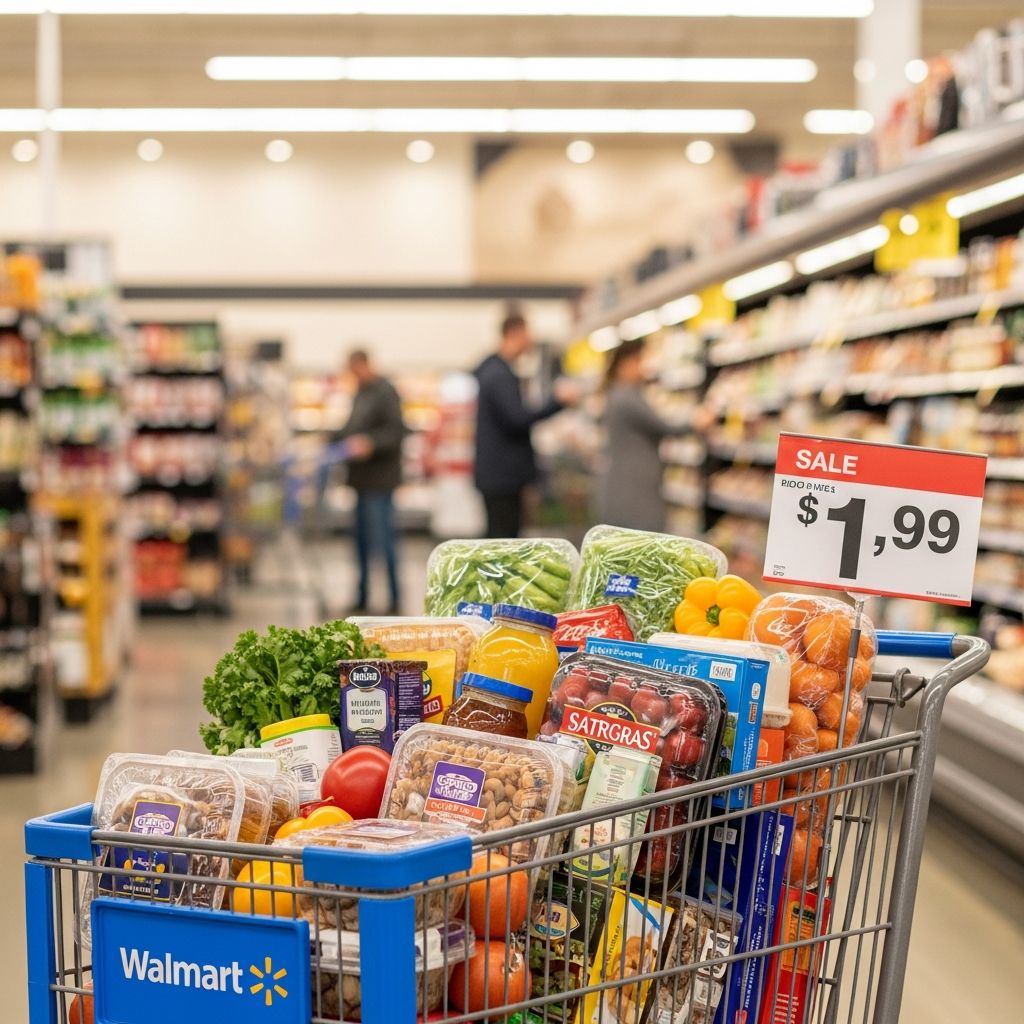
Walmart, the world’s largest retailer, is intensifying its efforts to lower grocery prices across thousands of items in fiscal year 2026. This aggressive pricing strategy stems from robust Q2 performance, strategic responses to economic pressures like tariffs, and a commitment to everyday low prices that resonate with budget-conscious shoppers.In Q2 FY2026, Walmart implemented about 7,400 temporary price cuts—30% more grocery rollbacks than the prior year, helping drive U.S. comparable-store sales up 4.6% excluding fuel.
CEO Doug McMillon emphasized during the earnings call that the company is ‘playing offense’ to keep prices low amid rising costs, including those from tariffs, while seeing strong growth in grocery sales reaching mid-single digits. This move not only counters inflation but also counters supplier-proposed hikes, positioning Walmart to gain market share.
What Walmart’s Price Cuts Look Like
Walmart’s price reductions span groceries, health & wellness, and everyday essentials. In Q2, the retailer added roughly 2,000 more temporary cuts than Q1, totaling 7,400 rollbacks, with a 30% year-over-year increase in grocery-specific discounts. These aren’t isolated promotions; they’re part of a broader ‘everyday low price’ philosophy refined through data-driven merchandising.
- Grocery Rollbacks Up 30%: Focus on high-demand categories like produce, dairy, and packaged foods, where mid-single-digit growth was reported.
- 7,400+ Temporary Cuts: Covering a wide assortment to maintain competitive gaps, especially against rivals like Target and Amazon.
- Private Label Push: Brands like Better Goods see increased uptake, offering quality at lower prices across income cohorts.
This strategy has led to higher engagement from upper-income households alongside sustained growth among middle- and lower-income shoppers, who are trading down or adjusting baskets in response to price pressures.
Why Walmart Is Doing This Now
Several factors converge in 2026 to prompt Walmart’s price-slashing spree. Consumers remain price-sensitive post-inflation, and external pressures like tariffs are forcing retailers to absorb or offset costs creatively.
| Factor | Impact on Pricing | Evidence from Q2 FY2026 |
|---|---|---|
| Tariffs | Gradual cost increases on imports; Walmart replenishes inventory at higher levels but holds retail prices steady | Costs rising weekly into Q3/Q4; no major behavioral shifts yet |
| Supplier Pushback | Fighting branded suppliers proposing hikes; advocating for price investments | CEO: ‘Fighting back aggressively’ on increases |
| Consumer Behavior | Lower/middle-income trading down; upper-income seeking value | Sales growth across cohorts; grocery up mid-single digits |
| Economic Backdrop | Macro uncertainty; focus on financial flexibility from high-margin areas | Raised FY guidance: net sales 3.75%-4.75% |
Amid tariffs, McMillon noted impacts have been ‘gradual enough to minimize behavioral adjustments,’ with shoppers in discretionary categories moderating units. Walmart’s merchants are ‘creative and urgent’ in avoiding pass-throughs, unlike some competitors raising prices.
Q2 FY2026 Earnings: Fueling the Price War
Walmart’s financial strength underpins its pricing power. Consolidated revenue hit $169.3 billion, up 4.8% YoY, with operating income growing 8.5% to $600 million. U.S. grocery sales, a key driver, generated $276 billion in FY2025—nearly 12% higher than two years prior—and continued mid-single-digit growth in Q2.
- U.S. Comp Sales: +4.6% ex-fuel, led by grocery and health & wellness.
- E-commerce Surge: +26% YoY, with store delivery up 50%; 1/3 of deliveries in ≤3 hours.
- Advertising Growth: Walmart Connect up 30% in U.S..
- Sam’s Club: Strong comp sales in food/health; membership income +14.4%; e-comm +22%.
Related Stories



CFO John David Rainey highlighted ‘financial flexibility’ from higher-margin businesses like advertising and membership, enabling sustained low prices. The company raised full-year guidance: net sales growth to 3.75%-4.75% (from 3%-4%), adjusted EPS to $2.62 (from $2.52), and operating income outlook to 6.5%-8%. For Q3, net sales expected +3.25%-4.25%.
How Walmart Negotiates Lower Prices
Behind the rollbacks, Walmart wields massive leverage over suppliers. Executives are ‘less willing to accept price increases,’ pushing brands to invest in lower prices rather than hikes. McMillon stated: ‘We have less upward pressure, but… we are fighting back aggressively’.
This includes monitoring competitor pricing and adjusting promotional allowances. While an older FTC suit alleged aggressive tactics like pressuring suppliers to raise rivals’ costs (e.g., via PepsiCo monitoring), Walmart maintains its focus is customer value. In 2026, the emphasis is on absorbing tariff hits and branded goods pressures without fully passing them on.
Consumer Response and Market Share Gains
Shoppers are responding positively. Walmart reports ‘continued sales growth, share gains, and higher gross margins’ without inflation reliance. Upper-income households lead engagement, but middle/lower-income growth persists despite tariff-induced trades to cheaper options.
Grocery remains a powerhouse: $276B in FY2025 sales, with Q2 building momentum. E-commerce profitability improves via faster delivery (20% of orders in ≤30 min), outpacing rivals. Even as Amazon ramps same-day grocery, McMillon welcomes competition, citing convenience as Walmart’s edge.
Challenges Ahead: Tariffs and Competition
Tariffs pose ongoing risks, with inventory costs climbing weekly into Q3/Q4. Competitors like P&G and others plan modest hikes, but Walmart commits to low prices ‘as long as we can’. Stock dipped 5% post-earnings on EPS miss, yet long-term outlook is raised.
Sam’s Club complements with value: food/health sales drive comps, memberships hit records. Vs. Walmart stores, prices can vary slightly (e.g., eggs 17¢/each at Walmart), but bulk appeals to different segments.
Future Outlook for Walmart Shoppers
Expect more rollbacks through 2026. Raised FY guidance signals confidence amid uncertainty. Walmart’s playbook—leverage scale, e-comm innovation, supplier negotiations—positions it to outpace peers. For consumers, this means sustained relief on grocery bills, even as broader retail navigates tariffs and inflation echoes.
Frequently Asked Questions (FAQs)
Q: Why is Walmart cutting grocery prices in 2026?
A: To maintain everyday low prices amid tariffs, fight supplier hikes, and drive sales growth across income levels, as seen in 30% more Q2 rollbacks.
Q: How many price cuts did Walmart implement in Q2 FY2026?
A: Approximately 7,400 temporary cuts, including 30% more grocery rollbacks than last year.
Q: Are tariffs affecting Walmart’s prices?
A: Yes, gradually increasing costs, but Walmart absorbs them to keep retail prices low ‘as long as possible’.
Q: Is Walmart gaining market share?
A: Yes, with sales growth, share gains, and higher engagement from all income cohorts.
Q: What’s Walmart’s full-year 2026 guidance?
A: Net sales +3.75%-4.75%, adjusted operating income +6.5%-8%.
References
- Walmart added 30% more grocery price cuts in Q2 — Grocery Dive. 2026 (Q2 FY2026 earnings). https://www.grocerydive.com/news/walmart-grocery-price-cuts-increased-second-quarter-fiscal-2026/758274/
- Walmart cuts prices for more than 7,000 items, warns it will fight back — Food Navigator-USA. 2024-08-19. https://www.foodnavigator-usa.com/Article/2024/08/19/Walmart-cuts-prices-for-more-than-7-000-items-warns-it-will-fight-back-against-brands-proposing-hikes/
- Tariffs Aren’t Keeping Walmart From Attracting Shoppers — Food Manufacturing. Recent (2026 context). https://www.foodmanufacturing.com/consumer-trends/news/22948513/tariffs-arent-keeping-walmart-from-attracting-shoppers-outpacing-target
- Rollback Racket — Washington Monthly. 2026-01-22. https://washingtonmonthly.com/2026/01/22/price-discrimination-walmart-grocery-prices/
Similar Articles








Read full bio of Sneha Tete