Warfarin-Induced Skin Necrosis: Causes, Signs & Treatment
Rare but serious complication of warfarin therapy causing painful skin necrosis in fatty areas due to protein C deficiency.
What is warfarin-induced skin necrosis?
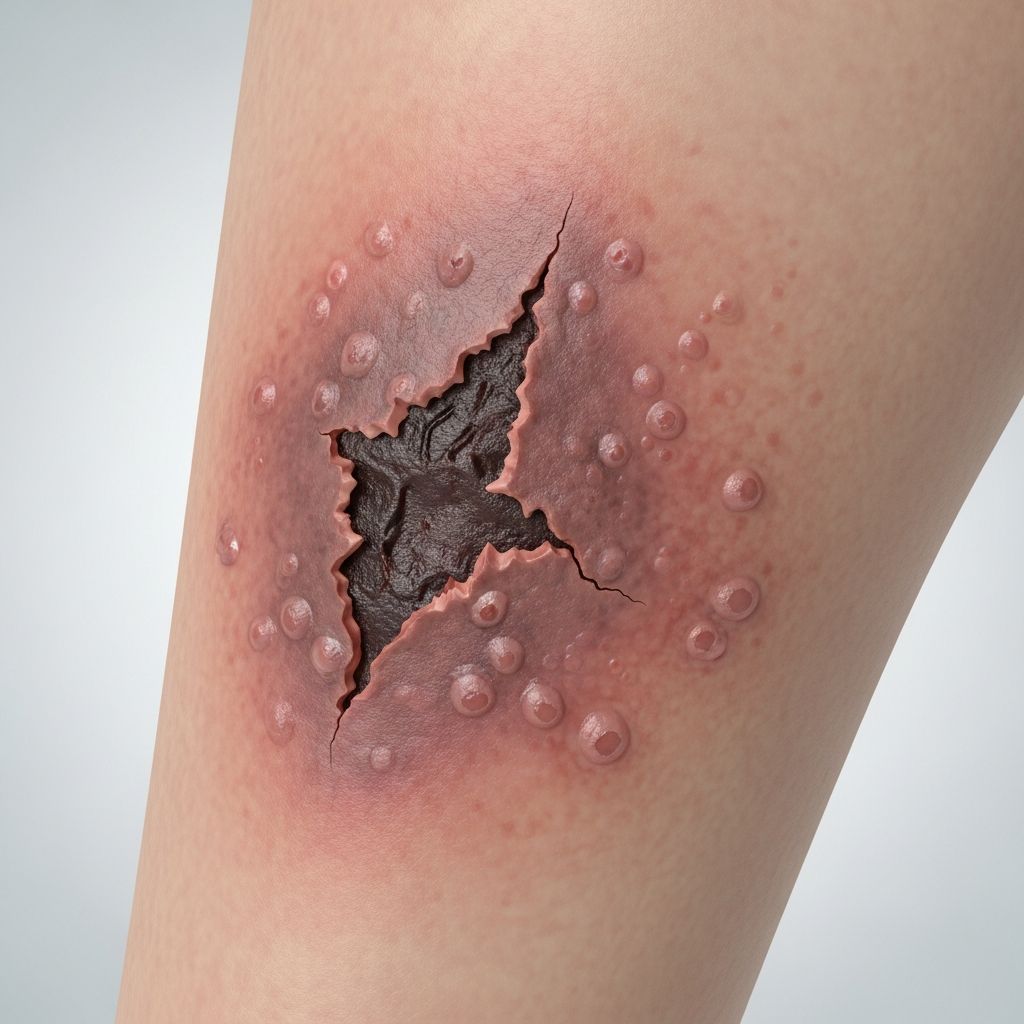
Warfarin-induced skin necrosis (WISN) is a rare but potentially life-threatening complication of warfarin therapy, an oral anticoagulant commonly used to prevent and treat blood clots. This condition typically manifests as painful, purpuric lesions that progress to full-thickness skin necrosis, primarily in areas rich in subcutaneous fat such as the breasts, thighs, buttocks, hips, abdomen, and occasionally the extremities or penis. The onset usually occurs within the first 2 to 5 days of initiating warfarin, coinciding with a transient hypercoagulable state induced by the drug’s mechanism of action.
Although infrequent, with an estimated incidence of 0.01-0.1% in warfarin users, WISN can lead to significant morbidity, including extensive tissue loss, secondary infections, sepsis, and even amputation or death if not promptly recognized and managed. It is particularly associated with underlying thrombophilias, such as protein C or S deficiency, and is more common in women due to their higher body fat distribution. Early complaints of localized pain or paresthesia in fatty areas should prompt immediate investigation to halt progression.
Who gets warfarin-induced skin necrosis?
WISN predominantly affects adults on warfarin for conditions like deep vein thrombosis (DVT), pulmonary embolism (PE), atrial fibrillation, or prosthetic heart valves. Women are disproportionately impacted, comprising about 80-90% of cases, likely due to greater adipose tissue in susceptible sites. Patients with hereditary deficiencies in anticoagulant proteins C or S are at highest risk; approximately one-third of cases involve protein C deficiency.
- Hereditary thrombophilias: Protein C deficiency (most common), protein S deficiency, antithrombin III deficiency, factor V Leiden mutation, antiphospholipid syndrome.
- Acquired factors: Heparin-induced thrombocytopenia (HIT), where warfarin can precipitate venous limb gangrene or skin necrosis.
- Therapeutic risks: High loading doses of warfarin (>10 mg/day), failure to bridge with heparin, or abrupt resumption after interruption.
- Demographics: More common in obese individuals or those with poor vascular supply to fatty tissues.
Children and neonates rarely develop WISN, but it has been reported in homozygous protein C deficiency. In HIT patients, supratherapeutic INRs exacerbate the risk.
What causes warfarin-induced skin necrosis?
Warfarin inhibits vitamin K epoxide reductase, reducing the synthesis of vitamin K-dependent clotting factors II, VII, IX, X, and anticoagulant proteins C and S. Protein C has the shortest half-life (6-8 hours), depleting rapidly within 24-48 hours of warfarin initiation, while procoagulant factors (half-lives 2-5 days) decline more slowly. This imbalance creates a transient hypercoagulable state, promoting microvascular thrombosis in dermal and subcutaneous venules.
In susceptible individuals, especially those with baseline protein C deficiency, endothelial cell damage in poorly perfused adipose tissues leads to fibrin thrombi formation, ischemia, and necrosis. Histopathology reveals fibrin deposition in postcapillary venules, microthrombi, subepidermal hemorrhages, and ischemic necrosis of dermis/subcutis. The predilection for fatty areas remains unclear but may relate to relative hypoxia or lower fibrinolytic activity in adipocytes.
In HIT, warfarin exacerbates extreme hypercoagulability, causing venous limb gangrene alongside necrosis. Large loading doses without heparin bridging amplify the protein C drop.
What are the clinical features of warfarin-induced skin necrosis?
Symptoms emerge 1-10 days post-warfarin (typically day 3-5), starting with pain, paresthesia, pressure sensation, or erythematous flush in affected sites. Lesions begin as central erythematous macules or tender purpura, evolving over hours to days into bluish-black necrotic plaques with surrounding retiform purpura (net-like red rash) and hemorrhagic bullae.
| Stage | Features |
|---|---|
| Early (Day 1-2) | Pain, paresthesia, erythema, petechiae |
| Intermediate (Day 2-4) | Ecchymosis, hemorrhagic blisters, induration |
| Late (>Day 4) | Full-thickness necrosis, eschar, ulceration |
Common sites: breasts (periareolar), thighs, buttocks, abdomen (80% of cases). Extremities may show blue toe syndrome or gangrene. Systemic signs like fever or renal failure can occur with extensive involvement.
Related Stories



Diagnosis
WISN is primarily clinical, based on history of recent warfarin initiation, characteristic lesions in fatty areas, and exclusion of differentials (e.g., calciphylaxis, purpura fulminans, necrotizing fasciitis, coumadin necrosis mimics). Supportive tests include:
- Thrombophilia screen: Protein C/S levels (low), INR (often supratherapeutic).
- Biopsy: Confirms microvascular thrombi, fibrinoid necrosis (early); avoid if infection suspected.
- Imaging: Doppler for DVT/PE; MRI for depth assessment.
Differentials include protein C deficiency purpura fulminans, HIT-related gangrene, or antiphospholipid syndrome.
Management and treatment
Immediate warfarin cessation is critical, followed by heparin (unfractionated or LMWH) bridging to reverse hypercoagulability. Supportive care includes:
- Wound care: Debridement of necrotic tissue, dressings, grafting for large defects.
- Anticoagulation: Restart warfarin at low dose (2-5 mg) with heparin overlap until INR therapeutic.
- Protein C concentrate: For severe homozygous deficiency.
- Pain control/Sepsis management: Analgesics, antibiotics if infected.
Direct oral anticoagulants (DOACs) like rivaroxaban may be alternatives in thrombophilia patients. Multidisciplinary input (dermatology, hematology, surgery) optimizes outcomes. Mortality is 15-20% with delayed treatment.
Prevention of warfarin-induced skin necrosis
- Initiate warfarin at low doses (2-5 mg/day), especially in high-risk patients.
- Bridge with heparin/LMWH for 5 days or until INR >2.
- Screen for protein C/S deficiency pre-warfarin in young patients with unprovoked VTE.
- Avoid loading doses; monitor closely in first week.
- In HIT, ensure platelet recovery before warfarin.
Frequently asked questions (FAQs) about warfarin-induced skin necrosis
Q: How soon after starting warfarin does skin necrosis occur?
A: Typically within 2-5 days, but can be 1-10 days or rarely delayed up to years.
Q: Is warfarin-induced skin necrosis fatal?
A: Potentially, with 15-20% mortality from sepsis/amputation; early intervention improves prognosis.
Q: Can warfarin be restarted after WISN?
A: Yes, at low doses with heparin overlap after stabilization.
Q: Who should be screened for protein C deficiency?
A: Patients with first VTE <50 years, family history, or WISN.
Q: What does a WISN lesion look like?
A: Painful purplish plaques progressing to black necrosis with red rim, often on breasts/thighs.
References
- Warfarin induced skin necrosis — DermNet NZ. 2023. https://dermnetnz.org/topics/warfarin-induced-skin-necrosis
- Warfarin-induced skin necrosis: a rare condition — PMC – NIH. 2021-04-12. https://pmc.ncbi.nlm.nih.gov/articles/PMC8042803/
- Warfarin-Induced Skin Necrosis — Pharmacy Times. 2023. https://www.pharmacytimes.com/view/warfarin-induced-skin-necrosis
- Warfarin-Induced Skin Necrosis and Venous Limb Gangrene — JAMA Internal Medicine. 2004. https://jamanetwork.com/journals/jamainternalmedicine/fullarticle/216469
- Warfarin-Induced Skin Necrosis: Not Your Typical Rash — Emergency Medicine Residents’ Association. 2023. https://www.emra.org/emresident/article/warfarin-skin-necrosis
- Warfarin-Induced Skin Necrosis — PMC – NIH. 2014-03-18. https://pmc.ncbi.nlm.nih.gov/articles/PMC3956802/
Similar Articles








Read full bio of Sneha Tete