Warfarin Necrosis Pathology: Comprehensive Histopathology Guide
Detailed histopathology of warfarin-induced skin necrosis, a rare anticoagulant complication causing paradoxical thrombosis.
Warfarin necrosis is a paradoxical blood clotting occurring in patients on warfarin therapy. It occurs in approximately one in every 10,000 patients prescribed this anticoagulant. This condition arises due to a transient hypercoagulable state during the initial days of therapy, particularly when protein C levels drop faster than procoagulant factors.
Histopathology description
In warfarin necrosis, sections from affected skin demonstrate variable degrees of
epidermal and dermal necrosis
(figure 1). The epidermis may show full-thickness necrosis with ghost-like keratinocytes, while the dermis exhibits coagulative necrosis of collagen and adnexal structures. Notably, there is an absence of significant inflammatory infiltrate, distinguishing it from infectious or vasculitic processes.Extensive
intravascular thrombi
are observed within capillaries and venules throughout the dermis and subcutis (figures 2, 3). These thrombi consist of fibrin and platelets, filling the lumina of small vessels. The thrombi are often laminated and occlusive, leading to downstream ischemic necrosis. Remaining patent vessels appear dilated and congested, reflecting compensatory changes in unaffected vasculature.In some cases, thrombi extend into deeper dermal and subcutaneous vessels, correlating with full-thickness skin involvement. Endothelial swelling may be present but is not a dominant feature. Special stains such as phosphotungstic acid-hematoxylin (PTAH) can highlight fibrin thrombi, confirming their composition.
Differential diagnosis
- Disseminated intravascular coagulation (DIC) – Features widespread fibrin thrombi similar to warfarin necrosis, but typically accompanied by systemic signs, schistocytes on blood smear, and abnormal coagulation parameters. Clinical correlation is essential.
- Coagulopathy – May present morphologically identical microvascular thrombosis. History of anticoagulant use and protein C/S deficiency helps differentiate.
- Antiphospholipid syndrome – Can cause similar retiform purpura and thrombosis, but often shows more inflammation and antiphospholipid antibodies on serology.
- Calciphylaxis – Distinguished by medial calcification of small arteries and calcium deposition in vessels, sometimes precipitated by warfarin.
- Protein C or S deficiency-associated thrombosis – Identical histopathology; confirmed by genetic testing and protein levels.
The key to diagnosis lies in clinicopathologic correlation. Warfarin necrosis typically lacks vasculitis, leukocytoclasia, or significant dermal inflammation seen in other thrombotic disorders.
Clinical context
Warfarin-induced skin necrosis manifests 2-5 days after initiating therapy, primarily in areas rich in subcutaneous fat such as breasts, thighs, buttocks, and abdomen. It begins with painful purpura progressing to hemorrhagic bullae and full-thickness necrosis. The pathology reflects microvascular occlusion by thrombi, triggered by rapid decline in protein C (half-life 6-8 hours) preceding the drop in vitamin K-dependent procoagulants (II, IX, X).
Risk factors include heterozygous protein C or S deficiency (prevalence 0.2-0.5% in population), factor V Leiden, antiphospholipid syndrome, and high loading doses of warfarin without concomitant heparin. Women aged 50-70 years, especially perimenopausal or obese individuals, are disproportionately affected.
Related Stories



Microscopic images description
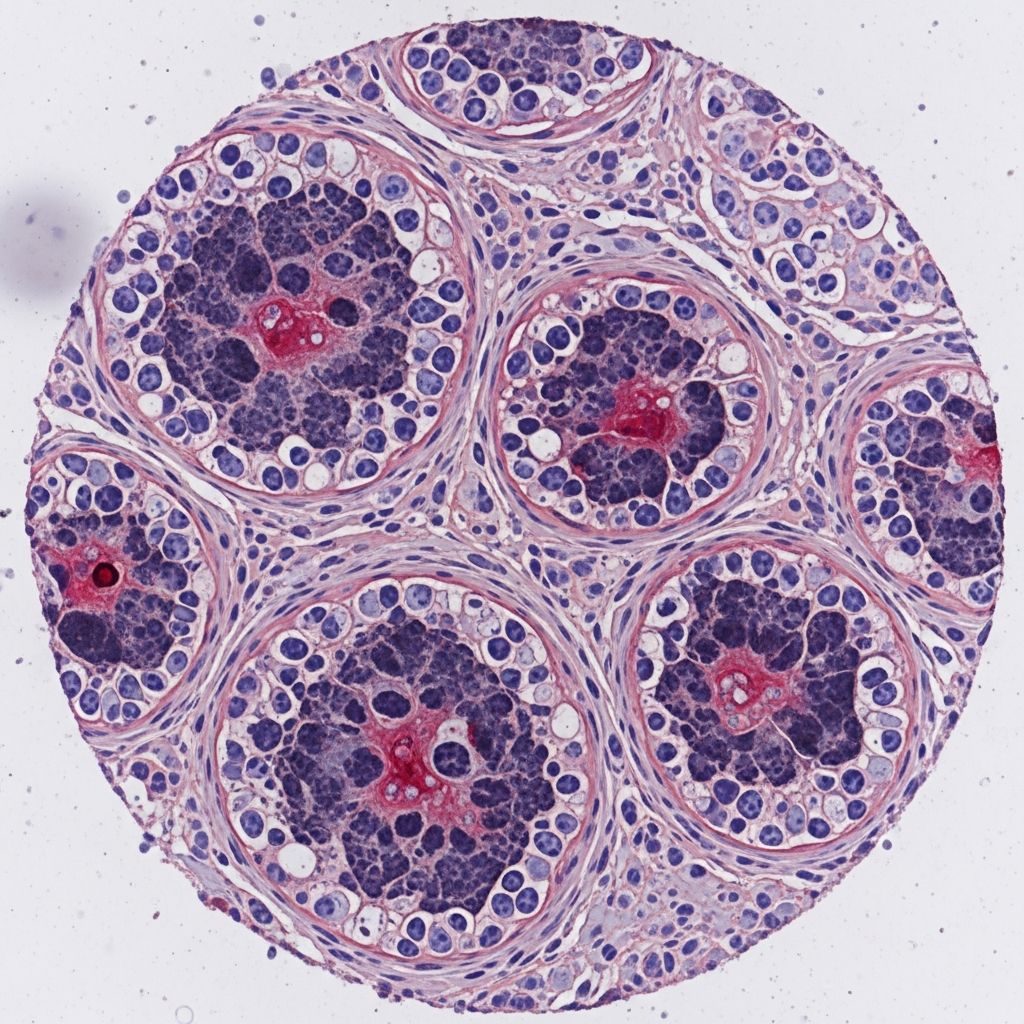
- Figure 1: Low-power view showing wedge-shaped dermal necrosis extending from superficial papillary dermis to mid-reticular dermis. Epidermis is necrotic with loss of nuclear detail.
- Figure 2: Higher magnification reveals numerous ectatic vessels filled with hyalinized thrombi. Surrounding stroma shows early necrosis without neutrophils.
- Figure 3: Capillary and venular thrombi with fibrin deposition. Dilated patent vessels contrast with occluded ones.
These images, sourced from clinical histopathology slides, illustrate the hallmark non-inflammatory thrombotic vasculopathy.
Pathophysiology
Warfarin inhibits vitamin K epoxide reductase, reducing gamma-carboxylation of clotting factors II, VII, IX, X, and anticoagulants protein C and S. Protein C has the shortest half-life (~6 hours), leading to transient deficiency and unopposed procoagulant activity initially. This imbalance promotes thrombosis in post-capillary venules, particularly in adipose-rich tissues possibly due to lower blood flow or higher expression of endothelial protein C receptor.
In protein C deficient patients, even heterozygous states amplify this effect, causing clinically evident necrosis. Rarely, late-onset necrosis occurs months later, associated with cholestasis or acquired deficiencies.
Investigations and confirmation
Skin biopsy is crucial for histopathological confirmation. Thrombophilia workup includes protein C activity (functional assay preferred), protein S levels, antithrombin III, factor V Leiden, prothrombin gene mutation, and lupus anticoagulant. Biopsy timing is important as early lesions may show only thrombi without necrosis.
| Test | Expected Finding | Notes |
|---|---|---|
| Protein C activity | Low (<55%) | Hereditary or transient |
| Protein S activity | Low | Free and total levels |
| PT/INR | Elevated | Due to warfarin |
| Fibrinogen | Normal | Rules out DIC |
| D-dimer | Elevated | Nonspecific |
Treatment implications
Immediate discontinuation of warfarin is paramount. Switch to heparin or low-molecular-weight heparin for anticoagulation needs. Fresh frozen plasma or protein C concentrates for severe cases. Vitamin K reversal if bleeding risk high. Surgical debridement and grafting for extensive necrosis.
Histopathology guides management by excluding differentials like infection, allowing focused thrombophilia-directed therapy.
Frequently Asked Questions (FAQs)
What is the hallmark histopathological finding in warfarin necrosis?
Extensive non-inflammatory thrombi in dermal capillaries and venules with overlying epidermal and dermal necrosis.
Does warfarin necrosis show inflammation on biopsy?
No, inflammation is minimal or absent, distinguishing it from vasculitis or infection.
Can warfarin necrosis occur late after starting therapy?
Rarely, weeks to months later, often with underlying protein deficiencies or cholestasis.
How is warfarin necrosis differentiated from DIC pathologically?
Morphologically similar, but DIC has systemic features and schistocytosis; clinical correlation required.
Is skin biopsy always necessary for diagnosis?
Clinical diagnosis is primary, but biopsy confirms pathology and excludes mimics.
Prognosis and prevention
Mortality is low (<10%) with prompt treatment, but morbidity from scarring and sepsis is significant. Prevention: Overlap warfarin with heparin for 5 days, use low loading doses (≤5mg/day), screen high-risk patients for protein C/S deficiency before initiation.
This expanded discussion on warfarin necrosis pathology emphasizes its unique thrombotic profile, aiding dermatopathologists and clinicians in accurate diagnosis and management. Early recognition prevents progression to large necrotic defects requiring reconstruction.
References
- Warfarin induced skin necrosis — DermNet NZ. 2023. https://dermnetnz.org/topics/warfarin-induced-skin-necrosis
- Warfarin necrosis pathology — DermNet NZ. 2023. https://dermnetnz.org/topics/warfarin-necrosis-pathology
- Warfarin-induced Skin Necrosis Within Psoriatic Plaques — PubMed/NCBI. 2019-07-26. https://pubmed.ncbi.nlm.nih.gov/31329395/
Similar Articles








Read full bio of Sneha Tete