Wart Removal: Treatment Options and Effectiveness
Explore effective wart removal methods: from home remedies to professional treatments and their success rates.
Understanding Warts and Removal Treatment Options
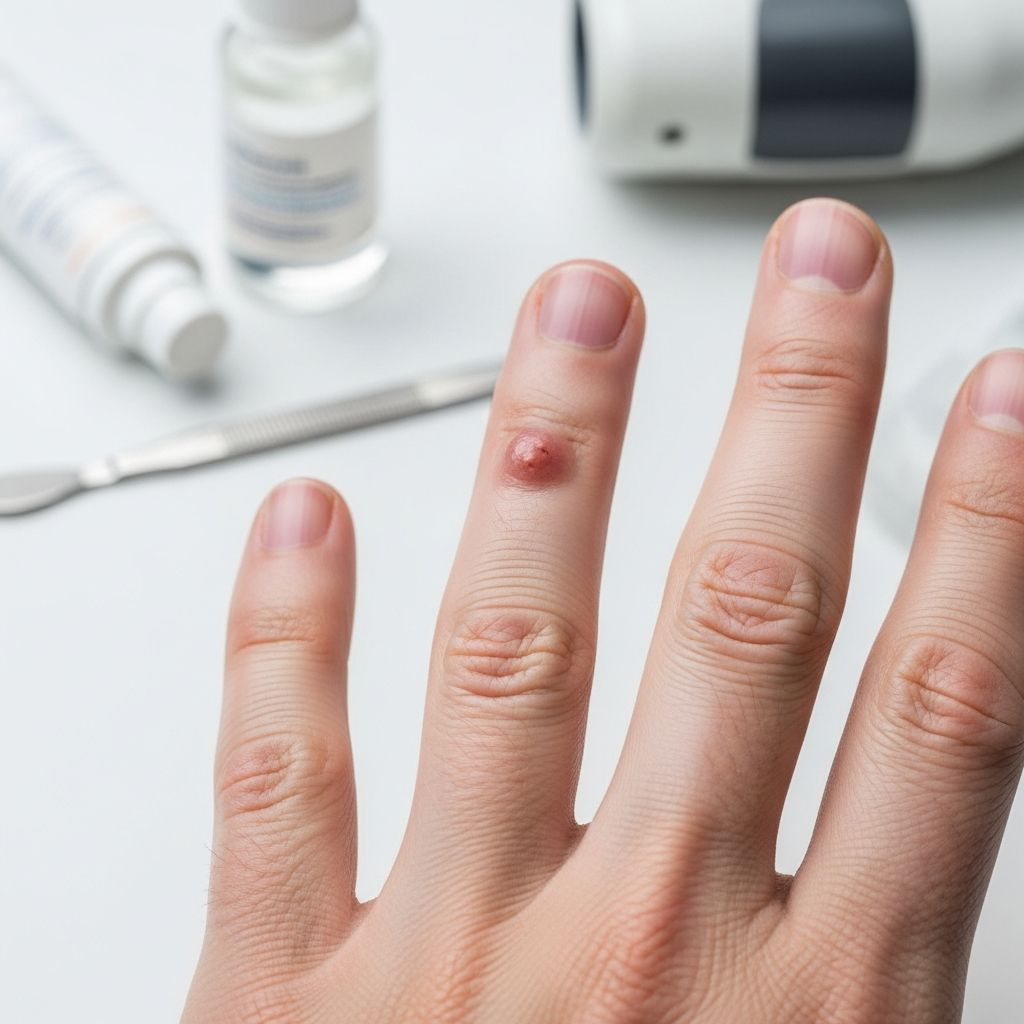
Warts are harmless growths that commonly appear on the hands and feet, caused by the human papillomavirus (HPV). While some warts disappear naturally over time, many people prefer to remove them quickly using various treatment methods. It’s important to understand that wart treatments work by removing the visible growth rather than curing the underlying HPV infection, which means warts may recur after treatment since the virus can remain in the body.
A range of treatments, including home remedies and professional medical procedures, can effectively remove warts. The choice of treatment depends on the wart’s size, location, your skin type, and how quickly you want results. People with weakened immune systems or diabetes should consult a doctor before using any wart removal treatment, and those with warts on the face or genitals should seek professional medical advice.
Over-the-Counter Wart Removal Methods
Salicylic Acid Treatment
Salicylic acid is one of the most popular and accessible over-the-counter wart removal options. Several products containing salicylic acid are available for topical application to common warts. Many of these products require wart filing, where you use a nail file to remove dead skin from the wart before applying the medication.
The effectiveness of salicylic acid has been well-studied. According to research analysis, daily treatment with salicylic acid removes warts within 12 weeks in approximately 70% of cases. Comparative studies show that about 39 out of 100 people using salicylic acid solutions no longer had any warts after three to six months, compared to 25 out of 100 people who received a placebo treatment.
When using salicylic acid, the wart should gradually peel away in stages until it becomes as flat as the surrounding skin. After treatment with salicylic acid and filing, the base of the wart begins to look like typical skin but may still show small black dots or a grainy appearance. Continue filing until these marks disappear completely. The American Osteopathic College of Dermatology recommends continuing wart medication use until the wart is no longer visible and looks identical to surrounding skin, with no visible black dots or grainy texture.
Important safety note: The HPV virus is transmissible through contact with used nail files, so dispose of nail files after every use to prevent spreading the infection.
Duct Tape Method
The duct tape method is a simple home remedy worth trying, though scientific support is limited. The approach involves applying new duct tape to a wart every few days with the idea that it gradually removes layers of the wart. While there is no clear evidence that duct tape wart removal is effective and no guidance on expected timelines, the method is easy to attempt at home and carries minimal cost.
However, it’s important to note that this method may not work for everyone, and some people may experience side effects such as skin reactions and bleeding. If you choose to try this approach, monitor your skin carefully and switch to a proven treatment method if you don’t see improvement after several weeks.
Related Stories



Professional Medical Wart Removal Treatments
Cryotherapy (Freezing)
Cryotherapy is among the best-studied and most effective wart removal treatments. This procedure uses liquid nitrogen to freeze the wart, causing the surface layers to peel off. During treatment, a doctor dips a cotton swab in liquid nitrogen and holds it against the wart for several seconds. The liquid nitrogen may also be sprayed onto the wart using a small nozzle.
People require regular cryotherapy treatments every 1–2 weeks to prevent the wart from growing back. After 3–4 months of treatment, cryotherapy effectively removes warts in approximately 70% of cases. Research shows that after three months, about 49 out of 100 people treated with cryotherapy no longer had any warts, compared to 13 out of 100 people who received no treatment.
However, cryotherapy does have some potential downsides. The treatment can cause blistering that lasts several days or weeks, permanent white marks on the skin, and temporary numbness in the treatment area. Despite these side effects, many dermatologists consider it one of the most effective options for hand warts. Interestingly, cryotherapy wasn’t found to be more effective than waiting when used to treat warts on the soles of the feet, suggesting location matters in treatment efficacy.
At-home cryogenic wart-removal pens are available at pharmacies without a prescription, though these don’t get as cold as professional liquid nitrogen treatments. Their effectiveness has not been tested in scientific studies, and the FDA has issued warnings that some cryogenic pens contain flammable substances and have caused burns in some users.
Cantharidin (Cantharone) Treatment
Cantharidin is a topical medication that doctors apply directly to the wart. This substance causes a blister to form underneath the wart. About one week after treatment, the doctor can cut away the dead wart, making this an efficient removal method that typically works faster than other treatments.
Electrosurgery and Curettage
Electrosurgery and curettage use heat to burn away the base of the wart. This treatment can effectively remove large warts that have not responded to other treatments. However, this procedure has several important considerations:
- The wound can take 2 weeks or more to heal
- Warts can recur in approximately 20% of cases
- The treatment can cause permanent scarring, which may be painful
- Recovery time is longer compared to other methods
Due to these potential side effects, electrosurgery and curettage is typically reserved for stubborn or particularly large warts that haven’t responded to gentler treatments.
Laser Surgery
Laser surgery involves using a laser beam to heat and destroy wart tissue. Several types of laser treatments exist for wart removal:
- Standard Laser Surgery: A traditional laser heats and destroys the wart, though this treatment can cause scarring
- Pulsed Dye Laser Treatment: Uses a laser beam to heat and destroy the narrow blood vessels that supply blood to the wart
- Erbium YAG Laser: Destroys wart cells by strongly heating the fluid within them for a short time
These laser treatments are effective for resistant warts but carry a higher risk of scarring compared to other options.
Curettage
Curettage involves scraping warts off with a special instrument. The wart is often first treated with a salicylic acid plaster or solution to soften it before the scraping procedure. This method can be effective, particularly when combined with initial chemical treatment.
Photodynamic Therapy
This specialized treatment begins with applying a gel to the wart, which is then left on for approximately three hours. The gel contains a chemical substance that is activated by light, allowing it to destroy wart tissue. While effective, this treatment is less commonly used than cryotherapy or salicylic acid.
Signs of Effective Wart Removal
Understanding what to expect during the wart removal process helps you determine if your treatment is working. When a wart is beginning to fall off after receiving medications such as salicylic acid or cryotherapy, you may experience several characteristic signs:
- After cryotherapy, some soreness or blisters forming in the wart area
- The skin of the wart drying and peeling off in stages
- The wart becoming lighter in color
- The wart shrinking or flattening noticeably
- The skin continuing to peel and fall off until it reaches the same level as surrounding skin
If after 3–4 months of consistent treatment the wart has not peeled away or flattened to match surrounding skin level, your current treatment method may not be working, and you should consider switching to a different approach or consulting a dermatologist.
Preventing Wart Transmission and Recurrence
Since HPV is transmissible through contact with warts, taking steps to prevent spreading is important:
- Use wart treatment rather than waiting for the wart to resolve on its own, which takes longer and gives the virus more chance to transmit
- Cover the wart to help prevent HPV from passing to others or spreading to other areas of your body
- Wash your hands immediately after touching or applying treatment to a wart
- Avoid shaving over an area with a wart, as it can create small tears and spread HPV to surrounding skin
You can reduce your risk of getting warts by maintaining good hygiene, avoiding direct contact with warts on other people, and keeping your skin intact and healthy.
Unusual Wart Treatment Claims
Various unusual wart treatments exist, including “distance healing” and other alternative approaches. However, scientific evidence does not support these methods. Warts typically disappear on their own without any treatment once the body builds up enough immune response against the HPV virus. This makes it very difficult to judge the effectiveness of alternative treatments without proper scientific comparison. For example, a study on “distance healing” involving 84 people with an average of eight warts each found that those receiving distance healing still had an average of eight warts after six weeks, while the control group who received no treatment had one fewer wart on average—suggesting no real benefit from the alternative treatment.
Comparison of Treatment Effectiveness
| Treatment Method | Success Rate | Timeline | Key Considerations |
|---|---|---|---|
| Salicylic Acid | 70% (12 weeks) | 12 weeks | Over-the-counter, requires filing, no scarring risk |
| Cryotherapy | 70% (3-4 months) | 3-4 months | Professional treatment, may cause blistering, repeated sessions needed |
| Cantharidin | High | 1 week | Professional application, quick results, blister formation |
| Electrosurgery/Curettage | 80% | 2+ weeks healing | 20% recurrence rate, permanent scarring possible |
| Duct Tape | Unproven | Unknown | Low cost, minimal evidence of effectiveness |
Frequently Asked Questions About Wart Removal
Q: Can warts come back after successful removal?
A: Yes, warts may recur after treatment because wart removal treatments eliminate the visible growth but do not cure the underlying HPV infection. The virus can remain dormant in your skin and cause new warts to develop. However, recurrence rates vary by treatment method, with electrosurgery showing about 20% recurrence.
Q: How long does wart removal typically take?
A: Timeline varies significantly by treatment method. Salicylic acid requires about 12 weeks of daily application, cryotherapy typically takes 3–4 months with regular treatments every 1–2 weeks, and cantharidin treatment can remove a wart in about one week. Home remedies like duct tape have no proven timeline.
Q: Is professional treatment necessary for wart removal?
A: No, many effective over-the-counter options exist, particularly salicylic acid products. However, professional treatment may be recommended for large warts, warts in sensitive locations (face or genitals), warts that haven’t responded to home treatment, or if you have a weakened immune system or diabetes.
Q: Which wart removal method is safest?
A: Salicylic acid is generally considered one of the safest options as it has minimal side effects when used as directed. Cryotherapy is also safe but may cause temporary blistering and white marks. Electrosurgery carries higher risks of permanent scarring. Always follow product instructions and consult a doctor if you have concerns.
Q: Can you use at-home cryogenic pens instead of professional cryotherapy?
A: While at-home cryogenic pens are available without prescription, they don’t get as cold as professional liquid nitrogen treatments. Their effectiveness hasn’t been tested in scientific studies, and the FDA has warned that some contain flammable substances and have caused burns. Professional cryotherapy remains the more reliable option.
Q: What should I do if wart treatment isn’t working?
A: If a wart hasn’t improved after 3–4 months of consistent treatment, switch to a different method or consult a dermatologist. Some warts may be resistant to certain treatments, and a healthcare provider can recommend the most appropriate option for your specific situation.
References
- Stages of Wart Falling Off: How to Know if Wart Removal is Effective — Medical News Today. 2024. https://www.medicalnewstoday.com/articles/stages-of-wart-falling-off
- Warts: Treatment Options and Effectiveness — National Center for Biotechnology Information (NCBI). https://www.ncbi.nlm.nih.gov/books/NBK279585/
- American Osteopathic College of Dermatology (AOCD) Guidelines — AOCD. https://www.aocd.org/
Similar Articles








Read full bio of medha deb