Wavefront Technology in Vision Correction
Advanced light measurement technology transforms personalized eye care and surgical outcomes.
The Foundation of Wavefront Technology
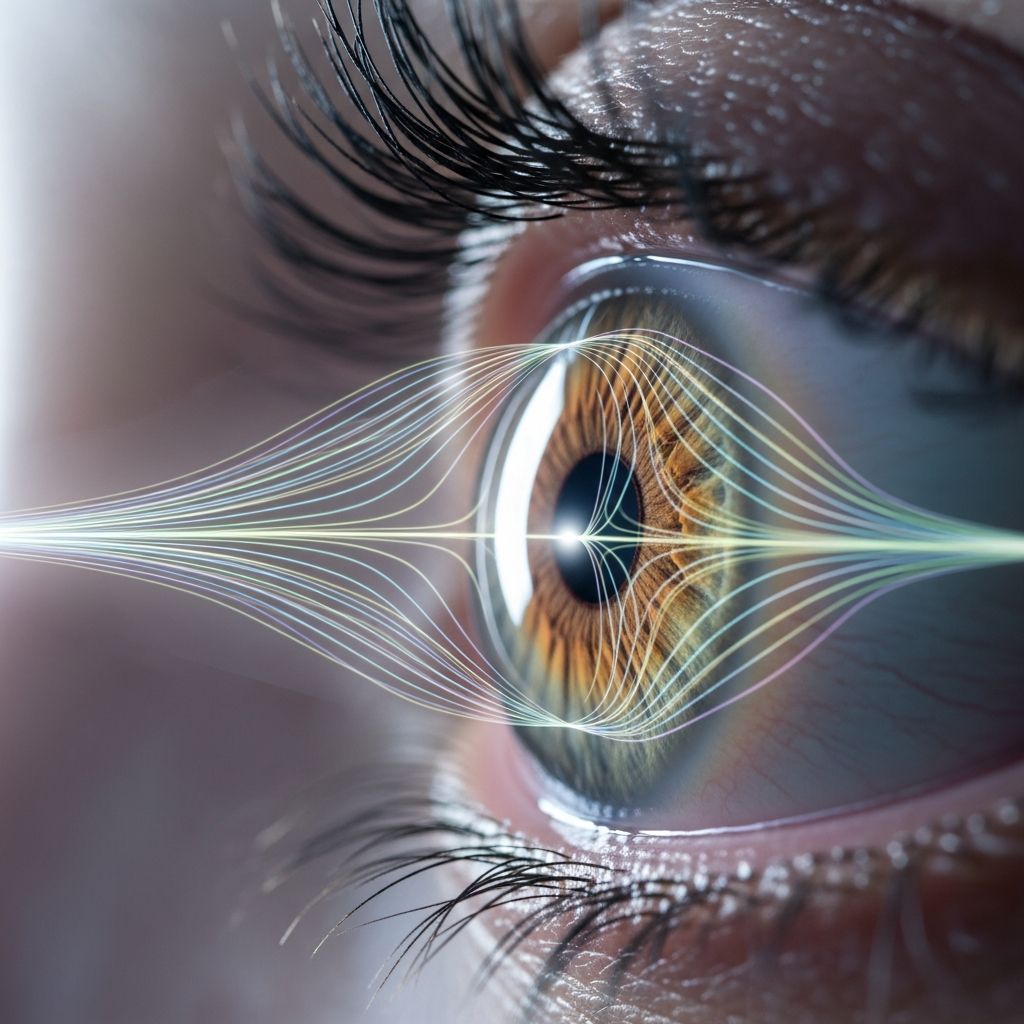
Vision correction has undergone a remarkable transformation through the application of wavefront technology, a sophisticated measurement system that captures the intricate details of how light travels through the eye. This technology originated from optical theories developed over four centuries ago, refined by astronomers more than a century ago to address atmospheric distortions, and now applied to enhance visual outcomes in modern ophthalmology. The fundamental principle behind wavefront analysis involves directing carefully calibrated light through the eye and analyzing how that light reflects back, creating a detailed map of the eye’s optical characteristics.
Unlike traditional vision measurements that focus primarily on basic refractive errors such as myopia or hyperopia, wavefront technology detects the subtle imperfections in how light passes through the cornea and lens. These imperfections, known as aberrations, significantly influence visual clarity, especially in low-light conditions. By capturing these microscopic variations in light wave patterns, eye care professionals gain unprecedented insight into each patient’s unique optical system.
How Wavefront Measurement Works in Practice
The wavefront measurement process begins with a non-invasive scanning procedure. A low-intensity light beam passes through the eye’s natural lens and cornea, then reflects back to a highly sensitive optical sensor. The entire procedure takes only seconds and requires no contact with the eye, making it completely comfortable for patients. The advanced sensor records even the tiniest changes in light wave patterns as they travel through the eye, detecting irregularities that standard eye exams cannot identify.
Modern wavefront systems, influenced by technology originally developed for NASA’s Webb telescope, generate significantly more data than earlier generations. Contemporary wavefront LASIK systems produce five times the amount of mapping data compared to previous generations of eye-mapping technology, enabling surgeons to measure aberrations and irregularities with unprecedented precision. This data-rich approach translates directly into more accurate treatment plans tailored to each individual’s specific optical characteristics.
Computer algorithms instantly process the sensor data into color-coded maps that provide immediate visual representation of the eye’s optical properties. This instant feedback during the same appointment allows patients and eye care teams to review results and discuss treatment options without delay. The wavefront map essentially creates a unique optical fingerprint of each eye, serving as a blueprint for customized treatment strategies.
Distinguishing Between Wavefront-Guided and Wavefront-Optimized Approaches
Two primary applications of wavefront technology have emerged in laser vision correction, each employing the measurement data differently:
Wavefront-Guided Treatment Strategy
Wavefront-guided treatments utilize comprehensive measurements of all aberrations present in an eye, including higher-order aberrations (HOAs), to create a customized ablation pattern specific to that individual eye. This approach attempts to correct pre-existing HOAs without inducing new ones. The personalized treatment design means patients receive care tailored specifically for their unique eyes rather than a standardized one-size-fits-all solution.
Clinical research demonstrates that wavefront-guided treatments induce substantially lower levels of HOAs compared to conventional treatments, resulting in improved visual quality for patients. Additionally, published clinical studies show that wavefront-guided treatments can reduce troublesome night vision problems by 20 to 30 percent, meaning less glare from oncoming headlights, fewer halos around street lights, and reduced starbursts.
Related Stories



Wavefront-Optimized Treatment Approach
In contrast, wavefront-optimized treatment operates under different theoretical principles. Rather than attempting to correct or reduce pre-existing HOAs, this approach focuses on preventing the induction of one specific HOA: spherical aberration. Earlier laser generation treatments inadvertently induced spherical aberration most prominently, resulting in glare, halos, and blurred vision for some patients, particularly in dim light conditions.
The rationale behind wavefront-optimized treatment rests on the observation that 80 to 90 percent of patients do not have substantial pre-operative HOAs and therefore benefit more from a treatment that preserves their existing quality of vision. According to this theoretical framework, wavefront-guided treatments are reserved only for the smaller percentage of patients with significant pre-operative visual symptoms or complex eye conditions.
Detecting Vision Errors with Advanced Precision
An instrument called an aberrometer uses wavefront technology to provide detailed analysis of the eye within seconds. For patients with lower-order vision errors such as nearsightedness or farsightedness, wavefront measurements yield more accurate vision correction with contact lenses or eyeglasses. The technology reveals subtle errors that traditional measurement methods overlook.
Patients with more complex, higher-order aberrations may experience subtle vision errors undetectable through conventional examination methods. These issues can be more easily and accurately identified and corrected using wavefront techniques. Dr. Larry N. Thibos, who pioneered wavefront technology’s use in optometry, emphasized that advanced techniques allow monitoring of optical quality changes, assessment of advanced vision-correcting therapy outcomes, and tracking of visual abnormalities in growing eyes.
Beyond simple vision correction, wavefront technology can identify subtle corneal or lens changes before they become serious problems. This early detection capability helps eye doctors monitor and treat conditions such as keratoconus and early cataracts before they significantly impact vision. Regular wavefront testing enables ongoing monitoring, helping ensure that treatments remain effective and alerting doctors to new vision issues that may develop.
Clinical Applications and Patient Benefits
Specialized Vision Correction Scenarios
Wavefront technology proves particularly beneficial for patients experiencing specific vision challenges. This includes those with post-LASIK vision issues, patients requiring exceptional visual acuity such as athletes or military personnel, and individuals with complex optical requirements. The technology can correct significant glare, ghosting, halos, starbursts, and double vision that standard corrections cannot address.
Patients preparing for cataract surgery benefit greatly from wavefront mapping when selecting premium intraocular lenses (IOLs). The detailed measurements help surgeons choose the optimal lens type and power to maximize vision quality after cataract removal, potentially reducing post-operative dependence on glasses.
Custom Contact Lens Design
Wavefront maps provide detailed information enabling the creation of custom contact lenses that correct not only basic refractive errors but also higher-order aberrations for exceptionally clear vision. Patients with keratoconus, post-surgical corneas, high astigmatism, or other irregular eye conditions receive particularly significant benefits from wavefront-guided contact lens fitting. The precise measurements help reduce visual distortions and improve lens stability for all-day comfort.
Night Vision Enhancement
One of the most significant clinical advantages involves night vision improvement. Older laser technology could not effectively treat the peripheral cornea, leaving light rays from the untreated outer edge of the ablation zone unfocused. This resulted in halos and glare at night, a problem especially pronounced in patients with larger corrections or larger pupils due to induced spherical aberration. Modern wavefront-optimized treatment profiles address these spherical aberrations to preserve or improve night vision after LASIK.
Clinical Evidence and Treatment Outcomes
Published clinical studies consistently demonstrate superior outcomes with wavefront-guided LASIK approaches. Patients undergoing wavefront LASIK tend to have better night vision compared to standard LASIK recipients, experience a lower chance of needing retreatment, and show a higher chance of achieving 20/20 vision or better. These improvements result from the precision measurements and customized treatment planning enabled by wavefront analysis.
The technology’s ability to generate detailed optical maps provides surgeons with more accurate and precise measurements to drive treatment plans, achieving better quality of vision from laser vision correction for each patient. By accounting for each patient’s unique eye aberrations and corneal dimensions, wavefront laser treatments prove more customized than glasses, contact lenses, and standard LASIK procedures, while modern wavefront laser helps preserve the cornea’s natural optical contours to minimize glare, halos, and poor night vision.
Key Advantages of Wavefront-Guided Vision Assessment
- Personalized treatment blueprints: Your wavefront map serves as a detailed blueprint for designing treatments matching your exact eye shape and vision requirements rather than applying standardized solutions.
- Instant results and discussion: Your wavefront map is created immediately during your visit, allowing your eye care team to review and discuss results right away during the same appointment.
- Non-invasive procedure: A safe, low-intensity light beam passes through your eye with no touching involved, making the process completely comfortable and non-invasive.
- Enhanced night vision: Clinical studies demonstrate that wavefront-guided treatments reduce troublesome night vision problems by 20 to 30 percent, reducing glare and halos.
- Early disease detection: The technology identifies subtle changes in your cornea or lens before they become serious problems, enabling early intervention.
- Comprehensive error detection: Both lower-order and higher-order vision errors are detected, revealing subtle errors that standard eye exams cannot identify.
- Long-term monitoring: Regular wavefront testing tracks vision changes over time, ensuring treatments remain effective and alerting doctors to emerging issues.
Patient Selection and Ideal Candidates
While wavefront technology benefits many patients, certain groups derive the greatest advantages from this advanced diagnostic approach. Patients with high levels of astigmatism, irregular corneal shapes, or previous eye surgeries receive significant benefits, as wavefront diagnostics provide comprehensive data helping correct unusual vision problems that standard correction methods often cannot fully address. Those experiencing post-surgical complications or requiring exceptional visual clarity represent ideal candidates for wavefront-guided treatment planning.
Additionally, patients with specific occupational demands, such as pilots, athletes requiring precise depth perception, or individuals performing detailed visual work, benefit substantially from the enhanced visual quality that wavefront-guided correction provides. Even patients with seemingly standard refractive errors may discover they have underlying aberrations affecting their visual experience in ways they didn’t previously recognize.
The Future of Personalized Eye Care
Wavefront technology continues evolving as optical science advances. Contemporary systems, refined by innovations originally developed for space-based telescope optics, represent a significant leap forward in measurement precision and data acquisition. As technology developers continue enhancing these systems, even greater refinement in customized vision correction becomes possible.
The integration of wavefront analysis into routine eye care represents a paradigm shift toward truly personalized medicine in ophthalmology. Rather than applying predetermined correction patterns, eye care professionals can now design treatments based on the unique optical characteristics of each individual eye. This patient-specific approach translates into superior visual outcomes, reduced complications, and enhanced satisfaction with vision correction procedures.
Frequently Asked Questions
Is wavefront testing painful or uncomfortable?
No. The wavefront measurement process is completely non-invasive and painless. A safe, low-intensity light beam passes through your eye with no contact required, making it entirely comfortable.
How long does a wavefront analysis take?
The measurement process occurs in seconds, with results instantly converted into color-coded maps that your eye care team can review and discuss with you during the same appointment.
Can wavefront technology benefit patients with standard vision problems?
Yes. While wavefront technology excels at detecting complex higher-order aberrations, it also provides more precise measurements for standard refractive errors like nearsightedness and farsightedness, enabling more accurate correction.
Does wavefront-guided LASIK guarantee perfect vision?
While wavefront-guided LASIK offers excellent outcomes and reduces complications like glare and halos, individual results vary. However, published clinical studies show high rates of achieving 20/20 vision or better with reduced retreatment needs.
Who should consider wavefront-guided treatments?
Ideal candidates include those with complex optical needs, post-surgical eyes, high astigmatism, irregular corneal shapes, prior vision correction complications, or occupations requiring exceptional visual clarity.
References
- Wavefront technologies: Helping you decide what’s best for your patient — Ophthalmology Times Europe. https://europe.ophthalmologytimes.com/view/wavefront-technologies-helping-you-decide-whats-best-your-patient
- Wavefront Technologies for More Accurate Vision Correction — Boston Sight. https://www.bostonsight.org/wavefront-technologies-utilized-for-more-accurate-vision-correction/
- Understanding Wavefront Diagnostic Technology — Specialty Vision. https://specialty.vision/article/understanding-wavefront-diagnostic-technology/
- Wavefront LASIK – How NASA’s Webb Telescope Advanced LASIK — American Refractive Surgery Council. https://americanrefractivesurgerycouncil.org/nasas-webb-telescope-and-wavefront-lasik/
- Wavefront Laser Technology — 20/20 Eye Site. https://www.2020eyesite.com/wavefront-laser-technology/
- Wavefront technology in eye exams — All About Vision. https://www.allaboutvision.com/eye-care/eye-exam/types/wavefront/
Similar Articles








Read full bio of medha deb