Wet AMD Symptoms: 5 Early Signs To Watch For
Recognizing the signs of wet AMD early can prevent severe vision loss through timely treatment interventions.
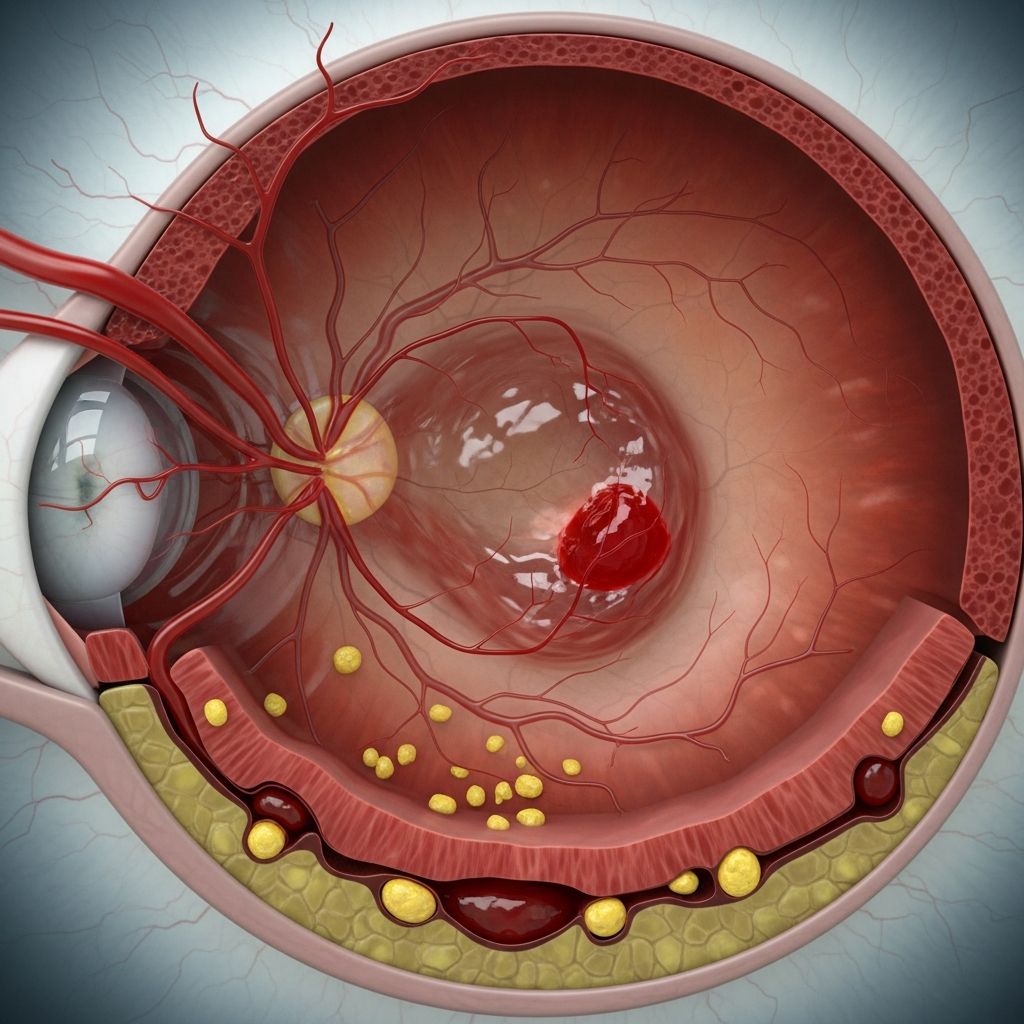
Wet age-related macular degeneration (AMD), also known as neovascular AMD, affects about 10% of AMD cases but causes most severe central vision loss due to abnormal blood vessel growth and leakage in the macula. Unlike dry AMD, wet AMD progresses rapidly, often leading to scarring if untreated, making early symptom recognition essential for preserving vision through anti-VEGF therapies.
What Is Wet AMD?
The macula, central to the retina, enables sharp, detailed vision for reading, driving, and recognizing faces. In
wet AMD
, abnormal blood vessels called choroidal neovascularization grow beneath the retina, leaking fluid and blood into the macula, causing swelling, distortion, and rapid damage. This ‘wet’ phase can develop suddenly from dry AMD or independently, accounting for the majority of AMD-related blindness despite its lower prevalence.Without intervention, these vessels scar the macula permanently. However, treatments like anti-VEGF injections can stabilize or improve vision if started promptly. Wet AMD typically strikes people over 50, with risk doubling every decade after 50.
Wet AMD Symptoms
Symptoms of wet AMD emerge abruptly and worsen quickly compared to the gradual onset of dry AMD. Common signs include:
- Straight lines appearing wavy or bent (metamorphopsia): A hallmark symptom where grid lines look distorted, detectable via Amsler grid tests.
- Central blind spot or blurry spot: Grows over days to weeks, impairing central vision while peripheral sight remains intact.
- Sudden vision changes: Rapid loss in one or both eyes, often noticed during reading or driving.
- Colors seeming less vibrant: Faded hues due to macular damage.
- Objects appearing smaller or distorted in size (micropsia/macropsia): Visual illusions from retinal swelling.
These symptoms demand immediate ophthalmologist evaluation, as delays exacerbate scarring. One eye may be affected first, but the second often follows.
Wet AMD Causes and Risk Factors
Wet AMD arises when VEGF triggers fragile new vessels under the retina, which leak and bleed. While the exact trigger is unknown, it often progresses from dry AMD’s drusen deposits.
Key
risk factors
include:- Age over 50, with highest incidence after 75.
- Family history or genetics, such as CFH gene variants.
- Smoking, which doubles risk by promoting vessel instability.
- High blood pressure and cardiovascular disease.
- Caucasian ethnicity and obesity.
- Prior dry AMD.
Lifestyle factors like UV exposure and poor diet exacerbate risks, though wet AMD cannot be slowed by supplements alone unlike dry AMD.
How Is Wet AMD Diagnosed?
Diagnosis starts with a comprehensive dilated eye exam by a retina specialist. Key tests include:
- Amsler grid test: Patients view a grid; wavy or missing lines indicate issues.
- Optical coherence tomography (OCT): Non-invasive imaging reveals fluid, blood, or vessel growth under the retina.
- Fluorescein angiography: Dye injection highlights leaking vessels.
- Fundus photography: Documents retinal changes.
Early detection via routine exams is critical, as symptoms alone may underestimate damage.
Wet AMD Treatment
No cure exists, but treatments halt progression and can restore vision in many cases. Primary options target VEGF to shrink abnormal vessels.
Anti-VEGF Injections
Related Stories



The gold standard, administered monthly initially via office procedure: eye numbed, cleaned, injected with a tiny needle. Drugs block VEGF, stopping leakage.
| Drug | Key Features | Dosing |
|---|---|---|
| Lucentis (ranibizumab) | FDA-approved 2006; first to improve vision | Monthly initially |
| Eylea (aflibercept) | Longer-acting | Every 8 weeks |
| Beovu (brolucizumab) | Extended intervals | Every 12 weeks |
| Vabysmo (faricimab) | Dual VEGF/Ang-2 action; newest | Up to 16-20 weeks |
Risks like infection or hemorrhage are rare (<1%). Most need ongoing injections, tailored by response. Early treatment yields best outcomes.
Photodynamic Therapy (PDT)
Less common adjunct: IV verteporfin (Visudyne) activated by cold laser to seal vessels without scarring healthy tissue. Used with anti-VEGF for certain cases; doesn’t improve vision alone. Procedure: IV dye, numbing, laser via contact lens.
Emerging Treatments
Research focuses on longer-acting implants (refilled every 6-9 months) and gene therapies to reduce injection frequency. Laser therapies are outdated due to scarring risks.
Preventing Vision Loss from Wet AMD
Quit smoking, manage blood pressure, eat leafy greens/antioxidants (though less effective for wet vs. dry), protect eyes from UV, and get annual exams post-50. Low-vision aids help post-treatment.
When to See a Doctor
Seek immediate care for new wavy lines, blind spots, or rapid changes. Delays cause irreversible scars. Retina specialists coordinate lifelong monitoring.
Frequently Asked Questions (FAQs)
What is the difference between wet and dry AMD?
Dry AMD involves drusen and gradual atrophy; wet features leaky vessels and swift loss. Wet is rarer but more destructive.
How quickly does wet AMD progress?
Symptoms can worsen in weeks without treatment, leading to central scarring.
Do anti-VEGF injections hurt?
Minimal pain after numbing; very tolerable with rare complications.
Can wet AMD be cured?
No, but treatments stabilize vision long-term for most.
Is wet AMD hereditary?
Genetic factors increase risk; family history warrants screening.
(Article word count: 1723)
References
- Wet AMD — Wills Eye Hospital. Accessed 2026. https://www.willseye.org/wet-amd/
- What is Wet AMD? — American Macular Degeneration Foundation. Accessed 2026. https://www.macular.org/about-macular-degeneration/wet-macular-degeneration
- Age-related macular degeneration (AMD) – Treatments — NHS. Accessed 2026. https://www.nhs.uk/conditions/age-related-macular-degeneration-amd/treatment/
- Treatments for Wet AMD (Advanced Neovascular AMD) — National Eye Institute (NEI). Accessed 2026. https://www.nei.nih.gov/eye-health-information/eye-conditions-and-diseases/age-related-macular-degeneration/treatments-wet-amd-advanced-neovascular-amd
- What is Wet Macular Degeneration? Causes, Symptoms, and Treatment — The Eye Doctors. Accessed 2026. https://www.theeyedoctors.net/eye-care-resources/what-is-wet-macular-degeneration
- Macular disease treatments — Macular Society. Accessed 2026. https://www.macularsociety.org/diagnosis-treatment/treatments/
- Wet Macular Degeneration: Symptoms & Treatment — Cleveland Clinic. Accessed 2026. https://my.clevelandclinic.org/health/diseases/wet-macular-degeneration
Similar Articles








Read full bio of Sneha Tete