Wet Wraps: 6-Step Guide For Eczema Flare Relief
Effective technique for managing severe eczema flares by locking in moisture and reducing itch.
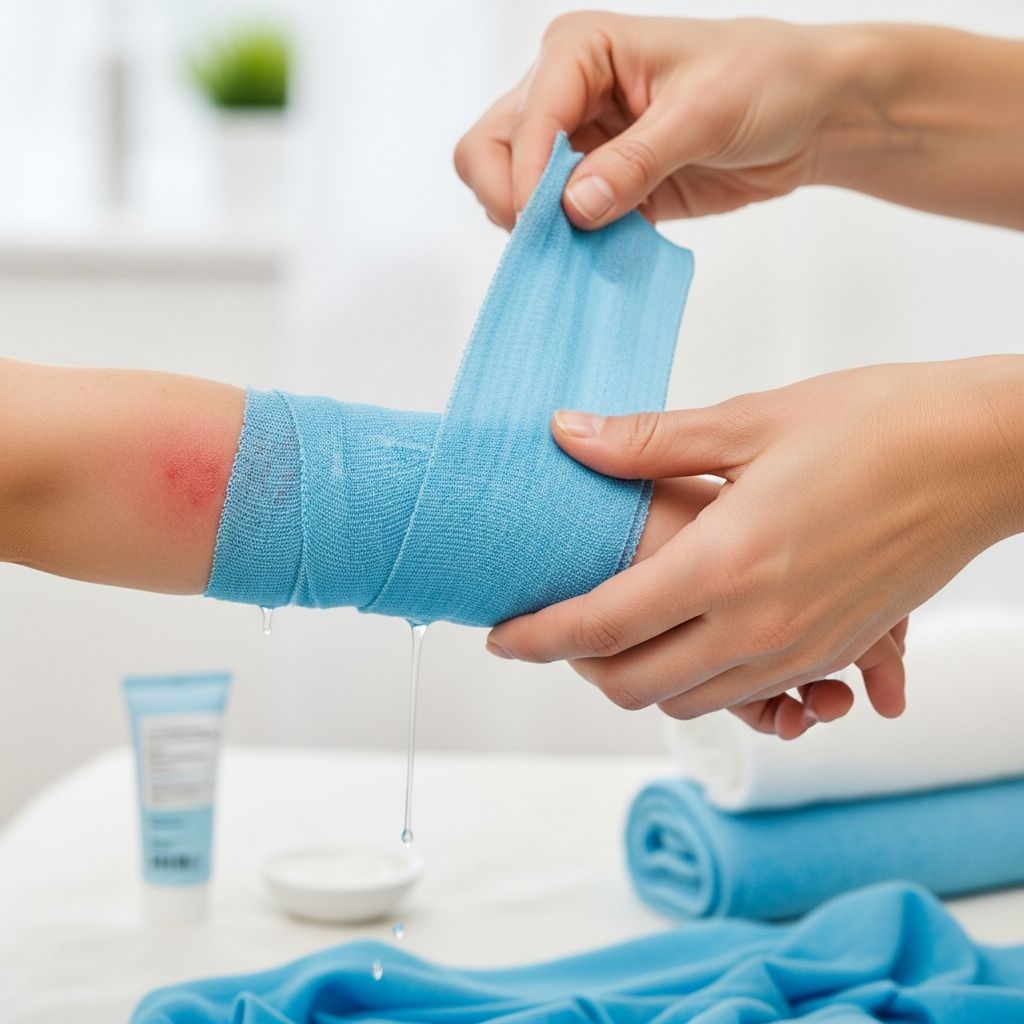
Wet wrap therapy is a specialized dermatological technique primarily used to treat moderate to severe eczema (atopic dermatitis) by intensely hydrating the skin, enhancing the absorption of topical medications, and providing relief from severe itching and inflammation.
What are wet wraps?
Wet wraps involve applying two layers of bandage or clothing to the affected skin areas: the inner layer is dampened with lukewarm water after moisturizing or applying prescribed topicals, and the outer layer is dry. This method locks in moisture, cools the skin as the water evaporates, and acts as a barrier to prevent scratching.
The technique is particularly useful during acute flares of eczema where standard emollients and steroids alone are insufficient. It can be applied to limbs, torso, or the entire body using tubular bandages, gauze, or purpose-made garments like vests and leggings.
Who should use wet wraps?
Wet wraps are recommended for individuals with moderate to severe atopic dermatitis experiencing intense flares, severe itch, pain, or sleep disruption due to scratching. They are suitable for children and adults but should only be used under medical supervision, especially in young children to avoid risks like hypothermia.
- Primary use: Atopic dermatitis (eczema) during flares.
- Other indications: Occasionally for dyshidrotic or nummular eczema, psoriasis, or other inflammatory rashes.
- Not suitable for: Infected skin (e.g., weeping, crusted, or pus-filled areas), open wounds, or without topical steroids in severe cases.
How do wet wraps work?
The mechanism of wet wraps combines hydration, occlusion, and cooling:
- Hydration boost: The damp inner layer and occlusive outer layer trap moisture, allowing deeper penetration of emollients and medications into the stratum corneum.
- Cooling effect: Evaporation from the wet layer provides an anti-pruritic (itch-relieving) sensation, breaking the itch-scratch cycle.
- Enhanced efficacy: Occlusion increases the potency of topical corticosteroids by up to 10-fold, reducing inflammation more effectively.
- Barrier protection: Prevents unconscious scratching during sleep, promoting skin healing.
Studies show significant improvements: one trial reported a 71% symptom reduction in children with severe eczema, sustained for a month post-treatment.
Benefits of wet wraps
Wet wrap therapy offers multiple advantages, making it a valuable ‘jump-start’ for flare management:
| Benefit | Description |
|---|---|
| Deep moisturization | Superior hydration compared to creams alone, restoring the skin barrier. |
| Itch and pain relief | Cooling evaporation reduces discomfort rapidly. |
| Improved treatment absorption | Medications penetrate better under occlusion. |
| Reduced inflammation | Decreases redness, swelling, and flare severity. |
| Better sleep | Barrier to scratching allows restful nights. |
Patients often see dramatic improvements within 1-2 applications, with flares resolving faster when combined with standard care.
Preparation for wet wraps
Optimal results come after the ‘soak and seal’ method: bathing followed by immediate application of topicals.
Supplies needed
- Lukewarm water.
- Cotton tubular bandages, gauze, soft cloths, or wet-wrap garments (e.g., Comfit or Tubifast).
- Thick emollient (e.g., petroleum jelly) or prescribed topical (steroid cream).
- Clean towel, pajamas or loose clothing.
- Bathtub/sink for soak.
Soak and seal steps
- Bathe in lukewarm water for 5-10 minutes using fragrance-free cleanser; avoid scrubbing.
- Pat dry gently, leaving skin damp.
- Apply topical steroid to inflamed areas within 3 minutes.
- Immediately layer thick moisturizer over entire body (avoid over steroids).
How to apply wet wraps (step-by-step)
Related Stories



Apply post-soak and seal, ideally in the evening for overnight use.
- Prepare wet layer: Soak cotton/gauze in lukewarm water, wring until just damp (dripping wet risks over-cooling).
- Wrap affected areas: Apply damp layer directly over medicated skin, ensuring even coverage without tightness (check circulation).
- Add dry layer: Cover with dry duplicate bandage or clothing for occlusion.
- Outer layer: Wear loose pajamas or sweats over wraps to secure without disturbing.
- Duration: Leave on 2-12 hours or overnight; reapply moisturizer after removal.
- Frequency: 1-2 times daily for 3-7 days during flares, then taper.
Tip: For full-body, use garments; for limbs, tubular bandages sized by limb circumference.
Duration and frequency
Use wet wraps intensively for short periods:
- Acute flares: 3-14 days, 1-2 sessions/day.
- Maintenance: Less frequent as symptoms improve.
- Avoid prolonged use to prevent skin maceration or dependency.
Monitor progress; consult a doctor if no improvement in 48 hours.
Precautions and risks
While safe when done correctly, precautions are essential:
- Infection risk: Do not use on infected (weeping, golden crusts) or broken skin; signs include fever, pus, worsening pain.
- Hypothermia: In infants/children, monitor temperature; use warm room, limit time if cold.
- Circulation: Wraps must not constrict; toes/fingers should stay warm/pink.
- Topicals: Use low-mid potency steroids; avoid potent ones on face/genitals without advice.
- Overheating: Damp wraps cool but can chill; dry outer layer prevents this.
Discontinue if shivering, increased redness, or no relief. Always get provider approval first.
When to avoid wet wraps
- Active bacterial/viral skin infections (e.g., impetigo, herpes).
- Uncontrolled asthma (rare risk of absorption).
- Without emollient/steroid (ineffective alone).
- Patient unable to tolerate (claustrophobia, immobility).
Alternatives to wet wraps
For milder cases:
- Daily emollient application post-bath.
- Occlusive dressings (plastic wrap over cream, short-term).
- Antihistamines for itch, phototherapy, or systemic meds for severe eczema.
Frequently Asked Questions (FAQs)
Q: How long do I leave wet wraps on?
A: Typically 2-12 hours or overnight for best results; remove in the morning and re-moisturize.
Q: Can I use wet wraps on my baby’s face?
A: Avoid face unless specifically advised; risk of eye irritation or inhalation. Use body only.
Q: Do wet wraps cure eczema?
A: No, they manage flares but are not a cure; combine with ongoing skincare.
Q: What if my child gets cold during wet wraps?
A: Use a warm room, thicker dry layer, or limit duration; monitor temperature closely.
Q: Can adults use wet wraps?
A: Yes, effective for adult atopic dermatitis flares under medical guidance.
Q: How often can I repeat wet wrap courses?
A: As needed for flares, but space out (e.g., every 1-3 months); avoid daily long-term.
Patient tips for success
- Practice first on a small area.
- Keep supplies sterile/clean.
- Combine with trigger avoidance (e.g., irritants, allergens).
- Track symptoms with photos for doctor reviews.
- For children, make it fun with stories or rewards.
References
- How to Apply Wet Wrap Treatment for Rash: A Step-by-Step Guide — Coastal Dermatology. 2023. https://www.coastaldermonline.com/blog/how-to-apply-wet-wrap-treatment-for-rash-a-step-by-step-guide
- Wet Wrapping — Nottingham Eczema Support. 2019-02. https://www.nottinghameczema.org.uk/documents/wetwrappingfeb19.pdf
- Wet Wrap Therapy — National Eczema Association. 2024. https://nationaleczema.org/treatments/wet-wrap-therapy/
- Wet Wrap Bandages — Newcastle Hospitals NHS Foundation Trust. 2023. https://www.newcastle-hospitals.nhs.uk/services/dermatology/patient-dermatology-information-leaflets/wet-wrap-bandages/
- How to: “Wet Wraps” for Eczema — Complete Dermatology. 2023-03. https://complete-derm.com/wp-content/uploads/2023/03/Wet-Wraps._2.pdf
- Wet Wraps — Rady Children’s Health. 2024. https://www.rchsd.org/programs-services/dermatology/eczema-and-inflammatory-skin-disease-center/treatment/wet-wraps/
Similar Articles








Read full bio of medha deb