Clinical Trials: 4 Key Phases And What You Need To Know
Discover the essential role of clinical trials in advancing medicine, ensuring treatment safety, and improving patient outcomes worldwide.
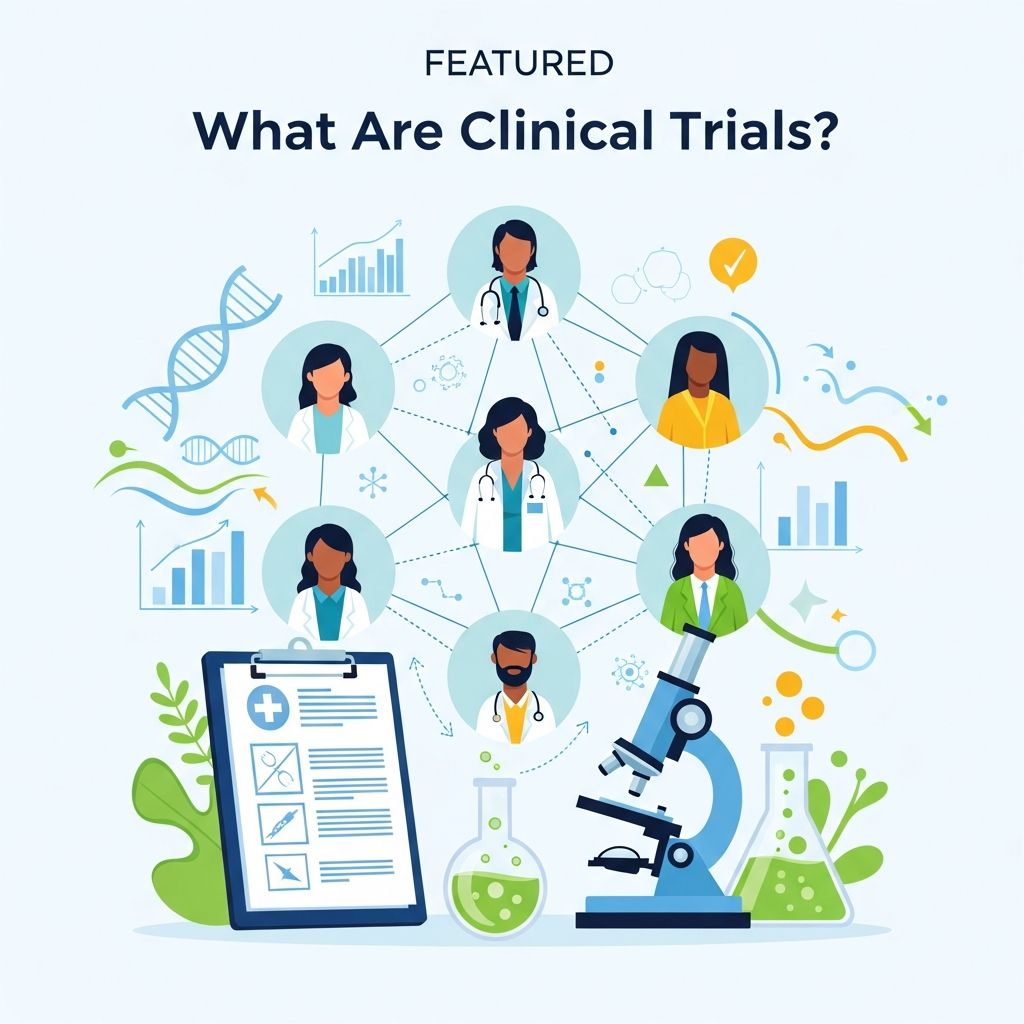
Clinical trials are prospective biomedical or behavioral research studies on human participants designed to answer specific questions about biomedical or behavioral interventions, including new treatments, vaccines, and diagnostic tools. These trials provide the strongest evidence for determining the safety and efficacy of medical interventions before they reach widespread use.
What Is a Clinical Trial?
A
clinical trial
is a research study that prospectively assigns human participants or groups to one or more health-related interventions to evaluate their effects on health outcomes. Interventions can include drugs, devices, procedures, preventive measures, or changes in lifestyle and behavior. Clinical trials follow strict protocols to ensure scientific rigor and ethical standards, forming the backbone of evidence-based medicine.These studies are essential because they generate the data required for regulatory approval, such as by the FDA, confirming that new treatments are both safe and effective for public use. Without clinical trials, medical advancements would rely on anecdotal evidence rather than robust scientific validation.
Why Are Clinical Trials Important?
Clinical trials drive medical progress by ensuring treatments are safe and effective, advancing public health, reducing healthcare costs, deepening disease understanding, and developing therapies for rare diseases. They underpin evidence-based medicine (EBM), supported by systematic reviews and meta-analyses in resources like the Cochrane Library.
- Safety and Efficacy Assurance: Trials rigorously test new drugs for benefits, side effects, and optimal dosing, comparing them to existing treatments.
- Public Health Impact: Trials have revolutionized treatment for diseases like HIV/AIDS through antiretroviral drugs, extending lives and improving quality of life.
- Cost Reduction: Effective interventions prevent expensive complications, lowering long-term healthcare expenses.
- Disease Biology Insights: Trials reveal genetic mutations in cancers, enabling targeted therapies with fewer side effects.
- Rare Disease Treatments: Despite challenges like small patient pools, trials provide access to life-saving options for rare conditions.
The Four Phases of Clinical Trials
Clinical trials progress through four distinct phases, each building on the previous to comprehensively evaluate new interventions. This phased approach minimizes risks and maximizes reliable data.
| Phase | Purpose | Participants | Key Focus |
|---|---|---|---|
| Phase 1 | Test safety, dosage, and side effects | 20-100 healthy volunteers | Safety and pharmacokinetics |
| Phase 2 | Assess efficacy and further safety | Several hundred patients | Short-term side effects, optimal dosing |
| Phase 3 | Confirm effectiveness, monitor side effects | 300-3,000+ patients | Comparison to standard treatments |
| Phase 4 | Post-marketing surveillance | Thousands of patients | Long-term effects, rare adverse events |
Phase 1 focuses on safety in small groups, identifying safe dosage ranges. Phase 2 tests efficacy in patients with the condition. Phase 3 involves large-scale randomized controlled trials (RCTs) for definitive proof. Phase 4 monitors real-world use after approval.
How Do Clinical Trials Work?
Clinical trials follow structured protocols outlining objectives, design, methodology, and statistical considerations. Participants are typically randomized to intervention or control groups (often placebo) to minimize bias. Key elements include informed consent, institutional review board (IRB) oversight, data monitoring, and adverse event reporting.
Related Stories



Trials employ blinding (single, double, or triple) and randomization for objectivity. Interim analyses allow early termination for efficacy or harm. Databases like ClinicalTrials.gov track over 400,000 studies worldwide, enhancing transparency.
Types of Clinical Trials
Beyond phases, trials vary by design to address diverse research needs, especially in oncology and personalized medicine.
- Interventional: Test specific treatments (e.g., new drugs).
- Observational: Monitor without intervention.
- Platform Trials: Evaluate multiple treatments for one disease adaptively.
- Basket Trials: Test one treatment across diseases sharing biomarkers.
- Umbrella Trials: Test multiple treatments for subgroups of one disease.
These innovative designs accelerate research, particularly for precision medicine.
Who Conducts Clinical Trials?
Trials are sponsored by pharmaceutical companies, government agencies (e.g., NIH), academic institutions, and nonprofits. Principal investigators (PIs) lead multidisciplinary teams including physicians, statisticians, and coordinators. Sites range from academic medical centers to community hospitals.
How to Find and Participate in Clinical Trials
Search ClinicalTrials.gov using keywords, location, and condition. Criteria include eligibility (age, stage, health status) and exclusion factors. Steps:
- Review trial details and protocol.
- Contact coordinator for screening.
- Provide informed consent.
- Undergo baseline assessments.
- Follow schedule of visits/tests.
Benefits: Free care, access to innovations. Risks: Side effects, time commitment.
Risks and Benefits of Participating
| Benefits | Risks |
|---|---|
| Access to cutting-edge treatments | Unknown side effects |
| Close medical monitoring | Placebo assignment |
| Contribute to science | Time and travel demands |
| Often no-cost care | Exclusion from standard care |
IRBs ensure ethical balance. Discuss with doctors.
Clinical Trials for Rare Diseases
Rare disease trials face recruitment hurdles due to small populations. Solutions: International collaboration, adaptive designs, natural history studies. Orphan drug incentives spur development.
AI and Innovations in Clinical Trials
AI automates recruitment via EHR analysis, predicts outcomes, and extracts evidence. Novel designs like platform trials enhance efficiency.
Regulatory Oversight and Ethics
Trials adhere to Declaration of Helsinki, GCP guidelines. FDA/NIH oversee via IRBs, DSMBs. ClinicalTrials.gov mandates registration.
Frequently Asked Questions (FAQs)
What is the difference between a clinical trial and observational study?
Trials intervene actively; observational studies monitor without changing care.
Are clinical trials free?
Yes, participants receive study-related care at no cost, though non-study costs may apply.
Can anyone join a clinical trial?
No, strict eligibility criteria ensure safety and validity.
How long do clinical trials take?
Phases span years; Phase 3 often 1-4 years.
Do I get paid for clinical trials?
Compensation for time/travel is common, not for participation itself.
What if I experience side effects?
Trials monitor closely; report immediately for management.
References
- Importance of clinical trials and contributions to contemporary medicine — National Library of Medicine, NIH. 2024. https://pmc.ncbi.nlm.nih.gov/articles/PMC11721763/
- Selected Publications About ClinicalTrials.gov — National Library of Medicine, NIH. 2023-2024. https://clinicaltrials.gov/about-site/selected-publications
- ClinicalTrials.gov Background — U.S. National Library of Medicine. 2023. https://clinicaltrials.gov/about-site/background
- Principles and Practice of Clinical Trials — NIH/NLM. 2023. https://pmc.ncbi.nlm.nih.gov/articles/PMC10491999/
- Ethical Guidelines for Clinical Trials — FDA.gov. 2024. https://www.fda.gov/regulatory-information/search-fda-guidance-documents
Similar Articles








Read full bio of Sneha Tete