Food Additives: Comprehensive Guide to Types, Uses, and Safety
Understand the role of food additives in enhancing safety, flavor, and nutrition while learning about regulations and safety.
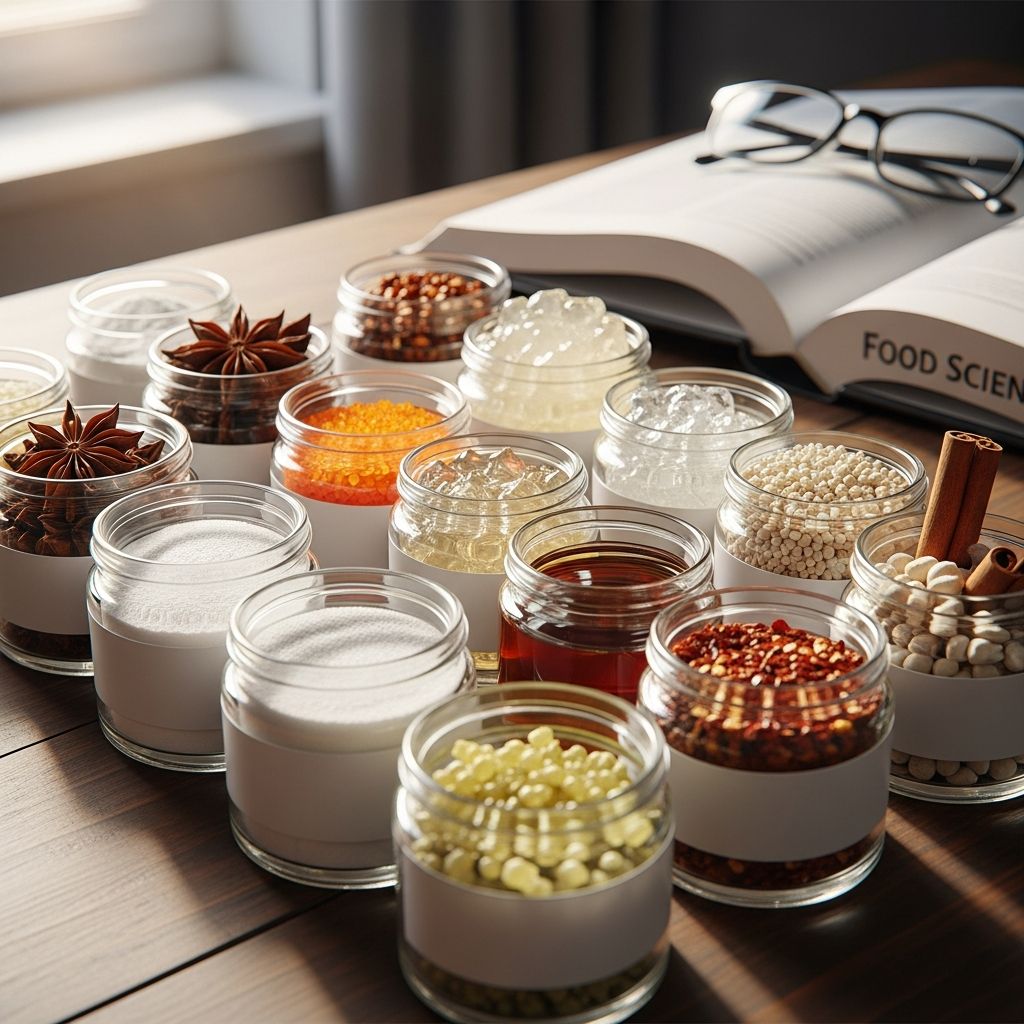
Food additives are substances added to food to preserve flavor, improve taste or appearance, or enhance nutritional value. They play a crucial role in maintaining food quality and safety during production, storage, and distribution.
Why Are Food Additives Used?
Food additives serve multiple essential functions in modern food production. They help prevent spoilage from bacteria, mold, or yeast, extending shelf life and reducing food waste. Additives also maintain freshness, nutritional quality, and sensory attributes like color, flavor, and texture that might otherwise deteriorate during processing or storage.
For instance, preservatives inhibit microbial growth, while antioxidants prevent fats and oils from becoming rancid. Without these, many packaged foods would spoil quickly, leading to higher costs and waste.
- Preservation: Extends shelf life by inhibiting microorganisms.
- Enhancement: Improves color, flavor, and texture.
- Nutrition: Fortifies foods with vitamins and minerals.
- Processing Aid: Facilitates manufacturing, like emulsifiers blending oil and water.
Types of Food Additives
Food additives are categorized by function. Common types include preservatives, colors, flavors, sweeteners, emulsifiers, stabilizers, and more. Over 3,000 additives are used globally, derived from natural sources like plants and animals or synthesized chemically.
The following table outlines major categories with examples:
| Type | Function | Examples |
|---|---|---|
| Preservatives | Inhibit spoilage | Sodium nitrite, propylparaben |
| Antioxidants | Prevent rancidity | Vitamin E (dl-alpha-tocopherol), ascorbic acid |
| Colors | Enhance appearance | Curcumin (yellow), beet red |
| Flavors/Enhancers | Improve taste | Monosodium glutamate (MSG), disodium guanylate |
| Sweeteners | Add sweetness | High-fructose corn syrup, aspartame |
| Thickeners/Stabilizers | Improve texture | Xanthan gum, guar gum, pectin |
| Emulsifiers | Blend ingredients | Lecithins, propylene glycol esters |
| Anti-caking Agents | Prevent clumping | Mannitol, microcrystalline cellulose |
Preservatives
Preservatives like sodium nitrite (in cured meats) prevent bacterial growth, such as Clostridium botulinum that causes botulism. Others, like propylparaben, inhibit mold in baked goods.
Artificial Colors and Flavors
Colors such as beetroot red or synthetic Green S restore natural hues lost in processing. Flavor enhancers like MSG amplify umami taste in savory foods.
Thickeners and Stabilizers
Gums like guar, xanthan, and gum arabic thicken sauces and stabilize emulsions in dressings. They are especially useful in gluten-free products.
Sweeteners and Humectants
High-fructose corn syrup sweetens beverages, while humectants like glycerol retain moisture in confections.
How Are Food Additives Regulated?
Food additives undergo rigorous safety testing before approval. In the U.S., the FDA maintains a Substances Added to Food list, evaluating additives via toxicological studies for safe intake levels, known as Acceptable Daily Intake (ADI).
The WHO and Codex Alimentarius set international standards, ensuring additives are safe when used as intended. In Europe, E numbers (e.g., E621 for MSG) identify approved additives.
Regulators consider factors like metabolism, long-term effects, and vulnerable populations (e.g., children). Additives must demonstrate “reasonable certainty of no harm” from lifetime exposure.
- Pre-market Approval: Extensive animal and human studies.
- GRAS Status: Generally Recognized as Safe for common substances like salt or vinegar.
- Post-market Surveillance: Ongoing monitoring for adverse effects.
Related Stories



Food Additive Safety
Approved additives are safe at regulated levels. For example, preservatives like sodium nitrite are used in tiny amounts (ppm) far below toxic thresholds. WHO notes thousands of additives are vetted globally.
Concerns arise with overconsumption or sensitivities. Studies link some artificial colors to hyperactivity in children, prompting warnings in the EU. Antioxidants like BHA/BHT are limited to prevent excess intake.
Natural vs. synthetic: Both are tested equally; “natural” doesn’t mean safer (e.g., some plant extracts are potent allergens).
Food Additives on the Label
U.S. labels list additives by common or chemical name, not function (e.g., “calcium propionate” not “preservative”). E numbers appear in Europe and some imports.
Scan ingredient lists: Additives follow main ingredients in descending order. Color additives may be grouped as “artificial colors.” Clean-label trends use natural alternatives like beet juice.
- Tip: Look for “no artificial additives” claims.
- Allergens: Additives like sulfites must be declared.
Common Food Additives to Know
Here are frequently used additives:
- MSG (E621): Flavor enhancer in soups, snacks.
- Sodium Nitrite: Preserves cured meats.
- Xanthan Gum: Thickener in dressings.
- Ascorbic Acid (Vitamin C): Antioxidant in juices.
- Carrageenan: Stabilizer in dairy.
Frequently Asked Questions (FAQs)
Are food additives safe for everyone?
Approved additives are safe for most at regulated levels, but those with sensitivities (e.g., to sulfites or MSG) should avoid them. Consult a doctor for allergies.
What do E numbers mean?
E numbers are EU codes for approved additives (e.g., E300 for ascorbic acid), ensuring standardization across Europe.
Can I avoid food additives entirely?
Fresh, whole foods have fewer additives. Processed foods inevitably contain them for safety and quality.
Are natural additives better than synthetic?
Not necessarily; both undergo the same safety tests. Natural ones can cause reactions too.
How does the FDA approve additives?
Via petitions with safety data; GRAS for history-of-use substances.
Choosing Foods with Additives
Opt for minimally processed foods. Read labels, prioritize whole ingredients, and balance diet. Additives enable affordable, safe food supply but moderation is key.
In summary, food additives are vital for safe, appealing food when regulated properly. Informed consumers can navigate labels effectively.
References
- Substances Added to Food (formerly EAFUS) — U.S. Food and Drug Administration (FDA). 2023-10-01. https://www.fda.gov/food/food-additives-petitions/food-additive-status-list
- Food additives — Food Standards Agency (FSA), UK Government. 2024-05-15. https://www.food.gov.uk/safety-hygiene/food-additives
- Food additives — World Health Organization (WHO). 2023-12-20. https://www.who.int/news-room/fact-sheets/detail/food-additives
- Food additives — Better Health Channel, Victoria Government (.gov.au). 2024-02-10. https://www.betterhealth.vic.gov.au/health/conditionsandtreatments/food-additives
- Food Additives and E Numbers — DermNet NZ (academic-affiliated). 2023-11-05. https://dermnetnz.org/topics/food-additives-and-e-numbers
- 12 Common Food Additives — Healthline (citing FDA/WHO). 2024-01-12. https://www.healthline.com/nutrition/common-food-additives
Similar Articles








Read full bio of Sneha Tete