What Are Proteins? Definition, Types & Examples
Understanding proteins: The essential molecules that power every function in your body.
What Are Proteins?
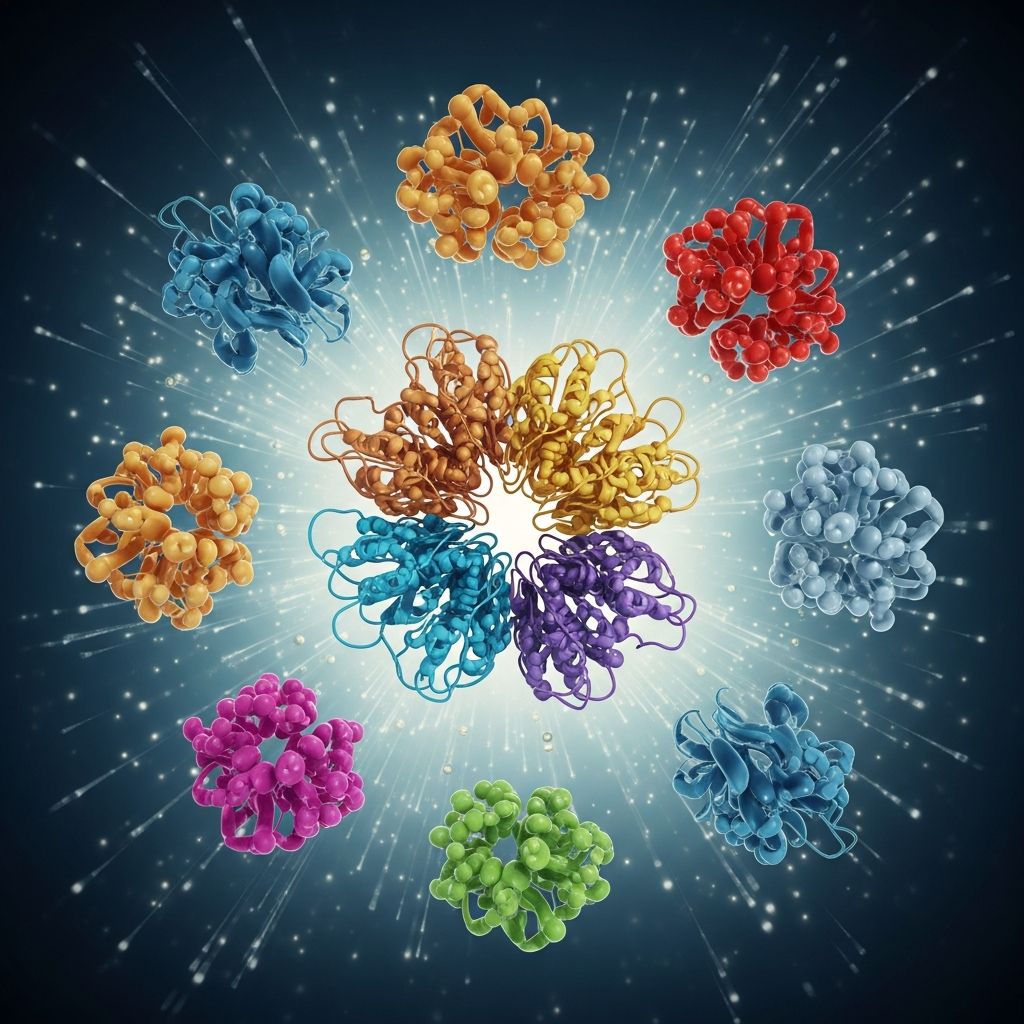
Proteins are complex molecules that form the foundation of every living cell in your body. They are made up of amino acids, which are organic compounds that your body uses to construct and maintain proteins. Essentially, proteins are chains of amino acids that work tirelessly to support nearly every biological function you can imagine. From helping you flex your muscles to breaking down nutrients in the foods you eat, proteins are constantly working behind the scenes to keep your body functioning optimally.
When you consume protein-rich foods like beans, salmon, eggs, or chicken, your digestive system breaks down that protein into its component parts—amino acids. Your body then uses those amino acids to build new proteins that perform all sorts of crucial jobs. This process is part of your metabolism and happens continuously throughout your day.
Understanding Amino Acids
At the heart of proteins are amino acids. There are 20 different amino acids that your body needs, and each one has its own specific functions and roles. Your body can produce 11 of these amino acids on its own, but the remaining nine—known as essential amino acids—must come from the foods you eat. This is why it’s crucial to maintain a varied and balanced diet.
Different amino acids serve different purposes in your body. For example, the amino acid histidine helps make histamine, which plays a major role in your body’s immune system response. The amino acid valine is involved in muscle growth, tissue regeneration, and energy production. Tryptophan is responsible for making serotonin, the brain chemical that regulates your mood, appetite, and sleep patterns. Understanding these different amino acids helps you appreciate just how important diverse protein sources are for your health.
The Role of Proteins in Your Body
Proteins serve multiple essential functions throughout your body. They help form muscle tissue, transport vital nutrients, and build and repair tissue that’s been damaged or broken down. Proteins also send signals between cells, support digestion, and protect you from harmful pathogens and disease. Additionally, proteins play a crucial role in maintaining brain health and can help slow cognitive decline as you age.
Every cell in your body contains proteins—in fact, any given cell holds several thousands of proteins. Each protein in a cell does a specific job to support your body’s needs. Proteins go by different names depending on what they do and fall into general categories according to their function. Some are structural proteins that provide support, while others are enzymes that speed up chemical reactions, and still others are hormones that regulate various body processes.
Complete Versus Incomplete Proteins
When it comes to dietary protein, there’s an important distinction between complete and incomplete proteins. A complete protein contains all nine essential amino acids that your bodies can’t produce on their own. These proteins contain all the amino acids in consistent amounts and in perfect proportion in terms of biological function. Complete protein sources include animal-based foods such as chicken, fish, eggs, dairy products, and whey.
Incomplete proteins, by contrast, contain some but not all of the essential amino acids, and in varying amounts. Many plant-based sources of protein fall into this category, including beans, lentils, nuts, seeds, and whole grains. However, this doesn’t mean vegetarian and vegan diets are lacking in protein quality. By mixing and matching different incomplete protein sources throughout the day, you can obtain all nine essential amino acids your body requires.
Protein Structure and Its Importance
Proteins have four levels of structure, ranging from simple to complex. These structural levels are critical because any changes to a protein’s expected structure can lead to significant health problems. Your body relies on proteins adopting a certain structure to do their jobs as they should. When something goes wrong with a protein structure—even a single amino acid that’s different than it should be—the effects on your body can be profound.
Genetic disorders can affect protein structure or function, leading to conditions like sickle cell disease and Alzheimer’s disease. This demonstrates why protein synthesis—the process of making new proteins—is so vital. Protein synthesis happens constantly inside cells all over your body. Understanding protein structure helps explain why maintaining adequate protein intake is so important for preventing age-related decline and maintaining optimal health.
Why You Need Continuous Protein Intake
Proteins don’t last your entire life. Over time, they naturally break down, and your body needs new ones to keep up with your body’s demands. This is why you need a constant intake of protein from the foods you eat so your body has new building blocks for protein synthesis. You can think of cells in your body like tiny factories with equipment for building proteins. Each cell contains the same basic equipment needed to manufacture proteins from the amino acids you consume.
As you age, this process becomes even more important. Research shows that when people consume an adequate amount of protein as they age, it can actually protect brain health and slow cognitive decline that occurs naturally. This makes protein intake particularly important for older adults who want to maintain their physical strength and mental sharpness.
How Much Protein Do You Need?
The amount of protein you need depends on several factors, including your body weight, age, and activity level. A general recommendation for healthy adults is to eat at least 0.8 grams of protein per kilogram of body weight each day. To calculate this, take your weight in pounds, divide it by 2.2, and then multiply that number by 0.8. For example, a 150-pound person would need approximately 54 grams of protein per day.
However, protein needs can vary significantly. Exercise enthusiasts and older adults may need more protein because it helps build and repair muscle. Depending on your overall health and how active you are, protein should make up about 10 to 35 percent of your daily calories. If your diet skews more toward vegetables and less toward meat, you can still meet your protein needs by consuming a wide variety of plant foods such as legumes, lentils, nuts, seeds, and whole grains on a daily basis.
Best Sources of Protein
Finding quality protein sources is easier than you might think. Excellent options include:
- Chicken breast: One of the most popular sources of protein with a favorable taste and great nutritional profile, providing protein, niacin, selenium, phosphorus, and vitamins B6 and B12
- Eggs: A complete protein containing about 6 to 8 grams of protein per egg, plus B vitamins, vitamin D, choline, and omega-3 fatty acids
- Fish and salmon: Excellent sources of protein with beneficial omega-3 fatty acids
- Beans and legumes: Plant-based protein sources that also provide fiber and essential minerals
- Nuts and seeds: Protein-rich foods that offer healthy fats and additional nutrients
- Cheese and dairy products: Complete protein sources containing all essential amino acids
When choosing chicken, be sure to avoid the skin and visible fat, as these provide extra calories in the form of saturated fat, which can lead to elevated cholesterol values. Focus on lean cuts to maximize the nutritional benefits while minimizing unhealthy fat intake.
Plant-Based Protein Options
For people who don’t eat much meat or no meat at all, plant-based proteins offer substantial benefits. While many plant-based sources of protein are incomplete proteins, combining different plant proteins throughout the day allows you to get all the amino acids your body needs. These foods also provide additional benefits in the form of vitamins, minerals, and fiber. Consider these plant-based proteins and their protein content:
- Lentils: High protein, fiber, and essential minerals
- Black beans: Complete protein when combined with grains, rich in fiber
- Chickpeas: Versatile legume with good protein content
- Almonds: Nutrient-dense nuts with protein and healthy fats
- Quinoa: Unique grain that contains all nine essential amino acids
- Hemp seeds: Complete plant-based protein source
- Tofu and tempeh: Soy-based foods with complete amino acid profiles
Protein and Overall Health Benefits
Beyond muscle building, protein offers numerous health benefits. Adequate protein intake can help you feel fuller longer, boosting satiety and potentially supporting weight management goals. Protein also boosts your metabolism and strengthens your immune function, helping your body fight off illness and disease. For aging adults, maintaining adequate protein intake helps preserve muscle mass, support bone health, and protect cognitive function.
The relationship between protein and brain health is particularly important. As you age, your brain naturally experiences some cognitive decline, but research indicates that consuming adequate protein can help slow this process. This makes protein not just important for your muscles, but for keeping your mind sharp and focused as you grow older.
Meeting Your Daily Protein Goals
To ensure you’re getting enough protein throughout your day, it’s important to plan what your protein will be for each meal. You don’t need to eat complete proteins at every meal to get the body-boosting effects. Instead, the goal should be to get a balance of those essential amino acids over the course of the day. If you eat a varied, healthy diet with a range of protein-filled foods, you probably don’t need to stress too much about whether each individual food is a complete protein.
Consider mixing animal and plant-based sources, combining incomplete proteins to create complete amino acid profiles, and varying your choices throughout the week. This approach ensures you get the full spectrum of nutrients along with your protein, including vitamins, minerals, and fiber.
Frequently Asked Questions
Q: What exactly is a complete protein?
A: A complete protein is a food that contains all nine essential amino acids that your body cannot produce on its own. Animal-based sources like eggs, chicken, fish, and dairy are typically complete proteins, as are some plant-based options like quinoa and soy products.
Q: Can I get enough protein on a vegetarian or vegan diet?
A: Yes, absolutely. By consuming a wide variety of plant foods such as legumes, lentils, nuts, seeds, and whole grains throughout the day, you can obtain all the amino acids your body needs. Combining different incomplete proteins creates a complete amino acid profile.
Q: How do I calculate how much protein I need?
A: Take your weight in pounds, divide it by 2.2 to convert to kilograms, then multiply by 0.8. This gives you your daily protein requirement in grams. Individual needs may vary based on age, activity level, and health status.
Q: Is it possible to eat too much protein?
A: While protein is essential, excessive amounts can put strain on your kidneys, particularly if they’re not functioning optimally. Follow the general recommendation of 0.8 grams per kilogram of body weight, adjusting based on your activity level and age.
Q: Why is protein especially important as I age?
A: Adequate protein intake helps maintain muscle mass, supports bone health, and protects brain health by slowing age-related cognitive decline. Older adults may benefit from consuming slightly more protein than younger adults.
Q: What are the best protein sources for someone concerned about cholesterol?
A: Eggs are actually a good choice despite cholesterol concerns, as they’re nutrient-dense. Also consider lean chicken breast without skin, fish rich in omega-3s, plant-based proteins, and low-fat dairy products.
References
- What Are Proteins? Definition, Types & Examples — Cleveland Clinic. 2025. https://health.clevelandclinic.org/health/body/proteins
- Complete vs. Incomplete Proteins and Examples — Cleveland Clinic. 2024. https://health.clevelandclinic.org/do-i-need-to-worry-about-eating-complete-proteins
- How Much Protein Do You Need? And How To Get It — Cleveland Clinic. 2024. https://health.clevelandclinic.org/how-much-protein-you-need
- How Protein Can Help us Stay Sharp as we Age — Cleveland Clinic News Service. October 2025. https://newsroom.clevelandclinic.org/2025/10/08/how-protein-can-help-us-stay-sharp-as-we-age
- How Much Protein Do you Really Need? — Cleveland Clinic Newsroom. December 2024. https://newsroom.clevelandclinic.org/2024/12/16/how-much-protein-do-you-really-need
- Plate Debate: What Are the Best and Worst Sources of Protein? — Cleveland Clinic. 2024. https://health.clevelandclinic.org/best-and-worst-sources-of-protein
- Is It Possible To Eat Too Much Protein? — Cleveland Clinic. 2024. https://health.clevelandclinic.org/can-you-eat-too-much-protein
Similar Articles





Read full bio of Sneha Tete