What Causes Acne: Understanding Hormones, Bacteria, and Diet
Discover the multifactorial causes of acne including hormones, bacteria, inflammation, and dietary factors.
What Causes Acne
Acne is a complex skin condition that results from multiple interconnected factors rather than a single cause. Understanding what triggers acne development is essential for effective prevention and treatment. While acne is most prevalent in adolescents due to hormonal changes during puberty, it can affect people of all ages and all races. Although acne typically becomes less problematic after age 25, approximately 15% of women and 5% of men continue to experience acne into adulthood. Some individuals may even develop acne for the first time during their adult years.
The Role of Hormones in Acne Development
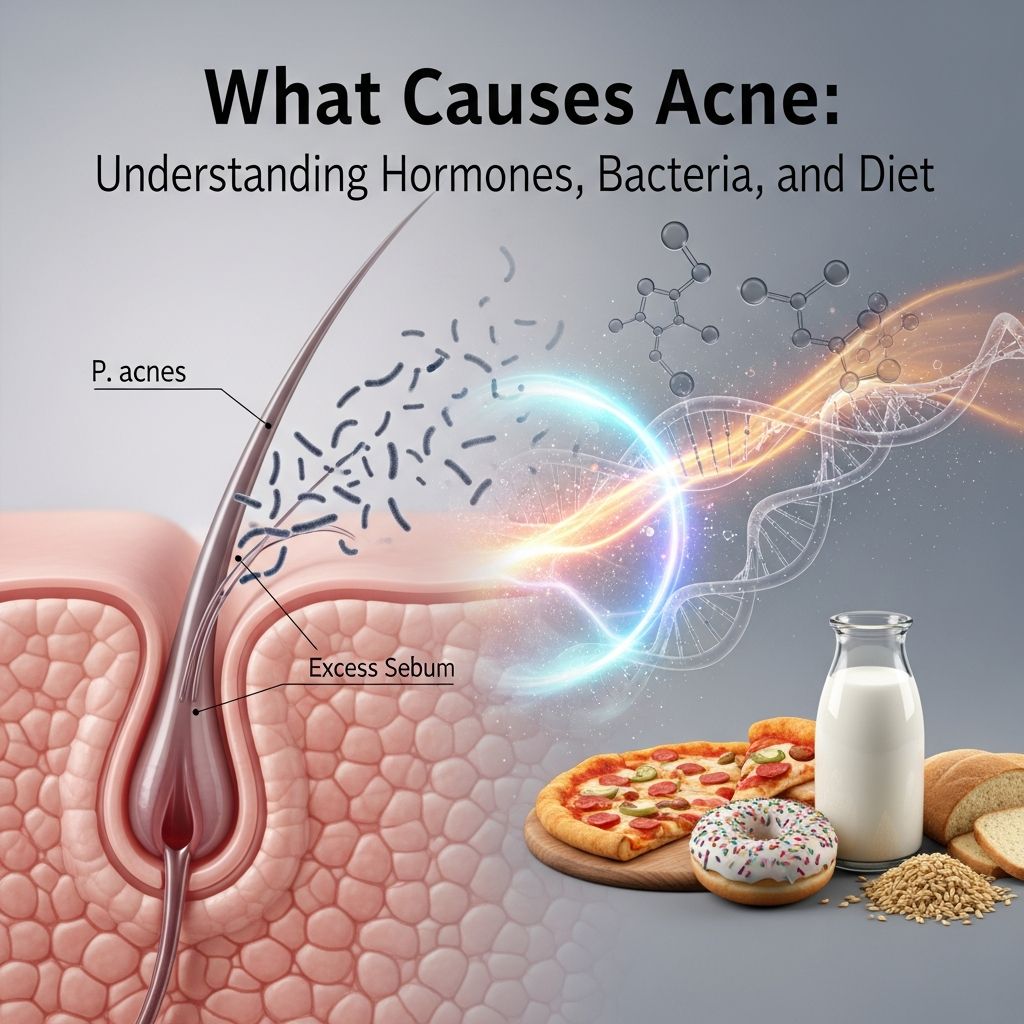
Hormonal changes are one of the primary drivers of acne formation. After puberty, there are significantly higher levels of sex hormones compared to younger children. These hormonal fluctuations trigger a cascade of physiological changes in the skin that promote acne development. Androgens (male hormones) play a particularly important role by stimulating increased sebum production and triggering keratinization, which is the abnormal scaling of cells lining hair follicles.
The relationship between hormones and acne extends beyond puberty. In adult women, hormonal fluctuations related to pregnancy, menstrual cycles, and conditions such as polycystic ovarian syndrome (PCOS) can trigger or exacerbate acne. Additionally, certain medications containing hormonal components may increase acne risk. For some people, stress can also contribute to adult acne onset by influencing hormonal balance.
Sebum Production and Follicle Blockage
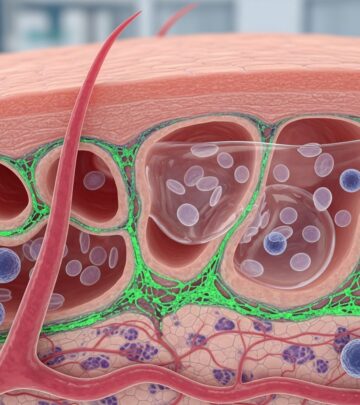
Increased sebum (oil) production is a fundamental factor in acne development. Sebum is a naturally occurring oil produced by sebaceous glands attached to hair follicles. When excess sebum combines with dead skin cells and debris, it can block the sebaceous duct and hair follicle, forming comedones—the hallmark lesions of acne. This blockage leads to inflammation and the characteristic appearance of blackheads and whiteheads.
The wall of the follicle may rupture under pressure, further increasing the inflammatory response. This rupture releases follicular contents into surrounding skin tissue, triggering deeper inflammation and the formation of more severe acne lesions such as papules, pustules, and nodules. Understanding this mechanism explains why treatments that reduce sebum production or promote cell turnover are effective in managing acne.
Bacterial Colonization and Inflammation
Bacteria contribute significantly to the inflammatory nature of acne, although acne itself is not considered an infectious disease. At puberty, the number of bacteria on the skin surface increases, including the colonization of Cutibacterium acnes (formerly known as Propionibacterium acnes). The number and activity of C. acnes bacteria varies according to oxygen supply, nutrient supply, and the skin’s pH level.
Importantly, the severity of acne does not directly depend on the number of bacteria on the skin surface or within the sebaceous ducts. Instead, some acne lesions are colonized by C. acnes while others are not. However, when present, these bacteria can produce active enzymes and inflammatory mediators that contribute to acne activity. The lipases produced by C. acnes can convert triglycerides in sebum into free fatty acids, which increases bacterial clumping in sebaceous ducts and promotes further colonization.
The inflammatory mediators produced by C. acnes bacteria penetrate surrounding skin tissue, causing inflammation that manifests as redness and swelling. Antimicrobial treatments such as topical benzoyl peroxide and oral tetracyclines work by suppressing bacterial growth and reducing this inflammatory response.
The Impact of Diet on Acne
Research suggests a link between diet and acne, although studying this relationship is challenging. Evidence indicates that acne is less common in populations consuming diets with lower glycemic indices, such as indigenous peoples from Kitava and Papua New Guinea, the Ache people of Paraguay, Inuit populations, and rural residents of Kenya, Zambia, and Bantu regions. Notably, these populations also tend to reach sexual maturity at later ages than individuals in urban areas where higher glycemic index foods predominate. Early puberty is associated with earlier acne onset and more severe manifestations that typically peak between ages 16 and 18.
Glycemic Index and Insulin Response
Foods with a high glycemic index cause rapid spikes in blood sugar levels, which triggers increased insulin production. When we consume foods such as white bread and baked goods, our blood sugar rises sharply, stimulating our body to produce more insulin. Insulin, in turn, induces male hormones (androgens), glucocorticoids, and growth factors. These hormonal changes provoke keratinization of hair follicles and increased sebum production—both key factors in acne development.
Several studies, though criticized for their methodological quality, have demonstrated benefits from low-glycemic index diets in reducing acne. The proposed mechanisms relate to these foods’ effects on insulin and insulin-like growth factor-1 (IGF-1). By consuming foods with lower glycemic indices and including whole grains, fresh fruits, and vegetables, individuals may experience less insulin stimulation and consequently reduced acne severity.
The Role of Dairy Products
Although cow’s milk has a relatively low glycemic index, it contains androgens, estrogen, progesterone, and glucocorticoids—all hormones that can provoke keratinization and sebum production. Additionally, milk contains amino acids such as arginine, leucine, and phenylalanine that stimulate insulin production when combined with carbohydrates. Other milk components that might contribute to comedone formation include whey proteins and iodine.
Reducing dairy intake, particularly cow’s milk, may help some individuals with acne-prone skin. However, responses vary significantly between individuals, and eliminating dairy does not guarantee acne improvement for everyone.
Other Dietary Considerations
Chocolate contains caffeine, theobromine, and serotonin, compounds that may increase insulin production and potentially worsen acne. Regarding fats, while fatty acids are necessary for sebum formation, specific types have different effects. Some monounsaturated fatty acids, such as sapienic acid and certain vegetable oils, may increase sebum production. Conversely, essential fatty acids including linoleic, linolenic, and gamma-linolenic acid may unblock follicles and reduce sebum production.
Many individuals with acne report improvements in their skin when following a low-glycemic index diet while increasing consumption of whole grains, fresh fruits and vegetables, fish, olive oil, and garlic, and moderating wine consumption. Reducing intake of high glycemic index foods such as sugar, biscuits, cakes, ice creams, and bottled drinks may also be beneficial, as may reducing meat consumption and amino acid supplements.
Genetic and Familial Factors
A familial tendency toward acne plays a significant role in determining individual susceptibility. Some people have particularly severe acne, which may be attributed to genetic predisposition. Individuals with family members who experienced severe acne are more likely to develop acne themselves and may have more difficulty managing the condition. This genetic component interacts with hormonal and environmental factors to determine acne severity and persistence.
Why Acne Eventually Resolves
Despite understanding many factors that cause acne, dermatologists still do not fully understand why acne eventually clears. Resolution does not always coincide with reduced sebum production or decreased bacterial numbers on the skin. The clearing of acne may relate to changes within the sebaceous glands themselves or to shifts in immune system activity. This gap in understanding highlights the complexity of acne pathophysiology and suggests that additional factors beyond those currently identified contribute to acne resolution.
Key Factors Contributing to Acne: Summary Table
| Contributing Factor | Mechanism of Action | Impact on Acne |
|---|---|---|
| Hormonal Changes | Increased androgens stimulate sebum production and follicle keratinization | Primary trigger for puberty-related acne |
| Sebum Overproduction | Excess oil clogs pores and hair follicles | Creates environment for comedone formation |
| Bacterial Colonization | C. acnes produces inflammatory mediators and enzymes | Causes inflammation and pustule formation |
| High Glycemic Index Foods | Spikes insulin and IGF-1 levels | Increases sebum production and follicle changes |
| Dairy Products | Contains hormones and amino acids affecting insulin | May trigger or worsen acne in susceptible individuals |
| Genetic Predisposition | Family history influences sebaceous gland activity | Determines individual susceptibility and severity |
Practical Recommendations for Acne Management
While changing diet does not always help everyone with acne, certain lifestyle modifications may reduce acne severity:
- Choose oil-free cosmetics and skincare products
- Wash affected areas twice daily with mild soap and water
- Avoid harsh skincare products that may irritate skin
- Remove makeup at the end of each day with a gentle cleanser
- Reduce consumption of high glycemic index foods such as white bread, sugary snacks, and baked goods
- Limit dairy product intake, particularly cow’s milk
- Increase consumption of whole grains, fresh fruits, vegetables, and fish
- Use olive oil and garlic in cooking while moderating alcohol consumption
- Avoid picking or squeezing acne lesions, which can increase inflammation and scarring risk
- Quit smoking, as this may reduce acne severity and scarring risk
- Seek medical help if acne is persistent, severe, or if home management strategies prove ineffective
Frequently Asked Questions About Acne Causes
Q: At what age does acne typically start?
A: Acne most commonly begins during puberty when hormonal changes increase sebum production. However, acne can develop at any age and may even start for the first time during adulthood.
Q: Does acne mean I have poor hygiene?
A: No. Acne is not caused by poor hygiene or dirt. It results from hormonal and biological factors including sebum production, bacterial colonization, and follicle blockage. Excessive washing or harsh scrubbing can actually irritate skin and worsen acne.
Q: Is acne contagious?
A: No, acne is not contagious. Although bacteria contribute to acne inflammation, the condition results from multiple factors including hormones, genetics, and skin physiology rather than infectious disease transmission.
Q: Can diet alone cure my acne?
A: Diet modification may help reduce acne severity in some individuals, but dietary changes do not always produce improvement. A comprehensive approach addressing hormonal factors, skincare habits, and potentially medical treatment is often necessary for effective acne management.
Q: Why does acne persist into adulthood?
A: While most people experience improvement after age 25, approximately 15% of women and 5% of men continue with acne into adulthood. Adult acne may result from ongoing hormonal fluctuations, genetic predisposition, stress, or conditions such as polycystic ovarian syndrome.
Q: Does chocolate really cause acne?
A: Chocolate contains compounds like caffeine and theobromine that may increase insulin production, potentially worsening acne in susceptible individuals. However, responses vary significantly between people, and chocolate is not a universal acne trigger.
Q: Should I eliminate all dairy to treat acne?
A: Not necessarily. While some individuals benefit from reducing dairy intake, it does not help everyone. If you suspect dairy contributes to your acne, consider reducing consumption and monitoring your skin’s response, but consult a healthcare provider before making significant dietary changes.
References
- What causes acne? — DermNet New Zealand. Accessed 2026-01-29. https://dermnetnz.org/topics/what-causes-acne
- Bacteria in acne — DermNet New Zealand. Accessed 2026-01-29. https://dermnetnz.org/topics/bacteria-in-acne
- Acne Vulgaris: Features, Types, and Treatments — DermNet New Zealand. Accessed 2026-01-29. https://dermnetnz.org/topics/acne-vulgaris
- Comedonal acne — DermNet New Zealand. Accessed 2026-01-29. https://dermnetnz.org/topics/comedonal-acne
- Acne Scarring — DermNet New Zealand. Accessed 2026-01-29. https://dermnetnz.org/topics/acne-scarring
- Adult acne — DermNet New Zealand. Accessed 2026-01-29. https://dermnetnz.org/topics/adult-acne
Similar Articles



Read full bio of medha deb