What Causes Warts: Understanding HPV and Prevention
Discover what causes warts, how HPV spreads, and effective prevention strategies.
What Causes Warts: A Comprehensive Guide to Understanding HPV
Warts are common skin growths that affect millions of people worldwide. Despite their prevalence, many people don’t fully understand what causes them or how they develop. The answer lies in a virus called the human papillomavirus, or HPV. Understanding the causes of warts is essential for prevention and appropriate treatment. This guide explores everything you need to know about wart development, transmission, and risk factors.
The Human Papillomavirus: The Root Cause of Warts
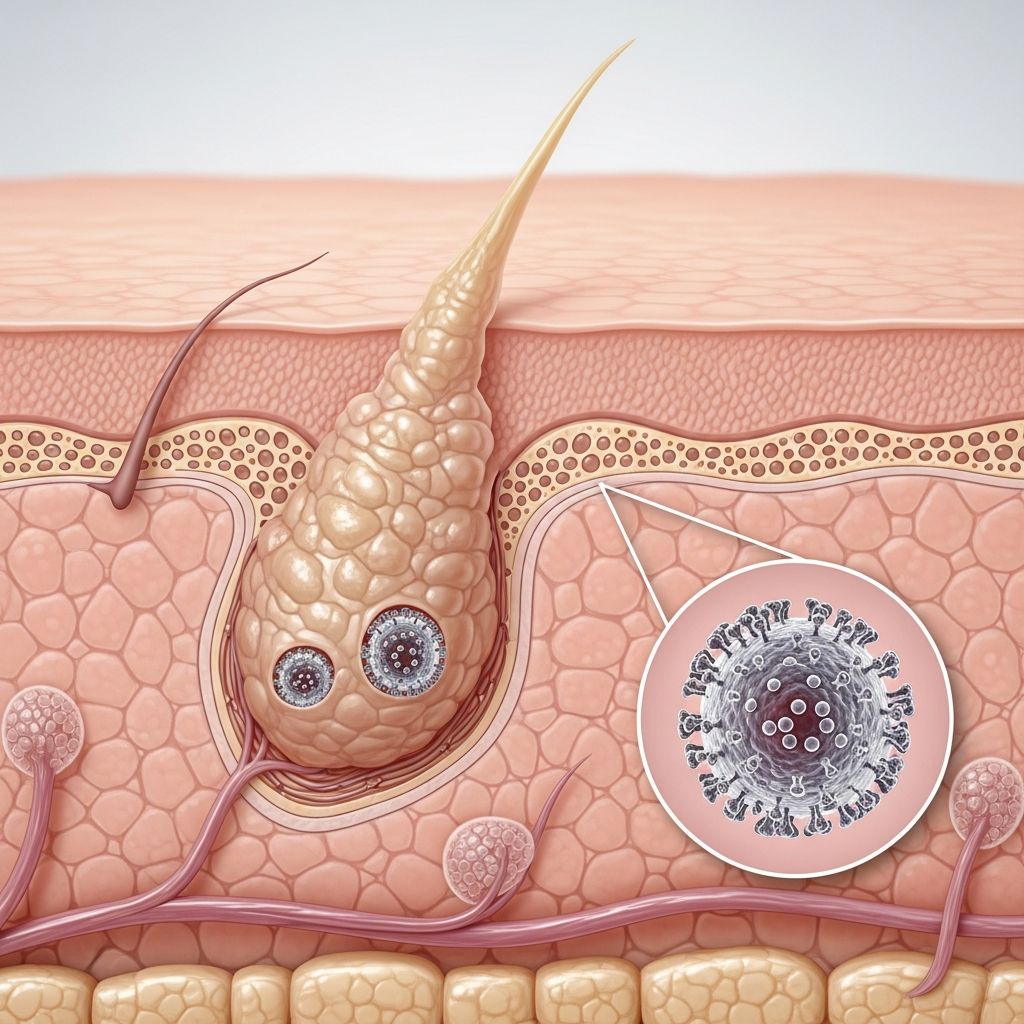
Warts are caused exclusively by the human papillomavirus (HPV), a common virus that affects the skin and mucous membranes. Over 100 different types of HPV exist, but only certain strains cause warts on specific areas of the body. The virus works by infecting cells in the outer layer of skin and causing them to grow abnormally and rapidly.
When HPV infects skin cells, it triggers excessive production of keratin, a hard protein found on the top layer of skin. This abnormal cell growth results in the characteristic thickened, bumpy appearance of a wart. The specific appearance and characteristics of a wart depend largely on which HPV strain is responsible for the infection and where on the body the infection occurs.
It’s important to understand that not all HPV strains cause warts. In fact, certain high-risk HPV strains are associated with serious health conditions like cervical cancer, but these strains do not cause the common warts that appear on hands and feet. This means that having common skin warts does not indicate an increased risk of developing cancer.
How Warts Develop: The Infection Process
Warts don’t appear instantly after HPV exposure. The development process takes time and involves several stages. It can take 2 to 6 months for a wart to develop after initial HPV infection. This delayed appearance means you may not notice the infection for several months after exposure.
HPV probably enters the skin through areas of minimal trauma, such as small cuts, scrapes, or breaks in the skin. The virus is particularly likely to establish infection in moist, soft, or injured skin. Once the virus penetrates the skin barrier, it infects the epidermal cells and causes them to proliferate abnormally, leading to the visible wart formation.
The location of infection determines the type of wart that develops. The hands and feet are the most common sites for wart development, though warts can technically appear on any area of skin. Plantar warts develop on the soles of feet, common warts typically appear on hands and fingers, and flat warts can develop on various body surfaces.
Routes of Transmission: How Warts Spread
Warts are contagious because HPV is contagious, and the virus can spread through several different routes. Understanding these transmission pathways helps you take preventive measures to protect yourself and others.
Direct Contact: The most common transmission route is direct skin-to-skin contact with someone who has a wart. This includes touching another person’s wart or having direct contact with infected skin. People with warts on their hands and feet are particularly likely to spread the virus through casual contact.
Related Stories



Indirect Contact: HPV can also spread through indirect contact with contaminated objects. Items like towels, razors, nail files, washcloths, and other personal care items can carry the virus if they’ve been in contact with a wart. Even shared surfaces in communal areas, such as public showers and pools, can transmit the virus.
Self-Inoculation: You can also spread warts to other parts of your own body through certain behaviors. Scratching or biting a wart, sucking your fingers, biting your fingernails when warts are present, and shaving areas with warts can all cause the virus to spread to new locations on your body.
Breaks in the Skin: The virus usually spreads through breaks in the skin, such as hangnails or scrapes. Biting your nails can create small wounds that make it easier for HPV to establish infection, which is why warts are common around the nail beds and fingers of people who bite their nails.
Risk Factors for Developing Warts
While HPV exposure is necessary for wart development, not everyone who comes into contact with the virus develops warts. Several risk factors increase your likelihood of developing warts:
- Age: Children and young adults are more prone to developing common warts than older adults. This increased susceptibility may be related to less developed immune systems or more frequent minor skin injuries.
- Immune System Status: People with weakened or suppressed immune systems have significantly higher rates of wart development. This includes individuals with HIV/AIDS, organ transplant recipients, and those undergoing immunosuppressive therapy. Studies show that up to 90% of immunosuppressed renal transplant recipients develop warts within 5 years or longer after transplantation.
- Nail Biting and Picking: The habit of biting nails or picking at hangnails increases wart risk on fingers and around the nail area. These behaviors create small wounds that allow HPV to more easily penetrate the skin.
- Occupational Exposure: Certain occupations increase wart risk. People who work with raw meat, such as butchers, have a higher risk for developing warts. The combination of skin contact with meat products and minor cuts from handling raw materials creates an ideal environment for HPV infection.
- Communal Shower Use: Regular use of communal showers and bathing areas increases wart exposure risk. These warm, moist environments are conducive to HPV transmission, especially for plantar warts.
- Damaged or Wet Skin: Having wet or damaged skin significantly increases infection risk. For example, people with cuts on their feet are more likely to develop plantar warts from visiting public swimming pools where they may be exposed to HPV.
Types of Warts and Their Causes
Different HPV strains cause different types of warts, each with distinct characteristics and typical locations:
| Wart Type | Common Location | HPV Strain | Characteristics |
|---|---|---|---|
| Common Warts | Hands, fingers, knees | Specific strains | Rough, bumpy surface; flesh-colored or slightly darker |
| Plantar Warts | Soles of feet | Specific strains | Flat or slightly raised; painful when walking |
| Flat Warts | Face, hands, legs | Specific strains | Small, smooth, slightly raised; often in clusters |
| Genital Warts | Genital area | Different strains | Transmissible through sexual contact; different from common warts |
It’s crucial to understand that different HPV strains cause different wart types, and not all warts can become genital warts. The strains that cause common skin warts are entirely different from those that cause genital warts. This means you cannot convert a hand wart into a genital wart.
The Role of Personal Immunity in Wart Development
An important factor in wart development is how your individual immune system responds to HPV exposure. Each person’s immune system responds to HPV differently, so not everyone who comes in contact with HPV develops warts. This explains why some people can be exposed to the virus multiple times without developing warts, while others develop them readily.
In immunocompetent people (those with healthy immune systems), warts are generally harmless and often resolve as a result of natural immunity within months or years. Your body’s immune system eventually recognizes and fights off the HPV infection, causing the wart to disappear without treatment. However, this natural resolution process can take considerable time, which is why many people choose to seek treatment for warts that are bothersome or concerning.
For immunocompromised individuals, the situation is different. Without a fully functioning immune system, the body struggles to clear HPV infections, leading to more persistent warts that are less likely to resolve spontaneously.
Why Warts Are Generally Not Dangerous
Warts are benign (noncancerous) growths that pose no serious health risk in most cases. While some HPV strains can cause serious health conditions, the strains that cause common skin warts do not increase cancer risk. This is an important distinction that reassures people with common warts.
Even genital warts, while requiring medical evaluation, carry a very low risk of cervical cancer. The high-risk HPV strains associated with cervical cancer are different from the strains that cause genital warts, which is why different screening protocols exist for cervical health.
However, warts can sometimes become problematic if they bleed, cause pain, become infected, or spread extensively. Additionally, many people find warts bothersome or embarrassing, which is a valid reason to seek removal.
Frequently Asked Questions About Wart Causes
Q: Can I get warts from animals or other non-human sources?
A: No. Warts are caused exclusively by human papillomavirus strains that infect humans. You cannot get warts from animals, plants, or other non-human sources.
Q: If I have one wart, am I more likely to develop more?
A: Having one wart indicates you’ve been infected with HPV, and you’re at risk of spreading the virus to other parts of your body through self-inoculation, especially if you scratch or pick at the wart. Maintaining good hygiene and avoiding behaviors that spread the virus can help prevent additional warts.
Q: How long will it take for a wart to appear after HPV exposure?
A: It typically takes 2 to 6 months for a wart to develop after initial HPV infection, though this timeline can vary among individuals.
Q: Are all warts caused by HPV?
A: Yes. All warts are caused by HPV infection. There is no other cause of warts, though various conditions can mimic the appearance of warts.
Q: Can warts spread through swimming pools?
A: Yes, warts can potentially spread through swimming pools, particularly plantar warts. The warm, moist environment and potential for skin-to-skin contact or contact with contaminated surfaces create conditions favorable for HPV transmission.
Q: Should I be concerned about common warts becoming cancerous?
A: No. Common warts caused by typical HPV strains do not increase cancer risk. Only certain high-risk HPV strains are associated with cancer, and these do not cause the common warts that appear on hands and feet.
Prevention Strategies
Understanding what causes warts helps you take effective prevention measures:
- Avoid walking barefoot in communal areas like public pools, showers, and locker rooms
- Protect cuts and scrapes with bandages, especially on hands and feet
- Don’t bite your nails or pick at hangnails, as these create entry points for the virus
- Avoid touching other people’s warts or sharing personal items like towels and razors
- Keep your skin clean and dry, as HPV spreads more easily on moist skin
- Maintain a strong immune system through proper nutrition, exercise, and sleep
- Use protective footwear in public bathing areas
When to Seek Medical Attention
While most warts are harmless, you should contact a healthcare provider if a wart causes pain, bleeds easily, changes appearance, spreads easily to other body parts, or returns after removal. Additionally, seek medical evaluation if you have many warts, have a weakened immune system, or if warts appear on the face, feet, or genitals. Healthcare providers can typically diagnose warts by visual examination, though in rare cases a skin biopsy may be needed to confirm diagnosis.
References
- Warts (non-genital) — National Center for Biotechnology Information (NCBI/PMC), National Institutes of Health. https://pmc.ncbi.nlm.nih.gov/articles/PMC4054795/
- Warts: How To Identify, Causes, Types, Treatment & Prevention — Cleveland Clinic. https://my.clevelandclinic.org/health/diseases/15045-warts
- Common warts – Symptoms and causes — Mayo Clinic. https://www.mayoclinic.org/diseases-conditions/common-warts/symptoms-causes/syc-20371125
- Is This Normal? Warts and All, a Q&A — UVA Health. https://www.uvahealth.com/healthy-balance/normal-warts-qa
- Warts: Causes, types, and treatments — Medical News Today. https://www.medicalnewstoday.com/articles/155039
Similar Articles








Read full bio of Sneha Tete