What Does Legally Blind Mean? Criteria, Causes, And Support
Discover the precise criteria for legal blindness, its implications for benefits, and how it differs from total blindness in everyday vision care.
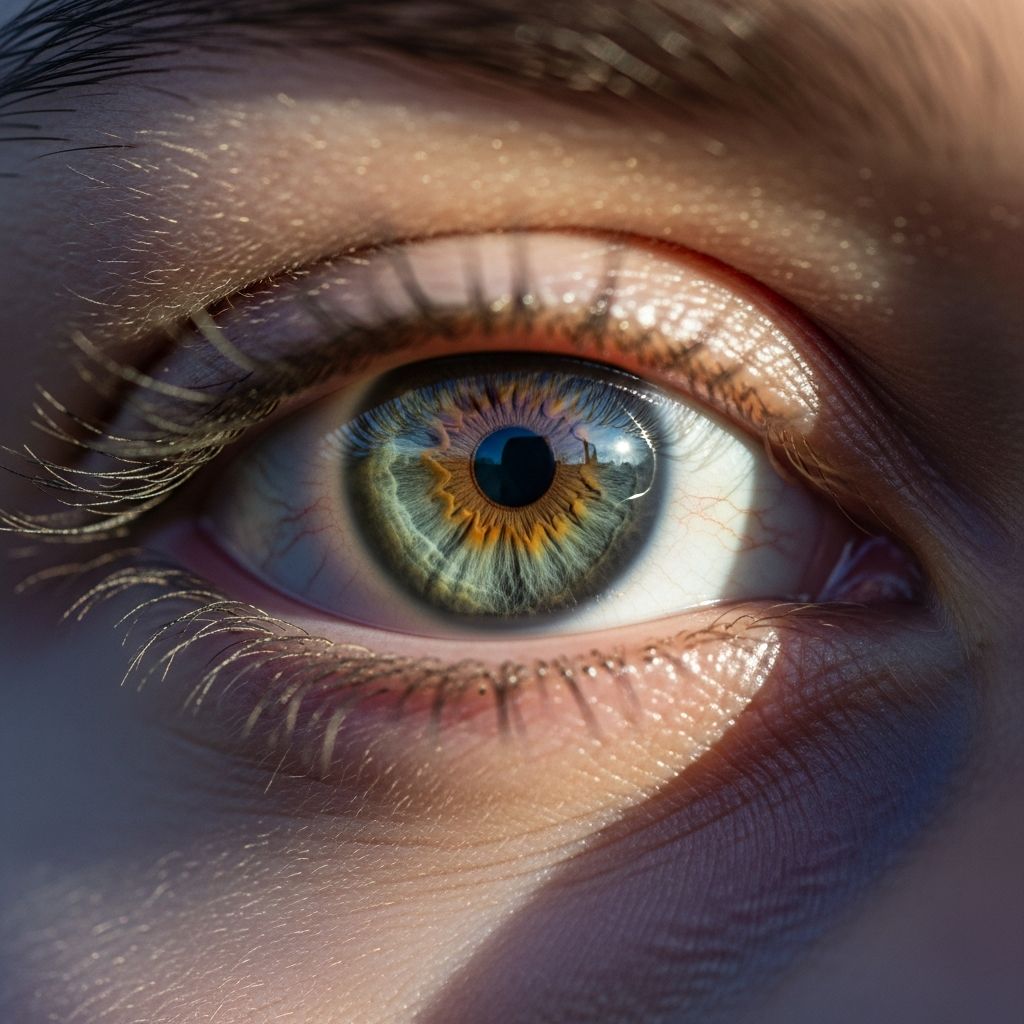
Legal blindness refers to a specific threshold of vision loss established by government agencies to determine eligibility for disability benefits and services, rather than a complete absence of sight. In the United States, this status applies when visual acuity in the better eye is 20/200 or worse with best correction, or when the visual field is limited to 20 degrees or less.
Understanding Visual Acuity and Field of Vision
Visual acuity measures the sharpness of vision, typically tested using a Snellen chart where 20/20 represents normal sight. A person with 20/200 acuity sees at 20 feet what someone with normal vision sees at 200 feet. This means they might only discern the largest letter on the chart even with glasses or contacts.
The visual field, meanwhile, is the full extent of what the eye can perceive without moving the head. A restriction to 20 degrees or narrower—compared to the normal 180 degrees—qualifies as legal blindness regardless of central acuity.
These criteria were formalized by the Social Security Administration (SSA) based on 1934 American Medical Association guidelines, with updates in 2007 to accommodate modern testing charts like ETDRS. Under these rules, failure to read the 20/100 line on newer charts equates to 20/200 or worse.
How Legal Blindness Differs from Total Blindness
Unlike total blindness, where no light is perceived (affecting only about 15% of those with severe vision issues), legal blindness allows some functional vision. Most legally blind individuals can detect light, shapes, or motion but struggle with detailed tasks like reading fine print or recognizing faces at distance.
- Legal blindness: Partial sight remains, enabling navigation with aids.
- Total blindness: No light perception (NLP), requiring full non-visual adaptations.
This distinction is crucial, as it affects daily life strategies and available supports.
Criteria Across Testing Methods
| Test Type | Legal Blindness Threshold | Notes |
|---|---|---|
| Snellen Chart | 20/200 or worse in better eye | Standard distance test with letters. |
| ETDRS Chart (updated 2007) | Cannot read 20/100 line | Equates to 20/200; more precise measurement. |
| Visual Field Test | ≤20 degrees diameter | Perimetry measures peripheral scope. |
Doctors issue a Certificate of Legal Blindness upon meeting these standards, essential for accessing services.
Common Causes Leading to Legal Blindness
Several eye conditions can progress to legal blindness if untreated:
- Macular Degeneration: Damages central vision in older adults.
- Glaucoma: Gradually narrows visual field.
- Diabetic Retinopathy: Affects blood vessels in the retina from diabetes.
- Cataracts: Cloud lens, severely reducing clarity.
- Retinitis Pigmentosa: Genetic disorder shrinking visual field.
Early detection via routine exams can prevent or delay progression.
Government Benefits and Services for the Legally Blind
Qualifying opens doors to vital supports:
- Social Security Disability Insurance (SSDI) or Supplemental Security Income (SSI).
- Vocational rehabilitation and job training.
- Tax exemptions, priority housing, and utility discounts.
- Accessible materials like Braille books or screen readers.
- Handicap parking placards and transport subsidies.
Related Stories



In Oregon, for example, the Commission for the Blind uses identical criteria for eligibility, focusing on those at risk of further loss.
Global Perspectives on Vision Impairment
While U.S. standards are widely referenced, definitions vary internationally. The World Health Organization (WHO) classifies blindness in its ICD-11 using categories based on acuity at 6 meters:
| WHO Category | Metric Acuity | Imperial Equivalent |
|---|---|---|
| Category 3 (Severe) | 6/60 | 20/200 |
| Category 4-5 (Blindness) | Worse than 6/60 | Worse than 20/200 |
Australia mirrors U.S. metrics with 6/60 (20/200) or <20-degree field. India’s NPCB uses 20/200, differing slightly from WHO’s stricter 20/400 in some contexts.
Living with Legal Blindness: Practical Strategies
Many thrive using adaptive tools:
- Magnifiers, high-contrast displays, and large-print materials.
- Screen-reading software like JAWS for computers.
- Guide dogs, canes, or mobility training.
- Smart home devices with voice controls.
Ophthalmologists or low-vision specialists tailor rehab plans. Regular monitoring prevents worsening.
Prevalence and Public Health Impact
Vision disability ranks among top impairments for adults and children per CDC data. Globally, WHO notes millions affected, emphasizing prevention through diabetes control and cataract surgery.
Frequently Asked Questions (FAQs)
Can you drive if legally blind?
No, legal blindness disqualifies driving in all U.S. states due to acuity/field limits.
Is legal blindness the same worldwide?
No, though WHO standards influence many; U.S. uses SSA criteria primarily.
Can glasses fix legal blindness?
By definition, no—it’s measured with best correction.
How do I get certified as legally blind?
See an optometrist or ophthalmologist for testing and certification.
What if my vision is borderline, like 20/160?
Under 2007 SSA rules, 20/160 on ETDRS may qualify if below 20/100 readability.
Steps to Take if You Suspect Vision Loss
- Schedule a comprehensive eye exam annually.
- Discuss family history and symptoms like blurriness or tunnel vision.
- Ask about low-vision aids early.
- Explore rehab services via state agencies.
Proactive care preserves remaining sight and unlocks resources.
References
- What is legal blindness? – Seeta Eye — Seeta Eye Care Center. 2023. https://www.seeta-eye-care-center.com/blog/1034247-what-is-legal-blindness
- Vision loss, low vision and legal blindness — Macular Disease Foundation Australia. 2024. https://www.mdfoundation.com.au/living-well/living-with-vision-loss/vision-loss-low-vision-and-legal-blindness/
- Legally Blind: What It Is, Qualifications & Common Questions — Cleveland Clinic. 2023-10-24. https://my.clevelandclinic.org/health/articles/legally-blind
- Legal blindness in America — American Optometric Association. 2022. https://www.aoa.org/news/clinical-eye-care/diseases-and-conditions/legal-blindness-in-america
- Low Vision and Legal Blindness Terms and Descriptions — American Foundation for the Blind. 2023. https://afb.org/blindness-and-low-vision/eye-conditions/low-vision-and-legal-blindness-terms-and-descriptions
- What Does it Mean to be Legally Blind? — The Eye and Laser Center. 2024. https://theeyeandlasercenter.com/eye-resources/what-does-it-mean-to-be-legally-blind/
- Medical Criteria for VR Eligibility – Oregon Commission for the Blind — Oregon.gov. 2023. https://www.oregon.gov/odhs/providers-partners/vr/CooperativeAgreements/commission-for-the-blind-cooperative-agreement-definition.pdf
Similar Articles








Read full bio of medha deb