Sustainable Food System: 3 Key Pillars Explained
Explore how sustainable food systems ensure nutrition, security, and planetary health for current and future generations.
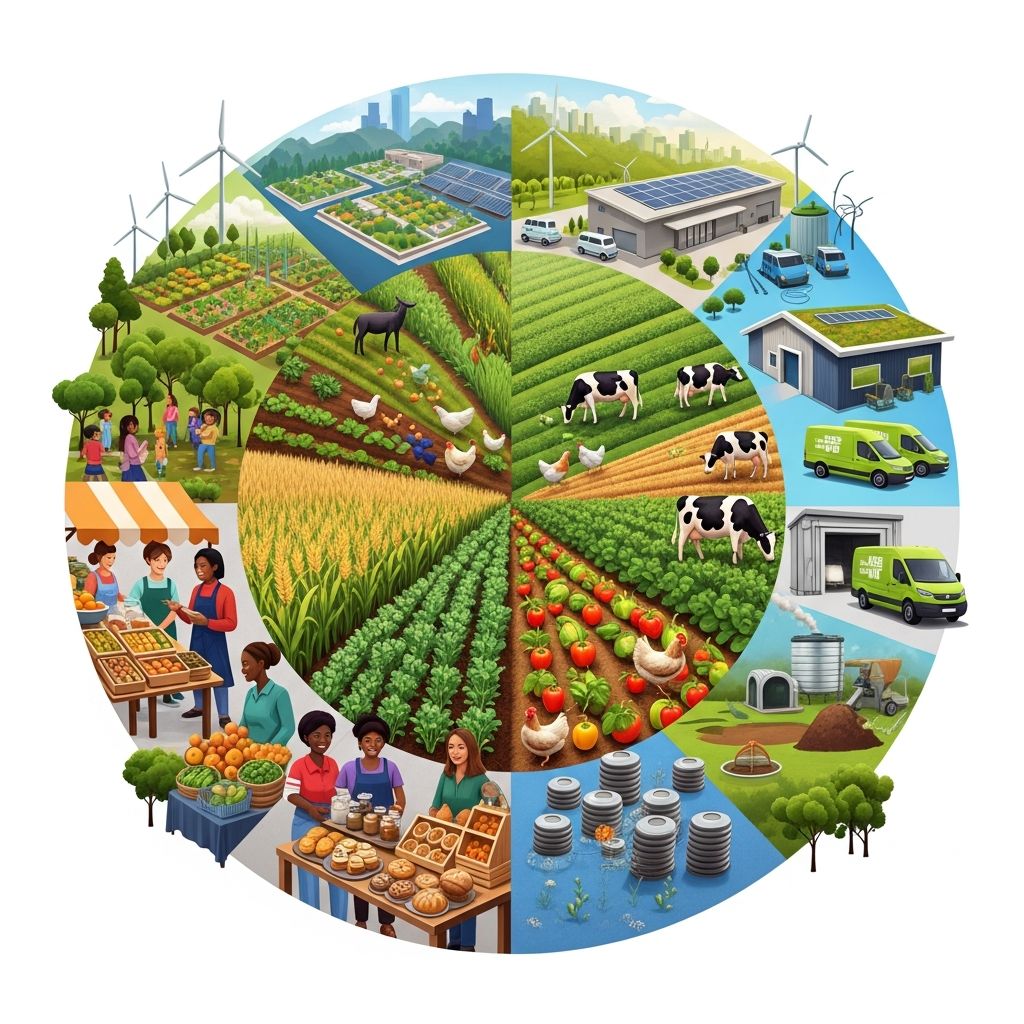
A
sustainable food system
provides nutrition and food security for everyone without compromising the well-being of people or the planet now and in the future.Sustainable Food Systems
A “food system” encompasses everything involved in the production, distribution, and consumption of food. This includes growing, raising, harvesting, processing, distributing, ensuring food safety, eating, and even discarding food. It also involves the connections between these processes and the people and resources affected by them.
The sustainability of a food system impacts everyone. Food systems determine what foods are available, how accessible they are, and their cost. A sustainable food system ensures nutrition and food security for all without harming human or planetary well-being.
While definitions evolve, experts agree that sustainable food systems address three key factors:
economic
,environmental
, andsocial
sustainability.Economic Factors
The economic goal is to benefit everyone in the system. This means providing livable wages for food system workers, tax revenues for governments, profits for businesses, and safe, nutritious, affordable food for consumers.
Sustainable business models in agrifood incorporate circular economy principles like zero waste design, material reuse, and natural system regeneration. They also emphasize regenerative agriculture for soil health, biodiversity, and climate resilience, alongside innovative technologies such as precision agriculture, IoT, and AI for resource efficiency.
Social Factors
Social sustainability promotes fairness and equity, especially for vulnerable groups. It includes worker health, respect for cultural traditions, safe work environments, and animal well-being.
A social-ecological framework views food systems as complex human-nature adaptive systems with dynamic feedback. This ensures equitable access, fair labor practices, and community development through ethical sourcing and fair compensation.
- Promoting good health among workers
- Respecting cultural food traditions
- Providing safe workplaces
- Ensuring animal welfare
- Food democracy and community involvement
Environmental Factors
Environmental sustainability aims for neutral or positive impacts. Key elements include retaining biodiversity, limiting water use, prioritizing plant and animal health, minimizing food loss and waste, and reducing atmospheric carbon contributing to climate change.
Principles include soil fertility maintenance, water quality protection, biodiversity preservation, and efficient energy use. Regenerative practices build soil quality through organic waste recycling and adopt regionally appropriate crops.
- Protecting biodiversity in agro-ecosystems
- Conserving water and energy
- Reducing greenhouse gas emissions
- Minimizing food waste
- Promoting organic and low-input farming
Balancing All Factors
Developing sustainable food systems requires considering economic, social, and environmental impacts, including unintended consequences. For instance, technological improvements may boost profits and efficiency but lead to farm worker job losses—an economic gain with social costs.
Similarly, enhancing animal well-being improves social and environmental outcomes but may increase costs or labor needs, affecting economics. Balancing these requires a holistic approach, like the Wageningen model focusing on food security, healthy diets, fair cost distribution, and environmental protection.
Related Stories



Sustainability is a system property involving vulnerability and resilience in social-ecological systems. Assessments identify properties like resilience to global changes (e.g., climate change) and internal dynamics.
| Pillar | Goals | Examples | Potential Trade-offs |
|---|---|---|---|
| Economic | Livable wages, profits, affordable food | Precision agriculture, fair trade | May increase short-term costs |
| Social | Equity, worker health, animal welfare | Fair labor, cultural respect | Job losses from automation |
| Environmental | Biodiversity, low waste, carbon reduction | Regenerative farming, waste minimization | Higher production costs |
Characteristics of Sustainable Food Systems
Sustainable food systems are secure, resilient to changes like climate shifts or energy price rises, energy-efficient, economically generative, healthy, safe, and environmentally beneficial.
- Supports urban and rural food production
- Balances food imports with local capacity
- Uses creative water conservation for irrigation
- Preserves biodiversity and promotes organic farming
- Features strong educational focus on food issues
- Ensures fair trade with livable incomes
Additional principles include local and seasonal sourcing, reducing animal products while maximizing welfare, excluding at-risk fish species, fair-trade certification, health promotion, food democracy, and waste reduction.
Challenges and Pathways Forward
Key challenges include managing global and internal changes synergistically. Food systems must enhance resilience while delivering healthy food, maintaining ecosystems, and ensuring accessibility and affordability.
Pathways include:
- Regenerative Agriculture: Enhances soil health and biodiversity.
- Circular Economy: Zero waste and resource regeneration.
- Innovative Tech: AI and IoT for efficiency.
- Policy Support: Incentives for sustainable practices from governments like those outlined by UN sustainable development goals.
Frequently Asked Questions (FAQs)
What is a food system?
A food system includes all processes from production and processing to distribution, consumption, and waste management, plus connected people and resources.
What are the three pillars of a sustainable food system?
Economic viability, social equity, and environmental protection.
How does sustainable food benefit the environment?
It retains biodiversity, reduces waste and emissions, conserves water, and promotes soil health.
Can technology help sustainable food systems?
Yes, precision agriculture and AI optimize resources but must balance job impacts.
What role does individual action play?
Choosing local, seasonal, organic foods, reducing waste, and supporting fair trade contribute to sustainability.
Conclusion
Achieving sustainable food systems demands integrated efforts across economic, social, and environmental dimensions. By prioritizing resilience, equity, and ecological health, we can nourish current populations while safeguarding the planet for future generations.
References
- What Is A Sustainable Food System? — Academy of Nutrition and Dietetics. 2023. https://www.eatright.org/food/planning/food-security-and-sustainability/what-is-a-sustainable-food-system
- Food Sustainability: A Comprehensive Guide to Building a Better Future — Agribusiness Academy. 2024. https://learning.agribusiness.academy/food-sustainability-guide-better-future/
- Modeling Sustainable Food Systems — PubMed Central / NIH. 2016-04-20. https://pmc.ncbi.nlm.nih.gov/articles/PMC4828486/
- Definition of a Sustainable Food System — CRC Research. 2010. https://www.crcresearch.org/sites/default/files/u641/definition_of_a_sustainable_food_system.pdf
- What is sustainable food and how can we eat more of it? — Ecole Ducasse. 2023. https://www.ecoleducasse.com/en/blog/what-sustainable-food
- Fast Facts – What are sustainable food systems? — United Nations. 2023. https://www.un.org/sustainabledevelopment/fast-facts-what-are-sustainable-food-systems/
Similar Articles








Read full bio of Sneha Tete