Electrophysiologist: Complete Guide To Heart Rhythm Care
Understanding heart rhythm specialists and their role in cardiac care.
What Is An Electrophysiologist?
An electrophysiologist is a heart specialist with a deep understanding of your heart’s electrical system. These medical professionals specialize in diagnosing and treating disorders related to the heart’s electrical signaling, which is essential for maintaining a normal heartbeat and circulating blood throughout your body. Unlike general cardiologists who focus on the heart’s structure and overall function, electrophysiologists concentrate specifically on the electrical pathways and conduction systems that regulate how your heart beats.
Normally, your heart beats in an orderly and efficient manner, with electrical signals following a precise pathway to make your heart pump consistently and effectively. When these electrical signals become disrupted or irregular, an electrophysiologist is the specialist equipped to identify the problem, locate where it originates, and implement appropriate treatment solutions.
The Role and Expertise of Electrophysiologists
Electrophysiologists are cardiologists who have received extensive additional training beyond their general cardiology education. They possess expertise in understanding complex electrical abnormalities within the heart and are skilled at determining what causes these irregularities and precisely where the problems originate. Once they identify the underlying cause, they can develop targeted treatment plans to restore normal heart rhythm and improve patient outcomes.
The work of electrophysiologists has transformed the treatment landscape for heart rhythm disorders. With advanced diagnostic techniques and therapeutic interventions like catheter ablation, electrophysiologists have achieved remarkable success rates, with more than 90% of treatments proving successful. This high success rate significantly improves the quality of life for many patients they treat, allowing them to return to normal activities without the burden of chronic arrhythmias.
Educational Training and Qualifications
Becoming an electrophysiologist requires extensive medical training and dedication to the field. After completing medical school, prospective electrophysiologists must fulfill several additional training requirements:
First, they complete a general internal medicine residency, which provides foundational knowledge in comprehensive patient care and medical management. Following this, they pursue a cardiovascular disease fellowship, which focuses specifically on heart and vascular conditions. After completing their cardiology fellowship, aspiring electrophysiologists undertake an additional one to two years of specialized training in electrophysiology, during which they learn advanced diagnostic and therapeutic techniques specific to heart rhythm management.
Upon completing their training, electrophysiologists can pursue board certification from the American Board of Internal Medicine. This certification demonstrates their expertise and commitment to maintaining the highest standards of patient care. They must take and maintain multiple board certifications throughout their careers, ensuring they stay current with advancing medical knowledge and techniques in their specialty.
Diagnostic and Treatment Approaches
Electrophysiologists employ sophisticated diagnostic methods to evaluate patients with suspected heart rhythm abnormalities. These specialized approaches allow them to accurately identify the type and location of arrhythmias. Common diagnostic techniques include:
Electrocardiogram (ECG): A fundamental test that records the electrical activity of the heart, providing initial information about rhythm patterns.
Ambulatory Monitoring: Devices that continuously monitor heart rhythm over extended periods, capturing irregular beats that may not appear during a standard office visit.
Electrophysiology Study: A more invasive diagnostic procedure that maps the heart’s electrical system in detail, helping identify the exact source of abnormal rhythms.
Related Stories



Head Upright Tilt Test: A specialized test used to diagnose syncope (fainting) and other rhythm-related conditions by monitoring heart rate and blood pressure changes during postural shifts.
Once a diagnosis is established, electrophysiologists offer multiple treatment options tailored to each patient’s specific condition. Treatment methods include catheter ablation, cardioversion, pacemaker implantation, and implantable cardioverter defibrillators (ICDs). Catheter ablation, one of the most successful procedures, involves using targeted energy to eliminate the abnormal tissue responsible for irregular heartbeats.
Conditions Treated by Electrophysiologists
Electrophysiologists specialize in diagnosing and treating a wide variety of heart rhythm disorders. These experts manage both common and complex arrhythmias, including:
Atrial Fibrillation: One of the most common arrhythmias, characterized by rapid and irregular beating in the heart’s upper chambers.
Ventricular Tachycardia: Abnormally fast rhythms originating in the heart’s lower chambers, potentially life-threatening if untreated.
Wolff-Parkinson-White Syndrome: A congenital condition involving extra electrical pathways in the heart that cause rapid heart rates.
Heart Block: A condition where electrical signals are delayed or blocked as they travel through the heart’s conduction system.
Long QT Syndrome: A genetic condition that affects the heart’s electrical activity and increases the risk of dangerous arrhythmias.
Premature Ventricular Contractions: Early heartbeats originating in the ventricles that may cause palpitations.
Electrophysiologists also manage Ebstein’s anomaly in adults and numerous other rhythm disturbances. Their comprehensive expertise allows them to handle both straightforward cases and highly complex situations requiring sophisticated interventions.
Work Settings and Clinical Practice
Electrophysiologists work in diverse clinical settings, adapting their practice to serve patients effectively. Many work in private practice settings alongside other cardiologists and medical professionals, providing comprehensive cardiac care. Others are based in hospital settings, where they collaborate with multidisciplinary teams to manage complex cases.
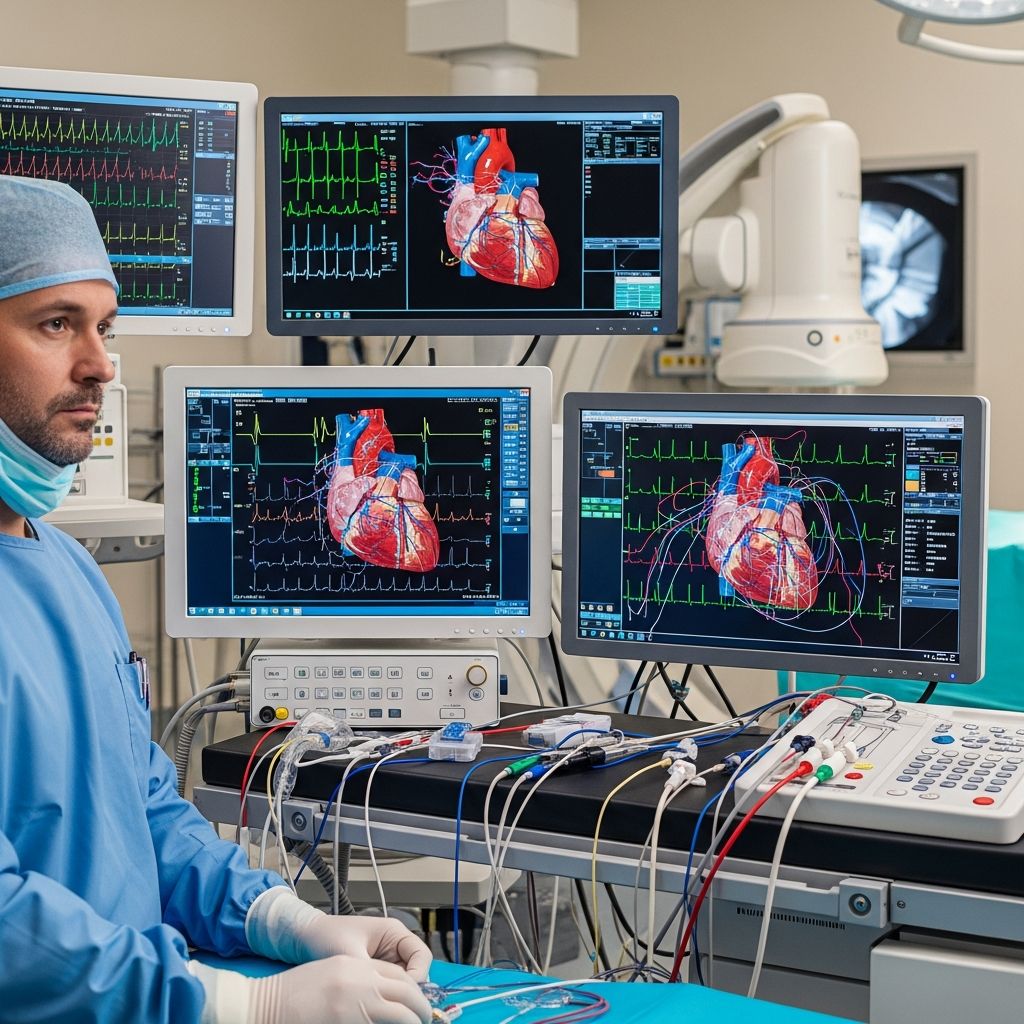
A significant portion of their clinical work takes place in specialized electrophysiology laboratories, commonly referred to as EP labs or catheterization “cath” labs. These state-of-the-art facilities are equipped with advanced imaging and diagnostic equipment necessary for performing intricate procedures. These labs feature multiple procedure rooms, sophisticated mapping systems, and imaging technology that enables electrophysiologists to visualize the heart’s electrical system in unprecedented detail.
In these specialized environments, electrophysiologists perform diagnostic studies, therapeutic interventions, and device implantations. The combination of advanced technology and the physician’s specialized knowledge allows for management of complex cases that might otherwise be untreatable.
Advanced Technologies and Innovations
The field of electrophysiology continues to evolve with emerging technologies that enhance treatment outcomes. Recent advancements include pulsed field ablation, which offers improved safety and efficacy compared to traditional radiofrequency ablation techniques. High-density mapping systems provide enhanced visualization of electrical activity, enabling more precise ablations. Intracardiac echocardiography allows real-time visualization during procedures, and magnetically driven catheters improve navigation within the heart.
These technological innovations represent the cutting edge of cardiac care, allowing electrophysiologists to treat increasingly complex conditions with greater precision and fewer complications. As research continues, new treatment modalities continue to expand the therapeutic options available to patients with rhythm disorders.
Device Management and Monitoring
Beyond performing procedures, electrophysiologists manage patients with implanted cardiac devices including pacemakers and implantable cardioverter defibrillators. Modern remote monitoring devices allow electrophysiologists to track device function and patient cardiac status without requiring patients to visit the clinic for every follow-up assessment. This technological advancement improves patient convenience and allows for earlier detection of potential problems.
For patients with complex arrhythmias or multiple device-related issues, specialized device clinics provide comprehensive follow-up care. These clinics perform device interrogations, adjust settings as needed, and address any complications that may arise.
When To See An Electrophysiologist
While many patients with heart rhythm concerns initially see their primary care physician or general cardiologist, certain situations warrant evaluation by an electrophysiologist. You should consider seeing an electrophysiologist if you experience:
– Persistent palpitations or irregular heartbeats
– Unexplained fainting or near-fainting episodes
– Rapid heart rate that doesn’t respond to initial treatment
– Need for pacemaker or ICD implantation
– Complex arrhythmias requiring specialized diagnosis
– Consideration of catheter ablation procedures
– Management of inherited arrhythmia conditions
Your primary care physician or general cardiologist can determine if a referral to an electrophysiologist is appropriate for your specific condition.
Frequently Asked Questions
Q: What is the difference between a cardiologist and an electrophysiologist?
A: While both are heart specialists, cardiologists focus on the heart’s structure and general function, including blood vessels and valve problems. Electrophysiologists specialize specifically in the heart’s electrical system and rhythm disorders, requiring additional specialized training beyond general cardiology.
Q: Are catheter ablation procedures safe?
A: Yes, catheter ablation is considered a safe procedure when performed by experienced electrophysiologists in properly equipped facilities. Like all medical procedures, it carries some risks, but the success rate exceeds 90% for many arrhythmias, and serious complications are relatively uncommon.
Q: How long does an electrophysiology study take?
A: An electrophysiology study typically takes one to three hours, depending on the complexity of your condition and the procedures required. Your electrophysiologist will provide specific timing information based on your individual situation.
Q: Will I need a pacemaker or defibrillator?
A: Whether you need a device depends on your specific diagnosis and the severity of your condition. Your electrophysiologist will discuss all treatment options, including medical management and procedural interventions, to determine the best approach for your situation.
Q: Can arrhythmias be cured permanently?
A: Many arrhythmias can be effectively treated with excellent long-term outcomes through catheter ablation and other interventions. However, the permanence of treatment varies by condition type. Your electrophysiologist can discuss the expected outcomes for your specific arrhythmia.
Q: How often will I need follow-up appointments after treatment?
A: Follow-up frequency depends on your diagnosis and treatment type. After catheter ablation, you may have appointments over several months to ensure successful treatment. Patients with implanted devices require periodic device checks, which can often be done remotely.
References
- What Is An Electrophysiologist? — Cleveland Clinic. 2024. https://my.clevelandclinic.org/health/articles/24039-electrophysiologist
Similar Articles








Read full bio of Sneha Tete