Bile: What It Is, Where It’s Made & What It Does
Understanding bile: the digestive fluid your liver produces to break down fats and eliminate waste.
What Is Bile?
Bile is a yellowish-green digestive fluid that plays a crucial role in your body’s ability to process food and eliminate waste. Your liver produces bile continuously, creating approximately 800 to 1,000 milliliters (about 27 to 34 fluid ounces) of this vital substance every single day. This remarkable production rate demonstrates just how important bile is to your digestive health and overall bodily functions. Bile contains specialized bile salts and acids that work together to break down fats and facilitate nutrient absorption, making it one of the most essential substances your body produces for proper digestion.
Where Bile Is Made and Stored
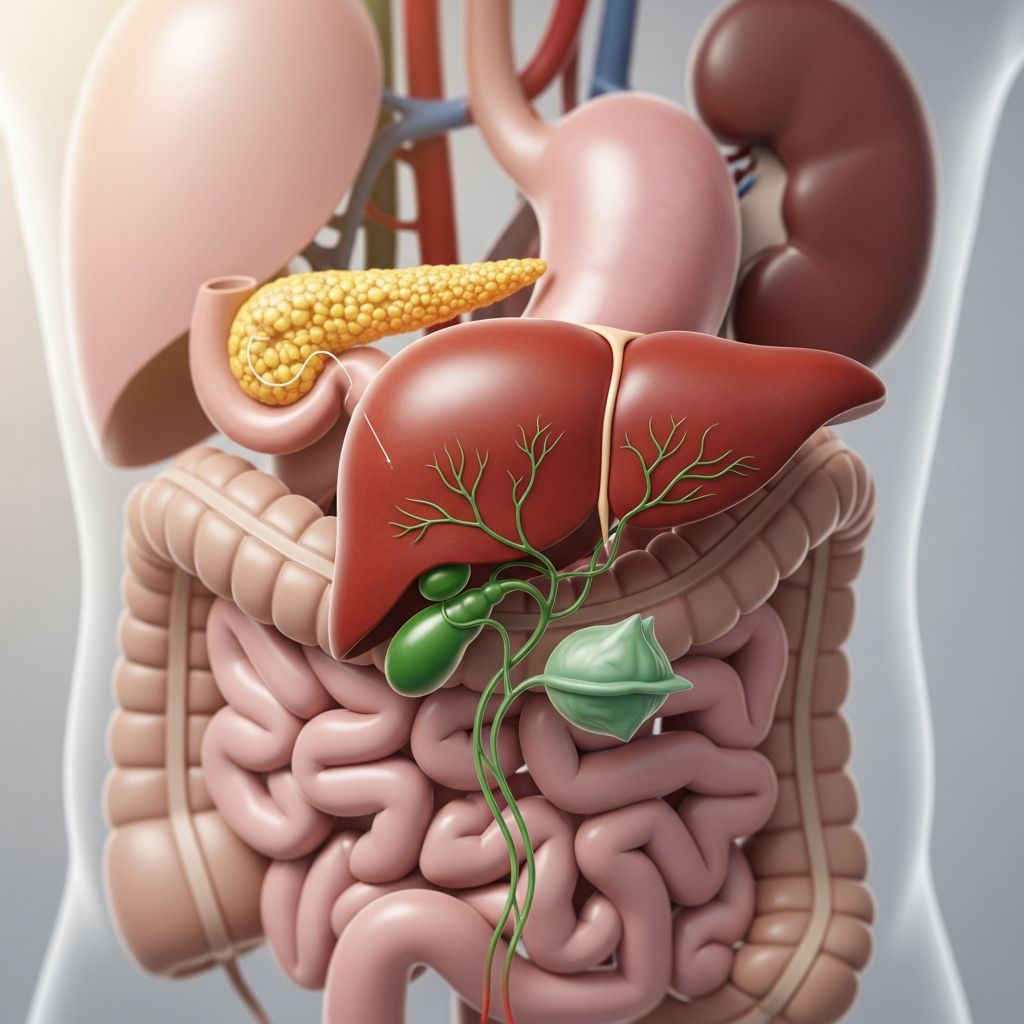
Your liver, the largest internal organ in your body, is the manufacturing center for bile. Located in the upper right portion of your abdomen, your liver continuously produces bile as part of its many critical functions. However, bile production is just one of dozens of jobs your liver performs daily. Once your liver produces bile, it doesn’t immediately enter your digestive system. Instead, the newly created bile flows through your bile ducts into your gallbladder, a small, pear-shaped organ that functions as a specialized storage tank.
Your gallbladder is positioned just beneath your liver and serves an important purpose in the digestive process. It stores bile that isn’t needed immediately, holding approximately 30 to 80 milliliters (about 1 to 2.7 fluid ounces) of fluid at any given time. Think of your gallbladder as a reservoir that concentrates and stores bile until your body signals that it’s needed for digestion. This storage capability allows your body to have a ready supply of bile available when you consume a meal containing fat.
The Composition of Bile
Bile is a complex fluid with multiple important components that work together to facilitate digestion. The most significant components are bile salts, which are the primary active ingredients in bile. These bile salts possess remarkable properties that allow them to emulsify fats, breaking large fat globules into much smaller particles that are easier for your digestive system to process. Beyond bile salts, bile also contains bile acids, cholesterol, phospholipids, and water, all working in concert to support your digestive processes.
Additionally, bile serves as a carrier for waste products that your liver has filtered from your blood. One of the most important waste products transported by bile is bilirubin, a byproduct that forms during the natural breakdown of red blood cells. By incorporating these waste products into bile, your body efficiently eliminates them through your digestive tract, ensuring they exit your body in your stool.
How Bile Functions in Digestion
The digestive role of bile is multifaceted and absolutely essential for proper nutrition. When you consume a meal containing fat, your body initiates a sophisticated signaling process. Specialized hormones detect the presence of fat in your food and send signals to your gallbladder, instructing it to contract and release its stored bile. This bile then travels through the cystic duct into the common bile duct, which delivers it to your small intestine, specifically to the duodenum, the first section of your small intestine.
Once bile reaches your small intestine, something remarkable happens. The bile salts encounter the fat molecules in your partially digested food and immediately begin their work. They emulsify the fats, which means they break down large fat globules into tiny, suspended particles throughout the digestive mixture. This process dramatically increases the surface area of the fat, making it exponentially easier for your digestive enzymes to attack and break down the fat molecules into absorbable fatty acids and other nutrients.
Related Stories



With fat broken into smaller, manageable pieces, your digestive enzymes can work much more efficiently. These smaller fat particles can be more easily processed, allowing your bloodstream to absorb the fatty acids and fat-soluble vitamins. Your body then utilizes these nutrients for energy production, hormone synthesis, and countless other vital functions. Without bile and its emulsifying properties, your body would struggle to digest and absorb dietary fats effectively, leading to nutritional deficiencies and digestive problems.
Bile’s Role in Waste Elimination
Beyond its digestive functions, bile serves as your body’s waste management system for certain substances. As mentioned earlier, bile acts as a carrier for bilirubin, the yellowish pigment that results from the breakdown of old red blood cells. Your liver filters bilirubin from your blood and incorporates it into bile, ensuring that this waste product is transported from your liver through your bile ducts to your small intestine, where it eventually exits your body through your feces. This process is so efficient that under normal circumstances, you never notice it happening.
This waste elimination function is so important that when it becomes disrupted, serious health problems can develop. If bile cannot flow properly through your bile ducts due to obstruction or other complications, bilirubin and other waste products can back up into your bloodstream, causing a condition called jaundice, which is characterized by a yellowing of your skin and the whites of your eyes. This visible sign indicates that your body’s waste elimination system is not functioning properly and requires medical attention.
The Biliary System: How Everything Works Together
Your biliary system is an interconnected network of organs and ducts designed to produce, store, concentrate, and deliver bile exactly when and where it’s needed. Understanding how these components work together provides insight into the remarkable sophistication of your digestive system. The system begins with your liver, where bile is continuously produced. Small branching ducts within your liver collect this newly made bile and channel it toward larger ducts.
These intrahepatic ducts, located inside your liver, gradually merge and combine to form two main branches: the right hepatic duct and the left hepatic duct. These two branches then join outside your liver to create the common hepatic duct. This duct then connects to your gallbladder through a smaller duct called the cystic duct. The common hepatic duct continues beyond the gallbladder connection and becomes the common bile duct, which is your body’s main bile delivery highway, approximately 10 centimeters long.
Your common bile duct represents the largest bile duct in your biliary system and serves as the central trunk of what doctors sometimes call the “biliary tree.” About half of the bile your liver produces flows directly into this common bile duct on its way to your small intestine. The other half is diverted into your gallbladder for storage and concentration. When your small intestine requires bile for fat digestion, your gallbladder receives the signal, contracts, and pushes its stored bile into the cystic duct, which merges with the common bile duct to deliver concentrated bile where it’s needed.
What Happens When Bile Flow Is Disrupted
Your body relies on unobstructed bile flow to maintain digestive health and eliminate waste products efficiently. When something interferes with this flow, complications can develop. The most common obstruction is caused by gallstones, which are hardened deposits that form in your gallbladder. Some of these stones can travel into your bile ducts, a condition called choledocholithiasis. If these stones grow large enough, they can partially or completely block the flow of bile through your ducts, preventing bile from reaching your intestines when needed.
Another condition that disrupts bile flow is bile duct stricture, which occurs when your bile ducts become abnormally narrow. This narrowing can result from long-term inflammation that creates scar tissue in your bile ducts, or it can be caused by birth disorders such as biliary atresia or Alagille syndrome. When bile flow is completely or significantly blocked, a condition called cholestasis develops, meaning bile stalls or backs up in your system.
Backed-up bile creates multiple problems for your body. First, stalled bile flow encourages dangerous infections to develop in your biliary system. These infections can be acutely painful and potentially life-threatening. If an infection spreads to your liver and enters your bloodstream, it can develop into septicemia, a systemic blood infection that can lead to sepsis, a medical emergency requiring immediate treatment.
Second, when bile cannot flow to your small intestine, your digestive system loses its ability to properly break down and absorb fats. This malabsorption can lead to nutritional deficiencies and malnutrition, as your body cannot extract essential fatty acids and fat-soluble vitamins from your food. Third, bile that backs up into your bloodstream can cause jaundice, nausea, severe itching of your skin, and in some cases, even mild cognitive impairment, a condition called hepatic encephalopathy that results from waste products accumulating in your brain.
Frequently Asked Questions About Bile
Q: How much bile does my liver produce daily?
A: Your liver produces approximately 800 to 1,000 milliliters (27 to 34 fluid ounces) of bile every day, making it a continuous process essential for digestion and waste elimination.
Q: What color is bile and why?
A: Bile is yellowish-green in color. The yellow component primarily comes from bilirubin, a waste product from red blood cell breakdown that your liver incorporates into bile.
Q: How much bile can my gallbladder hold?
A: Your gallbladder typically stores between 30 to 80 milliliters (approximately 1 to 2.7 fluid ounces) of concentrated bile, which it releases when needed for fat digestion.
Q: What are bile salts and why are they important?
A: Bile salts are the most important component of bile. They have the unique ability to emulsify fats, breaking large fat globules into smaller particles that your digestive enzymes can more easily process and your body can absorb.
Q: Can I live without a gallbladder?
A: Yes, you can live without a gallbladder. While your gallbladder stores and concentrates bile, bile production continues in your liver, and bile can still reach your intestines through the common bile duct, though some people may experience digestive changes after gallbladder removal.
Q: What is cholestasis?
A: Cholestasis is a condition in which bile flow stalls or becomes blocked, preventing bile from flowing through your bile ducts properly. This can result from gallstones, strictures, infections, or other conditions affecting your biliary system.
Q: What does it mean if I have jaundice related to bile problems?
A: Jaundice, characterized by yellowing of your skin and eyes, indicates that bilirubin and other waste products are backing up into your bloodstream because bile cannot flow properly through your bile ducts, usually due to an obstruction or blockage.
References
- Bile: What It Is, Where It’s Made & What It Does — Cleveland Clinic. 2024. https://my.clevelandclinic.org/health/body/what-is-bile
- Gallbladder: What Is It, Function, Location & Anatomy — Cleveland Clinic. 2024. https://my.clevelandclinic.org/health/body/21690-gallbladder
- What Are Bile Ducts? — Cleveland Clinic. 2024. https://my.clevelandclinic.org/health/body/24523-bile-duct
- Biliary Tree (Tract): What It Is, Anatomy & Function — Cleveland Clinic. 2024. https://my.clevelandclinic.org/health/body/biliary-tract
- Liver: Where It’s Located, Function & Anatomy — Cleveland Clinic. 2024. https://my.clevelandclinic.org/health/body/21481-liver
- Bile Reflux: Symptoms, Treatment, Causes & What It Is — Cleveland Clinic. 2024. https://my.clevelandclinic.org/health/diseases/22056-bile-reflux
Similar Articles








Read full bio of Sneha Tete