What Is a Bubble Study: Heart Health Guide
Understanding bubble studies: A comprehensive guide to detecting heart abnormalities and shunts.
What Is a Bubble Study?
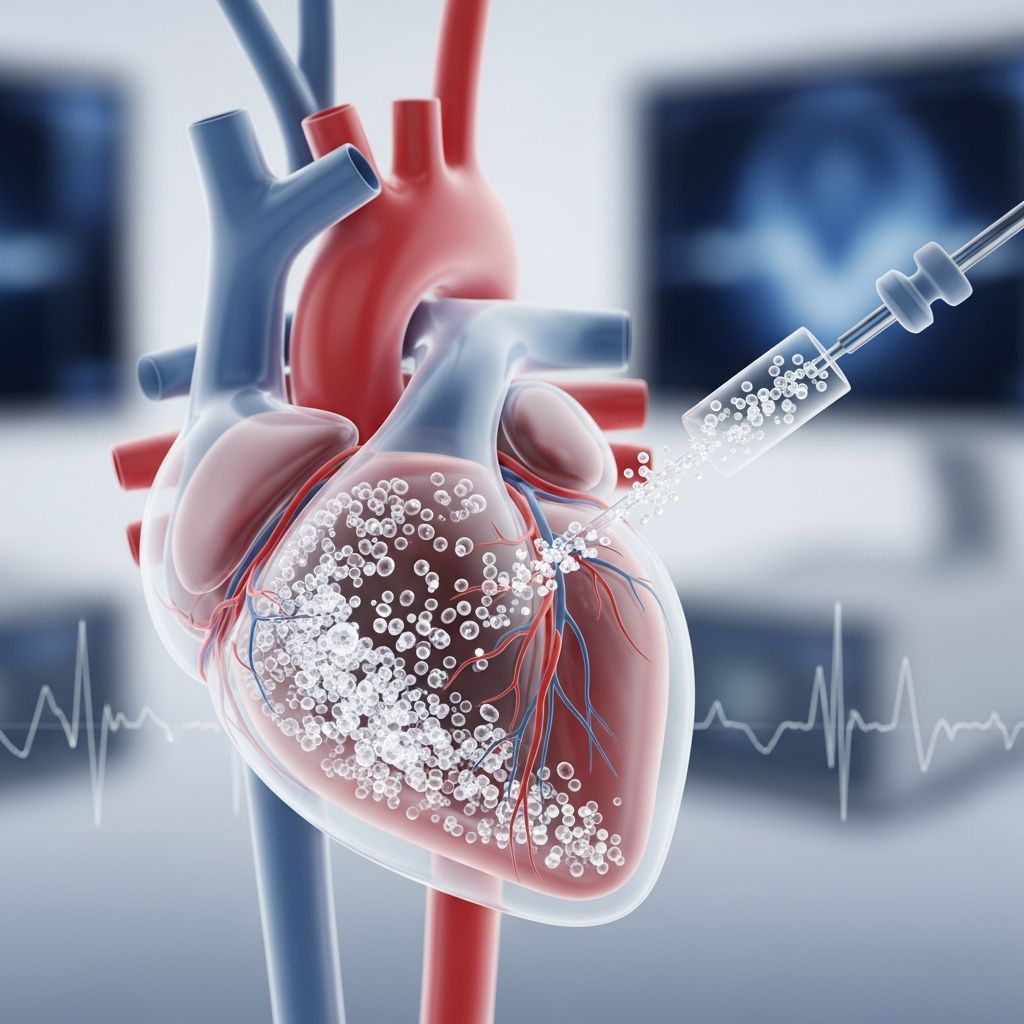
A bubble study, also known as an agitated saline contrast echocardiogram, is a specialized diagnostic test used to detect abnormal blood flow patterns within the heart. This non-invasive cardiac ultrasound procedure involves injecting microbubbles into a vein and monitoring their movement through the heart’s chambers and circulatory system. The test is particularly valuable in identifying right-to-left shunts—conditions where blood bypasses normal pulmonary circulation and flows directly from the right side of the heart to the left side. Understanding this procedure can help patients appreciate why their cardiologist might recommend it and what the results signify for their cardiovascular health.
How Does a Bubble Study Work?
The bubble study procedure begins with the creation of microbubbles through a simple yet effective process. Medical professionals agitate a saline solution with air to create tiny bubbles that are visible on ultrasound imaging. These microbubbles are then injected into a vein, typically in the arm through an intravenous line. As the bubbles travel through the venous system toward the heart, they create distinctive echoes that appear on the ultrasound monitor, allowing the sonographer to track their precise path through the cardiac chambers.
During the procedure, the patient may be asked to perform specific maneuvers to enhance the detection of shunts. The Valsalva maneuver—which involves bearing down or straining—is commonly used to temporarily increase pressure in the right side of the heart, making it easier to detect abnormal blood flow patterns. This simple action can significantly increase the sensitivity of the test by creating conditions that make shunts more apparent on imaging.
In a normal heart without shunts, the microbubbles pass through the right atrium and right ventricle before traveling to the lungs, where the pulmonary circulation filters them out. However, when a right-to-left shunt exists, some microbubbles bypass the lungs and appear in the left side of the heart or in the cerebral circulation. This abnormal appearance of bubbles in the left heart chambers is the key finding that indicates a shunt is present.
What Conditions Does a Bubble Study Detect?
Bubble studies are instrumental in identifying several cardiac and pulmonary conditions that affect blood flow patterns. The most common conditions detected include:
Patent Foramen Ovale (PFO)
A patent foramen ovale is a small opening between the right and left atria that normally closes shortly after birth. When the foramen ovale remains open into adulthood, it creates a potential pathway for blood to cross abnormally from the right to the left side of the heart. PFO is the most common cause of right-to-left shunting and can increase stroke risk in certain individuals.
Atrial Septal Defects (ASD)
Atrial septal defects are larger congenital openings in the wall separating the right and left atria. Unlike PFO, which is a patent channel in the foramen ovale, an ASD represents a true defect in the atrial septum. These defects allow continuous shunting of blood and are generally more significant than PFO in terms of hemodynamic impact.
Pulmonary Arteriovenous Malformations (PAVMs)
Pulmonary arteriovenous malformations are abnormal connections between pulmonary arteries and veins in the lungs. These malformations allow unfiltered blood to bypass the normal capillary filtering system and enter systemic circulation directly, creating a pulmonary-based right-to-left shunt rather than a cardiac one.
Related Stories



Why Would Your Doctor Recommend a Bubble Study?
Cardiologists and neurologists recommend bubble studies for patients with specific clinical presentations that suggest possible shunting conditions. Common indications include:
Unexplained Stroke or Transient Ischemic Attacks (TIAs): When patients experience stroke symptoms without traditional risk factors like hypertension, atrial fibrillation, or atherosclerotic disease, a bubble study may be ordered to determine if a PFO is responsible. These cryptogenic strokes—those without an identified cause—occur in approximately 25-40% of stroke patients, and PFO-related shunting is a suspected contributor.
Severe Migraines with Aura: Research has identified a potential association between PFO and migraine with aura. Patients experiencing debilitating migraines may undergo bubble studies to determine if a shunt is contributing to their symptoms.
Unexplained Hypoxemia: Patients with persistently low oxygen saturation levels without clear pulmonary causes may have a bubble study to identify right-to-left shunting as the underlying issue.
Decompression Sickness: Divers who experience decompression sickness despite following proper safety protocols may have a PFO that allows nitrogen bubbles to bypass pulmonary filtration and enter systemic circulation.
Follow-up to Abnormal Cardiac Imaging: When initial echocardiograms suggest possible shunting, a bubble study provides definitive confirmation and assessment of shunt severity.
Understanding Bubble Study Results
Negative Results
A negative bubble study indicates that no bubbles crossed from the right side of the heart to the left side. This finding suggests the absence of significant right-to-left shunting and helps exclude PFO or other shunt-related conditions from the differential diagnosis.
Positive Results and Shunt Grading
A positive bubble study indicates that microbubbles have crossed from right to left circulation, confirming the presence of a shunt. The severity of the shunt is typically graded based on the number of bubbles observed crossing to the left side:
- Mild Shunt (Grade 1-2): A small number of bubbles appear on the left side of the heart
- Moderate Shunt (Grade 3): A moderate number of bubbles cross over to the left side
- Severe Shunt (Grade 4): A large number of bubbles appear quickly, indicating a large shunt with easy opening
Timing and Location of Bubble Appearance
The timing of when bubbles appear on the left side carries diagnostic significance. If bubbles appear within 3-4 cardiac cycles after injection, this typically indicates an intracardiac shunt such as PFO or ASD. If bubbles appear after 5 or more cardiac cycles, this pattern suggests a pulmonary arteriovenous malformation where the shunt originates in the lungs rather than the heart.
Types of Bubble Study Procedures
Transthoracic Echocardiography (TTE) with Bubble Study
Transthoracic echocardiography is the most commonly performed bubble study method. This non-invasive procedure involves placing ultrasound transducers on the chest wall to visualize the heart and track bubble movement. TTE requires no sedation and can be performed in an outpatient setting with the patient awake and able to cooperate with maneuvers like the Valsalva maneuver.
Transesophageal echocardiography involves placing a specialized ultrasound transducer into the esophagus to obtain closer, more detailed images of the heart. While TEE can provide superior image quality, it requires sedation and is more invasive than TTE. It is typically reserved for cases where TTE results are inconclusive or additional anatomical detail is needed. Transcranial Doppler ultrasound represents an advanced method for detecting right-to-left shunts. Instead of imaging the heart directly, TCD tracks microbubbles as they travel through the cerebral circulation in the brain’s arteries. This method offers several advantages: it provides more accurate assessment of shunting severity by detecting bubbles in the brain’s arteries, it is non-invasive with ultrasound probes placed on the head, and it does not require sedation. TCD is increasingly recognized as the preferred method for PFO detection in many clinical settings. Before the Procedure: Patients should wear comfortable, loose-fitting clothing that allows easy access to the arms for intravenous placement. Most bubble studies require no special fasting or advance preparation. Patients should inform their healthcare provider about any medications they are taking, particularly blood thinners or antiplatelet medications. During the Procedure: A small intravenous catheter is placed in a vein, usually in the arm. The agitated saline solution is prepared by mixing sterile saline with air to create microbubbles. This solution is then injected through the IV while the ultrasound transducer simultaneously captures images of the heart. The sonographer will likely ask the patient to perform the Valsalva maneuver at specific times during the study to optimize visualization of any shunt. The entire procedure typically takes 15-30 minutes. After the Procedure: Most patients experience no discomfort or side effects after a bubble study. The intravenous catheter is removed, and patients can resume normal activities immediately. Results are typically available within 24-48 hours as the cardiologist reviews the images and formulates a report. Bubble studies are generally considered safe with minimal risk. The microbubbles used in the procedure are temporary and are reabsorbed by the body within seconds. The ultrasound imaging involves no radiation, making it safe even for patients who require multiple studies. The primary risks are minimal and include rare allergic reactions to contrast agents if contrast is used and the small risk of infection at the IV site. Patients with severe claustrophobia may find TEE challenging, but TTE and TCD present no such concerns. Pregnant women should generally avoid unnecessary imaging, but bubble studies can be performed if clinically necessary as ultrasound poses no known fetal risks. The results of a bubble study have important implications for patient management and stroke prevention. Patients with positive results indicating PFO or other shunts may be managed with antiplatelet therapy such as aspirin, anticoagulation therapy, or in selected cases, catheter-based closure procedures. The decision regarding management depends on the patient’s specific clinical presentation, the severity of the shunt, and other individual risk factors. For patients with cryptogenic stroke and a detected PFO, studies have shown that PFO closure procedures may reduce the risk of recurrent stroke in certain subgroups. However, not all patients with PFO require intervention, and treatment decisions should be individualized based on comprehensive clinical evaluation. Yes, bubble studies are safe non-invasive procedures with minimal risk. The microbubbles are absorbed by the body within seconds, and ultrasound imaging involves no radiation exposure. Complications are rare and typically limited to minor IV site irritation. Most bubble studies take 15-30 minutes from start to finish, making them quick outpatient procedures that don’t significantly disrupt daily schedules. No, patients typically do not feel the microbubbles. Some may experience minimal discomfort during IV placement, but the bubbles themselves cause no sensation as they move through the circulation. A positive result indicates a right-to-left shunt, which can increase stroke risk in certain patients. However, not all patients with shunts require intervention. Your cardiologist will discuss individualized treatment options based on your specific situation. Yes, bubble studies can be safely repeated if necessary for clinical follow-up or additional diagnostic clarification. The procedure can be performed multiple times without cumulative risks. While initial findings may be available immediately after the procedure, formal results are typically available within 24-48 hours after the cardiologist reviews and interprets the ultrasound images.What to Expect During a Bubble Study
Safety and Considerations
Clinical Significance and Next Steps
Frequently Asked Questions
Is a bubble study safe?
How long does a bubble study take?
Will I feel the microbubbles traveling through my heart?
What does a positive bubble study mean for my stroke risk?
Can a bubble study be repeated if needed?
How soon will I get my results?
References
Similar Articles








Read full bio of medha deb