What Is Cholesterol? Types, Functions, and Risks
Understanding cholesterol: its types, roles in the body, and how high levels increase heart disease risk.
What Is Cholesterol?
Cholesterol is a lipid (fat) that plays a vital role in the body. It is a waxy, fat-like substance found in the blood and is essential for building cell membranes, producing hormones, and aiding in the digestion of fats. While cholesterol is necessary for normal bodily functions, having too much in the bloodstream can lead to serious health problems, especially heart disease.
Types of Cholesterol
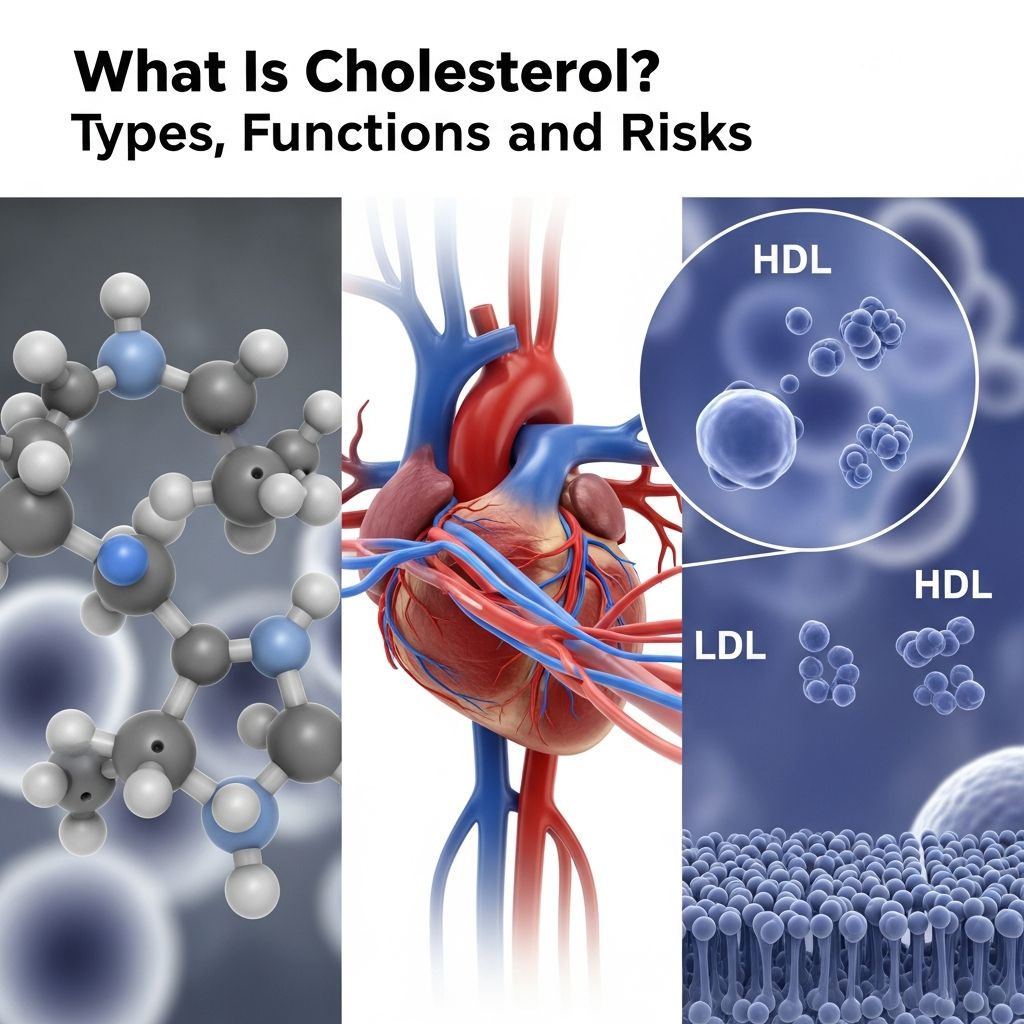
Cholesterol travels through the blood attached to proteins, forming lipoproteins. There are three main types of cholesterol that are commonly measured in blood tests:
- Low-Density Lipoprotein (LDL): Often called “bad” cholesterol, LDL carries cholesterol from the liver to the cells. High levels of LDL can lead to plaque buildup in the arteries, increasing the risk of heart attack and stroke.
- High-Density Lipoprotein (HDL): Known as “good” cholesterol, HDL helps remove excess cholesterol from the bloodstream and transports it back to the liver for disposal. Higher HDL levels are associated with a lower risk of heart disease.
- Very Low-Density Lipoprotein (VLDL): VLDL mainly carries triglycerides, another type of fat, and contributes to plaque buildup in the arteries.
Functions of Cholesterol
Cholesterol is not inherently harmful. In fact, it is crucial for several bodily functions:
- Building and maintaining cell membranes
- Producing hormones such as estrogen, testosterone, and cortisol
- Aiding in the production of vitamin D
- Helping in the digestion of fats through bile acid production
Why High Cholesterol Is Dangerous
While cholesterol is necessary, high levels in the blood can be dangerous. Excess cholesterol can accumulate in the walls of arteries, forming plaque. This process, known as atherosclerosis, can narrow the arteries and reduce blood flow to vital organs like the heart and brain. Over time, this increases the risk of:
- Heart attack
- Stroke
- Peripheral artery disease
High cholesterol is a major risk factor for atherosclerotic cardiovascular disease (ASCVD), which is the leading cause of death in the United States1.
Cholesterol Levels and What They Mean
Cholesterol levels are measured in milligrams per deciliter (mg/dL) of blood. The following table outlines the general guidelines for healthy cholesterol levels:
| Cholesterol Type | Desirable Level (mg/dL) | Borderline High (mg/dL) | High (mg/dL) |
|---|---|---|---|
| LDL | Less than 100 | 100–129 | 130 or higher |
| HDL | 60 or higher | 40–59 | Less than 40 |
| Total Cholesterol | Less than 200 | 200–239 | 240 or higher |
Causes of High Cholesterol
Several factors can contribute to high cholesterol levels:
- Diet: Consuming foods high in saturated and trans fats can raise LDL cholesterol.
- Lack of Exercise: Physical inactivity can lower HDL cholesterol and increase LDL cholesterol.
- Obesity: Being overweight or obese is associated with higher LDL and lower HDL levels.
- Genetics: Some people inherit genes that cause their bodies to produce too much cholesterol.
- Age and Sex: Cholesterol levels tend to rise with age. Men are generally at higher risk than women until women reach menopause.
- Medical Conditions: Conditions like diabetes, hypothyroidism, and kidney disease can affect cholesterol levels.
Preventing and Managing High Cholesterol
Managing cholesterol levels is crucial for reducing the risk of heart disease. The main strategies include:
- Lifestyle Changes: Eating a heart-healthy diet, exercising regularly, maintaining a healthy weight, and quitting smoking can help lower cholesterol.
- Medications: Statins are the first-line therapy for lowering LDL cholesterol and preventing ASCVD. Other medications may be used if statins are not effective or if additional risk factors are present2.
- Regular Monitoring: Regular blood tests can help track cholesterol levels and guide treatment decisions.
Cholesterol Testing
Cholesterol testing is a simple blood test that measures total cholesterol, LDL, HDL, and triglycerides. Fasting for 9–12 hours before the test is often recommended to get the most accurate results. The test helps doctors assess your risk of heart disease and determine the best treatment plan.
Related Stories



Can Plaque Buildup Be Reversed?
A common question is whether plaque buildup in the arteries can be reversed. The overwhelming evidence suggests that the best chance to reverse existing plaque is to keep LDL cholesterol very low. Studies have shown that aggressively lowering LDL cholesterol can decrease the plaque burden in the arteries, reducing the risk of heart attack and stroke3.
Cholesterol and Diet
Diet plays a significant role in cholesterol management. To lower cholesterol, it is important to:
- Limit foods high in saturated fat (such as red meat and full-fat dairy products)
- Avoid foods with trans fat (such as many processed and fried foods)
- Eat more fruits, vegetables, whole grains, and lean proteins
- Include foods rich in omega-3 fatty acids (such as fatty fish)
It is important to note that dietary supplements marketed for cholesterol lowering, such as fish oil, garlic, and red yeast rice, have not been shown to be as effective as statin medications in lowering LDL cholesterol4.
FAQs About Cholesterol
What is the difference between HDL and LDL cholesterol?
HDL (high-density lipoprotein) is known as “good” cholesterol because it helps remove excess cholesterol from the bloodstream. LDL (low-density lipoprotein) is known as “bad” cholesterol because it can lead to plaque buildup in the arteries.
Can high cholesterol be reversed?
Yes, high cholesterol can be managed and, in some cases, reversed through lifestyle changes and medications. Keeping LDL cholesterol very low is the best way to reduce plaque buildup in the arteries.
How often should I get my cholesterol checked?
Most adults should have their cholesterol checked every 4–6 years. People with risk factors for heart disease or those who are being treated for high cholesterol may need more frequent testing.
Are dietary supplements effective for lowering cholesterol?
Most dietary supplements marketed for cholesterol lowering are not as effective as prescription medications like statins. It is important to talk to your doctor before starting any supplement.
What are the symptoms of high cholesterol?
High cholesterol usually does not cause symptoms. It is often discovered through routine blood tests. However, untreated high cholesterol can lead to heart attack or stroke.
References
- Atherosclerotic Cardiovascular Disease (ASCVD) and Cholesterol — Cleveland Clinic. 2022. https://www.ccjm.org/content/87/5_suppl_1/15
- Cholesterol Guidelines and ASCVD Prevention — Cleveland Clinic Journal of Medicine. 2021. https://www.ccjm.org/content/ccjom/68/7/623.full.pdf
- Reversing Plaque Buildup with Low LDL Cholesterol — Cleveland Clinic Podcast. 2022. https://my.clevelandclinic.org/podcasts/love-your-heart/health-journey-what-you-need-to-know-about-cholesterol
- Dietary Supplements and Cholesterol — Cleveland Clinic Newsroom. 2022. https://newsroom.clevelandclinic.org/2022/11/06/cleveland-clinic-trial-finds-six-widely-used-dietary-supplements-do-not-lower-cholesterol-compared-with-either-a-low-dose-statin-or-placebo
Similar Articles








Read full bio of medha deb