Interventional Cardiology: Minimally Invasive Heart Procedures
Minimally invasive heart procedures using catheters to diagnose and treat cardiovascular conditions.
What Is Interventional Cardiology?
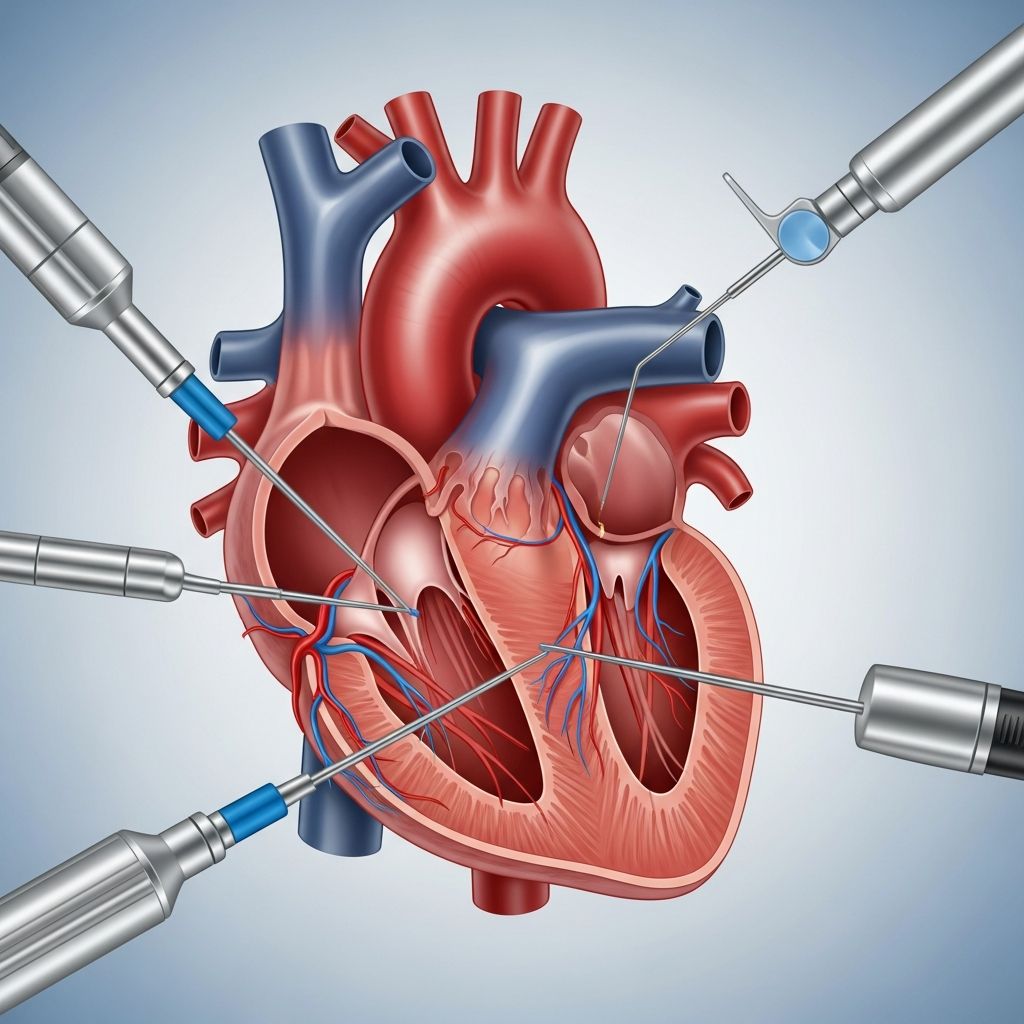
Interventional cardiology is a specialized medical field that focuses on diagnosing and treating heart and blood vessel conditions using minimally invasive techniques. Unlike traditional cardiothoracic surgeons who perform open-heart surgery, interventional cardiologists use small, flexible tubes called catheters to access the heart and its blood vessels through tiny incisions. This approach offers patients significant advantages, including reduced recovery time, lower infection risk, and minimal scarring compared to conventional surgical methods.
An interventional cardiologist is a specially trained physician who combines the expertise of a general cardiologist with advanced interventional skills. These doctors receive extensive training in catheter-based procedures and can both diagnose and treat a wide range of cardiovascular conditions without requiring open-heart surgery. The field has evolved dramatically over the past few decades, with interventional cardiology now representing one of the most dynamic and rapidly advancing areas of modern medicine.
Understanding Catheter-Based Interventions
The foundation of interventional cardiology rests on the use of catheters—thin, flexible tubes that can be threaded through blood vessels to reach the heart and surrounding structures. These catheters are typically inserted through a small puncture in the femoral artery (in the groin) or the radial artery (in the wrist). Once positioned, interventional cardiologists use advanced imaging techniques, including fluoroscopy and ultrasound, to guide the catheter to the target location with remarkable precision.
The ability to navigate these tiny pathways while visualizing internal cardiac structures requires exceptional skill and years of specialized training. Interventional cardiologists develop an intimate understanding of cardiovascular anatomy and physiology, allowing them to perform complex procedures that would otherwise require major surgery. The minimally invasive nature of these procedures means patients experience significantly less trauma to their bodies, resulting in faster recovery times and reduced hospital stays.
Common Interventional Cardiology Procedures
Coronary Angioplasty and Stent Placement
The most frequently performed interventional cardiology procedure is coronary angioplasty with stent placement. This lifesaving technique is commonly used to treat acute coronary syndrome and heart attacks. During the procedure, an interventional cardiologist uses a catheter to locate a blockage in one of the heart’s coronary arteries. Once identified, a tiny balloon attached to the catheter is inflated to compress the blockage against the arterial wall, restoring blood flow. In many cases, a stent—a small wire mesh tube—is then placed to keep the artery open and prevent future blockages.
Chronic Total Occlusion Intervention
Chronic total occlusions (CTOs) represent complete blockages in coronary arteries that have persisted for at least three months. These challenging cases traditionally offered limited treatment options. However, interventional cardiologists at specialized centers have developed advanced techniques to recanalize these vessels, restoring blood flow to previously ischemic heart muscle. This specialized intervention requires exceptional expertise and is performed at a limited number of high-volume centers.
Transcatheter Valve Procedures
One of the most significant advances in interventional cardiology has been the development of transcatheter valve interventions. These procedures allow cardiologists to repair or replace heart valves without requiring open-heart surgery. Common valve procedures include transcatheter aortic valve replacement (TAVR), transcatheter mitral valve edge-to-edge repair (TEER), and paravalvular leak closure. These innovations have dramatically expanded treatment options for patients with severe valve disease who are considered too high-risk for traditional surgical approaches.
Related Stories



Structural Heart Interventions
Interventional cardiologists now treat numerous structural heart conditions including atrial septal defects (ASDs), patent foramen ovale (PFO), and left atrial appendage occlusion. These minimally invasive closures eliminate the need for open-heart surgery and significantly reduce procedure-related complications. Left atrial appendage occlusion, for example, is increasingly used for stroke prevention in patients with atrial fibrillation who cannot tolerate anticoagulation therapy.
Diagnostic Applications in Interventional Cardiology
While many associate interventional cardiology primarily with therapeutic procedures, diagnostic applications remain critically important. Interventional cardiologists use various diagnostic techniques to evaluate heart function and coronary artery disease severity:
Cardiac Catheterization involves inserting a catheter into the heart to measure pressures, assess valve function, and evaluate overall cardiac hemodynamics. This foundational test provides essential information for diagnosis and treatment planning.
Intravascular Ultrasound (IVUS) uses ultrasound imaging from within the coronary arteries to visualize plaque composition and artery dimensions. This technology helps interventional cardiologists determine which lesions require treatment and guide stent deployment.
Fractional Flow Reserve (FFR) measures blood pressure and flow across a coronary lesion to determine its functional significance. This physiologic assessment helps clinicians decide whether a borderline lesion requires intervention or can be managed medically.
Optical Coherence Tomography (OCT) provides high-resolution imaging of coronary artery structure, allowing precise evaluation of plaque characteristics and optimal stent sizing.
Coronary Flow Reserve (CFR) assesses the heart’s ability to increase blood flow in response to stress, providing valuable information about microvascular function.
Conditions Treated by Interventional Cardiologists
The scope of conditions treated through interventional cardiology has expanded substantially. Beyond traditional coronary artery disease, interventional cardiologists now manage:
Acute Coronary Syndrome and Heart Attack: Emergency angioplasty and stent placement represent the gold standard treatment for acute myocardial infarction, restoring coronary blood flow and preserving heart muscle.
Chronic Coronary Artery Disease: Stable angina and ischemic heart disease are frequently managed through catheter-based revascularization.
Heart Valve Disease: Aortic stenosis, mitral regurgitation, and other valve pathologies can now be treated transcatheterally in many patients.
Congenital Heart Disease: Even complex congenital conditions, including those requiring prior surgical correction, can be managed through catheter-based interventions.
Peripheral Artery Disease: Carotid stenting, atherectomy, and lower extremity arterial interventions represent important treatment options for patients with peripheral vascular disease.
Hypertrophic Cardiomyopathy: Alcohol septal ablation provides a minimally invasive alternative for symptomatic patients who fail medical therapy.
Advanced Support Technologies
Modern interventional cardiology incorporates advanced mechanical support devices for high-risk patients. These technologies include:
Impella Devices: Provide temporary mechanical heart support during complex procedures or in cardiogenic shock states.
ECMO and Tandem Heart Systems: Offer extracorporeal membrane oxygenation and alternative support strategies for severely compromised hemodynamics.
These adjunctive technologies enable interventional cardiologists to safely manage patients with severely reduced cardiac function who would otherwise face prohibitive procedural risks.
Advantages of Interventional Approaches
Interventional cardiology offers numerous advantages over traditional surgical approaches. Procedures typically require only local anesthesia rather than general anesthesia, reducing anesthetic-related complications. Patients experience minimal blood loss, decreased infection risk, and dramatically shortened hospital stays—many procedures are performed on an outpatient basis. The cosmetic results are superior, with patients experiencing only small puncture wounds rather than large surgical incisions. Most importantly, the reduced physiologic stress allows treatment of elderly and medically complex patients who would be deemed too high-risk for traditional surgery.
Role of Technology and Innovation
Continuous technological advancement drives the interventional cardiology field forward. Advanced imaging systems provide real-time three-dimensional visualization of cardiac anatomy. Newer catheter designs and materials enable access to previously unreachable vessels. Drug-eluting stents with improved biocompatibility have reduced restenosis rates. Bioresorbable scaffolds represent the next frontier, potentially eliminating the permanent foreign material implanted during traditional stenting.
Cleveland Clinic has played a pivotal role in interventional cardiology innovation since Dr. F. Mason Sones developed coronary angiography at the institution in 1958. This rich tradition of innovation continues today, with the center performing over 11,000 procedures annually and regularly offering patients access to cutting-edge therapies still in clinical trials.
Training and Expertise
Becoming an interventional cardiologist requires extensive training beyond general cardiology fellowship. Most interventional cardiologists complete an additional 2-3 year fellowship focusing on catheter-based techniques. Advanced training programs now offer specialized rotations in coronary interventions, peripheral vascular interventions, and structural heart procedures. This comprehensive training ensures interventional cardiologists possess the specialized knowledge and technical skills necessary to manage complex cases safely and effectively.
Frequently Asked Questions
Q: Is interventional cardiology the same as open-heart surgery?
A: No. Interventional cardiology uses minimally invasive catheter-based techniques through small punctures, while open-heart surgery requires a large incision and stopping the heart. Interventional cardiology avoids major surgery in many cases.
Q: What is the recovery time after an interventional cardiology procedure?
A: Recovery is typically much faster than surgery. Many patients go home the same day or after an overnight stay. Full recovery usually occurs within 1-2 weeks, compared to 6-8 weeks for open-heart surgery.
Q: Are interventional cardiology procedures safe?
A: Yes, modern interventional cardiology procedures are generally safe when performed by experienced cardiologists at high-volume centers. Like any medical procedure, complications can occur, but overall risk profiles are favorable compared to surgical alternatives.
Q: Can all heart conditions be treated with interventional cardiology?
A: While interventional cardiology can treat many conditions, some complex cases still require traditional surgery. Your cardiologist will evaluate your specific situation to determine the most appropriate treatment approach.
Q: What should I expect during an interventional cardiology procedure?
A: You’ll receive local anesthesia at the puncture site and sedation to keep you comfortable. The cardiologist will use imaging guidance to navigate catheters to your heart. You’ll remain awake but sedated throughout the procedure, which typically lasts 30 minutes to 2 hours.
Q: How long do stents placed during intervention last?
A: Modern drug-eluting stents are designed to be permanent. They prevent restenosis through medication release over several months. You’ll need to take dual antiplatelet therapy for 6-12 months after placement, depending on the stent type.
Conclusion
Interventional cardiology represents a transformative approach to cardiovascular disease management. By combining advanced imaging technology with specialized catheter techniques, interventional cardiologists can diagnose and treat numerous cardiac conditions without requiring open-heart surgery. The field continues to evolve, with new procedures, devices, and techniques expanding treatment options for patients with increasingly complex cardiovascular pathology. For many patients with heart disease, interventional cardiology offers the opportunity for effective treatment with minimal invasiveness, faster recovery, and excellent long-term outcomes.
References
- Section of Invasive and Interventional Cardiology — Cleveland Clinic. 2024. https://my.clevelandclinic.org/departments/heart/depts/invasive-interventional-cardiology
- What Is Interventional Cardiology? — Cleveland Clinic. 2024. https://my.clevelandclinic.org/health/articles/24511-interventional-cardiology
- Structural & Interventional Cardiology — Cleveland Clinic Florida. 2024. https://my.clevelandclinic.org/florida/departments/heart/depts/structural-interventional-cardiology
- Private Interventional Cardiology — Cleveland Clinic London. 2024. https://clevelandcliniclondon.uk/clinical-institutes/heart-vascular-thoracic/interventional-cardiology
- Interventional Cardiology Fellowship — Cleveland Clinic. 2024. https://my.clevelandclinic.org/departments/heart/medical-professionals/fellowship-residency/interventional-cardiology
Similar Articles








Read full bio of Sneha Tete