What Is Jicama? Nutrition, Benefits and How to Eat It
Discover the crunchy, low-calorie superfood jicama: packed with fiber, vitamins and prebiotics for gut health, weight loss and more.
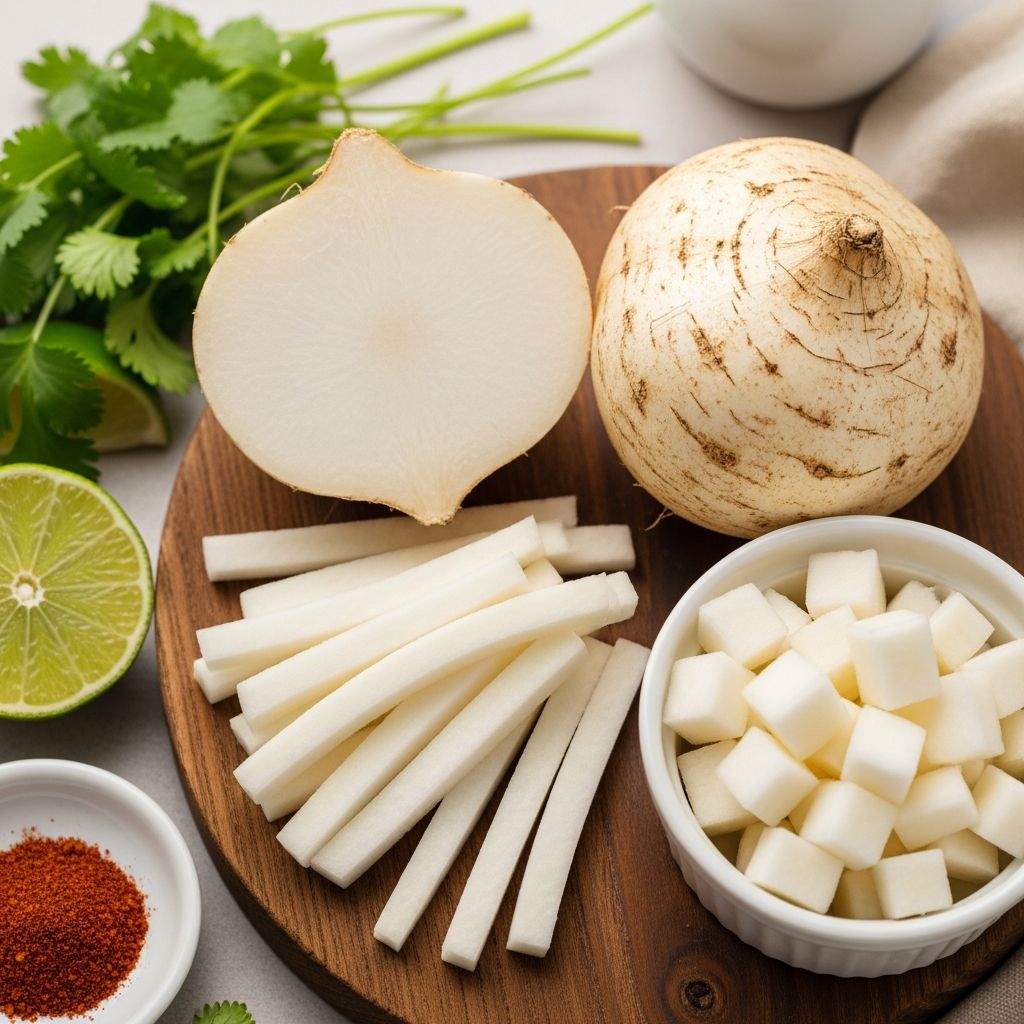
Jicama, also known as Mexican yam or Mexican turnip, is a crisp, mildly sweet root vegetable that has gained popularity for its unique texture and impressive nutritional profile. Native to Central and South America, this low-calorie food is hydrating, fiber-rich and versatile in the kitchen. With only about 38-49 calories per cup, jicama makes an excellent snack or salad addition while delivering antioxidants, prebiotic fiber and essential vitamins.
What Is Jicama?
Jicama (Pachyrhizus erosus) belongs to the bean family and grows on large, trailing vines. Only the bulbous taproot is edible—the leaves, seeds and stems contain toxic rotenone and must be avoided. The flesh is white, juicy and crunchy, similar to a pear or apple but with a subtle sweetness and no aftertaste. Its thin brown skin is easily peeled, revealing ivory-colored meat that’s 85-90% water.
Originating from Mexico and Central America, jicama has been cultivated for centuries and spread throughout Asia and the Pacific. Today, it’s widely available in the U.S. at grocery stores, often year-round. Select firm, unblemished roots with no soft spots or mold. Whole jicama can last up to a month in the fridge; cut pieces stay fresh 3-5 days wrapped tightly.
Jicama Nutrition Facts
One cup (130g) of raw jicama provides a nutrient-dense, low-energy snack. It’s predominantly carbohydrate-based from complex carbs and fiber, with minimal protein or fat. Key nutrients include:
- Calories: 38-49
- Carbohydrates: 9-11.5g
- Dietary Fiber: 5.9-6.4g (20-25% DV)
- Protein: 0.7-1g
- Fat: 0.1g
- Vitamin C: 26-29% DV (26-33mg)
- Potassium: 4-6% DV
- Folate: 4% DV
- Magnesium, Iron, Manganese: 4% DV each
- Vitamin E, Selenium, Beta-Carotene: Trace antioxidants
This makes jicama exceptionally low-glycemic (GI ~17), ideal for blood sugar control, and rich in inulin—a prebiotic fiber that feeds beneficial gut bacteria.
Potential Health Benefits of Jicama
1. Boosts Digestive Health
Jicama’s high soluble and insoluble fiber content (6.4g per cup) promotes regular bowel movements by bulking stool and speeding gastric emptying. Its signature prebiotic, inulin, selectively nourishes good gut bacteria like bifidobacteria, enhancing microbiome diversity. Studies link inulin to reduced constipation, lower inflammation and better mineral absorption.
Prebiotics from jicama may alleviate IBS symptoms, support immunity and even influence mood via the gut-brain axis. One animal study showed jicama-enhanced yogurt lowered blood sugar more effectively than plain probiotic yogurt, thanks to inulin.
2. High in Antioxidants
Ranking among antioxidant-rich foods, jicama supplies vitamin C (one-third RDA per cup), vitamin E, selenium and beta-carotene. These compounds neutralize free radicals, reducing oxidative stress linked to cancer, diabetes and heart disease. Vitamin C also bolsters immunity, collagen production and iron uptake.
3. Supports Heart Health
The combo of fiber, potassium and antioxidants targets multiple cardiovascular risks. Soluble fiber binds cholesterol in the gut, lowering LDL levels; potassium relaxes blood vessels to reduce blood pressure. A review confirms fiber intake cuts heart disease and stroke risk.
Related Stories



Jicama juice has shown unique benefits: one study found 500ml daily increased nitric oxide, preventing clots and relaxing arteries better than guava juice.
4. Aids Weight Loss and Satiety
At under 50 calories per cup with 6g fiber, jicama fills you up without excess energy. Fiber slows digestion, stabilizes blood sugar and curbs appetite. Its low insulin response combats resistance—a obesity driver. Animal research indicates jicama improves insulin sensitivity.
5. Stabilizes Blood Sugar
Low-GI carbs and inulin prevent glucose spikes, making jicama diabetic-friendly. Fiber moderates sugar release; prebiotics enhance insulin sensitivity. Cleveland Clinic notes it avoids drastic blood sugar fluctuations.
6. Strengthens Bones
Inulin boosts calcium/magnesium absorption, retaining minerals in bones. Phytoestrogens in jicama extract prevented osteoporosis in animal models mimicking postmenopausal bone loss.
7. Enhances Hydration and Skin Health
86% water plus electrolytes like potassium make jicama hydrating. Vitamin C supports collagen for skin elasticity and wound healing.
8. Additional Perks: Oral Health, Immunity, Brain Support
Vitamin C fights gum disease; B6 aids nerve function and energy metabolism; selenium protects brain cells.
How to Eat and Cook Jicama
Eat raw for maximum crunch and nutrients—peel first, then slice into sticks, fries or matchsticks. No cooking needed!
- Snacks: Sprinkle with lime, chili and salt (Mexican mexicolada style).
- Salads: Shred into slaw with cabbage, carrots, cilantro and vinaigrette.
- Spring Rolls: Sub for rice paper—add shrimp, herbs, avocado.
- Tacos: As low-carb shells with fish, slaw and salsa.
- Smoothies: Blend chunks for creaminess without sugar.
- Cooked: Stir-fry thin slices briefly; roast at 400°F for 20 min with oil/spices; pickle or ferment.
Storage Tip: Refrigerate whole up to 1 month; refrigerate cut in water up to 1 week. Avoid aluminum—causes discoloration.
Jicama Recipes
Easy Jicama Sticks (5 min)
Peel 1 medium jicama; cut into 3-inch sticks. Toss with lime juice, Tajín or chili powder. Serves 4 as snack (120 cal/serving).
Jicama Fruit Salad
Mix 2c diced jicama, 1c pineapple/orange, cilantro, mint, lime-honey dressing. Refreshing side dish.
Low-Carb Jicama Tacos
Thin-slice jicama into rounds; top with seasoned beef, avocado, salsa. Bake 10 min for flexibility.
FAQs
Is jicama keto-friendly?
Yes—net carbs ~5g per cup after fiber. Great low-carb swap for potatoes/carrots.
Can you eat jicama every day?
Absolutely; 1-2 cups daily boosts fiber intake safely for most people.
Does jicama cause gas?
Inulin may initially; start small and pair with digestive enzymes if needed.
Is jicama skin edible?
No—only peel and eat white flesh; skin, leaves, seeds are toxic.
How many calories in jicama fries?
~50 per cup baked plain—healthier than potato fries.
Jicama vs. Common Veggies: Nutrition Comparison
| Per 1 Cup Raw | Jicama | Potato | Carrot | Apple |
|---|---|---|---|---|
| Calories | 46 | 116 | 52 | 95 |
| Fiber (g) | 6.4 | 2.2 | 3.6 | 4.4 |
| Net Carbs (g) | 5 | 25 | 9 | 25 |
| Vit C (%DV) | 29 | 28 | 8 | 14 |
| Water (%) | 86 | 79 | 88 | 86 |
Jicama wins for fiber density and lowest calories/carbs.
References
- 8 Health and Nutrition Benefits of Jicama — Healthline. 2023-10-15. https://www.healthline.com/nutrition/jicama-nutrition-benefits
- Jicama: Nutrition and Health Benefits — WebMD. 2024-05-22. https://www.webmd.com/food-recipes/jicama-health-benefits
- Jicama vs. Potatoes: Health Benefits — Baptist Health. 2023-08-10. https://www.baptisthealth.com/blog/health-and-wellness/jicama-vs-potatoes-health-benefits
- What Is Jicama — and Is It Good for You? — Food Revolution Network. 2024-02-14. https://foodrevolution.org/blog/jicama-health-benefits/
- Jicama: Nutrition Facts and Benefits — Cleveland Clinic. 2023-11-08. https://health.clevelandclinic.org/jicama-nutrition
- Jicama: Health benefits, nutrition, and diet tips — Medical News Today. 2023-07-19. https://www.medicalnewstoday.com/articles/324241
Similar Articles








Read full bio of medha deb