Multiple Myeloma: Symptoms, Diagnosis, And Treatment Guide
Understand multiple myeloma: a plasma cell cancer causing bone pain, fatigue, and organ damage. Learn symptoms, causes, diagnosis, and treatments.
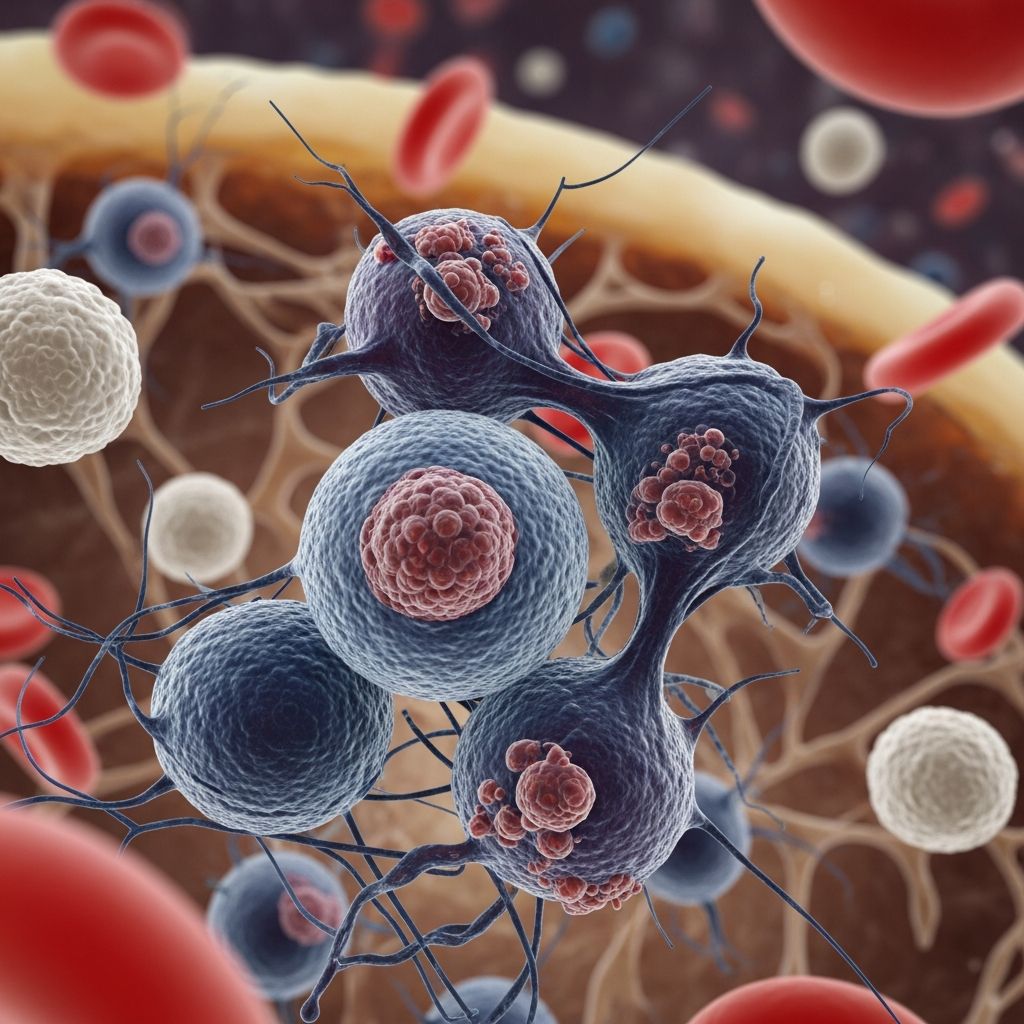
Multiple myeloma is a cancer of plasma cells, a type of white blood cell found in the bone marrow that produces antibodies to fight infections. In this disease, abnormal plasma cells called myeloma cells multiply uncontrollably, crowding out healthy blood cells and producing ineffective monoclonal proteins (M proteins) that damage organs like bones and kidneys.
Symptoms of Multiple Myeloma
Multiple myeloma often develops slowly and may not cause symptoms early on, sometimes discovered incidentally through routine blood tests showing elevated proteins. When symptoms appear, they stem from the CRAB criteria: hyper**calcemia** (high blood calcium),
renal
insufficiency,anemia
, andbone
lesions or pain. Common presentations include:- Bone pain: Particularly in the spine, ribs, chest, hips, or back, due to lytic lesions weakening bones and increasing fracture risk. Over 50-73% of patients report this.
- Fatigue and weakness: From anemia, affecting about 73% of newly diagnosed cases, as myeloma cells crowd out red blood cell production.
- Anemia: Low red blood cells causing pale skin, dizziness, shortness of breath; present in ~75% of cases.
- Kidney problems: Elevated creatinine in 48%, from M protein buildup leading to failure.
- Hypercalcemia: High calcium causing thirst, frequent urination, nausea, constipation, confusion (28% of cases).
- Infections: Frequent due to impaired immunity, like pneumonia or pyelonephritis.
- Other: Weight loss (24%), bruising, fevers, neuropathy (rare, may indicate amyloidosis), hyperviscosity (blurred vision, bleeding).
Nervous system issues like spinal cord compression from collapsed vertebrae can cause sudden back pain, leg numbness, or weakness—a medical emergency. Amyloidosis-related symptoms include enlarged tongue, carpal tunnel, or raccoon eyes.
Causes of Multiple Myeloma
The exact cause of multiple myeloma remains unknown, but it begins with genetic mutations turning normal plasma cells malignant. These cells proliferate in bone marrow, producing useless M proteins instead of functional antibodies. It often progresses from monoclonal gammopathy of undetermined significance (MGUS), a premalignant condition with low M protein levels that doesn’t initially harm. Risk escalates if MGUS evolves, influenced by genetic changes.
Risk Factors for Multiple Myeloma
Multiple myeloma is more common in older adults (median age 66-70), African Americans, and those with family history. Key risk factors include:
- Age over 65.
- African American race.
- Male gender.
- Family history of myeloma or MGUS.
- Previous MGUS or smoldering myeloma.
- Obesity and radiation exposure (less common).
It’s not contagious and rarely linked to lifestyle, though monoclonal proteins can be found in 3% of people over 50 without symptoms.
How Is Multiple Myeloma Diagnosed?
Diagnosis involves blood and urine tests, imaging, and bone marrow biopsy to confirm clonal plasma cells ≥10% and organ damage. Key tests:
| Test | Purpose |
|---|---|
| Blood tests: CBC, SPEP/UPEP, free light chains, beta-2 microglobulin | Detect anemia, M proteins, kidney function, disease burden |
| Urine tests: 24-hour for Bence Jones proteins | Identify light chains damaging kidneys |
| Bone marrow biopsy | Confirm plasma cell percentage and cytogenetics |
| Imaging: Skeletal survey, MRI, PET-CT, low-dose CT | Detect lytic lesions |
| Biopsy: Affected bone or soft tissue | Rule out other cancers |
Diagnosis requires biopsy-proven bony/plasmacytoma or ≥60% marrow plasma cells, plus biomarkers like high light chain ratio.
Multiple Myeloma Stages
Staging uses the Revised International Staging System (R-ISS), combining blood tests, genetics, and LDH levels into stages I-III, predicting survival. Durie-Salmon system assesses tumor burden via M protein, hemoglobin, calcium, lesions. Smoldering myeloma (asymptomatic) is monitored, not treated immediately.
Treatment for Multiple Myeloma
Treatment is not curative but manages as chronic condition, using induction therapy, stem cell transplant (SCT), maintenance, aiming for remission. Tailored by age, health, risk.
- Induction: 3-4 drug regimens like VRd (bortezomib, lenalidomide, dexamethasone) for transplant candidates.
- Autologous SCT: High-dose chemo followed by own stem cells; improves survival for eligible patients.
- Maintenance: Lenalidomide post-SCT to delay relapse.
- Relapsed/refractory: Daratumumab, carfilzomib, pomalidomide, selinexor, bispecific antibodies (teclistamab), CAR-T (idecabtagene vicleucel).
Related Stories



Supportive care: bisphosphonates/denosumab for bones, radiation for pain, infection prophylaxis, erythropoietin for anemia. Clinical trials offer new options like venetoclax.
Multiple Myeloma Prognosis
Prognosis varies; 5-year survival ~59%, better with novel therapies (10-year survival doubled past decade). High-risk cytogenetics (del(17p), t(4;14)) worsen outlook; early SCT improves it. Median survival 5-7 years, many live longer in remission.
Prevention and Living With Multiple Myeloma
No known prevention, but early detection via monitoring high-risk groups helps. Lifestyle: healthy weight, exercise, vaccinations reduce complications. Patients manage with regular checkups, support groups.
Frequently Asked Questions (FAQs)
What is multiple myeloma in simple terms?
A blood cancer where plasma cells in bone marrow grow out of control, causing bone damage, fatigue, and infections.
Is multiple myeloma curable?
Not typically curable, but treatments control it long-term, with many achieving prolonged remission.
What are the first signs of multiple myeloma?
Bone pain, persistent fatigue, frequent infections, unexplained anemia.
How fast does multiple myeloma progress?
Slowly at first (from MGUS), but accelerates with symptoms.
Who is at risk for multiple myeloma?
Older adults (>65), African Americans, those with family history or MGUS.
Can multiple myeloma be detected early?
Yes, via blood tests showing M proteins in routine screening.
References
- Multiple Myeloma – StatPearls — NCBI Bookshelf. 2023-10-01. https://www.ncbi.nlm.nih.gov/books/NBK534764/
- Multiple Myeloma: Definition, Symptoms, and Risk Factors — Fox Chase Cancer Center. 2024. https://www.foxchase.org/clinical-care/conditions/multiple-myeloma-amyloidosis-and-plasma-cell-disorders/about
- 3 Early Symptoms That May Point To Myeloma — Cancer Center. 2025-04-01. https://www.cancercenter.com/community/blog/2025/04/3-common-myeloma-symptoms
- Multiple myeloma – Symptoms and causes — Mayo Clinic. 2024-12-20. https://www.mayoclinic.org/diseases-conditions/multiple-myeloma/symptoms-causes/syc-20353378
- Multiple Myeloma — MedlinePlus. 2024. https://medlineplus.gov/multiplemyeloma.html
- Myeloma Basics — CDC. 2024. https://www.cdc.gov/myeloma/about/index.html
- Signs and Symptoms of Multiple Myeloma — American Cancer Society. 2024. https://www.cancer.org/cancer/types/multiple-myeloma/detection-diagnosis-staging/signs-symptoms.html
Similar Articles








Read full bio of Sneha Tete