What Is Myositis Ossificans: Causes, Symptoms & Treatment
Understanding myositis ossificans: bone formation in muscle tissue after trauma.
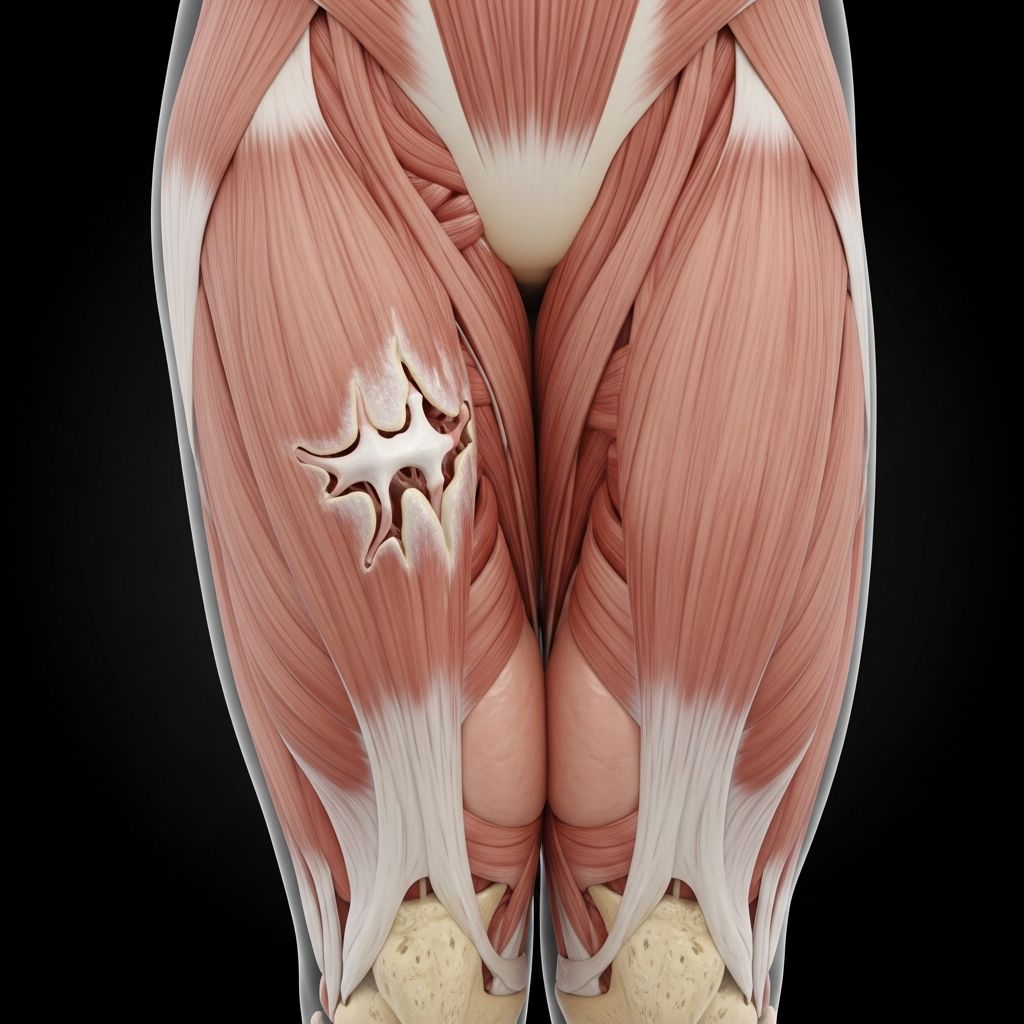
What Is Myositis Ossificans?
Myositis ossificans is a medical condition in which bone tissue forms abnormally inside muscle or other soft tissue where bone should not typically develop. The name “myositis ossificans” literally refers to inflammation of muscle tissue that becomes ossified or hardened into bone. However, despite its name, this condition does not involve true inflammation of the muscle itself. Instead, it represents an abnormal healing response where the body creates bone cells in the wrong location. This benign condition is characterized by abnormal heterotopic bone formation, typically involving striated muscle and soft tissue surrounding joints.
Understanding the Basics
When you experience a traumatic injury to muscle tissue, your body initiates a complex healing process. Normally, this process repairs damaged muscle fibers and returns tissue to its original state. However, in some individuals, this healing mechanism misfires. Instead of generating the muscle cells (fibroblasts) needed for proper muscle repair, the body produces immature bone cells at the injury site. This cellular mistake leads to a gradual accumulation of bone tissue within the muscle, creating what feels like a hard lump or bump beneath the skin.
The condition most frequently affects large muscles in the extremities, particularly around the elbow, hip, shoulder, and thigh regions. Young, active adults and athletes experience this condition most commonly, though it can develop in anyone following a significant traumatic injury. Additionally, individuals who are paralyzed from the waist down face an increased risk of developing myositis ossificans, even without a recognizable traumatic event.
Causes and Risk Factors
Myositis ossificans primarily develops following traumatic injury to muscle tissue or bone. The most common causes include:
Traumatic Injuries
The primary trigger for myositis ossificans is blunt trauma to muscle or soft tissue. This might occur through sports-related injuries such as direct hits while playing football or soccer that cause deep muscle bruising. Motor vehicle accidents, falls from significant heights, or crush injuries can also precipitate bone formation within muscle tissue. The severity of the initial injury influences the likelihood of developing this condition, with more severe trauma increasing the risk.
Repetitive Injury
While single traumatic events cause most cases, repetitive injuries to the same area can also trigger myositis ossificans. Horseback riders, for example, may develop this condition in their thigh muscles due to repeated friction and microtrauma. Athletes who experience chronic overuse injuries in specific muscle groups face elevated risk of heterotopic bone formation.
Muscle Strains and Contusions
Severe muscle contusions can trigger myositis ossificans, causing bone to form within the injured muscle tissue. Severe muscle strains, though rare as a cause, may also result in this condition’s development. High-energy crushing injuries to muscle tissue significantly increase the probability of abnormal bone formation.
Risk Factor Populations
Certain populations face higher risks for developing myositis ossificans. Young, active adults and competitive athletes at all levels—from recreational to professional—experience this condition more frequently than the general population. Individuals with spinal cord injuries and paralysis from the waist down show markedly increased susceptibility. Some individuals may have a genetic predisposition to heterotopic bone formation following trauma.
Related Stories



Types of Myositis Ossificans
Medical professionals recognize two primary classifications of myositis ossificans:
Myositis Ossificans Traumatica
This represents the most common form, developing after traumatic injury to muscle or soft tissue. It occurs when the body makes an error during the healing process, replacing muscle cells with bone cells. Most individuals with myositis ossificans traumatica experience resolution of symptoms within weeks to months, making this form generally more favorable in terms of prognosis.
Myositis Ossificans Progressiva
This rare hereditary form results from a gene mutation that individuals may inherit from parents or that occurs spontaneously without known cause. This type is more severe, progressive, and difficult to treat compared to traumatic myositis ossificans. Individuals with myositis ossificans progressiva typically require specialized management strategies.
Symptoms and Clinical Presentation
The symptoms of myositis ossificans develop gradually over weeks following the initial injury. Most individuals do not immediately recognize symptoms, as the bone formation process occurs slowly beneath the skin surface.
Early Symptoms
In the acute phase following injury, symptoms may include:
- Local warmth in the affected muscle area
- Swelling or enlargement of the muscle region
- Pain and tenderness at the injury site
- Decreased range of motion in nearby joints
- Mild to moderate discomfort that may worsen over time
Progressive Symptoms
As bone formation progresses, individuals typically notice a palpable lump or hard bump developing within the muscle. Unlike typical muscle strains that improve with time, myositis ossificans may cause pain that worsens rather than improves. The enlarging bone mass restricts muscle function, leading to progressive limitation of joint movement. Range of motion gradually decreases as the ossified tissue occupies space previously filled by healthy muscle.
Variable Presentations
In approximately 80 percent of cases, the painful, tender, enlarging mass develops in large muscles of the extremities. Some individuals experience a painless enlarging mass with reduced motion, typically noted weeks after trauma. The specific symptoms depend on the location of bone formation and its proximity to major joints.
Diagnosis and Imaging
Diagnosing myositis ossificans requires a combination of clinical assessment, patient history, and imaging studies.
Clinical Evaluation
Before diagnosing myositis ossificans, a physician will conduct a thorough assessment including questions about the injury mechanism, timing of the injury, current symptoms, and management steps already taken. Physical examination may reveal a palpable mass, warmth, swelling, and restricted range of motion in the affected area.
Radiographic Findings
Plain radiographic findings vary depending on disease stage. Early-stage myositis ossificans, occurring within the first two to four weeks after injury, shows soft tissue swelling and faint peripheral calcification. Radiographs during this phase may display a “dotted wheel” pattern of irregular soft tissue densities.
In the intermediate stage, occurring five to twenty-four weeks post-injury, well-defined calcification develops with possible coarser central calcification. The characteristic “zoning pattern” emerges during this phase, featuring peripheral mineralization resembling an eggshell made of lamellar bone, with a lucent central area composed of immature tissue. This peripheral maturation pattern is the opposite of malignant tumors such as osteosarcoma, where central portions are more mature.
After full maturation, occurring beyond six months, a densely calcified lesion appears, usually parallel to the long axis of the adjacent bone.
Laboratory Findings
Laboratory findings are typically normal in myositis ossificans. However, erythrocyte sedimentation rate (ESR) and alkaline phosphatase levels may be elevated during the acute inflammatory phase, reflecting the active bone formation process.
Distinguishing from Malignancy
It is critically important to recognize plain radiographic features of myositis ossificans because the condition can be mistaken for a malignant process such as osteosarcoma. Features suggesting malignancy rather than myositis ossificans include central mineralization (rather than peripheral), attachment to underlying bone, and increasing size with time. Myositis ossificans typically shrinks as it matures, whereas osteosarcoma continues enlarging.
Treatment Options
Treatment strategies for myositis ossificans vary based on the type, severity, and functional impact of the condition.
Conservative Management
Most individuals with myositis ossificans traumatica respond well to nonsurgical treatment approaches. Conservative management typically includes:
- Rest and activity modification to reduce stress on affected muscle
- Ice application to manage swelling and discomfort
- Nonsteroidal anti-inflammatory medications to reduce pain and inflammation
- Gentle range-of-motion exercises to maintain joint mobility
- Physical therapy to preserve muscle function and prevent stiffness
Prophylactic Interventions
In high-risk situations, such as following major orthopedic surgery or severe trauma, physicians may recommend prophylactic measures. Indomethacin, a nonsteroidal anti-inflammatory drug, can be administered to reduce the risk of heterotopic bone formation. Radiation therapy to the affected area may also prevent myositis ossificans development in selected high-risk patients.
Surgical Intervention
Surgical removal of the ossified bone is generally not recommended during the active formation phase, as surgery often stimulates further bone formation. However, once the lesion has fully matured (typically after twelve months or longer), surgical excision may be considered if the bone mass significantly limits function or causes persistent pain. Surgery is typically delayed until imaging confirms complete maturation of the lesion.
Prognosis and Recovery
The prognosis for myositis ossificans traumatica is generally favorable. Most individuals experience resolution of symptoms within several weeks to months after the initial injury. The condition is self-limiting, meaning it typically stabilizes and does not progress indefinitely. However, hereditary forms of myositis ossificans progressiva have a more guarded prognosis, with progressive bone formation that is more difficult to manage.
It can be difficult to predict who will develop myositis ossificans following trauma, and equally challenging to predict the severity and extent of bone formation in affected individuals. Some people develop minimal ossification that causes little functional impairment, while others experience more extensive bone formation that significantly restricts movement.
Frequently Asked Questions
Q: What is the difference between myositis ossificans and heterotopic ossification?
A: Some doctors view myositis ossificans and heterotopic ossification as two points on the same spectrum. Both conditions involve bone forming in and around soft tissue, usually muscle. They produce similar problems including pain, local signs of inflammation, and loss of motion. The terms are often used interchangeably in clinical practice.
Q: Can myositis ossificans be prevented?
A: While it is impossible to completely prevent myositis ossificans in all cases, prophylactic measures such as nonsteroidal anti-inflammatory medications or radiation therapy may be recommended in high-risk situations following severe trauma or major surgery.
Q: Is myositis ossificans cancer?
A: No, myositis ossificans is a benign condition, not cancer. However, because the histologic appearance can resemble osteosarcoma (a malignant bone tumor), imaging studies and clinical correlation are essential for accurate diagnosis.
Q: How long does myositis ossificans last?
A: Most cases of myositis ossificans traumatica resolve within weeks to months. Complete maturation and stabilization typically occurs within six to twelve months. Hereditary forms may persist longer.
Q: Will I need surgery for myositis ossificans?
A: Most individuals with myositis ossificans traumatica do not require surgery and improve with conservative management. Surgery is only considered if the bone significantly limits function and only after the lesion has fully matured, typically after one year or more.
Q: Which muscle is most commonly affected?
A: The quadriceps muscle in the thigh is among the most frequently affected, along with other large muscles of the arms and legs including the brachialis, gluteal muscles, and deltoid.
When to Seek Medical Care
Contact a healthcare provider if you experience persistent pain, swelling, or a palpable lump in muscle tissue following a traumatic injury. Seek immediate medical attention if you develop signs of nerve compression, such as numbness, tingling, or significant weakness in the affected area. Early evaluation and diagnosis facilitate appropriate management and monitoring of the condition.
References
- Myositis Ossificans — National Center for Biotechnology Information (NCBI/PubMed Central). 2012-09-15. https://www.ncbi.nlm.nih.gov/pmc/articles/PMC3236150/
- Myositis Ossificans: Diagnosis, Symptoms and Treatment — Cleveland Clinic. 2024. https://my.clevelandclinic.org/health/diseases/22419-myositis-ossificans
- Myositis Ossificans: Causes, Risk Factors, and Treatment — Medical News Today. 2024. https://www.medicalnewstoday.com/articles/320718
- Myositis Ossificans — Physiopedia. 2024. https://www.physio-pedia.com/Myositis_Ossificans
- Myositis Ossificans: Causes, Diagnosis, Imaging, and Treatment — Educational Medical Content. 2024. https://www.youtube.com/watch?v=XulKq46oaw4
Similar Articles








Read full bio of medha deb