Plateau Iris Configuration: Diagnosis, Treatment, Prognosis
Discover the essentials of plateau iris configuration, its impact on eye pressure, diagnostic methods, and effective treatments for preventing glaucoma.
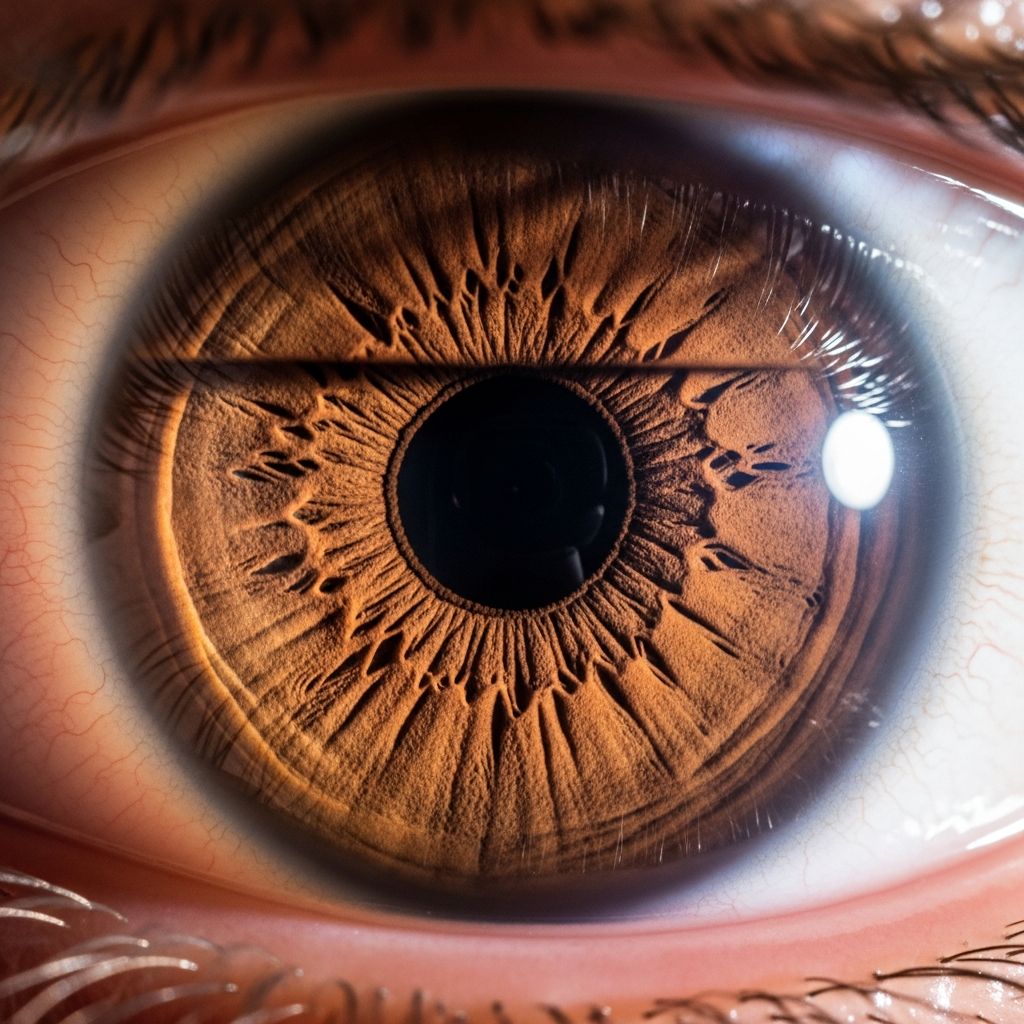
Plateau iris configuration represents a distinctive anatomical arrangement in the eye where the iris maintains a flat plane despite a typically normal central anterior chamber depth, potentially predisposing individuals to angle-closure glaucoma through peripheral iris displacement by the ciliary body. This condition often manifests in younger patients and requires precise diagnosis to differentiate it from other forms of glaucoma.
Understanding the Anatomy of Plateau Iris
The eye’s anterior segment includes the cornea, iris, ciliary body, and trabecular meshwork, which collectively manage aqueous humor drainage to regulate intraocular pressure (IOP). In plateau iris configuration, the ciliary body is positioned more anteriorly or exhibits increased volume, pushing the peripheral iris forward against the trabecular meshwork. This creates a ‘plateau’ effect where the iris root inserts steeply and shortly onto the ciliary body surface, lacking a typical ciliary sulcus.
Key anatomical hallmarks include:
- A centrally flat iris surface with normal anterior chamber depth.
- Anteriorly directed ciliary processes that support and convex the iris periphery.
- Absence of the ciliary sulcus, leading to irido-trabecular contact.
These features distinguish plateau iris from typical pupillary block mechanisms, where a shallow anterior chamber dominates.
Plateau Iris Configuration vs. Syndrome: Key Differences
While configuration describes the static anatomy, plateau iris syndrome emerges when this anatomy causes persistent angle closure post-iridotomy, confirmed by gonioscopy showing occludable angles despite a patent laser opening in the iris. The syndrome often involves residual pupillary block or mechanical obstruction.
| Aspect | Plateau Iris Configuration | Plateau Iris Syndrome |
|---|---|---|
| Definition | Anatomical variant with flat iris and normal central depth | Persistent angle closure after iridotomy |
| Anterior Chamber | Normal depth | Normal depth, but angle occludable |
| IOP Impact | May not elevate IOP immediately | Often raises IOP due to outflow blockage |
| Prevalence | More common | Rarer, seen in younger patients |
Syndrome subtypes include complete (full angle closure to Schwalbe’s line with high IOP) and incomplete (partial closure with normal IOP but risk of progression).
Clinical Presentation and Risk Factors
Patients may experience intermittent blurred vision, halos around lights, headaches, or acute IOP spikes, particularly under dark conditions or with pupil dilation. It predominantly affects younger females under 50, contrasting with age-related angle closure. Risk escalates with family history of glaucoma or Asian ethnicity, though it’s rarer overall.
Symptoms can mimic subacute or chronic angle-closure glaucoma, with gonioscopy revealing a double-hump sign during indentation: an initial elevation over ciliary processes, a mid-peripheral dip, and a secondary rise.
Diagnostic Approaches
Diagnosis hinges on clinical exam and imaging. Initial steps include slit-lamp biomicroscopy to assess iris plane and chamber depth, followed by gonioscopy to evaluate angle status pre- and post-mydriasis.
Advanced imaging is crucial:
- Ultrasound Biomicroscopy (UBM): High-resolution anterior segment imaging detects anterior ciliary processes, short iris root, and iridotrabecular touch. Useful for darkroom provocative tests.
- Optical Coherence Tomography (OCT): Non-contact visualization of angle structures, confirming plateau features and post-treatment changes.
- Gonioscopy: Indentation reveals characteristic signs; persistent closure post-iridotomy flags syndrome.
Related Stories



Post-iridotomy IOP monitoring is vital; a rise suggests plateau iris.
Differential Diagnosis
Ruling out mimics is essential:
- Pseudo-Plateau Iris: Ciliary body cysts (neuroepithelial or iris) cause focal angle closure, identifiable by UBM as discrete lesions.
- Pupillary Block Glaucoma: Responds to iridotomy with angle opening.
- Plateau-like Variants: Lens-induced or malignant glaucoma, differentiated by imaging and history.
UBM excels in distinguishing true plateau from cystic anomalies.
Treatment Strategies
Management escalates from conservative to interventional based on severity.
Initial Therapy: Laser peripheral iridotomy (LPI) addresses any pupillary block component, creating a peripheral iris opening to equalize pressures. However, in syndrome, angles remain narrow.
Definitive Treatment – Argon Laser Peripheral Iridoplasty (ALPI): Contracts peripheral iris via laser burns (200-500μm spot, 0.2-0.6s duration, 150-300mW power), pulling it from the angle. Highly effective, with low retreatment rates.
Pharmacologic Options: Miotics like pilocarpine constrict pupil and open angles temporarily; used adjunctively or long-term in mild cases. Avoid mydriatics to prevent attacks.
Surgical Interventions: Reserved for advanced cases with synechiae >180° or refractory glaucoma: trabeculectomy or tube shunts after ALPI.
Prognosis and Long-Term Management
With timely ALPI, most achieve open angles and IOP control, preventing optic nerve damage. Incomplete syndrome patients risk delayed synechiae, necessitating lifelong monitoring: annual gonioscopy, IOP checks, and imaging.
Lifestyle advice includes avoiding dim lighting triggers and prompt reporting of symptoms.
FAQs
What causes plateau iris configuration?
An anteriorly positioned or enlarged ciliary body displaces the iris periphery, narrowing the drainage angle.
Is plateau iris common?
Configuration is more frequent than syndrome, which is rare and often in younger patients.
How is it diagnosed?
Gonioscopy, UBM, and OCT confirm anatomy; post-iridotomy persistence defines syndrome.
Can it lead to blindness?
Untreated, yes, via glaucoma damage; early intervention prevents this.
What is the best treatment?
ALPI after LPI for syndrome cases.
References
- PLATEAU IRIS – DIAGNOSIS AND TREATMENT — PMC/NCBI. 2017-12-01. https://pmc.ncbi.nlm.nih.gov/articles/PMC5729809/
- Plateau iris — Wikipedia. N/A. https://en.wikipedia.org/wiki/Plateau_iris
- Plateau Iris — Vagelos College of Physicians and Surgeons. N/A. https://www.vagelos.columbia.edu/departments-centers/ophthalmology/education/digital-reference-ophthalmology/glaucoma/angle-closure-glaucoma/plateau-iris
- Plateau iris — PubMed. 2008-11-01. https://pubmed.ncbi.nlm.nih.gov/19039479/
- Lecture: Plateau Iris Syndrome (1 Slide in 5 Minutes) — YouTube/Cybersight. 2023-02-28. https://www.youtube.com/watch?v=GHDhZU-thSw
- Treating Plateau Iris — Glaucoma Today. 2012-09-01. https://glaucomatoday.com/articles/2012-sept-oct/treating-plateau-iris
Similar Articles








Read full bio of medha deb