What Is the Pons? Structure, Function & Anatomy
Understanding the pons: Your brainstem's vital relay center for breathing, sleep, and sensory function.
What Is the Pons?
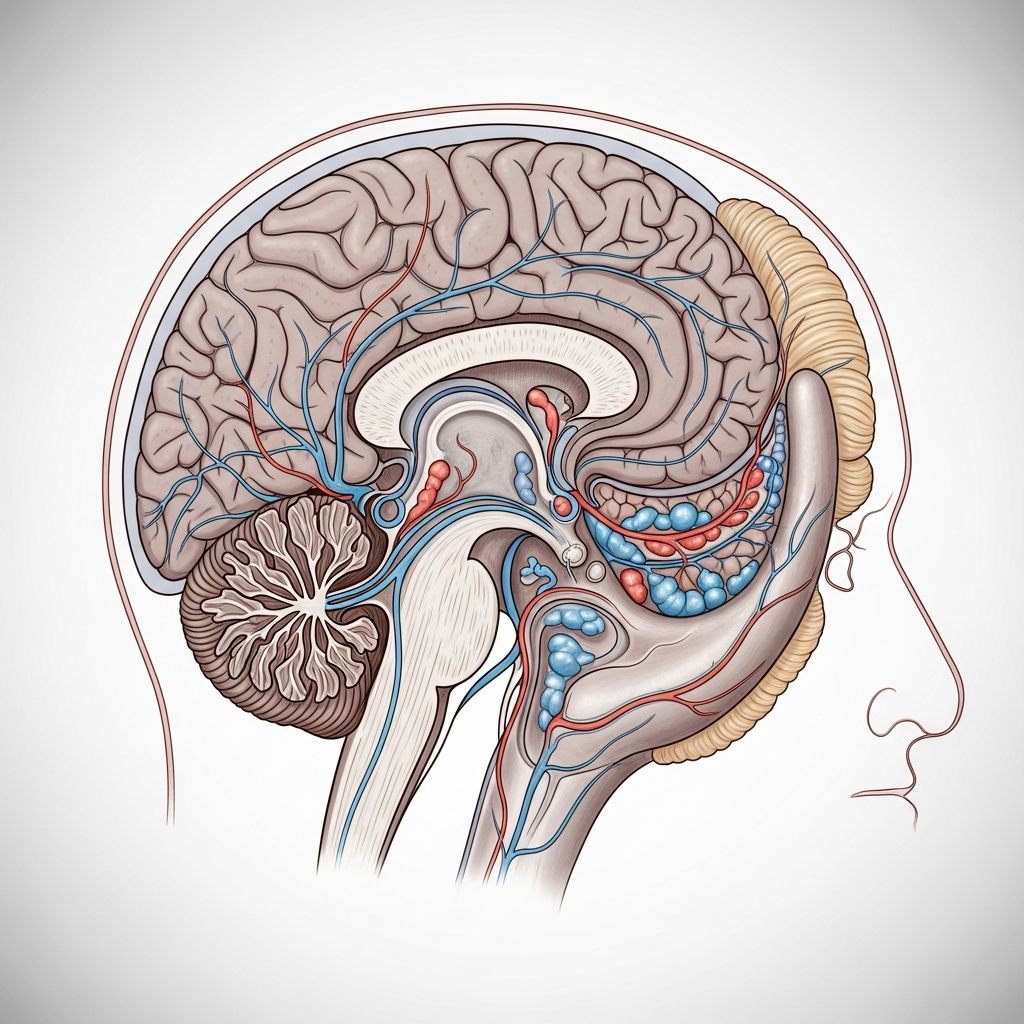
Your pons is a vital part of your brainstem, the structure that forms a critical connection linking your brain to your spinal cord. The pons serves as a relay station and junction point, handling many of the unconscious processes your body performs every single day. Located between your midbrain above and your medulla oblongata below, the pons acts as a bridge—in fact, the word “pons” is Latin for bridge. This strategic position makes it essential for transmitting signals between different regions of your brain and controlling fundamental life processes.
The pons is the second-lowest section of your brainstem, positioned just above the medulla oblongata. This anatomical placement is crucial because it allows the pons to function as a key merging point where nerve signals travel between your brain and the rest of your body. Understanding the pons is important for recognizing how your brain coordinates everything from your breathing patterns to your facial expressions.
Pons Location and Anatomy
Where Is the Pons Located?
The pons is located deep within your brain, specifically in the lower portion of your brain situated directly in front of your cerebellum. As part of your brainstem, it occupies a strategic position that allows it to serve as a communication highway between your cerebrum (the thinking part of your brain) and your cerebellum (responsible for coordination and balance). The pons connects directly to your spinal cord below, making it a critical link in your nervous system.
Structural Divisions of the Pons
The pons is divided into two main structural regions, each with distinct functions and characteristics:
The Ventral Portion: This section of your pons contains the pontine nuclei and transverse nerve fibers that cross through this region. The ventral portion serves as a major pathway for motor information traveling from your brain down through your spinal cord. It houses important neural structures and is involved in coordinating muscle movements and transmitting signals related to voluntary actions.
The Dorsal Portion: Also known as the tegmentum, this section of the pons houses several important neural structures. The dorsal portion relates to the cerebellar peduncles, which are bundles of nerve fibers that connect the cerebellum to other parts of your brain. This region plays a significant role in regulating unconscious processes and coordinating information flow between your brain regions.
Cranial Nerves in the Pons
One of the most important features of the pons is that it serves as a host to four of your twelve cranial nerves. These cranial nerves have direct connections to your brain and control numerous vital functions. The nerves found in your pons are responsible for helping you perform essential sensory and motor tasks that you often take for granted.
The cranial nerves in the pons enable you to:
– Chew food properly through coordinated jaw movements
– Blink your eyes to keep them moist and protected
– Focus your vision on objects at various distances
– Maintain balance and equilibrium
– Produce tears to lubricate and protect your eyes
– Hear and process sound information
– Make facial expressions that communicate emotions
Related Stories



These nerve connections are vital for your daily functioning and demonstrate just how important the pons is for controlling the muscles and carrying sensory information from your head and face to your brain.
Primary Functions of the Pons
Signal Transmission and Relay
The pons functions as a sophisticated relay system within your brain. Its primary role is to transmit signals between your forebrain (cerebrum) and your cerebellum. The nerve fibers in your pons connect the cerebrum and cerebellum while also connecting the right and left parts of your brain. This relay system holds important messages and directs them to the appropriate parts of your brain and body, ensuring that information flows smoothly between different neural regions.
Sensory and Motor Information Processing
The pons is essential in sending both sensory and motor information throughout your body. This dual role means that the pons helps you:
– Process taste sensations from your tongue and mouth
– Recognize and interpret touch sensations from your face and head
– Receive motor commands that allow you to move your facial muscles
– Communicate through speech and facial expressions
– Respond to pain signals and other protective sensations
This comprehensive processing capability makes the pons absolutely essential for your ability to interact with your environment and communicate with others.
Breathing Regulation
One of the most critical functions of the pons is regulating your breathing. Within the pons is a specialized bundle of nerve cells called the pneumotaxic center. This neural structure plays an essential role in controlling how much air you breathe and how frequently you take breaths. The pneumotaxic center works continuously to ensure that you get adequate oxygen whether you are sitting, walking, running, or sleeping. This automatic regulation of breathing is one of the pons’ most vital contributions to keeping you alive.
The pons works together with the medulla oblongata to generate and maintain the respiratory rhythm that keeps your body supplied with oxygen. Without proper pons function, breathing patterns can become irregular or insufficient, leading to serious health complications.
Sleep-Wake Cycle Regulation
The pons plays a fundamental role in regulating your sleep-wake cycle. Several neurotransmitters present in the pons facilitate brain function, particularly during sleep. The pons is actively involved in generating rapid eye movement (REM) sleep, the stage of sleep where most dreaming occurs and where significant brain consolidation of memories happens. Active functioning of the pons is essential for achieving normal, healthy sleep patterns.
Neurotransmitters and Brain Function
Multiple neurotransmitters are active in the pons, contributing to various aspects of brain function and body regulation. These chemical messengers facilitate communication between nerve cells and influence everything from your mood to your alertness level. The neurotransmitter systems in the pons are particularly important for managing your sleep states and transitions between sleep and wakefulness.
Several important neural structures within the pons release neurotransmitters that affect how you feel, think, and function. These chemical systems are targets for various medications used to treat sleep disorders, depression, and other neurological conditions.
Pain Processing and Protective Functions
Your pons helps with pain perception, processing sensory input related to painful stimuli and allowing your brain to recognize and respond to potentially harmful situations. This pain sensation is crucial for your survival because it alerts you to injuries or dangerous conditions, helping you react quickly to limit or prevent further damage. The pons integrates this pain information with other sensory data to provide your brain with a complete picture of your physical situation.
Frequently Asked Questions About the Pons
What happens if the pons is damaged?
Damage to the pons can result from strokes, tumors, infections, or traumatic brain injuries. A stroke affecting the pons results from either a large-vessel stroke or small-vessel disease within the posterior circulation. Pontine damage can lead to serious complications including loss of motor control, breathing difficulties, loss of consciousness, or even death, depending on the severity and location of the injury.
What is the difference between the pons and the medulla oblongata?
The pons and medulla oblongata are both parts of your brainstem but have distinct locations and functions. The pons is positioned above the medulla oblongata and serves primarily as a relay station and bridge between brain regions. The medulla oblongata, located below the pons, controls vital functions like heart rate and basic breathing patterns. While they work together in many processes, they handle different aspects of neurological function.
Why is the pons called a bridge?
The pons is called a bridge because it literally forms a connection between different parts of your brain. The word “pons” comes from Latin and means bridge. Just as a physical bridge connects two areas separated by a gap, the pons connects your cerebrum to your cerebellum and coordinates communication between the right and left sides of your brain.
Can problems with the pons affect sleep?
Yes, since the pons is actively involved in generating and regulating REM sleep and managing your sleep-wake cycle, problems with the pons can significantly affect sleep quality and patterns. Damage to the pons can result in sleep disturbances, insomnia, excessive daytime sleepiness, or irregular sleep cycles.
How does the pons contribute to facial expressions?
The pons houses cranial nerves that control the facial muscles responsible for expressions. These nerve pathways allow your brain to send commands that create smiles, frowns, and other facial expressions. The pons processes this motor information and coordinates the muscle contractions needed for expressive communication.
Clinical Significance of the Pons
The pons is a potential anatomical site for various neurological conditions, including tumors, infarction (stroke), and demyelinating disorders. Most pontine tumors are diffuse in nature, making chemotherapy and radiotherapy frequently preferred over surgical resection. However, patients with focal, low-grade tumors may be candidates for surgery. The pons’ strategic location and complex internal structure make it a challenging area to treat surgically, requiring specialized approaches and expertise.
Understanding pons anatomy is crucial for neurosurgeons and neurologists when treating brain conditions. The specific location of a lesion within the pons primarily determines the treatment approach and surgical route that may be used.
References
- Pons — Britannica. Accessed December 2025. https://www.britannica.com/science/pons-anatomy
- Neuroanatomy, Pons — StatPearls, National Center for Biotechnology Information (NCBI). December 2024. https://www.ncbi.nlm.nih.gov/books/NBK560589/
- Pons: What to Know — WebMD. Accessed December 2025. https://www.webmd.com/brain/pons-what-to-know
- What Is the Pons? — Cleveland Clinic. Accessed December 2025. https://my.clevelandclinic.org/health/body/23003-pons
- The Pons – Function, Location, Vasculature — TeachMeAnatomy. Accessed December 2025. https://teachmeanatomy.info/neuroanatomy/brainstem/pons/
Similar Articles








Read full bio of medha deb