Disordered Eating Vs Eating Disorder: 4 Key Differences
Understand the key differences between disordered eating behaviors and clinically diagnosable eating disorders, including symptoms, impacts, and when to seek help.
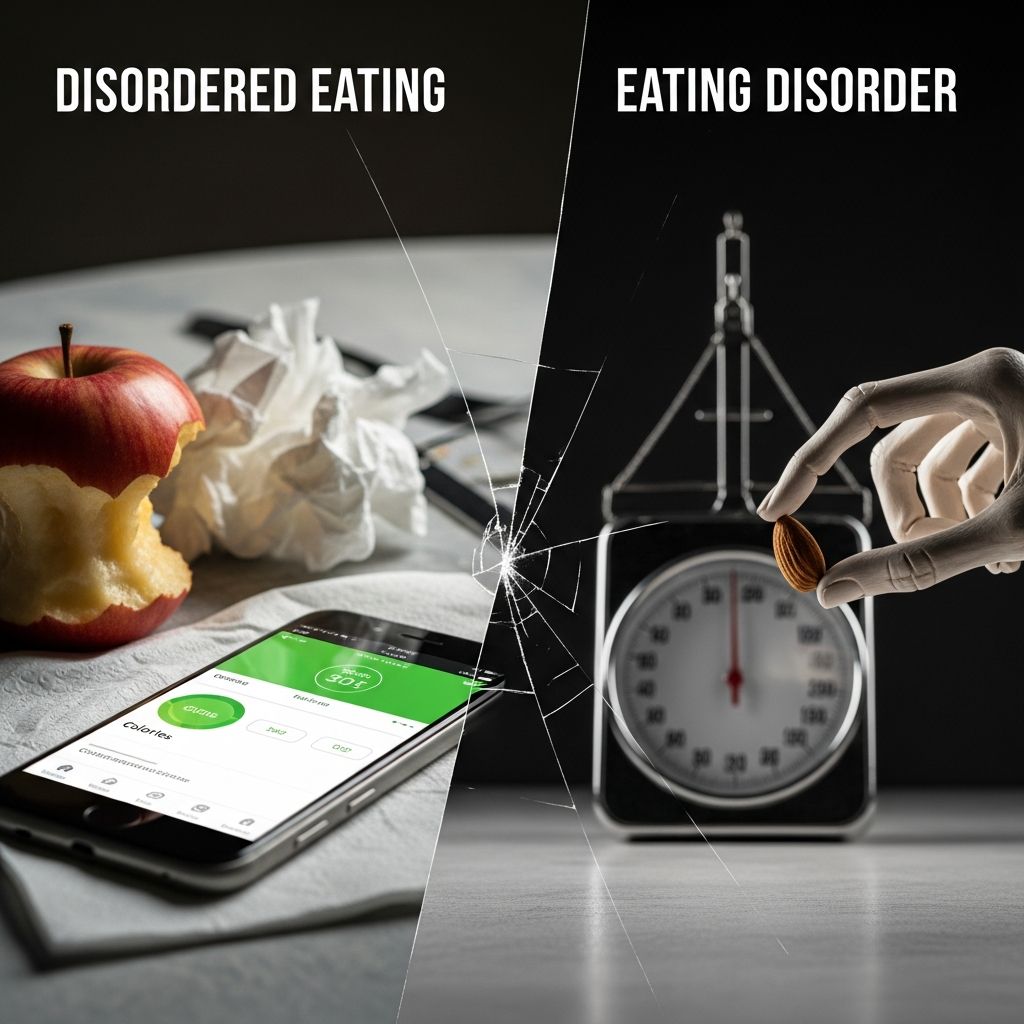
Eating disorders are serious mental health conditions diagnosable under DSM-5 criteria, while disordered eating encompasses milder, irregular behaviors that do not meet full diagnostic thresholds but can still harm well-being.
What is disordered eating?
Disordered eating describes a wide range of irregular eating habits and attitudes toward food, body image, and weight that fall short of clinical eating disorder diagnoses. These patterns often stem from societal pressures, dieting culture, or emotional coping but lack the frequency, intensity, or life impairment required for formal diagnosis. Common examples include rigid calorie tracking, moral labeling of foods as ‘good’ or ‘bad,’ occasional meal skipping, or using exercise to compensate for eating.
While not a mental illness per se, disordered eating exists on a spectrum and serves as a risk factor for progressing to full eating disorders if unaddressed. It can lead to nutrient deficiencies, fatigue, or strained relationships with food over time.
- Rigid dieting or fasting without medical supervision
- Binge eating in response to stress, without regular recurrence
- Avoiding food groups like carbs or fats
- Guilt or anxiety after eating certain foods
- Over-exercising to ‘earn’ meals
These behaviors are widespread; studies show up to 75% of young women engage in some form of disordered eating, often normalized by media and wellness trends.
What is an eating disorder?
Eating disorders are clinically recognized mental illnesses defined by the DSM-5-TR, involving severe disturbances in eating behaviors, intense preoccupation with body weight/shape, and significant psychological distress. They require specific symptom frequency (e.g., weekly for 3 months) and cause malnutrition, organ damage, or social withdrawal.
The National Eating Disorders Association (NEDA) emphasizes that eating disorders affect all demographics, with lifetime prevalence around 9% in the U.S., higher in certain groups. Unlike disordered eating, they demand professional intervention, often multidisciplinary treatment including therapy, nutrition, and medical care.
Main types of eating disorders
- Anorexia Nervosa: Extreme restriction leading to dangerously low weight, with intense fear of gaining weight despite underweight status. Symptoms include denial of low weight seriousness and body image distortion.
- Bulimia Nervosa: Recurrent binge-purge cycles (bingeing large amounts followed by vomiting, laxatives, or excessive exercise), occurring weekly for 3+ months, with self-esteem overly tied to body shape.
- Binge Eating Disorder (BED): Most common U.S. eating disorder; weekly binges without purging, causing distress, guilt, and often obesity-related issues. Binges involve eating rapidly until uncomfortably full, alone due to shame.
- ARFID (Avoidant/Restrictive Food Intake Disorder): Restriction in amount/variety not driven by body image but sensory issues, past trauma, or disinterest, leading to weight loss or deficiencies.
Key differences: Disordered eating vs eating disorders
The primary distinctions lie in severity, frequency, psychological intensity, and life impact. Disordered eating is occasional and manageable; eating disorders are pervasive and debilitating.
| Aspect | Disordered Eating | Eating Disorder |
|---|---|---|
| Frequency | Occasional (e.g., sporadic dieting) | Regular (e.g., weekly binges for 3+ months) |
| Severity | Mild distress, no major impairment | Intense obsession impairing work/school/social life |
| Diagnosis | No DSM-5 criteria met | Meets specific DSM-5-TR thresholds |
| Physical Impact | Minor issues like low energy | Malnutrition, organ damage, bone loss |
| Mental Impact | Intermittent worry about food/body | Constant preoccupation, shame, anxiety |
For instance, occasional emotional eating is disordered; BED involves uncontrollable weekly episodes with profound guilt. Rigid food rules causing occasional anxiety differ from anorexia’s life-dominating fear.
Related Stories



Signs and symptoms to watch for
Early recognition prevents escalation. Disordered eating signs include food anxiety in social settings or compensatory workouts; eating disorders show rapid weight changes, secrecy around eating, or withdrawal.
Disordered eating red flags:
- Assigning moral values to foods
- Secret eating or meal skipping
- Fear of new foods/environments
- Chronic dieting without medical need
Eating disorder warning signs:
- Extreme thinness or binge evidence (e.g., food wrappers)
- Frequent bathroom trips post-meal
- Social isolation, irritability
- Menstrual irregularities, fatigue
Risks and health impacts
Disordered eating risks nutrient gaps and yo-yo dieting effects like slowed metabolism. Eating disorders pose life-threatening issues: heart arrhythmias in anorexia, electrolyte imbalances in bulimia, diabetes in BED. Mental health toll includes depression, anxiety, suicidality.
ARFID uniquely risks growth failure in children. Both can evolve; 20-30% of dieters develop full disorders.
When to seek help
Consult professionals if behaviors cause distress, weight changes, or interfere with life. GPs screen via questionnaires; specialists diagnose. Early intervention via CBT, family therapy yields 60-80% recovery rates.
Hotlines like NEDA (1-800-931-2237) offer immediate support. Self-help starts with intuitive eating, but severe cases need inpatient care.
Treatment and recovery paths
Treatment ladders from outpatient therapy to residential programs. Evidence-based: FBT for youth, CBT-E for adults. Nutrition restoration, meal support essential. Recovery emphasizes body neutrality, holistic health.
- Therapy: CBT addresses distortions
- Medical: Monitors vitals, refeeds safely
- Support: Groups reduce isolation
Frequently Asked Questions (FAQs)
Q: Can disordered eating turn into an eating disorder?
A: Yes, disordered eating is a major risk factor; unaddressed patterns can escalate to diagnosable disorders in 20-30% of cases.
Q: Is dieting always disordered eating?
A: Frequent or restrictive dieting often qualifies as disordered, especially if driven by body image and leading to cycles.
Q: How common are eating disorders?
A: BED affects 1-5% of U.S. adults; overall prevalence ~9%, higher in women and LGBTQ+ communities.
Q: Does ARFID involve body image issues?
A: No, ARFID stems from sensory aversions or disinterest, not weight fear, distinguishing it from anorexia.
Q: What’s the first step in recovery?
A: Reach out to a doctor or helpline for assessment; early help improves outcomes significantly.
Understanding these distinctions empowers proactive steps toward healthier relationships with food and body.
References
- Disordered Eating vs Eating Disorder: Key Differences — Equip Health. 2023. https://equip.health/articles/understanding-eds/eating-disorders-vs-disordered-eating
- Disordered Eating vs. Eating Disorders — National Eating Disorders Association (NEDA). 2023-10-15. https://www.nationaleatingdisorders.org/what-is-the-difference-between-disordered-eating-and-eating-disorders/
- Eating Disorders vs. Disordered Eating — Geode Health. 2024. https://geodehealth.com/resources/eating-disorders-vs-disordered-eating/
- Disordered Eating vs. Eating Disorders – What’s the Difference? — Alliance for Eating Disorders Awareness. 2023. https://www.allianceforeatingdisorders.com/disordered-eating-vs-eating-disorders-whats-the-difference/
- Disordered Eating Vs. Eating Disorders — Change Creates Change. 2022-05-12. https://changecreateschange.com/disordered-eating-vs-eating-disorders-whats-the-difference/
- Disordered Eating vs. Eating Disorder — Eating Recovery Center. 2024. https://www.eatingrecoverycenter.com/resources/disordered-eating-vs-eating-disorders
Similar Articles








Read full bio of medha deb