Macros For Weight Loss: Expert Guide To Finding Your Ratios
Discover the best macronutrient ratios for effective, sustainable weight loss backed by science and expert advice.
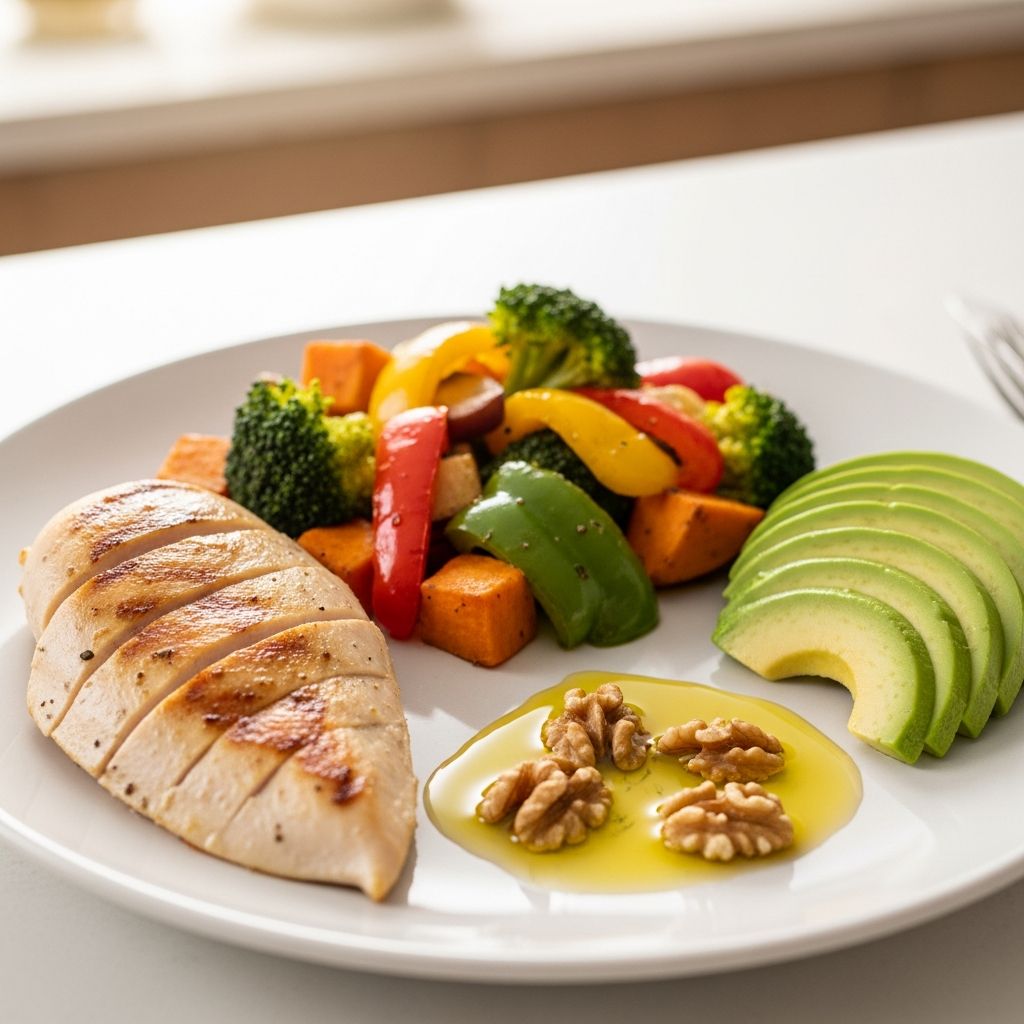
Macronutrients—**protein**,
carbohydrates
, andfats
—form the foundation of every diet, providing the energy and building blocks your body needs. While total calorie intake drives weight loss, the right macro balance can enhance satiety, preserve muscle, stabilize blood sugar, and support long-term adherence. Finding your optimal macros involves understanding their roles, calculating ratios based on goals, and prioritizing nutrient-dense foods.What Are Macros?
Macronutrients, or “macros,” are the primary nutrients your body requires in large amounts: proteins for muscle repair, carbohydrates for energy, and fats for hormone health. Each provides different calories per gram: protein and carbs at 4 kcal/g, fats at 9 kcal/g.
Unlike micronutrients (vitamins/minerals), macros make up the bulk of your diet. Imbalanced intake can lead to fatigue, cravings, or nutrient gaps, hindering weight loss. The Acceptable Macronutrient Distribution Range (AMDR) from health authorities recommends 45-65% carbs, 10-35% protein, and 20-35% fat of total calories to minimize chronic disease risk while supporting energy needs.
Why Macros Matter for Weight Loss
Calories create a deficit for fat loss, but macros determine how you lose weight—fat vs. muscle—and if you can sustain it. High-protein diets preserve lean mass during deficits, boost metabolism via higher thermic effect (20-30% of protein calories burned digesting), and curb hunger by regulating hormones like ghrelin.
- Protein: Builds/repairs muscle, increases fullness, prevents regain.
- Carbs: Fuel workouts/brain; fiber-rich sources steady energy.
- Fats: Essential for hormones, vitamin absorption; add meal satisfaction.
Studies show most macro patterns yield similar 6-month losses, but higher-protein or Mediterranean-style (veggie/fish/healthy fat-focused) excel long-term for cardiometabolic health and maintenance. Quality matters: whole foods over processed.
How to Calculate Your Macros
Step 1: Estimate daily calories (TDEE minus 15-20% for loss; use Harris-Benedict formula or calculators factoring age/weight/activity).
Step 2: Choose ratios, convert to grams (e.g., 2000kcal: 40% carb=200g, 30% protein=150g, 30% fat=67g).
Step 3: Track/adjust via apps like MyFitnessPal.
Common Macro Ratios for Weight Loss
| Goal | Protein | Carbs | Fat | Best For |
|---|---|---|---|---|
| Balanced | 25-30% | 40-50% | 20-30% | Beginners, sustainability |
| High-Protein | 30-40% | 30-40% | 20-30% | Muscle preservation |
| Low-Carb | 20-30% | 20-30% | 40-50% | Insulin sensitivity |
| Keto-Style | 20% | 5-10% | 70-75% | Rapid initial loss (short-term) |
Example for 150lb active woman (1800kcal goal): High-protein = 135-180g protein (30-40%), 135-180g carbs, 40-60g fat. Adjust up for athletes/menopause (1.2-1.5g/kg protein).
Best Macros for Different Goals
Fat Loss & Muscle Building
Prioritize
30-40% protein
(1.6-2.2g/kg bodyweight) to spare muscle; moderate carbs (30-40%) from veggies/whole grains; 25-30% fats. Atkins-style low-carb/high-protein shows 6-12 month efficacy.Menopause Weight Loss
Increase protein to 1.2-1.5g/kg combating sarcopenia; moderate low-GI carbs; adequate fats (esp. PUFAs) for hormones.
GLP-1 Meds (e.g., Ozempic)
Appetite suppression risks muscle loss—aim 1.2-1.5g/kg protein early-day in small meals: eggs/veggies, Greek yogurt, fish/tofu.
Protein: The Weight Loss MVP
**Protein** shines for loss: satiates via hormones, thermic effect burns 20-30% calories digesting, preserves muscle (key for metabolism). High-protein diets prevent regain better than standard[47 from 1].
Target: 1.2-2.0g/kg ideal bodyweight; 25-35% calories.
Related Stories



Sources: Chicken, fish, eggs, Greek yogurt, tofu, lentils, quinoa. Tips: Palm-sized portions/meal, protein smoothies.
Carbs: Fuel Smart, Not Hard
Not all carbs equal—fiber-rich complex carbs (veggies, berries, legumes, whole grains) steady energy/blood sugar vs. simple carbs’ crashes.
Target: 30-50% calories; prioritize volume/low-calorie for fullness.
Low-carb aids short-term but Mediterranean (moderate carbs + veggies) wins long-term.
Fats: Don’t Fear the Healthy Ones
Fats regulate hormones, absorb vitamins; unsaturated (avocado, nuts, olive oil, salmon) support heart/brain.
Target: 20-35%; calorie-dense, so portion mindfully.
Sample Meal Plans
Balanced Day (2000kcal: 30%P/45%C/25%F)
- Breakfast: Greek yogurt parfait w/ berries, chia (30gP)
- Lunch: Grilled chicken salad w/ quinoa, olive oil dressing (40gP)
- Dinner: Salmon, sweet potato, broccoli (40gP)
- Snacks: Apple w/ nuts, cottage cheese (20gP)
High-Protein Day (2000kcal: 40%P/30%C/30%F)
- Breakfast: Egg/veggie scramble + turkey sausage
- Lunch: Tuna salad lettuce wraps
- Dinner: Lean beef stir-fry w/ zucchini
- Snacks: Protein shake, edamame
Tracking & Adjusting Macros
Weigh food initially, use apps. Weekly: If no 0.5-1lb loss, cut 100-200kcal or tweak (e.g., +protein if hungry). Reassess every 4 weeks as metabolism adapts.
Common Mistakes to Avoid
- Undereating protein (<1g/kg) → muscle loss.
- Zero-carb/fat extremes → unsustainable, deficient.
- Ignoring quality → processed foods spike hunger.
- No tracking → inaccurate deficits.
Sustainable Strategies Beyond Macros
Combine with strength training, sleep, fiber (25-30g/day), whole foods. Mediterranean diet—veggies, fish, nuts—tops for maintenance.
Frequently Asked Questions (FAQs)
What are the best macro ratios for weight loss?
Start with 25-30% protein, 40-50% carbs, 20-30% fats; adjust to high-protein (30-40%) for muscle preservation.
How much protein do I need for weight loss?
1.2-2.0g per kg bodyweight (e.g., 100-150g for 150lb person) to stay full and protect muscle.
Should I go low-carb to lose weight?
Low-carb works short-term, but balanced/moderate-carb diets like Mediterranean sustain better long-term.
Can I eat carbs and fats while losing weight?
Yes—focus quality sources; eliminating leads to rebound.
How do I track macros accurately?
Use food scale/apps; prioritize protein/fiber first at meals.
References
- Optimal Diet Strategies for Weight Loss and Weight Loss Maintenance — PMC/NCBI. 2021-04-07. https://pmc.ncbi.nlm.nih.gov/articles/PMC8017325/
- Best Macros for Weight Loss + How to Calculate the Right Ratios — Knownwell. Recent (post-2023). https://www.knownwell.co/blog-posts/best-macros-weight-loss
- Know Your Macros: Why Macronutrients Are Key to Healthy Eating — Cedars-Sinai. Recent. https://www.cedars-sinai.org/stories-and-insights/expert-advice/what-are-macronutrients
- Nutrition: Macronutrient Intake, Imbalances, and Interventions — NCBI Bookshelf. 2023. https://www.ncbi.nlm.nih.gov/books/NBK594226/
- Balancing Macros to Lose Weight and Live a Healthy Lifestyle — Rebuilt Meals. Recent. https://www.rebuiltmeals.com/blogs/blog/balancing-macros-to-lose-weight-and-live-a-healthy-lifestyle
- The Best Diet: Quality Counts — Harvard T.H. Chan School of Public Health. Recent. https://nutritionsource.hsph.harvard.edu/healthy-weight/best-diet-quality-counts/
Similar Articles








Read full bio of medha deb