Meat Nutrition Labels: 7 Key Components Explained
Decode meat nutrition labels to make informed choices for a balanced diet and better health outcomes.
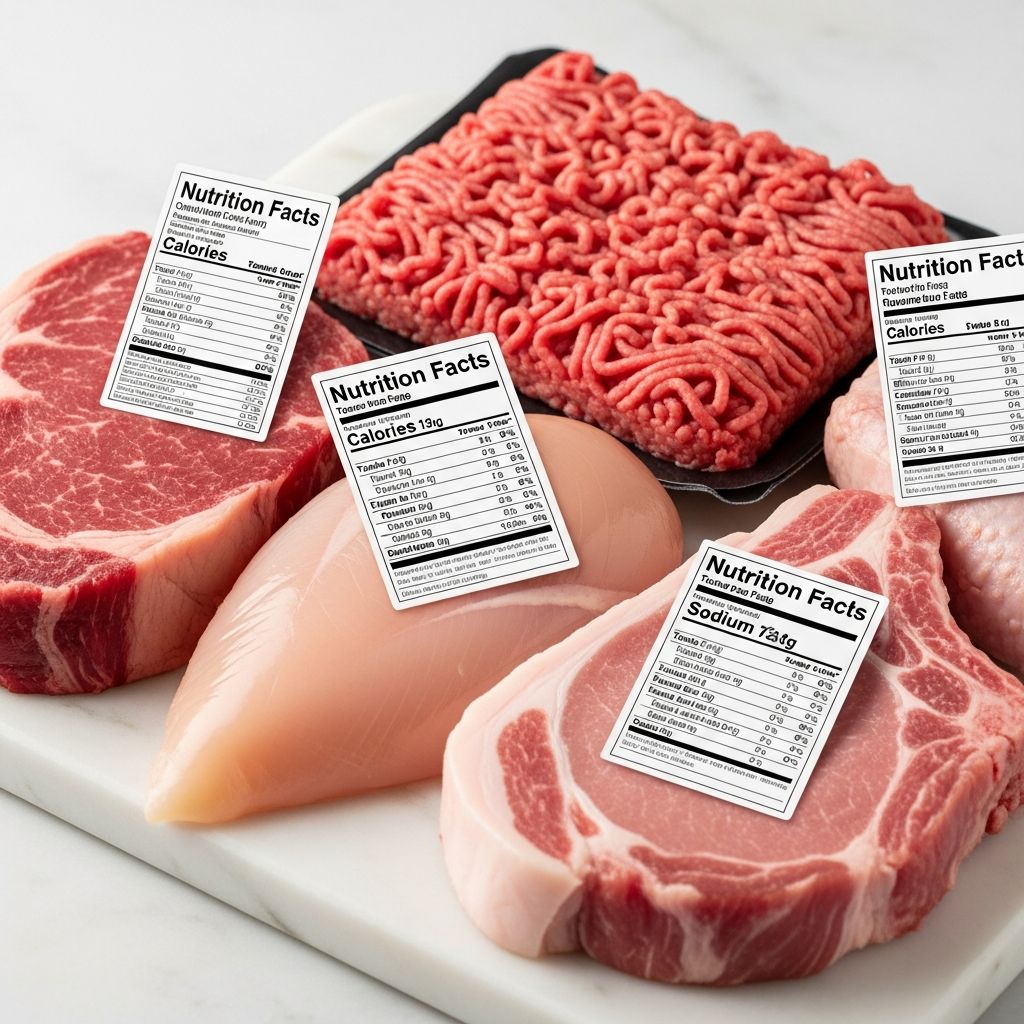
Meat nutrition labels provide essential information to help consumers make healthier choices at the grocery store. Unlike fresh produce, packaged meats like ground beef, poultry, and processed products must display detailed nutrition facts, enabling you to track calories, fats, proteins, and more for balanced meal planning.
Why Meat Labels Matter
Understanding meat nutrition labels empowers you to select products aligning with dietary goals, whether reducing saturated fat for heart health or boosting protein intake. The FDA and USDA mandate these labels on most packaged meats, with a key compliance update on January 1, 2024, ensuring standardized, accurate information based on a 2,000-calorie daily diet.
These labels go beyond basic ingredients, listing nutrients per serving to support conditions like diabetes, high cholesterol, or weight management. For instance, ground meats often highlight lean percentages (e.g., 90/10), directly impacting your fat and calorie intake.
Key Components of Meat Nutrition Labels
Meat labels follow the standard Nutrition Facts panel format, similar to other foods. Here’s a breakdown of the core elements:
- Serving Size: The top item specifies the recommended portion, such as 4 oz (112g) for ground beef or 3 oz for poultry. Actual consumption may differ, so adjust calculations accordingly. Serving sizes vary by product—always check to avoid overestimating intake.
- Calories: Indicates energy per serving (e.g., 250 calories for 80/20 ground beef). Use this for calorie-controlled diets; higher-fat meats yield more calories.
- Total Fat: Lists grams of fat, broken into saturated, trans, and unsaturated. Aim for moderation—saturated fats raise cholesterol.
- Cholesterol and Sodium: Cholesterol (mg) from animal products; sodium from processing or brining. Limit to under 300mg cholesterol and 2,300mg sodium daily.
- Protein: Key for muscle repair; meats excel here (20-30g per serving). %DV required only for specific claims or children’s products.
- Carbohydrates: Minimal in plain meats (<1g), but check processed varieties for added sugars or fibers.
- Vitamins and Minerals: Includes iron, potassium, vitamin B12 (abundant in meats), and sometimes vitamin D or calcium in fortified products.
% Daily Value (%DV) Explained
The %DV column shows nutrient contribution toward daily needs on a 2,000-calorie diet. 5% or less is low; 20% or more is high. Prioritize high %DV for fiber, protein, iron; low for sodium, saturated fats.
| Nutrient | 100% DV Amount | Goal |
|---|---|---|
| Saturated Fat | 20g | <10% DV |
| Sodium | 2,300mg | <10% DV |
| Protein | 50g | 10%+ DV |
| Iron | 18mg | 10%+ DV |
| Potassium | 4,700mg | 10%+ DV |
This table summarizes key %DV targets from FDA guidelines.
Understanding Lean and Extra Lean Claims
Meat labels often feature ‘lean’ or ‘extra lean’ for ground products, defined by USDA standards per 100g serving or per labeled serving:
- Lean: <10g total fat, <4.5g saturated fat, <95mg cholesterol.
- Extra Lean: <5g total fat, <2g saturated fat, <95mg cholesterol.
Example: 93/7 ground turkey is ‘extra lean,’ ideal for low-fat diets. Ground beef at 80/20 is neither—check labels for ratios.
Common Label Claims and What They Mean
Beyond Nutrition Facts, voluntary claims provide quick insights:
- Low Fat/Sodium/Sugar: Meets strict limits (e.g., low-fat: ≤3g fat/serving).
- Reduced: 25% less than reference food.
- Natural: No artificial ingredients/colors; minimally processed (USDA definition).
- No Antibiotics Added: Verified antibiotic-free raising; sick animals ineligible.
- Grass-Fed/Organic: Specific standards—grass-fed means primarily grass diet.
- USDA Grades: Prime (most marbling), Choice, Select for beef quality/tenderness.
Always verify claims against Nutrition Facts—’natural’ doesn’t imply healthier nutrition.
Special Considerations for Ground Meats
Ground meats (beef, turkey, pork) uniquely list lean/fat percentages (e.g., 85/15). Higher lean % means less fat/calories but potentially drier texture. Labels may voluntarily include trans fats (aim for 0g), though not required.
Related Stories



Trans fats occur naturally in meats but synthetically in processed; linked to heart disease. 75-80% of labels list them voluntarily.
Label Updates and Compliance
By January 1, 2024, all meat products must comply with updated FDA Nutrition Facts panels, including added sugars, revised %DV for potassium/vitamin D, and clearer serving sizes. This ensures consistency across foods.
Practical Tips for Reading Meat Labels
- Start with serving size—measure portions accurately.
- Compare calories/fats across similar products.
- Prioritize high protein, low sodium/saturated fat.
- Scan ingredients for allergens/additives.
- Look for safe handling instructions on raw meats.
Incorporate labels into shopping: Choose 90%+ lean ground meat for burgers, low-sodium bacon alternatives.
Frequently Asked Questions (FAQs)
What does 90/10 on ground beef mean?
90% lean meat, 10% fat—lower calories and saturated fat than 80/20.
Are trans fats listed on all meat labels?
No, voluntary; but seek 0g to minimize heart risks.
What’s the difference between lean and extra lean?
Lean: <10g fat/100g; extra lean: <5g fat/100g.
Does ‘natural’ mean healthier?
No—check Nutrition Facts; it only means minimal processing, no artificial additives.
Why include %DV on labels?
Shows nutrient contribution to daily diet (2,000 cal basis); guide for balanced eating.
Empowering Your Choices
Mastering meat nutrition labels transforms grocery shopping into a strategic health decision. Combine label reading with diverse proteins, veggies, and whole grains for optimal nutrition. Consult a registered dietitian for personalized advice.
References
- Understanding Meat Nutritional Labeling: A Guide for Label Customers — Bollin Company. 2024-01-01. https://bollin.com/understanding-meat-nutritional-labeling-a-guide-for-label-customers/
- What do meat nutrition labels mean? — FEP Blue. 2018-03-02. https://www.fepblue.org/news/2018/03/02/09/18/what-do-meat-nutrition-labels-mean
- How to Understand and Use the Nutrition Facts Label — U.S. Food and Drug Administration (FDA). 2024. https://www.fda.gov/food/nutrition-facts-label/how-understand-and-use-nutrition-facts-label
- Understanding Food Labels and Terms — American Cancer Society. 2024. https://www.cancer.org/cancer/risk-prevention/diet-physical-activity/eat-healthy/understanding-food-labels.html
- How to Read Dietary Labels: A Beginner’s Guide — Markets at Shrewsbury. 2024. https://www.marketsatshrewsbury.com/blog/read-meat-label/
- Meat Labels Explained — EW Nutrition. 2024. https://ew-nutrition.com/us/meat-labels-explained/
- How to Read Nutrition Labels: Carbs, Fiber, and Total Carbohydrates — American Diabetes Association. 2024. https://diabetes.org/food-nutrition/reading-food-labels/making-sense-food-labels
Similar Articles








Read full bio of medha deb