What To Eat After Food Poisoning: 5-Step Recovery Diet Guide
Recover faster from food poisoning with expert-recommended foods, hydration tips, and a step-by-step diet plan to soothe your stomach.
Food poisoning strikes suddenly, leaving you with nausea, vomiting, diarrhea, and stomach cramps that can last from hours to days. While most cases resolve on their own, knowing what to eat after food poisoning is crucial for replenishing lost fluids, electrolytes, and nutrients without irritating your sensitive digestive system. The goal is gentle reintroduction of food to promote healing and prevent dehydration, the most serious complication.
This guide draws from expert recommendations to outline a phased recovery diet, starting with hydration and progressing to solid foods. Recovery timelines vary—typically 24-48 hours for mild cases—but listen to your body and consult a doctor if symptoms persist beyond 48 hours or worsen.
Understanding Food Poisoning Recovery
Food poisoning, or foodborne illness, occurs when harmful bacteria, viruses, or toxins contaminate food or water. Common culprits include Salmonella, E. coli, norovirus, and Campylobacter. Symptoms usually appear within hours of ingestion and include vomiting (to expel toxins), diarrhea (to flush bacteria), and abdominal pain. Dehydration from fluid loss is the primary risk, especially in children, elderly adults, and those with weakened immune systems.
During the acute phase (first 6-24 hours), your body needs rest. Avoid solid foods to prevent further irritation. Focus on survival mode: replace fluids slowly. As symptoms subside, transition to the BRAT diet and bland foods. Full recovery to a normal diet often takes 3-7 days, but some may need a week or more if symptoms were severe.
Prioritize Hydration First
Hydration is the cornerstone of food poisoning recovery. Vomiting and diarrhea can lead to rapid fluid and electrolyte loss, causing dizziness, dry mouth, fatigue, and in severe cases, organ strain. Start rehydrating as soon as vomiting stops.
- Hours 0-6: Suck on ice chips or frozen electrolyte popsicles. These minimize stomach upset while providing small amounts of fluid.
- 6+ hours: Sip clear liquids every 15-20 minutes. Aim for 1-2 ounces at a time to test tolerance.
Recommended clear liquids include:
- Water (room temperature, non-carbonated)
- Oral rehydration solutions (ORS) like Pedialyte for balanced electrolytes
- Clear broths (chicken or vegetable, low-sodium)
- Diluted apple or grape juice (flat, not from concentrate)
- Herbal teas (peppermint or ginger for nausea relief)
Avoid caffeinated, sugary, or dairy-based drinks, as they can exacerbate diarrhea or nausea. Adults should target 8-10 cups daily once tolerating sips; children need age-appropriate amounts (e.g., 1-1.5 ounces per pound of body weight daily).
Introduce the BRAT Diet
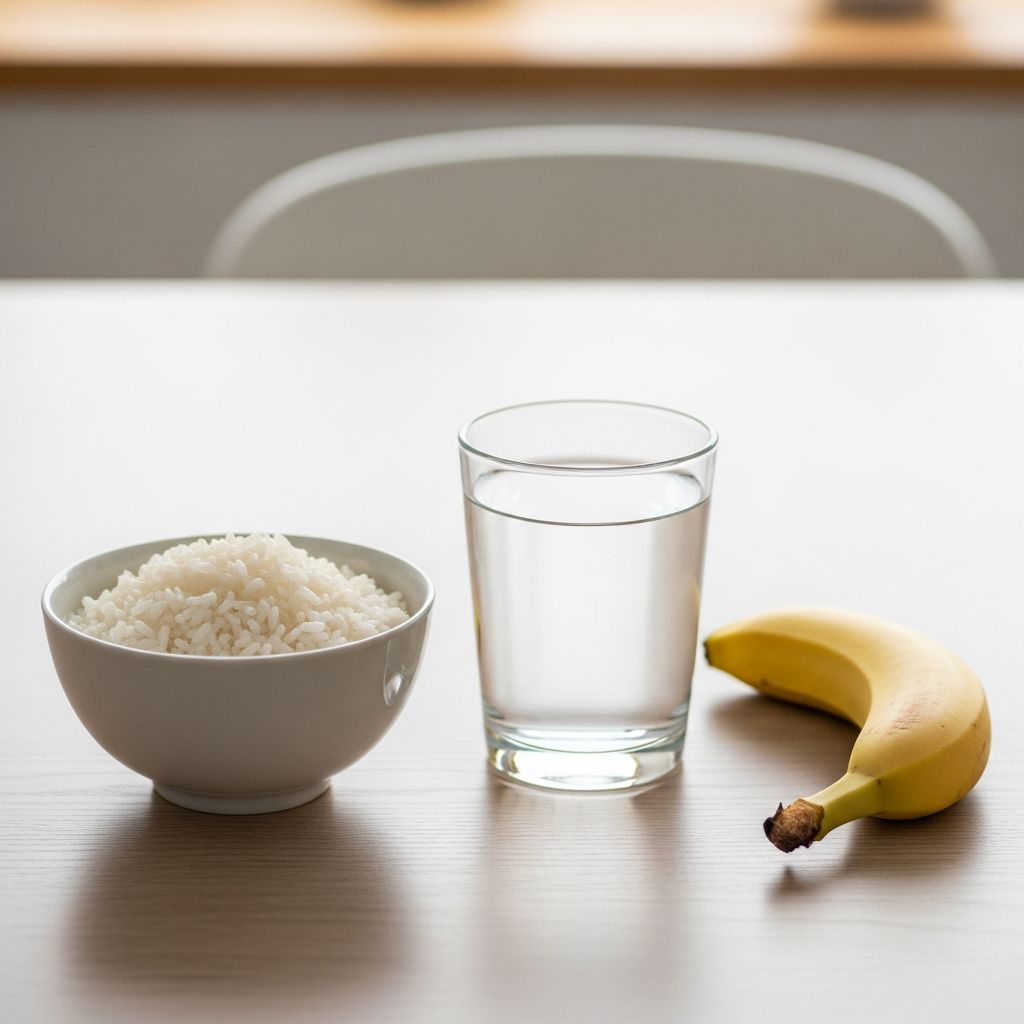
Once liquids stay down for 6-12 hours, advance to the BRAT diet—a time-tested, bland regimen that’s low in fiber and fat, easy to digest, and helps firm up stools. BRAT stands for Bananas, Rice, Applesauce, and Toast. These foods provide binding pectin and potassium to combat diarrhea and replenish nutrients.
| Food | Why It Helps | Serving Tips |
|---|---|---|
| Bananas | Rich in potassium (lost in diarrhea), pectin binds stool | Ripe, mashed; add flakes to rice |
| Rice | Starchy, absorbent; low fiber eases digestion | White rice, boiled plain |
| Applesauce | Pectin thickens stool; gentle on stomach | Unsweetened, smooth |
| Toast | Dry carbs settle nausea; sodium aids electrolyte balance | White bread, plain (no butter) |
Related Stories



Start with small portions: half a banana or 1/2 cup rice. Eat every 2-3 hours. If tolerated after 24 hours, expand to similar bland options.
Expand to Bland Foods
After 24-48 hours on BRAT, when appetite returns and stools firm, broaden to a bland diet. These foods add calories and protein without overwhelming your gut. Continue sipping fluids alongside solids.
- Boiled potatoes (skinless)
- Plain pasta, couscous, or quinoa
- Cooked, peeled vegetables (carrots, zucchini—no skins or seeds)
- Clear soups with rice or noodles (e.g., chicken noodle)
- Crackers, pretzels, or saltines
- Plain oatmeal or grits
- Boiled eggs (soft, no yolk if fatty foods upset)
Lean proteins like baked chicken breast or turkey can be introduced sparingly. Probiotics from plain yogurt (if dairy-tolerant) support gut flora recovery. Chew thoroughly and eat slowly.
Foods to Avoid Until Fully Recovered
Steer clear of anything that could irritate your healing gut. These prolong symptoms by drawing water into the intestines or increasing motility.
- Dairy: Milk, cheese, ice cream (lactose intolerance spikes post-illness)
- Fatty/Greasy: Fried foods, fatty meats, oils
- Spicy: Hot sauces, peppers, curry
- High-Fiber: Raw veggies, whole grains, beans, nuts
- Sugary: Candy, sodas, fruit juices (undiluted)
- Caffeine/Alcohol: Coffee, tea, beer, wine
- Carbonated: Soda, sparkling water
Reintroduce gradually after 3-7 days. If symptoms return, revert to BRAT.
Recovery Timeline
No one-size-fits-all, but here’s a general guide:
| Timeframe | Focus | Examples |
|---|---|---|
| 0-6 hours | Ice chips | Ice chips, popsicles |
| 6-24 hours | Clear liquids | Water, broth, diluted juice |
| 24-48 hours | BRAT diet | Bananas, rice, applesauce, toast |
| Day 3-7 | Bland solids | Potatoes, pasta, lean proteins |
| Week 1+ | Normal diet | Gradual return, monitor tolerance |
Children: Resume breast milk/formula or usual foods ASAP. Seek pediatric advice for infants.
When to See a Doctor
Most recover at home, but watch for red flags:
- Symptoms >48 hours
- Bloody stools or vomit
- High fever (>101.5°F)
- Severe dehydration (no urine 8+ hours, sunken eyes)
- Neurological symptoms (confusion, blurred vision)
High-risk groups (pregnant, elderly, immunocompromised) should seek care sooner. IV fluids may be needed for hospitalization.
Preventing Future Food Poisoning
Recovery is key, but prevention is better:
- Wash hands, produce, surfaces
- Cook meats to safe temps (165°F poultry)
- Refrigerate perishables promptly
- Avoid cross-contamination
Frequently Asked Questions (FAQs)
Can I eat yogurt after food poisoning?
Plain, low-fat yogurt with live cultures may help restore gut bacteria after 24-48 hours, but skip if dairy worsens symptoms.
How long does food poisoning last?
Typically 1-2 days, but up to a week for some pathogens like norovirus.
Is Gatorade good for rehydration?
Diluted sports drinks work, but ORS is better for electrolyte balance.
What if I have diarrhea after BRAT?
Stick to liquids; add pectin sources like banana flakes.
Can kids follow BRAT?
Yes, but transition to normal foods quickly to avoid nutrient gaps.
References
- Eating, Diet, & Nutrition for Food Poisoning — National Institute of Diabetes and Digestive and Kidney Diseases (NIDDK). 2023. https://www.niddk.nih.gov/health-information/digestive-diseases/food-poisoning/eating-diet-nutrition
- Food poisoning (foodborne illness) – Diagnosis and treatment — Mayo Clinic. 2024-10-15. https://www.mayoclinic.org/diseases-conditions/food-poisoning/diagnosis-treatment/drc-20356236
- What to Eat After Food Poisoning or a Stomach Bug — Houston Methodist. 2023-07-12. https://www.houstonmethodist.org/blog/articles/2023/jul/what-to-eat-after-food-poisoning-or-a-stomach-bug/
- What to Eat After Food Poisoning: Recovery Foods and Tips — Season Health. 2024. https://www.seasonhealth.com/blog/what-to-eat-after-food-poisoning
Similar Articles








Read full bio of medha deb