Type 1 And Type 2 Diabetes: 5 Key Differences Explained
Understand the key differences between type 1 and type 2 diabetes: causes, symptoms, risk factors, diagnosis, and effective management strategies.
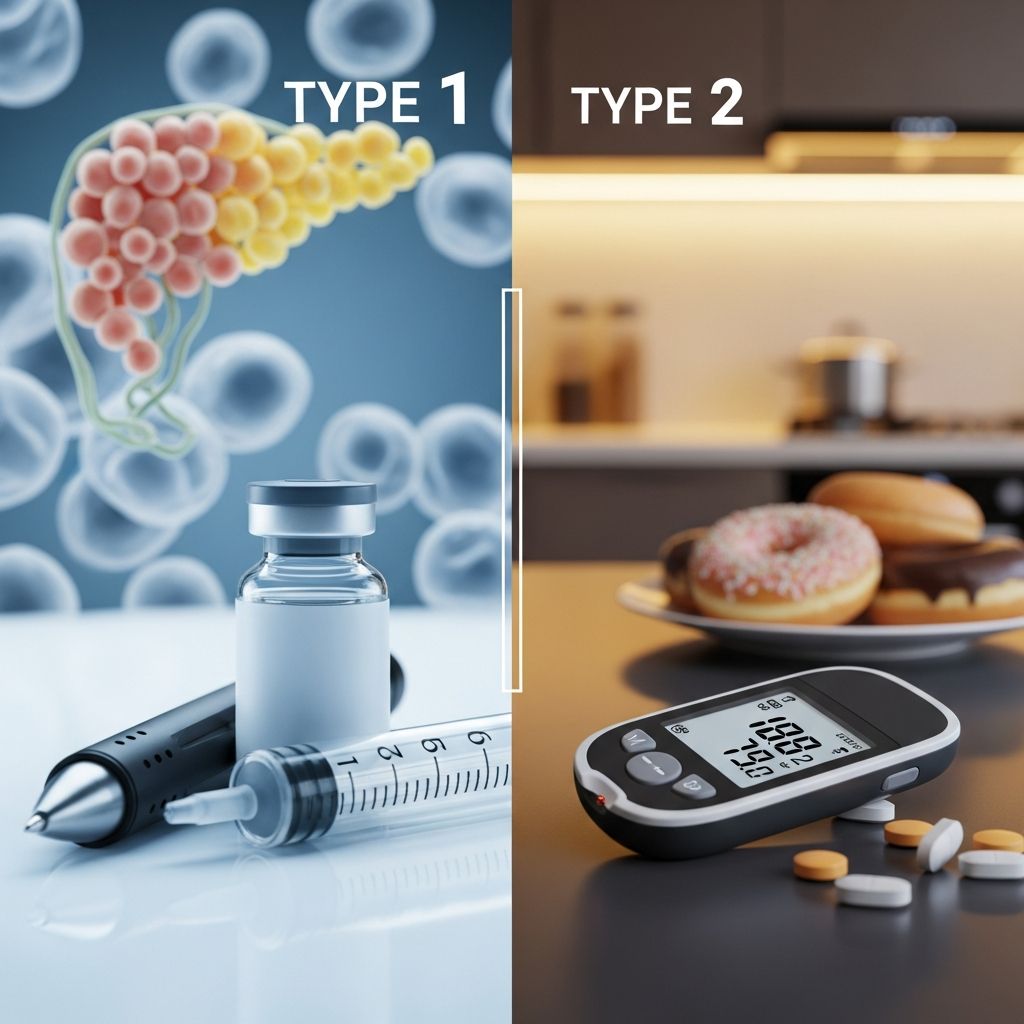
Type 1 and type 2 diabetes are the two primary forms of this chronic condition, both characterized by elevated blood glucose levels due to issues with insulin, a hormone essential for regulating sugar in the blood. While they share some symptoms, their causes, onset, risk factors, and treatments differ significantly. Type 1 diabetes is an autoimmune disease where the body destroys insulin-producing cells, affecting about 8% of people with diabetes, whereas type 2, impacting 90%, involves insulin resistance often linked to lifestyle factors.
Dr Sarah Jarvis, GP
Dr. Sarah Jarvis, a general practitioner with expertise in diabetes, explains: “There are several different kinds of diabetes, but two main ones. Type 1 diabetes is nothing to do with lifestyle. It’s what’s called an auto-immune disease.” This distinction is crucial for proper diagnosis and management.
How Type 1 Diabetes Develops
Type 1 diabetes occurs when the immune system mistakenly attacks and destroys the beta cells in the pancreas responsible for producing insulin. This results in little to no insulin production, leading to high blood glucose levels. We think you inherit a tendency for type 1 diabetes, and then a trigger—possibly a viral infection—prompts the body to recognize these beta cells as enemies, halting insulin production entirely.
Unlike type 2, type 1 is not caused by diet or weight but by genetic and environmental factors. It’s often diagnosed in childhood or young adulthood, though it can occur at any age, particularly under 40. Without insulin, the body cannot use glucose for energy, forcing it to break down fat, which can lead to dangerous diabetic ketoacidosis (DKA) if untreated.
How Type 2 Diabetes Develops
Type 2 diabetes is fundamentally different, primarily involving insulin resistance, where the body’s cells do not respond effectively to insulin. This is largely linked to excess abdominal fat, not just overall weight. As fat accumulates around organs, the pancreas compensates by producing more insulin, but eventually, it cannot keep up, leading to hyperglycemia.
Dr. Jarvis notes: “Type 2 diabetes is very different—it’s almost all to do with insulin resistance and that’s largely to do with not just weight but what we call abdominal fat—the fat deep inside your tummy.” Over time, the pancreas may also produce less insulin, compounding the issue. Type 2 accounts for the vast majority of cases and is more common in adults over 40, though it’s rising in younger populations due to obesity trends.
Type 1 vs Type 2: Key Differences at a Glance
| Aspect | Type 1 Diabetes | Type 2 Diabetes |
|---|---|---|
| Insulin Production | Body cannot produce insulin (autoimmune destruction of beta cells) | Body produces insulin but cells are resistant; production may decrease over time |
| Causes | Genetic predisposition + environmental trigger (e.g., virus); not lifestyle-related | Obesity, abdominal fat, age, ethnicity, family history, sedentary lifestyle |
| Onset | Rapid, often dramatic (days/weeks) | Slow, may be asymptomatic for years |
| Prevalence | 8% of diabetes cases | 90% of diabetes cases |
| Treatment | Lifelong insulin therapy required | Lifestyle changes, oral meds; insulin may be needed later |
This table summarizes the core distinctions based on clinical guidelines.
Risk Factors: What Increases Your Chances?
Related Stories



Risk Factors for Type 1 Diabetes
The exact causes of type 1 remain unclear, but family history slightly elevates risk due to linked genes. It’s not preventable and can strike anyone, though more common in younger people. Research continues into environmental triggers like viruses.
Risk Factors for Type 2 Diabetes
Type 2 has clearer modifiable risks:
- Age: Risk rises after 40 for white individuals, 25 for South Asian, African-Caribbean, Black African, or Chinese backgrounds.
- Family history: Strong genetic component.
- Weight and waist circumference: Obesity, especially central obesity.
- Ethnicity: Higher in certain groups.
- Lifestyle: Inactivity, poor diet.
Unlike type 1, many type 2 cases are preventable through weight management and activity.
Symptoms of Type 1 and Type 2 Diabetes
Both types share symptoms from high blood sugar, known as the 4 Ts (plus more):
- Toilet: Frequent urination, especially at night.
- Thirsty: Excessive thirst.
- Tired: Unusual fatigue.
- Thinner: Unexplained weight loss (more pronounced in type 1).
- Genital itching or thrush.
- Slow-healing wounds.
- Blurred vision.
- Increased hunger.
In type 1, symptoms hit quickly and dramatically, potentially leading to unconsciousness or DKA. Adults may miss them less readily than in children. Type 2 symptoms develop slowly, often over years—up to 10 without notice—making screening vital.
Dr. Jarvis emphasizes: “The symptoms of type 1 diabetes often come on very dramatically and very quickly… However with type 2 diabetes the symptoms can often be very mild and very simple to misunderstand.”
Diagnosis: How Do You Know If You Have Diabetes?
Diabetes is typically diagnosed via:
- HbA1c: ≥48 mmol/mol (6.5%).
- Fasting plasma glucose: ≥7.0 mmol/L (if HbA1c unsuitable, e.g., kidney disease).
Type 1 often presents acutely; type 2 via routine checks. Other forms like LADA (slow type 1 in adults) or clusters (e.g., severe insulin-resistant diabetes) exist but are less common.
Treatment and Management Strategies
Managing Type 1 Diabetes
Type 1 requires lifelong insulin replacement. Key approaches:
- Multiple daily injections or insulin pump.
- Carb counting to match insulin doses.
- Balanced diet, exercise, regular monitoring.
- Types: Rapid-acting (2-5 hours) for meals; long-acting (24 hours) for baseline.
Regular checks prevent complications like retinopathy or kidney disease.
Managing Type 2 Diabetes
Focuses on improving insulin sensitivity:
- Lifestyle first: Weight loss, healthy eating, 150+ minutes weekly exercise.
- Medications: Metformin, others to boost insulin or reduce resistance; insulin if progresses.
- Monitoring HbA1c targets (individualized, often <48 mmol/mol).
Early intervention can remit type 2 in some.
Complications and Long-Term Outlook
Untreated, both lead to heart disease, neuropathy, retinopathy, nephropathy. Type 1 raises DKA risk; type 2, cardiovascular issues. Family quality of life is more impacted in type 1, especially pediatric cases. Adherence to Standards of Care reduces risks.
Frequently Asked Questions (FAQs)
Can type 2 diabetes be cured?
No true cure, but remission via substantial weight loss is possible in early stages.
Is type 1 diabetes hereditary?
Genetic risk exists, but not directly inherited; environmental triggers play a role.
Why do type 1 symptoms appear faster?
Total insulin loss causes rapid glucose spikes vs gradual resistance in type 2.
Can children get type 2 diabetes?
Yes, increasingly due to childhood obesity.
How is diabetes prevented?
Type 1: Not preventable. Type 2: Healthy weight, diet, exercise.
References
- Differences between type 1 and type 2 diabetes — Diabetes UK. 2023. https://www.diabetes.org.uk/diabetes-the-basics/differences-between-type-1-and-type-2-diabetes
- Diabetes Mellitus: Causes, Symptoms, and Treatment — Patient.info. 2024-10-01. https://patient.info/doctor/endocrine-disorders/diabetes-mellitus-pro
- Video: What’s the difference between type 1 and type 2 diabetes? — Patient.info. 2023. https://patient.info/features/diabetes/video-whats-the-difference-between-type-1-and-type-2-diabetes
- Diabetes: What It Is, Causes, Symptoms, Treatment & Types — Cleveland Clinic. 2025-01-01. https://my.clevelandclinic.org/health/diseases/7104-diabetes
- Type 1 Diabetes: Symptoms, Diagnosis, and Treatment — Patient.info. 2024. https://patient.info/diabetes/type-1-diabetes
- Diagnosis and Classification of Diabetes: Standards of Care—2025 — American Diabetes Association. 2025-01-01. https://diabetesjournals.org/care/article/48/Supplement_1/S27/157566/2-Diagnosis-and-Classification-of-Diabetes
Similar Articles








Read full bio of medha deb