When Does Allergy Season End? A Regional Timeline
Discover when allergy season ends in your region and learn what triggers seasonal allergies.
When Does Allergy Season End?
Allergy season doesn’t follow a universal calendar—instead, it varies significantly depending on your geographic location, the specific allergens you’re sensitive to, and local climate conditions. Understanding when allergy season typically ends in your region can help you better prepare and manage your symptoms throughout the year. For many Americans, allergy season begins in late winter or early spring and can persist into late fall, though the exact timeline differs dramatically across regions.
Understanding Pollen Seasons and Their Duration
Different plants release pollen at different times throughout the year, which means allergy season is not a single, uniform period. Instead, it encompasses multiple pollen seasons that occur sequentially. If you’re allergic to just one type of pollen, you may experience symptoms for only a few weeks or months annually. However, if you react to multiple allergens—such as trees, grasses, and weeds—your allergy season could extend from mid-March through October.
Each individual pollen season typically lasts about four to six weeks of elevated pollen counts. This means that once one allergen’s season ends, another may be beginning, creating an extended period of potential symptoms for people with multiple allergies.
Spring Pollen Season: Trees Lead the Way
Tree pollen season marks the beginning of allergy season for most Americans. In many areas of the United States, tree pollination begins as early as February and can continue through late May. Tree pollen allergies are particularly common during spring because trees are among the first plants to release pollen as temperatures warm and daylight increases. Common tree allergens include oak, elm, birch, and cedar, though specific species vary by region.
Tree pollen typically lasts from March until mid-May, though mild winter temperatures can cause plants to pollinate earlier than normal, extending your suffering if you have tree allergies.
Late Spring and Early Summer: Grass Pollen Takes Over
As tree pollen seasons wind down in late spring, grass pollen becomes the dominant allergen. Grass pollen season typically begins in mid-May and can persist through mid-July. This transition period means that people allergic to both trees and grasses may experience little relief between seasonal changes, as one allergen season overlaps with the beginning of another.
Late Summer and Fall: Ragweed and Mold
For many people, fall brings the final major pollen season of the year: ragweed. Ragweed plants release large amounts of pollen from August through November, depending on your geographic location. Weed pollen, particularly ragweed, typically lasts from mid-August until November, making it one of the longest-lasting allergen seasons.
Additionally, late summer and early fall create ideal conditions for mold growth. From July to early fall, allergic symptoms from fungus spores can be particularly common, as mold grows on grasses, grains, logs, and compost piles. Hot and humid weather creates the perfect environment for mold proliferation, which can trigger allergies in susceptible individuals.
Related Stories



Winter: The Reprieve Period
Winter months typically offer the most relief from outdoor pollen allergies. Cold temperatures and frost help suppress the growth and release of allergens such as pollen. During winter, pollen allergies appear to be less prominent across most of the United States, providing a welcome break for allergy sufferers.
However, it’s important to note that winter doesn’t mean allergy freedom for everyone. Indoor allergens like mold, dust mites, and pet dander can trigger allergies year-round, and in some southern regions, tree pollen can remain prominent in January and winter months.
Regional Variations in Allergy Season Timing
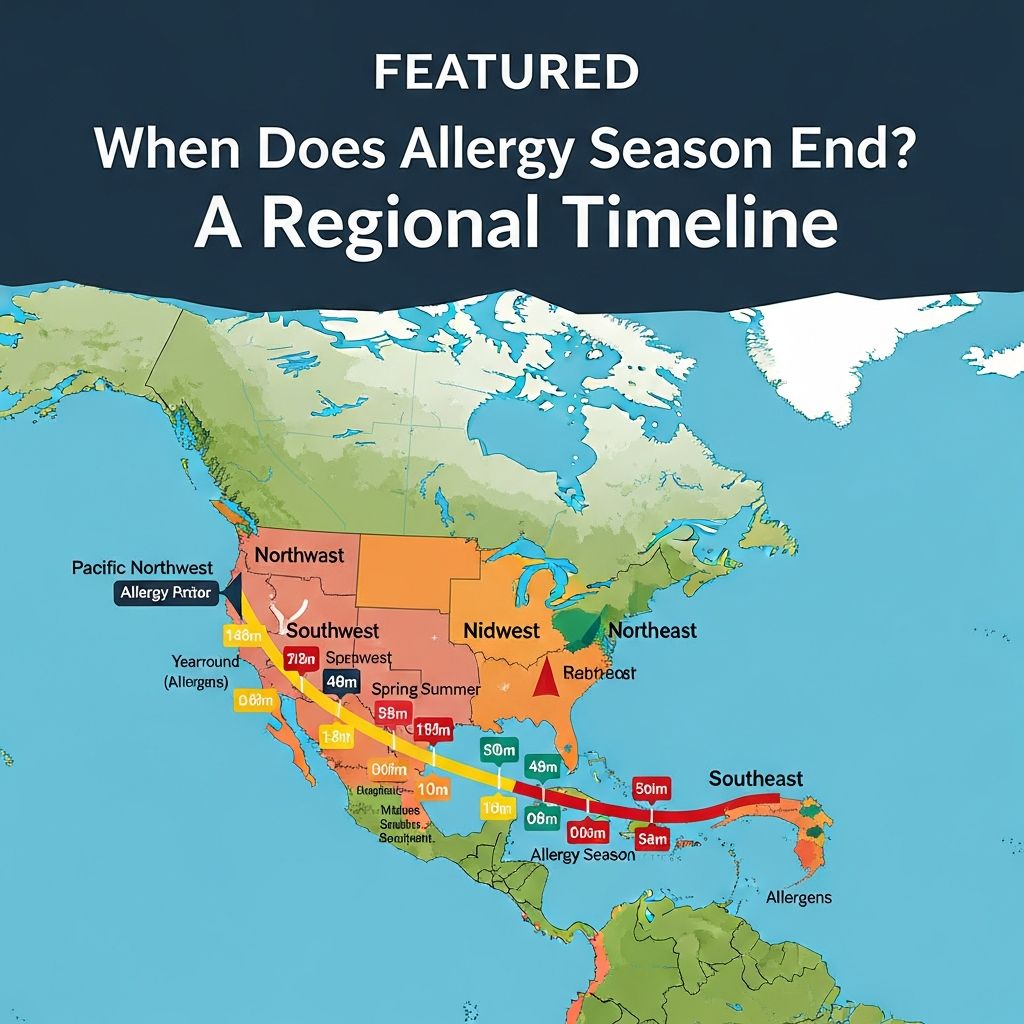
The exact timeline for when allergy season ends varies considerably by region due to differences in climate, local flora, and environmental conditions. Understanding your specific region’s allergen profile can help you anticipate symptom onset and duration.
Pacific Northwest
The Pacific Northwest features a cool, wet climate filled with evergreen trees. The most common pollen comes from the Cupressaceae family, including cedar, juniper, and cypress, which make up approximately 37% of the region’s pollen. The extended cool season means pollen seasons may extend longer than in warmer regions.
Great Lakes Region
The Great Lakes region experiences cold winters and humid summers. The landscape consists primarily of crops and grazing areas. Interestingly, this region experiences the lowest amount of pollen in July, with peak pollen seasons occurring from late March to late April, when oak trees are the predominant pollen source.
Central California
Central California enjoys a warm Mediterranean climate that is typically dry, receiving most rainfall in winter. The region’s mix of chaparral shrubs, grasslands, and oak forests means that approximately 94% of pollen comes from various trees, with elm and olive trees being the most common sources. The extended warm season means California residents may experience allergy symptoms for longer periods than those in northern regions.
The South
In southern states, tree pollen can be prominent not only in spring but also as early as January, and it can peak throughout the year. Grass pollen can appear across all seasons in the South, creating a prolonged and sometimes year-round allergy season for sensitive individuals. This extended season is one reason why southern allergy sufferers often report more persistent symptoms.
Factors That Affect When Allergy Season Ends
Several environmental and climatic factors can influence exactly when pollen seasons begin and end in any given year, causing variation from the typical timeline.
Weather and Temperature
Weather patterns significantly impact pollen release and allergen persistence. Mild winter temperatures can cause plants to pollinate earlier than normal, shifting the entire allergy season forward. Additionally, a rainy spring can promote rapid plant growth and lead to an increase in mold, potentially causing allergy symptoms to last well into the fall.
Wind patterns also affect pollen levels: windy and warm days cause pollen counts to surge, while days with no wind keep airborne allergens grounded. Pollen levels tend to peak in morning hours during tree and grass pollen seasons, and in morning hours during ragweed season in late summer and early fall.
Climate Change Impact
Climate change is bringing about significant changes in how long pollen seasons last, when pollen is released, and how much pollen plants produce. Warmer temperatures and altered precipitation patterns are extending pollen seasons in many regions, meaning allergy sufferers are experiencing symptoms for longer periods than they did historically. This represents a growing challenge for people managing seasonal allergies.
Management Strategies for Extended Allergy Seasons
Since allergy season timing varies and can be unpredictable, several strategies can help minimize symptoms and improve quality of life during high pollen periods.
Limiting Allergen Exposure
- Keep windows closed: Prevent pollen or outdoor allergens from entering your home during peak allergy season.
- Use air purifiers: HEPA filters can effectively remove allergens from indoor air.
- Wear masks: Wearing a pollen mask during yard work or outdoor activities can reduce exposure to airborne allergens.
- Monitor pollen counts: Check local pollen and mold counts regularly to plan outdoor activities strategically.
Personal Hygiene Practices
- Shower and wash clothes after being outside to rinse off accumulated pollen.
- Close doors and windows at night to prevent pollen infiltration.
- Use air conditioning with HEPA filters in your home and car.
Medical Management
Various over-the-counter and prescription medications can help ease allergy symptoms. Consult with an allergist to determine the most appropriate treatment options for your specific allergens and symptoms.
Allergen Duration Quick Reference
| Allergen Type | Typical Duration | Peak Season |
|---|---|---|
| Tree Pollen | March to mid-May | Early spring |
| Grass Pollen | Mid-May to mid-July | Late spring/early summer |
| Weed Pollen | Mid-August to November | Late summer/fall |
| Mold Spores | July to early fall | Summer/fall |
Frequently Asked Questions About Allergy Season
Q: Can allergy season last year-round?
A: Yes, if you’re allergic to multiple allergen types (trees, grasses, weeds, and mold), you could experience symptoms from mid-March through October, creating an extended allergy season that spans most of the year.
Q: How long does each pollen season typically last?
A: Each individual pollen season generally lasts about four to six weeks of high pollen counts, though this varies based on weather conditions and geographic location.
Q: Does local honey help prevent seasonal allergies?
A: No. Local honey, while tasty, does not alleviate allergies because the pollen that causes allergies is wind-pollinated, not bee-pollinated, and local honey contains bee-pollinated pollen instead.
Q: Why do allergy seasons seem to be getting longer?
A: Climate change is extending pollen seasons by causing warmer temperatures earlier in the year and altering precipitation patterns, which affects when and how long plants release pollen.
Q: Can moving to a different climate help avoid allergies?
A: Generally no. Moving to another climate to avoid allergies is usually unsuccessful because allergens are virtually everywhere, though the specific types may differ.
Q: When are pollen levels highest during the day?
A: Pollen levels typically peak in morning hours during tree and grass pollen season, and in morning hours during ragweed season in late summer and fall.
Conclusion: Planning for Your Allergy Season
Knowing when allergy season ends in your region empowers you to prepare and manage your symptoms more effectively. While spring and fall are generally the worst months for allergies due to tree, grass, and weed pollen prevalence, winter and late summer can offer some relief with reduced allergen levels. However, indoor allergens persist year-round, and climate change continues to alter traditional pollen season timelines.
By understanding your specific allergen triggers, monitoring local pollen counts, implementing exposure-reduction strategies, and consulting with an allergist, you can minimize disruption to your daily life and enjoy greater comfort throughout the year.
References
- Allergy season calendar: Best and worst months — Medical News Today. 2024. https://www.medicalnewstoday.com/articles/allergy-season-calendar
- Help! Survive Allergy Season with Dr. Lomasney — Cone Health. March 27, 2025. https://www.conehealth.com/services/allergy-asthma/help-survive-allergy-season-with-dr-lomasney/
- Seasonal Allergies: Causes, Symptoms & Treatment — American College of Allergy, Asthma and Immunology (ACAAI). https://acaai.org/allergies/allergic-conditions/seasonal-allergies/
- Seasonal Allergies: Symptoms, Causes & Relief — ZYRTEC®. https://www.zyrtec.com/allergy-guide/outdoors/understanding-seasonal-allergies
Similar Articles








Read full bio of medha deb