Which Type of Salt Is Healthiest for You?
Discover the healthiest salt options for managing blood pressure and hypertension with expert insights on sodium, potassium, and alternatives.
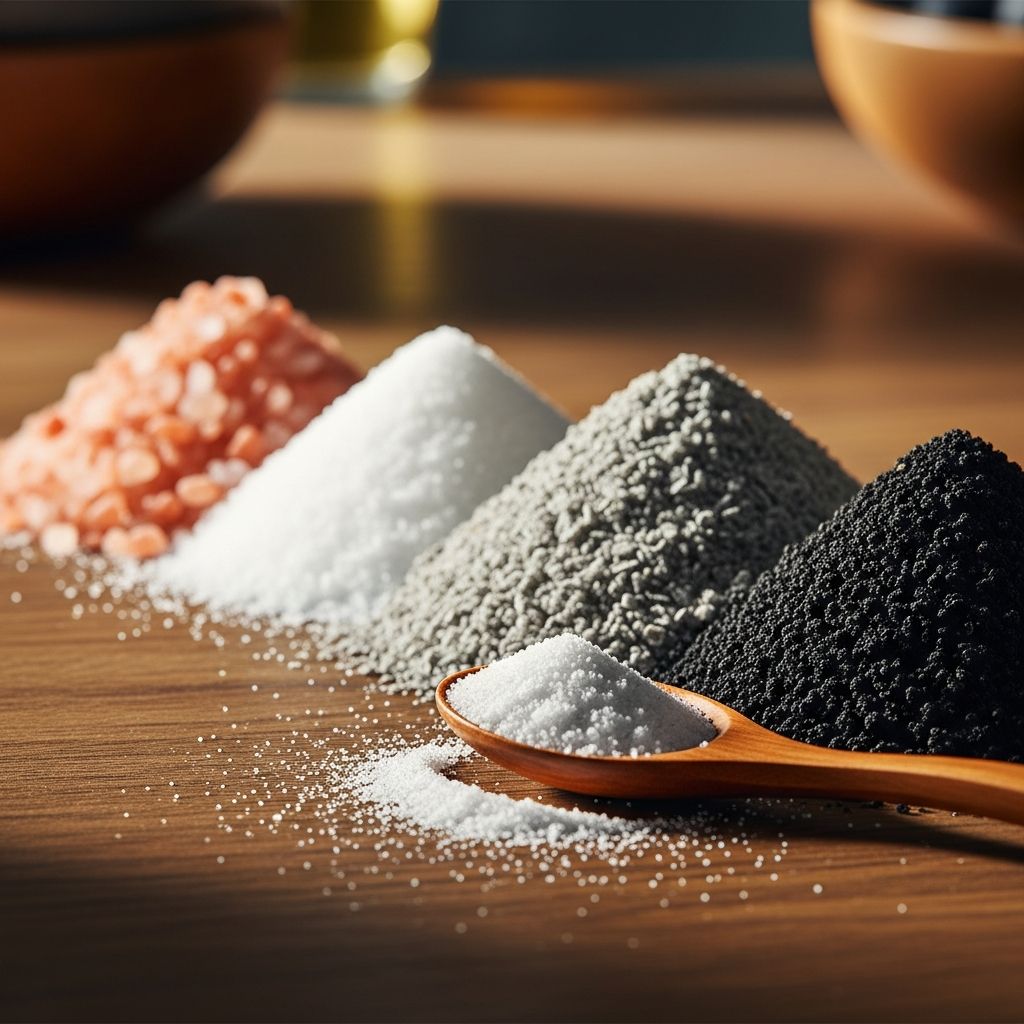
Salt is essential for flavor and bodily functions, but excessive sodium intake raises blood pressure, increasing hypertension and cardiovascular risks. For those with high blood pressure, choosing the right salt matters: while all salts contain sodium, potassium-enriched substitutes offer proven benefits by lowering blood pressure through reduced sodium and added potassium.
Why Salt Intake Matters for Blood Pressure
High sodium consumption triggers fluid retention, elevating blood pressure and straining the heart. The American Heart Association notes myths around salt types, emphasizing overall reduction. A meta-analysis shows moderate sodium cuts to 4,000 mg daily significantly lower blood pressure in all populations. Conversely, boosting potassium counters sodium’s effects, with studies linking higher potassium-to-sodium ratios to 25% reduced cardiovascular events.
World Health Organization guidelines urge sodium reduction below 2,000 mg daily and potassium increase to 3,510 mg, achievable via diet or substitutes. Excess salt hardens arteries and promotes heart hypertrophy, per MedicineNet.
Types of Salt: A Breakdown
All salts are primarily sodium chloride (40% sodium), differing in processing, minerals, and texture. Sodium per teaspoon varies by crystal size, but volume-adjusted intake remains similar.
| Type | Sodium per tsp (mg) | Key Features |
|---|---|---|
| Table Salt | ~2,300 | Fine, iodized, refined; additives for flow. |
| Sea Salt | 1,872 | Evaporated seawater; trace minerals like potassium, iron; coarser. |
| Kosher Salt | 1,120 | Coarse, unrefined, no iodine; lower density. |
| Himalayan Pink Salt | 1,680 | Mined, trace minerals (zinc, iron, calcium); pink hue; minimal iodine. |
| Potassium-Enriched Salt | Reduced (75% NaCl, 25% KCl) | Lowers BP by 4.6 mm Hg systolic; high adherence due to similar taste. |
Table Salt vs. Sea Salt vs. Himalayan Pink Salt
Table salt is highly processed with anti-caking agents and iodine for thyroid health. Sea salt, less refined, retains minerals but similar sodium load. Himalayan pink salt claims superiority due to 84 trace minerals, but a PubMed study of 17 hypertensive women found no BP or urinary sodium differences vs. table salt. Mayo Clinic confirms: ‘Salt is salt,’ urging intake limits over type switches.
- Respiratory claims for pink salt: Salt therapy may aid COPD, but evidence lacks for dietary use.
- Hydration: Essential, but excess dehydrates via BP spikes.
Is Himalayan Pink Salt Healthier?
Marketing touts lower sodium and minerals, but teaspoon differences (1,680 mg vs. 2,300 mg) stem from grain size, equating volumetrically. No large trials support BP benefits; the cross-over study showed equivalent impacts. Experts like Mayo’s Dr. Fernandes advise moderation, as all elevate BP risks.
The Case for Potassium-Enriched Salt Substitutes
Unlike gourmet salts, potassium-enriched substitutes (e.g., 75% NaCl, 25% KCl) reduce sodium while boosting potassium, mimicking regular taste for seamless use. A review of 21 trials (31,949 participants) reported 4.61 mm Hg systolic and 1.61 mm Hg diastolic reductions, plus 11% fewer cardiovascular events.
Long-term SSaSS trial showed 92% adherence over 5 years, with sustained BP drops and 40% event reduction in some studies. Guidelines endorse: European Society of Hypertension (2023) recommends for high-sodium diets; WHO explores availability. Safe for most, but consult doctors for kidney issues.
Who Should Use Salt Substitutes?
- Hypertensives on high-sodium diets.
- Those needing potassium boost without fruits/veggies.
- Avoid if hyperkalemia risk (e.g., CKD).
Related Stories



Benefits span ages, geographies; U.S. may see milder effects due to baseline potassium.
How Much Salt Is Too Much?
AHA limits: <2,300 mg sodium/day (<1,500 mg ideal for hypertension). WHO: <5g salt (~2g sodium). Potassium target: 3,500+ mg. Track via labels; use herbs/spices.
Tips for Reducing Salt Intake
- Read labels: Avoid >140 mg/serving.
- Cook fresh; rinse canned goods.
- Flavor with lemon, garlic, herbs.
- Switch to substitutes gradually.
- Eat potassium-rich foods: bananas, spinach.
Frequently Asked Questions (FAQs)
Is sea salt better for high blood pressure?
No, similar sodium content; focus on total intake.
Can Himalayan salt lower blood pressure?
No evidence; equivalent to table salt per studies.
Are potassium salt substitutes safe?
Yes for most; check with doctor if kidney problems.
How does potassium-enriched salt work?
Reduces sodium, adds potassium; lowers BP 4-7 mm Hg systolic.
What’s the daily salt limit for hypertension?
<1,500 mg sodium (<6g salt); use substitutes.
Conclusion
No ‘healthiest’ salt exists among table, sea, or pink— all pose hypertension risks if overused. Potassium-enriched substitutes stand out, backed by trials reducing BP and events. Pair with DASH diet for optimal heart health.
References
- Potassium-Enriched Salt Substitutes: A Review — American Heart Association Journals. 2023. https://www.ahajournals.org/doi/10.1161/HYPERTENSIONAHA.123.21343
- Which Salt Is Good for High Blood Pressure? — MedicineNet. 2023. https://www.medicinenet.com/which_salt_is_good_for_high_blood_pressure/article.htm
- Comparison between the Effects of Himalayan Salt and Common Salt — PubMed. 2022. https://pubmed.ncbi.nlm.nih.gov/35137791/
- Salt and Sodium — Harvard T.H. Chan School of Public Health. 2023. https://nutritionsource.hsph.harvard.edu/salt-and-sodium/
- Mayo Clinic Minute: Is Himalayan sea salt a healthy alternative? — Mayo Clinic News Network. 2023. https://newsnetwork.mayoclinic.org/discussion/mayo-clinic-minute-is-himalayan-sea-salt-a-healthy-alternative-video/
- Common High Blood Pressure Myths — American Heart Association. 2023. https://www.heart.org/en/health-topics/high-blood-pressure/the-facts-about-high-blood-pressure/common-high-blood-pressure-myths
Similar Articles








Read full bio of medha deb