Whipple’s Disease: Causes, Symptoms, and Treatment
Comprehensive guide to understanding Whipple's disease, diagnosis, and management.
What is Whipple’s Disease?
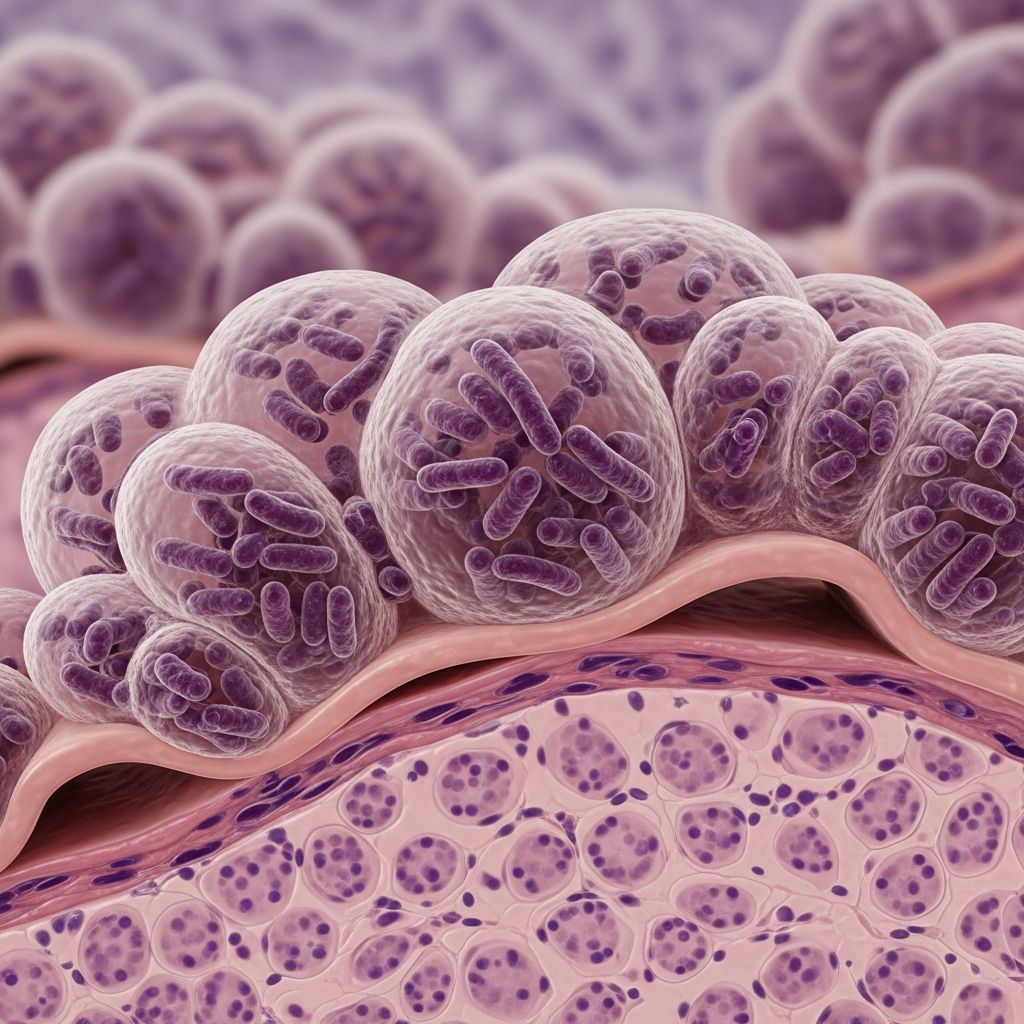
Whipple’s disease (WD) is a rare systemic infectious disease caused by the gram-positive bacterium Tropheryma whipplei. This ubiquitous actinomycete can invade multiple organ systems throughout the body, though it primarily affects the gastrointestinal tract. Unlike many infectious diseases, Whipple’s disease is not limited to gastrointestinal manifestations; it can affect joints, muscles, skin, lymph nodes, and even the central nervous system.
The disease was first documented in 1907 when Dr. George Hoyt Whipple reported a case of a 36-year-old man experiencing malabsorption, enlarged lymph nodes in the mesentery, and joint pain. This groundbreaking case established the foundation for understanding this complex systemic condition.
Epidemiology and Risk Factors
Whipple’s disease demonstrates a striking male predominance, with significantly more cases reported in men than women. The genetic background plays an important role, with documented associations with specific human leukocyte antigen (HLA) antigens, including HLA B27, DRB1*13, and DQB1*06. This genetic predisposition suggests that certain individuals may be more susceptible to symptomatic infection when exposed to Tropheryma whipplei.
Asymptomatic carriage of the bacterium has also been documented, indicating that exposure to the organism does not always result in clinical disease. The exact transmission route remains incompletely understood, though the organism has been identified in saliva and stool specimens.
Clinical Manifestations
Whipple’s disease presents with diverse clinical manifestations affecting multiple organ systems. The classic form typically involves gastrointestinal symptoms, but the disease frequently manifests with rheumatic and dermatologic features that may precede intestinal involvement.
Gastrointestinal Symptoms
The classic gastrointestinal presentation includes:
- Chronic diarrhea and malabsorption
- Weight loss (often progressive and significant)
- Abdominal pain and discomfort
- Fatigue and general malaise
However, it is important to note that gastrointestinal symptoms may be absent or minimal in some cases, particularly when cutaneous or systemic manifestations are prominent.
Rheumatic and Musculoskeletal Manifestations
Rheumatic manifestations are remarkably common in Whipple’s disease, occurring in approximately 60% of cases. Notably, these joint symptoms frequently precede gastrointestinal signs in three-fourths of patients, often serving as the first clinical indicator of disease.
The characteristic joint involvement includes:
- Migratory or additive non-destructive arthralgia involving large joints
- Symmetric and asymmetric polyarthralgia
- Intermittent articular attacks lasting days to weeks
- Acute onset of pain that may be debilitating
- Arthralgias and articular attacks that can precede intestinal symptoms by several years
The non-destructive nature of these joint manifestations distinguishes them from other chronic arthritides, though the symptoms can be severe and handicapping.
Dermatologic Manifestations
Cutaneous involvement in Whipple’s disease is relatively infrequent but distinctive when present. The most common dermatologic finding is hyperpigmentation or melanoderma, which develops in up to 46% of patients in the later stages of illness. This hyperpigmentation characteristically appears around malar and orbital regions.
Other characteristic skin manifestations include:
- Purpura
- Cheilitis (inflammation of the lips)
- Subcutaneous nodules
- Erythema nodosum-like lesions
- Inflammatory rashes that may mimic cutaneous lupus, dermatomyositis, psoriasis, or eczema
- Septal panniculitis with infiltration by foamy macrophages
Related Stories



Cutaneous granulomatosis, though rare, can also occur as a presenting feature of Whipple’s disease. These diverse skin manifestations can complicate diagnosis, as they frequently mimic other systemic or dermatologic conditions.
Systemic and Extra-Intestinal Manifestations
Beyond the gastrointestinal and rheumatic systems, Whipple’s disease can affect multiple organ systems:
- Fever (often low-grade and intermittent, sometimes persisting for years)
- Lymphadenopathy (particularly inguinal and mesenteric lymph node enlargement)
- Endocarditis
- Uveitis and other ocular manifestations
- Neurologic involvement and central nervous system disease
- Lung involvement
- Myositis and fasciitis (inflammation of muscles and fascia)
These extra-intestinal manifestations can occur in isolation or in combination with classical features, making diagnosis challenging.
Diagnosis
Diagnosis of Whipple’s disease requires integration of clinical suspicion, histopathological findings, and molecular confirmation.
Histopathological Examination
Small intestinal biopsy remains a cornerstone of diagnosis. Histological examination typically reveals:
- Periodic acid-Schiff (PAS)-positive, diastase-resistant macrophages in the lamina propria of the small intestine
- Foamy macrophages containing intracellular granules
- Granulomatous inflammation in some cases
PAS staining is highly characteristic, though it is important to note that negative duodenal biopsies do not exclude Whipple’s disease, particularly in patients with localized cutaneous or lymph node involvement.
Molecular Diagnosis
Polymerase chain reaction (PCR) testing for Tropheryma whipplei DNA represents the gold standard for confirmation and offers superior sensitivity. PCR can detect the organism in multiple tissue types and body fluids, including:
- Small intestinal biopsies
- Skin and subcutaneous biopsies
- Lymph node biopsies
- Saliva specimens
- Stool samples
PCR confirmation has proven particularly valuable in cases where PAS staining is negative but clinical suspicion remains high, and in cases where cutaneous or lymph node involvement is the predominant feature.
Differential Diagnosis Considerations
The clinical and histopathological features of Whipple’s disease can mimic several other conditions, including:
- Tuberculosis
- Sarcoidosis
- Lymphoma
- HIV-related infections
- Polymyositis and dermatomyositis
- Systemic lupus erythematosus
- Trichinellosis and other parasitic infections
Distinguishing between Tropheryma whipplei and mycobacteria is particularly important, as both organisms stain positive with PAS. However, mycobacteria are uniquely positive with Ziehl-Neelsen staining, allowing differentiation.
Treatment
Whipple’s disease responds well to appropriate antimicrobial therapy. Treatment typically involves a two-phase approach:
Phase One: Induction Therapy
Initial treatment typically consists of intravenous ceftriaxone or high-dose intravenous penicillin for 2-4 weeks to achieve rapid control of systemic manifestations and bacteremia. This induction phase rapidly suppresses active infection and reduces symptoms.
Phase Two: Maintenance Therapy
Following induction therapy, prolonged maintenance therapy with oral trimethoprim-sulfamethoxazole (TMP-SMX) for at least one year is recommended to prevent relapse. Some patients may require extended maintenance therapy beyond one year.
Alternative Regimens
For patients intolerant of standard regimens, alternative approaches include:
- Doxycycline combined with hydroxychloroquine
- Fluoroquinolones for specific cases
- Corticosteroids (such as methylprednisolone) for patients developing immune reconstitution inflammatory syndrome
Clinical Response and Monitoring
Patients typically demonstrate rapid clinical improvement within weeks of initiating appropriate treatment. Weight gain resumes, gastrointestinal symptoms resolve, and arthralgias improve. Cutaneous manifestations, including hyperpigmentation and nodular lesions, also show resolution with appropriate therapy.
Immune Reconstitution Inflammatory Syndrome (IRIS)
In some patients, particularly those with severe immunosuppression or delayed diagnosis, immune reconstitution inflammatory syndrome may develop following initiation of antibiotic therapy. This can manifest as erythema nodosum-like lesions or exacerbation of existing cutaneous manifestations. Recognition of IRIS is important to avoid inappropriate discontinuation of effective antimicrobial therapy. Corticosteroids may be beneficial in managing IRIS symptoms while continuing antimicrobial treatment.
Prognosis and Long-term Outcomes
With appropriate diagnosis and treatment, the prognosis for Whipple’s disease is excellent. Most patients achieve complete resolution of symptoms and return to normal function. However, untreated disease can progress to severe malnutrition, organ dysfunction, and potentially fatal outcomes. Relapse can occur if maintenance therapy is discontinued prematurely, emphasizing the importance of adherence to recommended treatment duration.
Frequently Asked Questions
Q: How is Whipple’s disease transmitted?
A: The exact transmission route of Tropheryma whipplei remains incompletely understood. The organism has been identified in saliva and stool, suggesting possible fecal-oral transmission, though waterborne and foodborne routes have also been proposed. Person-to-person transmission appears rare.
Q: Can Whipple’s disease be cured?
A: Yes, Whipple’s disease can be effectively treated and cured with appropriate antibiotic therapy. Most patients achieve complete resolution of symptoms with proper treatment compliance. However, maintenance therapy is necessary to prevent relapse.
Q: What is the role of skin biopsy in diagnosing Whipple’s disease?
A: Skin biopsy can be diagnostic in patients with cutaneous manifestations of Whipple’s disease. Biopsies may show specific features including PAS-positive macrophages, granulomatosis, panniculitis, and myositis, with PCR confirmation identifying Tropheryma whipplei DNA.
Q: Why do rheumatic symptoms often precede gastrointestinal symptoms?
A: The biological mechanism underlying this clinical pattern is not completely understood. The organism may establish initial infection at mucosal sites before systemic dissemination, with immune responses generating joint symptoms before intestinal damage becomes clinically apparent.
Q: How long does treatment last?
A: Treatment typically involves 2-4 weeks of induction therapy followed by at least one year of maintenance therapy. Some patients may require extended maintenance therapy. The exact duration should be individualized based on clinical response and disease severity.
Q: Can Whipple’s disease recur after successful treatment?
A: Relapse can occur if maintenance therapy is discontinued prematurely. With appropriate adherence to recommended maintenance therapy duration, recurrence is uncommon. Relapses typically respond to reinitiation of antimicrobial therapy.
References
- An unusual presentation of Whipples disease: adenopathies — Exploration Publishing. 2024. https://www.explorationpub.com/Journals/em/Article/1001113
- Specific cutaneous involvement in Whipple disease — National Library of Medicine/PubMed. 2014. https://pubmed.ncbi.nlm.nih.gov/24562051/
- Cutaneous Granulomatosis Revealing Whipple’s Disease — National Institutes of Health. 2022. https://pmc.ncbi.nlm.nih.gov/articles/PMC8622981/
- Whipple’s Disease: What Is It, Causes, Symptoms & Treatment — Cleveland Clinic. 2024. https://my.clevelandclinic.org/health/diseases/5958-whipples-disease
- The great masquerader: What is Whipple’s disease? — Gideon Online. https://www.gideononline.com/blogs/the-great-masquerader-what-is-whipples-disease/
Similar Articles








Read full bio of medha deb