White Blood Cells: Types, Function & Normal Ranges
Understanding white blood cells: Your body's immune defenders explained.
Understanding White Blood Cells: Your Body’s Immune Defense System
White blood cells are microscopic warriors that play a critical role in protecting your body from infections and diseases. These essential immune system components make up approximately 1% of the total blood volume in your body, yet their importance far exceeds their small percentage. While you cannot see white blood cells with the naked eye, they are constantly working to defend you against harmful pathogens, bacteria, viruses, and other foreign invaders that could compromise your health.
Your body produces an impressive number of white blood cells every single day—nearly 100 billion new cells are generated to maintain your immune defense. These cells are produced in the soft tissue inside your bones, known as bone marrow, where they originate from stem cells that have the remarkable ability to morph into various specialized cell types throughout your body.
What Are White Blood Cells?
White blood cells, also called leukocytes, are specialized cells in your blood that function as the primary defenders of your immune system. Unlike red blood cells, which are far more numerous in your body, white blood cells are specifically designed to identify and eliminate threats to your health. Their microscopic nature means they require a microscope to be visualized, making them invisible to the naked eye despite their crucial role in maintaining your wellness.
The production of white blood cells is called leukopoiesis and occurs primarily in the bone marrow. Additionally, certain types of white blood cells develop in other lymphoid tissues, including the thymus gland and lymph nodes. This distributed production system ensures that your body can rapidly generate these immune cells whenever they are needed to combat infections or inflammation.
The Five Types of White Blood Cells
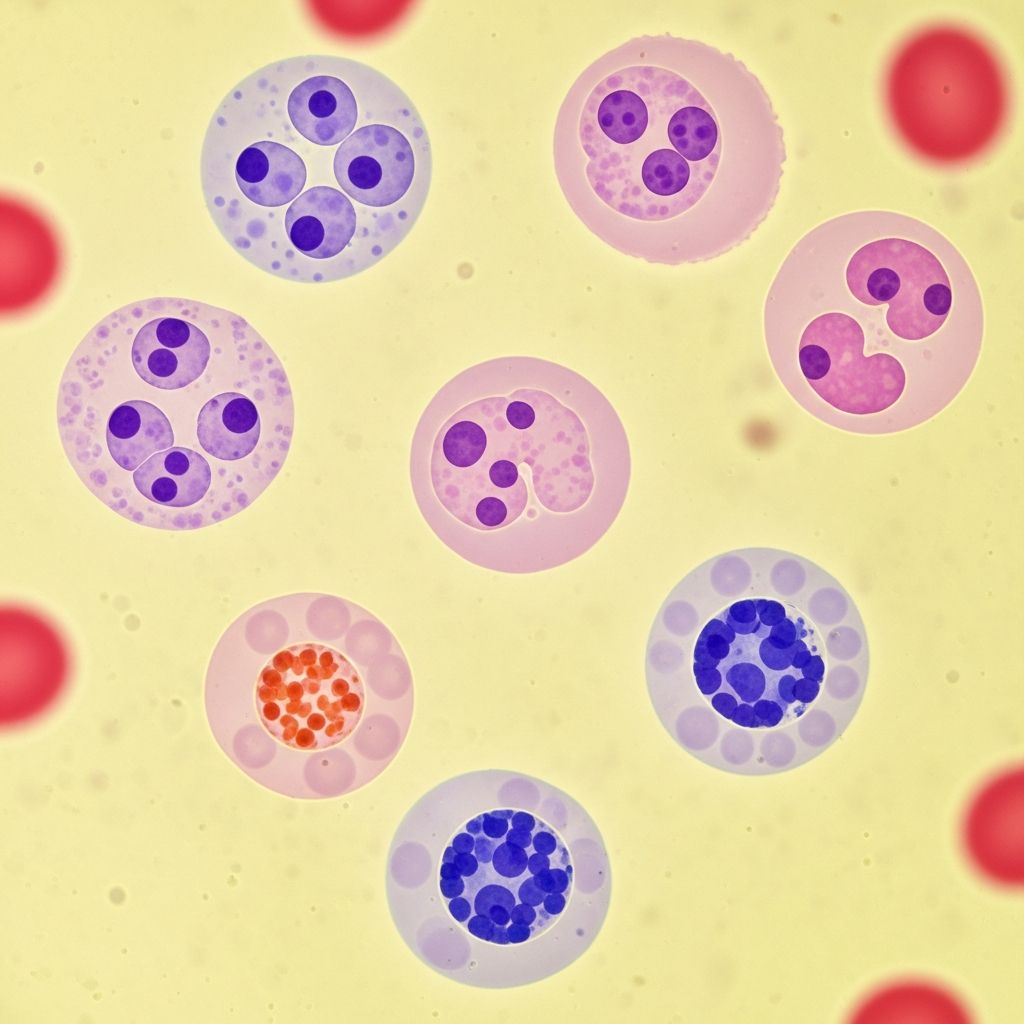
Your immune system relies on five distinct types of white blood cells, each with specialized functions and responsibilities. Understanding these different types helps explain how your body maintains such comprehensive immune defense:
Neutrophils
Neutrophils are the most abundant type of white blood cell and serve as your immune system’s first line of defense. These cells are particularly effective at fighting bacterial infections and responding quickly to inflammatory signals. When neutrophils are present in sufficient numbers, they provide robust protection against common infections. The absolute neutrophil count is an important measure of immunocompetence, indicating your body’s ability to fight off infections effectively.
Lymphocytes
Lymphocytes are a specialized group of white blood cells that includes T cells and B cells. T cells grow in the thymus gland and lymph nodes, while B cells develop in the spleen and lymph nodes. These cells are particularly important for adaptive immunity, allowing your body to recognize and remember specific pathogens it has encountered before. This immune memory is what makes vaccinations so effective.
Monocytes
Monocytes are large white blood cells that function as scavengers, engulfing and destroying foreign particles, bacteria, and dead cells. They play a crucial role in cleaning up debris and initiating inflammatory responses when necessary.
Related Stories



Eosinophils
Eosinophils are white blood cells specialized in fighting parasitic infections and managing allergic responses. They become elevated in certain allergic conditions and parasitic infections, making their levels a useful diagnostic indicator.
Basophils
Basophils are the least common type of white blood cell but play an important role in allergic reactions and inflammatory responses. They release chemical mediators that help regulate immune and inflammatory processes.
Where White Blood Cells Are Produced
The production and development of white blood cells is a carefully orchestrated process that involves multiple organs and tissues throughout your body. The bone marrow serves as the primary production facility for most white blood cells. This soft tissue, found inside your bones, contains hematopoietic stem cells—versatile cells capable of developing into various types of blood cells.
Beyond the bone marrow, specialized lymphoid tissues contribute to white blood cell development and maturation. The thymus gland is particularly important for T cell development, especially during childhood and early adulthood. The spleen and lymph nodes serve as both development sites and storage areas where lymphocytes can proliferate and respond to immune challenges.
White Blood Cell Count: Normal Ranges
Understanding what constitutes a normal white blood cell count is essential for interpreting blood test results. However, normal ranges can vary depending on age and sex, reflecting the different immune needs of different populations.
For adult males and children, the normal white blood cell count typically ranges from 5,000 to 10,000 cells per microliter of blood. Adult females generally have a slightly broader range, with normal counts falling between 4,500 and 11,000 cells per microliter of blood. The variation in these ranges reflects differences in immune system baseline activity between different populations.
The overall normal white blood cell count for adults generally falls between 4,000 and 11,000 cells per microliter of blood. When blood tests reveal values within these ranges, it typically indicates that your immune system is functioning appropriately and maintaining adequate defense capability.
How White Blood Cell Counts Are Measured
Measuring white blood cell count is accomplished through a common laboratory test called a Complete Blood Count (CBC).[10] This test provides comprehensive information about multiple components of your blood, including red blood cells, white blood cells, and platelets. A healthcare professional draws a blood sample, which is then analyzed using laboratory equipment to count the various blood cell types and provide detailed measurements.
The CBC provides both absolute counts and relative percentages of each type of white blood cell, a measurement known as the differential white blood cell count. This detailed breakdown allows healthcare providers to identify not just whether your white blood cell count is abnormal, but which specific types of white blood cells are elevated or reduced, providing important diagnostic information.
Functions and Roles of White Blood Cells
White blood cells serve multiple critical functions in protecting your body and maintaining your health. Their primary role is to attack and eliminate harmful germs, including bacteria, viruses, fungi, and parasites, thereby keeping your body healthy and preventing serious infections.
Different types of white blood cells contribute uniquely to your overall immune defense. Some white blood cells work as scavengers, consuming and destroying foreign particles and dead cells. Others produce antibodies that tag invaders for destruction. Still others coordinate immune responses by communicating with other cells about threats. This multifaceted approach ensures comprehensive protection against diverse threats to your health.
Abnormal White Blood Cell Counts
While normal white blood cell counts indicate a healthy immune system, deviations from the normal range can signal various health conditions requiring medical attention.
High White Blood Cell Count (Leukocytosis)
A white blood cell count exceeding 11,000 cells per microliter of blood indicates leukocytosis, or high white blood cell count. Elevated white blood cell counts typically reflect your body’s response to infections or inflammatory conditions. Most commonly, leukocytosis indicates that your immune system is actively fighting off an infection or managing inflammation.
However, persistently elevated white blood cell counts can occasionally indicate more serious underlying conditions. These may include blood cancers such as leukemia or lymphoma, bone marrow disorders, or other immune system dysfunctions. The specific symptoms accompanying elevated white blood cell counts can help healthcare providers determine whether the elevation represents a normal immune response or signals a more serious condition.
Common causes of elevated white blood cell counts include bacterial, viral, or fungal infections, inflammatory conditions, stress, corticosteroid use, and certain medications. Leukemia and lymphoma can also cause elevated white blood cell counts, though these conditions are less common causes.
Low White Blood Cell Count (Leukopenia)
A white blood cell count below 4,000 cells per microliter of blood indicates leukopenia, or low white blood cell count. Without sufficient white blood cells, particularly neutrophils, your body becomes more vulnerable to developing infections. The immune system’s reduced capacity to identify and eliminate pathogens increases your infection risk significantly.
Low white blood cell counts can result from various causes including bone marrow disorders, certain medications, chemotherapy, autoimmune diseases, or severe infections. When white blood cells are insufficient, even minor infections can become serious health concerns, making monitoring and management essential.
Symptoms of White Blood Cell Count Abnormalities
Recognizing symptoms associated with abnormal white blood cell counts can prompt timely medical evaluation. Symptoms of white blood cell conditions include:
- Fever or recurring fevers
- Frequent infections or persistent infections
- Fatigue or persistent tiredness
- Easy bruising or bleeding
- Swollen lymph nodes
- Unexplained weight loss
- Night sweats
- Persistent cough
- Mouth sores or ulcers
In severe cases, particularly with extremely elevated white blood cell counts associated with acute leukemia, the elevated cells can thicken blood and decrease blood flow. This condition, called hyperviscosity syndrome, can cause serious health complications including stroke, internal bleeding, or vision impairment.
Testing and Diagnosis
Healthcare providers rely on blood tests to diagnose white blood cell count abnormalities. The Complete Blood Count (CBC) is the primary test used to measure white blood cell levels.[10] A diagnosis of low white blood cells is confirmed when a blood test reveals fewer than 4,000 cells per microliter of blood. A diagnosis of high white blood cells is confirmed when a blood test reveals more than 11,000 cells per microliter of blood.
Additional specialized tests may be ordered when initial results suggest serious conditions. A differential white blood cell count provides detailed information about the relative percentages of each white blood cell type, offering more specific diagnostic clues. In some cases, bone marrow testing may be necessary to confirm diagnoses of blood cancers or bone marrow disorders.
Treatment and Management
Treatment for abnormal white blood cell counts depends entirely on the underlying cause. Once healthcare providers identify the root cause of elevated or reduced white blood cell counts, they can recommend appropriate targeted treatment. In many cases, addressing the underlying infection or condition resolves the white blood cell count abnormality.
Recovery timelines vary depending on the treatment type. Most individuals recover from leukocytosis within two to four weeks with appropriate treatment. However, if you are undergoing cancer treatment, recovery may require a longer timeframe. Some cases of mild leukocytosis may return to normal without intervention as your body naturally resolves the underlying trigger.
Important Facts About White Blood Cells
| Characteristic | Details |
|---|---|
| Percentage of Blood | Approximately 1% of total blood volume |
| Daily Production | Nearly 100 billion white blood cells produced daily |
| Primary Production Site | Bone marrow (soft tissue inside bones) |
| Visibility | Only visible under a microscope |
| Normal Count Range | 4,000 to 11,000 cells per microliter of blood |
| Types | Five main types: neutrophils, lymphocytes, monocytes, eosinophils, basophils |
| Main Function | Protecting body against infections and disease |
Frequently Asked Questions About White Blood Cells
Q: What is the significance of white blood cells making up only 1% of blood?
A: Although white blood cells comprise only 1% of your blood volume, they perform critical immune functions. Your body compensates for this small percentage by producing nearly 100 billion white blood cells every day, ensuring adequate numbers to maintain immune defense despite their limited percentage of total blood volume.
Q: How does my body produce such a large number of white blood cells daily?
A: White blood cells are continuously produced in the bone marrow through a process involving hematopoietic stem cells. These versatile cells differentiate into specific white blood cell types based on your body’s immune needs. This constant production compensates for white blood cell death and ensures your immune system maintains adequate defenses against threats.
Q: Why are different types of white blood cells important?
A: Each white blood cell type has specialized functions. Neutrophils respond quickly to bacterial infections, lymphocytes provide adaptive immunity and immune memory, monocytes function as scavengers, eosinophils fight parasites and manage allergies, and basophils regulate allergic and inflammatory responses. This specialization ensures comprehensive immune protection against diverse threats.
Q: When should I be concerned about white blood cell count abnormalities?
A: You should seek medical evaluation if you experience symptoms like recurring fevers, frequent infections, unexplained fatigue, easy bruising, or swollen lymph nodes. A simple blood test can determine whether your white blood cell count is abnormal and help identify any underlying conditions requiring treatment.
Q: Can stress affect my white blood cell count?
A: Yes, stress can temporarily elevate white blood cell counts as your body initiates an immune response to perceived threats. Additionally, certain medications including corticosteroids commonly cause elevated white blood cell counts as a side effect. Most stress-related elevations in white blood cells return to normal once the stressor is removed.
Q: How long does it take to recover from abnormal white blood cell counts?
A: Recovery depends on the underlying cause and treatment type. Most cases of leukocytosis resolve within two to four weeks with appropriate treatment. However, cases associated with cancer treatment may require longer recovery periods. Some mild cases resolve naturally without intervention.
Q: Are white blood cells visible without a microscope?
A: No, white blood cells are too small to see with the naked eye and require a microscope for visualization. However, you can measure white blood cell counts through laboratory blood tests like the Complete Blood Count (CBC), which provides precise numerical data about your white blood cell levels.
Q: What does the differential white blood cell count tell me?
A: The differential white blood cell count provides absolute counts and relative percentages of each white blood cell type. This detailed breakdown helps healthcare providers identify which specific types of white blood cells are abnormal, providing important diagnostic information about the cause of count abnormalities and guiding appropriate treatment decisions.
References
- Leukocytosis (High White Blood Cell Count): Causes & Symptoms — Cleveland Clinic. 2024. https://my.clevelandclinic.org/health/diseases/17704-high-white-blood-cell-count
- Three neglected numbers in the CBC: The RDW, MPV, and NRBC — Cleveland Clinic Journal of Medicine. 2017. https://www.ccjm.org/content/86/3/167
- Low White Blood Cell Count (Leukopenia) — Cleveland Clinic. 2024. https://my.clevelandclinic.org/health/diseases/17706-low-white-blood-cell-count
- White Blood Cells: Types, Function & Normal Ranges — Cleveland Clinic. 2024. https://my.clevelandclinic.org/health/body/21871-white-blood-cells
- Hematopoiesis: Definition, Types & Process — Cleveland Clinic. 2024. https://my.clevelandclinic.org/health/articles/24287-hematopoiesis
- Complete Blood Count (CBC): What It Is & Normal Ranges — Cleveland Clinic. 2024. https://my.clevelandclinic.org/health/diagnostics/4053-complete-blood-count
- Elevation in white blood cell count after corticosteroid use in hospitalized patients — Journal of Hospital Medicine. 2023. https://shmpublications.onlinelibrary.wiley.com/doi/full/10.1002/jhm.70008
Similar Articles








Read full bio of Sneha Tete