Whole Person Health: What It Is and Why It Matters
Discover whole person health: A holistic approach to wellness addressing body, mind, and social well-being.
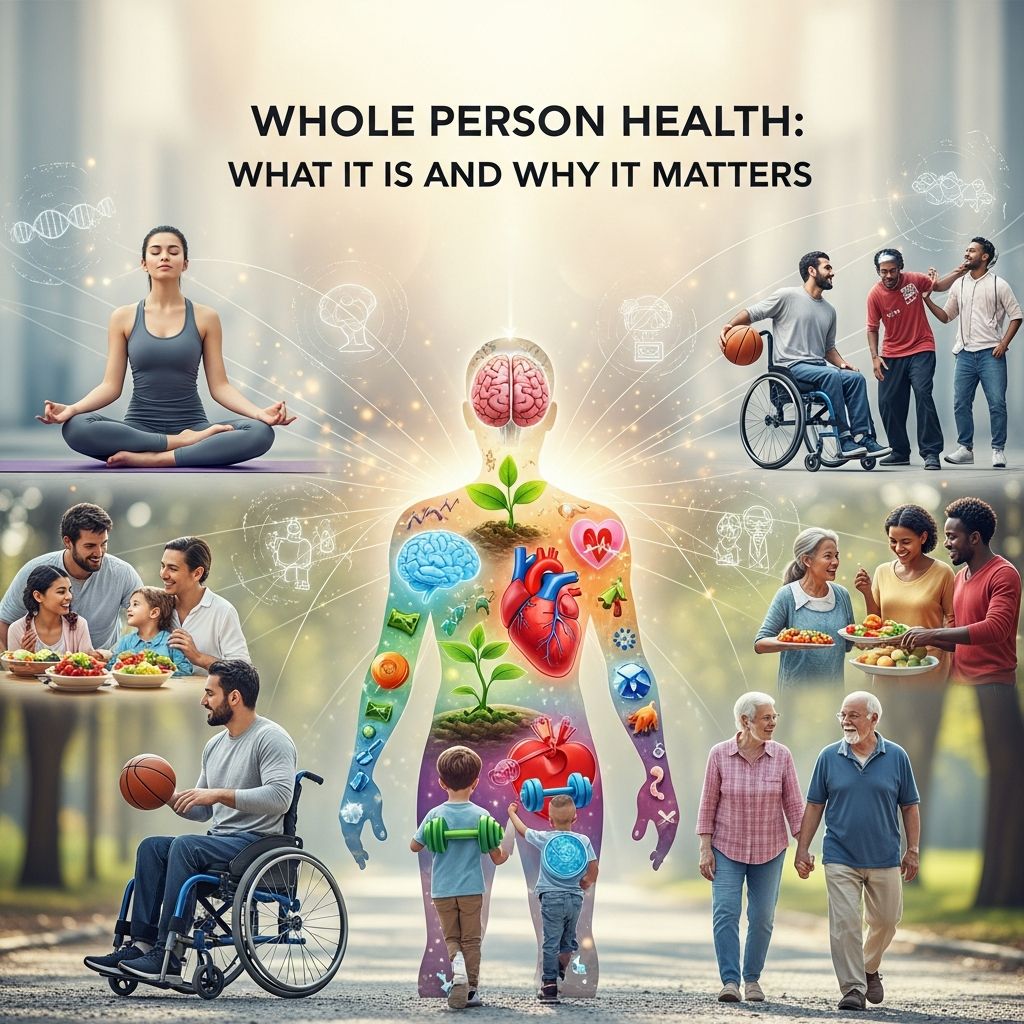
In modern healthcare, we often focus on treating specific diseases or isolated symptoms rather than considering the interconnected nature of human health. Whole person health represents a fundamental shift in this approach, emphasizing the importance of viewing individuals as integrated systems where physical, mental, social, and environmental factors work together to create overall wellness. This comprehensive framework is reshaping how healthcare providers, researchers, and individuals themselves approach health promotion and disease prevention.
What Is Whole Person Health?
Whole person health involves looking at the whole person—not just separate organs or body systems—and considering multiple factors that promote either health or disease. Rather than treating individual conditions in isolation, this approach recognizes that health exists on a continuum between wellness and disease, and that movement along this spectrum depends on numerous interconnected factors.
The concept represents more than just a medical philosophy; it is both a vision and an organizing principle for healthcare delivery and research. Whole person health means helping and empowering individuals, families, communities, and populations to improve their health across multiple interconnected biological, behavioral, social, and environmental areas. Instead of simply treating a specific disease after it develops, whole person health focuses on restoring health, promoting resilience, and preventing diseases throughout a person’s lifespan.
Key Components of Whole Person Health
The whole person health framework encompasses several critical dimensions:
- Biological Factors: Genetic makeup, immune function, and organ system health
- Behavioral Factors: Diet, physical activity, stress management, sleep quality, and self-care practices
- Social Factors: Relationships, community connections, family support, and social determinants of health
- Environmental Factors: Living conditions, access to resources, workplace environment, and community infrastructure
- Emotional and Psychological Well-being: Mental health, emotional resilience, and spiritual fulfillment
Understanding the Health-Disease Continuum
One of the most important concepts underlying whole person health is recognizing that health and disease are not separate, disconnected states but instead occur on a path that can move in two different directions, either toward health or toward disease. This bidirectional continuum acknowledges that individuals are constantly moving along a spectrum influenced by their choices and circumstances.
On this path toward disease, many factors can contribute to declining health: these include one’s biological makeup; unhealthy behaviors such as poor diet, sedentary lifestyle, chronic stress, and poor sleep; as well as social aspects of life—the conditions in which people are born, grow, live, work, and age. These interconnected factors can lead to chronic diseases affecting multiple organ systems simultaneously, such as diabetes, cardiovascular disease, degenerative joint disease, and depression.
The COVID-19 pandemic provided a striking real-world example of this principle. Although COVID-19 is primarily a respiratory infection, chronic conditions in other body systems (such as diabetes and hypertension) as well as social determinants of health emerged as important factors in disease severity and mortality. This demonstrated how underlying systemic health, shaped by lifestyle and social conditions, profoundly influences vulnerability to disease.
Related Stories



Movement Toward Health and Recovery
Importantly, the health-disease continuum also moves in the opposite direction. Self-care, lifestyle modifications, and behavioral interventions may help facilitate the return to health and prevent disease progression. By identifying and addressing the root causes of illness rather than just managing symptoms, individuals can move back toward improved health states.
Addressing health issues at an early stage can not only prevent multiple diseases but also restore health and stop progression to disease across the lifespan. This emphasizes the importance of preventive measures and early intervention, which are central to the whole person health approach.
Why Whole Person Health Is Important
The importance of whole person health extends far beyond theoretical considerations; it has profound practical implications for individuals, healthcare systems, and public health outcomes. Several key reasons explain why this approach matters in contemporary healthcare.
Addressing Root Causes Rather Than Symptoms
Traditional medical approaches often focus on treating symptoms or managing individual diseases once they appear. Whole person health inverts this traditional thinking, and instead of treating diseases one at a time, once they occur, it combines psychological, nutritional, and physical interventions and self-care to address the whole person proactively. By examining connections across biological, behavioral, social, and environmental domains, healthcare providers can better understand how co-occurring conditions can arise from common, interrelated factors.
This deeper understanding enables the development of more effective interventions. It is possible that one intervention developed with the whole person in mind could cross several systems, restoring health in all. For example, a multicomponent lifestyle intervention including healthy diet, physical activity, and stress management may improve multiple and interconnected aspects of health, including cardiovascular function (such as blood pressure), metabolic processes (such as glucose metabolism), and musculoskeletal function (such as muscle strength).
Integrating Care Across Providers and Settings
Whole person health also emphasizes well-coordinated care among different providers and institutions by bringing conventional and complementary approaches together to care for the whole person. This integration addresses fragmentation in healthcare delivery, where patients often see multiple specialists who may not communicate effectively or coordinate treatment plans.
Improving Health Outcomes and Quality of Life
By taking a comprehensive approach to health, whole person health frameworks have the potential to improve outcomes for individuals and populations. Research on whole person health aims to identify gaps in knowledge about the progression from health to disease and from disease back to health, as well as gaps in integration of care to develop multicomponent interventions that not only prevent progression to disease but also restore an improved state of health.
Promoting Health Equity
Recognizing social determinants of health as fundamental to whole person health highlights how inequities in living conditions, access to nutritious food, housing, and other resources contribute to health disparities. Addressing these social factors is essential for promoting equitable health outcomes across different communities and populations.
Real-World Applications of Whole Person Health
The Whole Health Institute Model
Established in 2020, the Whole Health Institute’s Whole Health model demonstrates practical application of these principles. This model helps people identify what matters most to them and build a plan for their journey to whole health. The framework provides tools to help people take good care of their body, mind, and spirit, involving working with a healthcare team as well as tapping into the support of family, friends, and communities.
State-Level Implementation
The North Carolina Department of Health and Human Services provides another example of whole person health implementation at a systems level. The state has incorporated a whole person health approach into its healthcare system by focusing on integrating physical, behavioral, and social health. The state has taken steps to encourage collaborative behavioral health care and help resolve widespread inequities in social conditions, such as housing and nutritious food access.
Research and the Future of Whole Person Health
The National Institutes of Health (NIH) has recognized the importance of whole person health and launched significant research initiatives to advance the field. The National Center for Complementary and Integrative Health (NCCIH) has been working over the last half-decade to advance the concept of whole person health, from research to healthcare delivery. A five-year research initiative will proceed in several stages, drawing from existing scientific knowledge to develop a complete, working model of healthy human physiology.
This research effort will build on existing resources such as the NIH Human Reference Atlas and the Human BioMolecular Atlas Program (HuBMAP) to connect the complex anatomy and function of the body’s different organs and systems into a single integrated map. As Dr. Helene M. Langevin, director of NCCIH, has noted: “Biomedical research is largely organized around the study of specific organs and diseases. In contrast, we do much less research on health itself, which is an integrated process involving the whole person.”
Evolution of the Concept
The concept of whole person health continues to evolve, just as the concept of complementary medicine has changed over time as the line between conventional and complementary medicine has increasingly become blurred. NCCIH has been examining the meaning of terms such as complementary, integrative, and health, transitioning to more inclusive definitions to reflect a whole person approach.
Emotional Well-Being and Whole Person Health
An important and often underemphasized dimension of whole person health is emotional well-being. Psychological and social factors are key aspects of the whole person and have major impacts on health promotion and disease prevention at all stages of life. NCCIH is interested in exploring ways to enhance emotional well-being—including the use of complementary and integrative health practices—and learning about how emotional well-being affects mental health, physical health, and resilience.
This recognition that emotional health is integral to overall wellness underscores how whole person health moves beyond physical symptoms to address the psychological and spiritual dimensions of human experience.
Frequently Asked Questions
What is the difference between whole person health and traditional medicine?
Traditional medicine often focuses on treating specific diseases or symptoms in isolation, whereas whole person health considers how biological, behavioral, social, and environmental factors work together to influence overall health. Whole person health emphasizes prevention, lifestyle modification, and addressing root causes rather than just managing symptoms.
How can I apply whole person health principles to my life?
You can apply whole person health by considering multiple dimensions of your wellness: maintaining healthy nutrition and physical activity, managing stress through meditation or other practices, cultivating strong social connections, ensuring adequate sleep, and addressing any social determinants affecting your health such as housing and food security.
Is whole person health the same as complementary medicine?
While whole person health may incorporate complementary approaches, they are not identical concepts. Whole person health is a broader framework that includes conventional and complementary approaches, integrated together to treat the whole person. The line between what is considered conventional and complementary continues to blur as evidence supports various approaches.
How does whole person health address chronic disease?
Rather than treating chronic conditions one by one, whole person health looks for common underlying factors that may contribute to multiple conditions. By addressing these root causes through multicomponent interventions involving diet, physical activity, stress management, and social support, it aims to prevent disease progression and restore health across multiple body systems simultaneously.
Why is social health considered part of whole person health?
Social determinants of health—the conditions in which people are born, grow, live, work, and age—profoundly influence health outcomes. Access to resources, community support, stable housing, and nutritious food are as important to health as medical treatment. Addressing these social factors is essential to achieving true health improvement.
References
- Building a Path to Whole Person Health — National Center for Complementary and Integrative Health (NCCIH), National Institutes of Health. 2021-2025. https://www.nccih.nih.gov/about/nccih-strategic-plan-2021-2025/introduction/building-a-path-to-whole-person-health
- Whole Person Health: What It Is and Why It’s Important — National Center for Complementary and Integrative Health (NCCIH), National Institutes of Health. 2024. https://www.nccih.nih.gov/health/whole-person-health-what-it-is-and-why-its-important
- NIH Launches Landmark Project on Whole-Person Health and Function — National Institutes of Health. 2024. https://www.nih.gov/news-events/news-releases/nih-launches-landmark-project-whole-person-health-function
- Advancing Research on Whole Person Health — Helene M. Langevin, M.D., National Center for Complementary and Integrative Health (NCCIH). 2025-04-04. https://content.govdelivery.com/accounts/USNIHNCCIH/bulletins/3dac391
- Emotional Well-Being and Whole Person Health — Helene M. Langevin, M.D., National Center for Complementary and Integrative Health (NCCIH). 2022-08-09. https://www.nccih.nih.gov/about/offices/od/director/past-messages/emotional-well-being-and-whole-person-health
Similar Articles








Read full bio of Sneha Tete