Brown Eyes: Why They Dominate Worldwide, Explained
Discover the genetic, evolutionary, and global reasons behind brown eyes being the world's most prevalent eye color phenomenon.
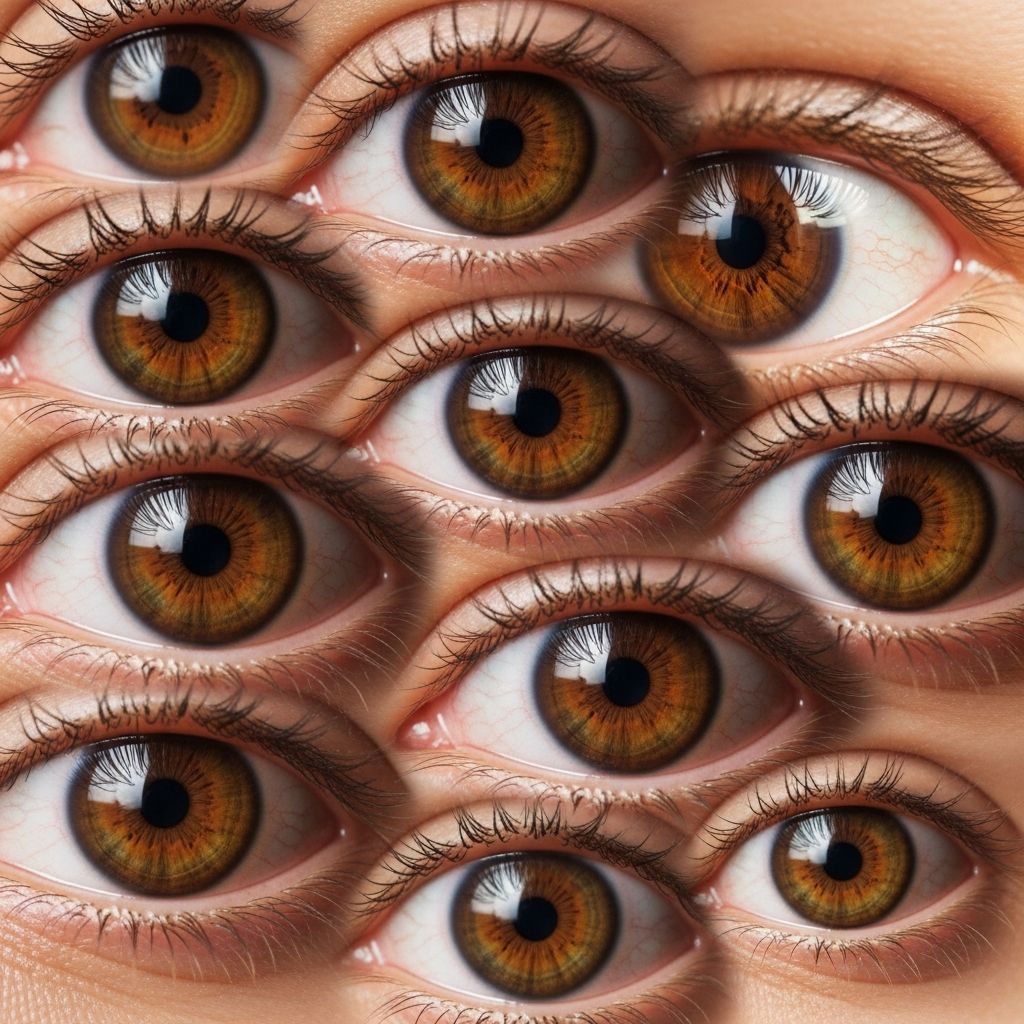
Brown eyes are the most prevalent eye color across the globe, appearing in over half of the world’s population due to higher melanin levels in the iris. This dominance stems from genetic mechanisms favoring melanin production, evolutionary adaptations, and migration patterns that spread these traits widely.
The Science of Iris Pigmentation
The color of the human iris arises primarily from melanin, a pigment responsible for darkening tissues in the eyes, skin, and hair. Individuals with brown eyes possess substantial melanin deposits in the iris’s front layers, absorbing light and creating a dark appearance. In contrast, lighter colors like blue result from minimal melanin, where light scatters to produce a blue hue via the Tyndall effect.
Melanosomes, organelles within iris cells, synthesize and store this melanin. The density and activity of these structures dictate eye shade, with brown-eyed people having more efficient melanosome function.
Primary Genes Shaping Eye Color
Eye color emerges from the interplay of multiple genes, debunking the outdated single-gene dominance model. The
OCA2
gene on chromosome 15 stands out, encoding the P-protein essential for melanosome maturation and melanin synthesis. Variants reducing P-protein output lead to lighter eyes, while higher levels promote brown.Adjacent to OCA2 lies
HERC2
, which regulates OCA2 expression. A key SNP (rs12913832) in HERC2 acts as a switch: the T allele boosts OCA2 activity for brown eyes, whereas the C allele suppresses it, favoring blue. This duo accounts for up to 74% of blue-brown variation.Other contributors include:
- TYR: Encodes tyrosinase, the enzyme kickstarting melanin production; mutations lighten eyes.
- SLC24A4 and SLC45A2: Influence ion transport affecting melanin levels, differentiating blue from green.
- ASIP and TYRP1: Modulate melanin pathways, fine-tuning shades like hazel.
Recent estimates suggest over 150 genes influence eye color, though major ones explain most variance.
Complex Inheritance Beyond Simple Dominance
Early 20th-century models posited brown as fully dominant over blue, implying blue-eyed parents could only produce blue-eyed offspring. Modern genomics reveals polygenic inheritance, where additive effects from multiple alleles create a spectrum. Thus, blue-eyed parents can yield brown-eyed children if recessive brown-boosting alleles combine favorably.
| Parental Eye Colors | Possible Child Outcomes | Genetic Explanation |
|---|---|---|
| Both Brown | Brown (most likely), Hazel/Green/Blue (possible) | Hidden recessive alleles surface. |
| One Brown, One Blue | Brown (75-90%), Blue (10-25%) | Brown alleles often dominant but not absolute. |
| Both Blue | Blue (most), Brown/Green (rare) | Rare polygenic boosts in melanin genes. |
This table illustrates probabilities based on studies; actual outcomes vary by specific genotypes.
Related Stories



Global Distribution Patterns
Brown eyes prevail in Africa (over 90%), Asia (nearly 100% in East Asia), and among Indigenous Americans, reflecting ancestral melanin-rich populations. Lighter eyes cluster in Europe: up to 89% blue in Finland, but brown still leads globally at 55-79%. These patterns trace to human origins in melanin-protective environments.
Evolutionary Roots of Brown Eye Prevalence
Humanity’s African genesis favored high-melanin traits for UV protection, shielding eyes from intense sunlight and reducing photophobia or pterygium risk. As groups migrated northward, lighter eyes evolved via OCA2/HERC2 mutations around 6,000-10,000 years ago, possibly aiding vitamin D synthesis in low-light regions. Yet, brown remained default due to its adaptive advantages in equatorial zones.
Selection pressures maintained brown dominance: darker irises may enhance visual acuity by minimizing glare and offer minor protection against UV-induced cancers.
Eye Color Variations and Rare Shades
- Hazel/Green: Moderate melanin with yellowish lipochrome; polygenic mixes yield these ‘in-between’ tones.
- Gray: Low melanin plus collagen scattering light differently from blue.
- Heterochromia: One eye differing from the other, often from somatic mutations or injury.
- Albinism: OCA2 defects cause near-pigmentless red/blue eyes from visible blood vessels.
Eye Color Myths and Misconceptions
Myth: Eye color is fixed at birth. Reality: Some infants’ eyes lighten as melanin develops postnatally.
Myth: Brown is purely dominant. Reality: Polygenic traits defy strict Mendelian rules.
Myth: Diet changes eye color. Reality: Genetics alone determine it; environment plays no direct role.
Health Implications of Eye Color
Brown-eyed individuals may face lower risks for:
- Uveal melanoma (pigment blocks UV).
- Macular degeneration (melanin antioxidants).
However, they report more light sensitivity in bright conditions. Lighter eyes correlate with higher alcohol tolerance sensitivity and altered pain thresholds, hinting at broader genetic links.
Modern Genetic Testing for Eye Color Prediction
Consumer tests analyze SNPs like rs12913832, predicting color with 90% accuracy for brown/blue using six markers. Forensic applications reconstruct eye color from DNA at crime scenes.
FAQs on Brown Eyes and Genetics
Can two blue-eyed parents have a brown-eyed child?
Yes, though rare (about 1-10%), due to polygenic inheritance activating hidden brown alleles.
What percentage of people have brown eyes?
Approximately 55-79% worldwide, highest in Africa and Asia.
Is eye color only about melanin?
No, light scattering and stromal structure contribute to lighter shades.
Do eye colors change with age?
Yes, especially in children; melanin can increase, darkening eyes.
How many genes control eye color?
At least 16 identified, with OCA2/HERC2 primary; up to 150 implicated.
Cultural Perspectives on Eye Color
In many cultures, brown eyes symbolize warmth and depth, while rare colors like blue carry exotic allure. Media amplifies this, but scientifically, prevalence underscores human genetic unity amid diversity.
References
- Is eye color determined by genetics? — MedlinePlus Genetics (U.S. National Library of Medicine). 2023. https://medlineplus.gov/genetics/understanding/traits/eyecolor/
- The Genetics of Eye Color — HudsonAlpha Institute for Biotechnology. 2022-10-01. https://www.hudsonalpha.org/the-genetics-of-eye-color/
- Genetics of human iris colour and patterns — PubMed (National Center for Biotechnology Information). 2009-07-17. https://pubmed.ncbi.nlm.nih.gov/19619260/
- Eye color — Wikipedia (citing primary genetic studies). 2024. https://en.wikipedia.org/wiki/Eye_color
- Genetics of Eye Color — News-Medical.net. 2023. https://www.news-medical.net/health/Genetics-of-Eye-Color.aspx
- Unlock the Mysteries of Eye Color Genetics — ViaCord Blog. 2023. https://www.viacord.com/blog/unlock-mysteries-eye-color-genetics-fascinating-deep-dive
Similar Articles








Read full bio of medha deb