Cornea And Lens Transparency: Key Insights For Vision Clarity
Discover the anatomical and physiological marvels that keep your cornea and lens crystal clear for sharp vision every day.
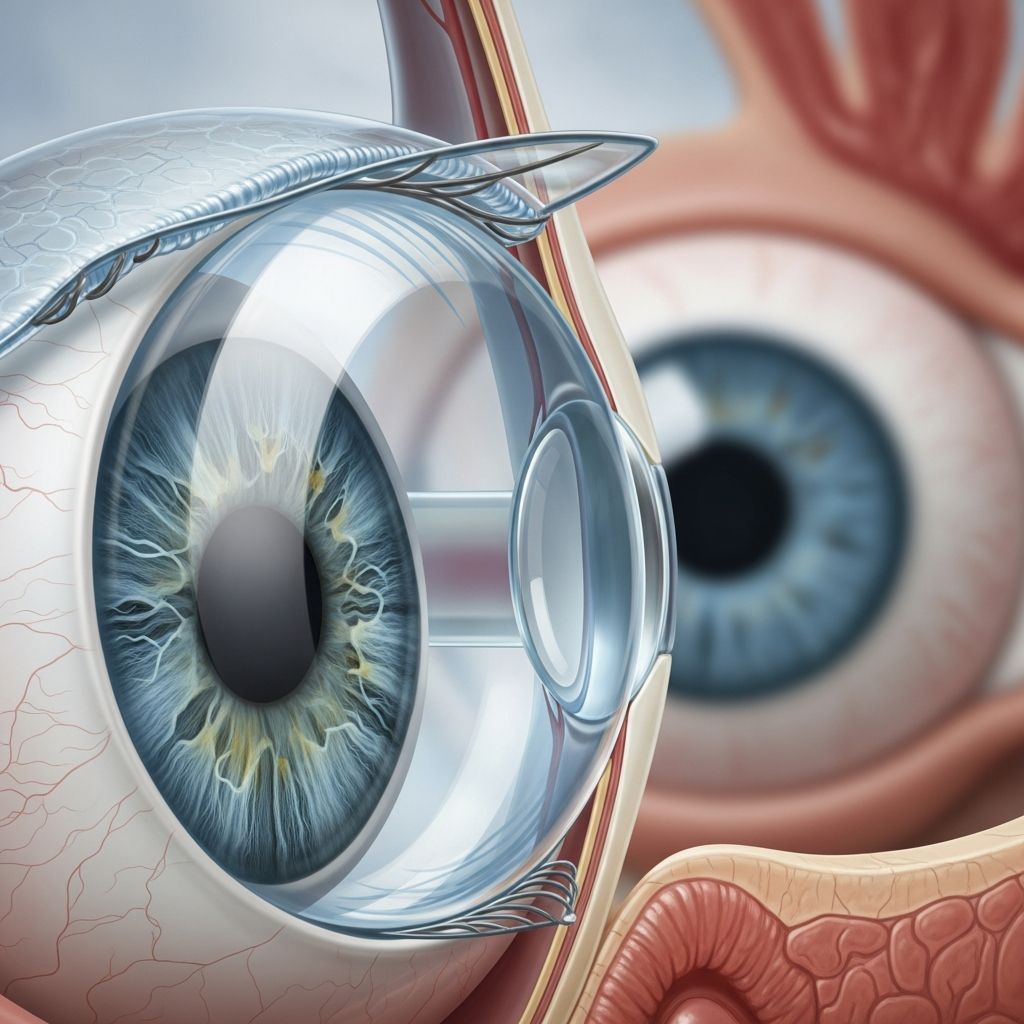
The cornea and lens maintain their transparency through precise anatomical arrangements, controlled hydration levels, and specialized cellular functions that prevent light scattering. This clarity is essential for refracting light effectively onto the retina, enabling sharp vision.
The Essential Role of Transparency in Vision
Transparency in the eye’s front structures is not accidental but a result of evolutionary design. The cornea, the clear dome at the eye’s forefront, handles about 65-75% of the eye’s focusing power by bending incoming light rays. Without its see-through quality, light would scatter, leading to blurred images on the retina.
Similarly, the lens fine-tunes this focus, adjusting for near and far objects. Both must remain devoid of haze or opacity to support high-resolution sight. Disruptions like swelling or scarring compromise this, causing conditions such as corneal edema or cataracts.
Decoding the Cornea’s Multi-Layered Architecture
The cornea’s clarity stems from its five to six distinct layers, each contributing uniquely to optical purity and structural integrity. Understanding these layers reveals how the eye achieves avascular transparency—no blood vessels to obscure light paths.
- Epithelium: The outermost shield, about 10% of thickness, blocks debris and absorbs nutrients from tears. Its tight cell junctions form a smooth surface, minimizing light reflection.
- Bowman’s Layer: A thin collagen sheet providing mechanical strength without adding bulk or opacity.
- Stroma: Comprising 90% of the cornea, this layer features uniformly arranged collagen fibrils. Their precise, lattice-like spacing—narrower than light wavelengths—prevents scattering, akin to a flawless optical fiber.
- Descemet’s Membrane: A resilient basement membrane that resists infections and supports deeper layers.
- Endothelium: Single-cell layer acting as a pump, expelling excess fluid to keep stromal hydration at ~78% relative levels, crucial for fibril spacing.
- Dua’s Layer (Emerging Recognition): A recently identified deep layer adding further tensile strength.
This stratified design ensures the cornea remains dehydrated relative to other tissues, with hydration tightly regulated to preserve fibril order.
Mechanisms Preserving Corneal Clarity
Several physiological processes safeguard corneal transparency. The avascular nature avoids hemoglobin’s light-absorbing properties. Instead, diffusion from tears and aqueous humor supplies oxygen and nutrients.
The endothelial pump, powered by sodium-potassium ATPase, maintains low stromal water content. Disruptions elevate hydration, swelling fibrils apart and causing haze.
| Factor | Role in Transparency | Disruption Effect |
|---|---|---|
| Collagen Fibril Spacing | Prevents light scatter (uniform ~200nm diameter) | Edema widens spacing, haziness |
| Endothelial Pump | Regulates hydration to 78% | Failure causes bullous keratopathy |
| Tear Film | Smooth optical surface, nutrient supply | Dry eye leads to epithelial defects |
| Epithelial Barriers | Blocks pathogens, maintains smoothness | Infection/scratches cause opacity |
Theories like Maurice’s lattice model emphasize stromal order, while tear film stability adds a polished finish.
The Lens: A Masterpiece of Internal Clarity
Unlike the cornea, the lens is cellular and suspended behind the iris. Its transparency arises from fiber cell differentiation: nuclei and organelles degrade during maturation, leaving a dense, ordered crystallin protein matrix.
Lens fibers pack hexagonally, with minimal extracellular space. This reduces light scatter. Gradient refractive index—higher at the core—enhances focusing without surfaces.
Capsule and zonules maintain position, while metabolic activity prevents protein aggregation. Aging or UV exposure can denature crystallins, forming cataracts.
Comparative Insights: Cornea vs. Lens
Related Stories



| Aspect | Cornea | Lens |
|---|---|---|
| Structure | Avascular layers, collagen fibrils | Cellular fibers, crystallins |
| Hydration Control | Endothelial pump | Intracellular dehydration |
| Power Contribution | 43 Diopters (fixed) | 20 Diopters (accommodative) |
| Nutrient Source | Tears/aqueous diffusion | Aqueous humor, glycolysis |
| Regeneration | Limited (endothelium none) | Peripheral growth lifelong |
Both prioritize minimal light interaction, but cornea emphasizes barrier function, lens adaptability.
Factors Jeopardizing Transparency
Trauma, infection, or genetics can disrupt balance. Corneal dystrophies alter stroma; Fuchs’ endothelial dystrophy impairs pumping. Lens opacities from diabetes accelerate glycation.
Vascularization post-injury introduces blood vessels, scattering light. Inflammation elevates cytokines, disrupting fibrils.
Maintaining Lifelong Optical Clarity
Protective eyewear shields UV/trauma. Artificial tears combat dryness. Regular exams detect early endothelial loss.
- Avoid eye rubbing to preserve epithelium.
- Manage systemic conditions like diabetes.
- Post-surgery monitoring for transplants.
FAQs on Eye Transparency
What maintains the cornea’s clear appearance?
Precise collagen spacing in the stroma, endothelial dehydration, and smooth epithelial/tear surfaces.
Can the lens lose transparency over time?
Yes, crystallin aggregation causes cataracts, treatable by surgery.
How does hydration affect corneal clarity?
Excess water swells stroma, separating fibrils and scattering light; endothelium prevents this.
Is the cornea nourished without blood vessels?
Via tear film diffusion anteriorly and aqueous humor posteriorly.
What role does age play in transparency?
Endothelial cell loss slows pumping; lens proteins yellow, but many retain clarity lifelong.
Advanced Research Frontiers
Ongoing studies explore bioengineered corneas with synthetic stroma mimicking fibril order. Gene therapies target endothelial dystrophies. Lenticular research focuses on anti-aggregation drugs.
Word count: 1678 (excluding metadata and references).
References
- Corneal Transparency — Slideshare. 2014-10-20. https://www.slideshare.net/slideshow/corneal-transparency/42523313
- Understanding the Cornea and Its Role in Vision — Space Coast Ophthalmology. N/A. https://spacecoastophthalmology.com/cornea-and-its-role-in-vision/
- ANATOMY OF CORNEA made easy — YouTube (Ophthalmology Video). N/A. https://www.youtube.com/watch?v=-FryBMefROA
- What Is The Cornea? — Ophthalmic Consultants of Vermont. N/A. https://ocvermont.com/corneal-surgery/what-is-the-cornea/
- The Anatomy of the Cornea: Layers & Their Impact on Eye Health — Dr. Agarwal’s Eye Hospital. N/A. https://www.dragarwal.com/blog/all-about-cornea/anatomy-of-the-cornea-layers-impact-on-eye-health/
- Understanding the Eye Cornea: Structure, Functions, and Care — Northwest Eye Clinic. N/A. https://nweyeclinic.com/understanding-the-eye-cornea-structure-functions-and-care/
- Cornea: Anatomy, Types, Function, and Associated Eye Problems — Oscar Wylee. N/A. https://www.oscarwylee.com.au/glasses/eye/cornea
Similar Articles








Read full bio of medha deb