Why Does Hair Turn Gray: Science Behind Premature Graying
Discover the biological mechanisms behind hair graying and what science reveals about stress, aging, and genetics.
Why Hair Turns Gray: Understanding the Science
Hair graying is a natural part of aging that many people experience, yet the biological mechanisms behind this phenomenon have puzzled scientists for decades. While graying is often associated with advancing age, research reveals that the process is far more complex than simple aging. Understanding why hair turns gray involves exploring genetics, cellular biology, stress responses, and oxidative stress at the molecular level.
The Role of Melanin and Melanocyte Stem Cells
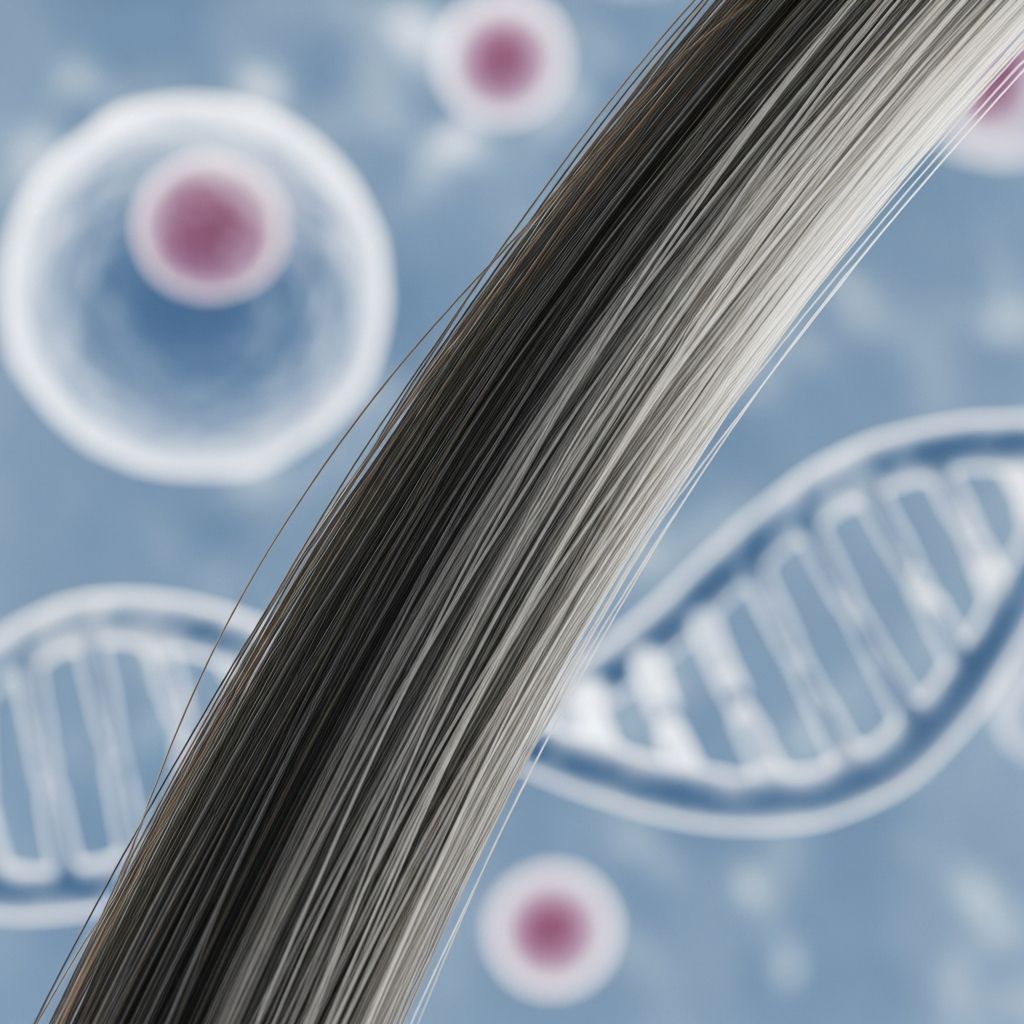
The color of your hair is determined by a pigment called melanin, which is produced by specialized cells known as melanocytes. These melanocytes are derived from melanocyte stem cells, which reside in the base of hair follicles in an area called the hair bulge. Throughout your life, these stem cells remain dormant in a reservoir, waiting to be activated when new hair growth is needed.
When a new hair begins to grow, the melanocyte stem cells are activated and convert into mature melanocytes, which produce melanin that colors the growing hair shaft. This intricate balance between stem cell activation, melanin production, and hair growth has evolved over millions of years to maintain consistent hair color throughout life. However, this system becomes compromised as we age, leading to the characteristic gray and white hairs associated with aging.
How Stress Triggers Hair Graying
For generations, people have anecdotally reported that stressful life events caused their hair to turn gray overnight. While the dramatic overnight transformation is largely a myth, groundbreaking research from Harvard University has confirmed that stress does indeed accelerate hair graying through a specific biological mechanism.
Researchers discovered that when the body experiences acute stress, the sympathetic nervous system activates as part of the fight-or-flight response. This activation triggers the release of a neurotransmitter called norepinephrine from nerve endings that extend into hair follicles. Rather than providing a protective benefit, this stress response causes melanocyte stem cells to become hyperactivated.
When norepinephrine causes these stem cells to activate excessively, they prematurely convert into pigment-producing melanocytes and migrate away from their protective reservoir in the hair follicle. This depletion happens rapidly—research shows that after just a few days of stress, the entire reservoir of melanocyte stem cells can be exhausted in affected hair follicles. Once these stem cells are depleted, they cannot be regenerated, and the damage is permanent.
The Role of Genetics in Hair Graying
While stress can accelerate graying, genetics remains one of the most significant factors determining when and how quickly hair turns gray. If your parents experienced early graying, there is a substantially higher probability that you will as well. Genetic factors control the overall health and longevity of melanocyte stem cells, the efficiency of melanin production, and the body’s ability to manage oxidative stress at the cellular level.
Certain genetic variations affect the production of catalase, an enzyme that neutralizes hydrogen peroxide accumulation in the body. People with less efficient catalase production tend to experience earlier hair graying because hydrogen peroxide damages melanocytes over time. Additionally, genetic factors influence the expression of genes responsible for maintaining stem cell function and preventing cellular damage in hair follicles.
Related Stories



Age-Related Changes and Cellular Aging
The most straightforward explanation for hair graying is the passage of time. As humans age, the cells responsible for maintaining hair color naturally become less efficient. Several age-related processes contribute to graying:
Telomerase Decline
Telomerase is an enzyme that helps cells maintain their ability to divide and function. As people age, telomerase activity decreases, leading to cellular aging in melanocyte stem cells. This decline reduces the stem cells’ capacity to maintain the melanocyte population needed for continuous pigment production.
Mitochondrial Dysfunction
Hair follicles require significant energy to maintain pigment production. With age, mitochondria—the powerhouses of cells—become less efficient at generating energy. This reduced energy production hampers the ability of melanocytes to synthesize and distribute melanin effectively, leading to less pigmented hair.
Stem Cell Exhaustion
Throughout life, melanocyte stem cells divide to replace damaged cells and maintain the melanocyte population. Over decades, this continuous division eventually exhausts the stem cell reservoir. Once depleted, hair follicles lose their capacity to produce pigmented hair, resulting in gray and white hair growth.
Oxidative Stress and Free Radicals
Another critical factor in hair graying is oxidative stress—an imbalance between damaging free radicals and the body’s antioxidant defenses. Hair follicles are particularly vulnerable to oxidative stress because they have high metabolic activity and generate reactive oxygen species during melanin synthesis.
Hydrogen peroxide naturally accumulates in hair follicles as a byproduct of cellular metabolism. In young hair follicles, the enzyme catalase efficiently breaks down this hydrogen peroxide into water and oxygen. However, as people age, catalase levels decline, allowing hydrogen peroxide to accumulate to toxic levels. This buildup directly damages melanocytes, preventing them from producing melanin and leading to gray hair.
Environmental factors also contribute to oxidative stress in hair follicles. Exposure to ultraviolet radiation, pollution, and smoke increases free radical production, accelerating the damage to melanocytes and contributing to premature graying.
Nutritional Deficiencies and Hair Graying
Adequate nutrition plays an important role in maintaining healthy hair pigmentation. Several vitamins and minerals are essential for melanin production and melanocyte health:
Copper
Copper is a critical cofactor for tyrosinase, the enzyme responsible for synthesizing melanin. Without sufficient copper, the body cannot effectively produce the pigments needed to color hair.
Vitamin B12 and Folate
These B vitamins are essential for cell division and DNA synthesis in rapidly dividing cells like melanocytes. Deficiencies in B12 or folate can impair melanocyte function and contribute to premature graying.
Zinc
Zinc supports immune function and helps regulate catalase production, which is important for protecting melanocytes from oxidative damage.
Iron
Iron is necessary for oxygen transport and energy production in cells. Insufficient iron can impair the function of melanocytes and their stem cells.
Other Contributing Factors to Hair Graying
Smoking
Smoking significantly increases the risk of premature graying by increasing oxidative stress and reducing blood flow to hair follicles. Studies consistently show that smokers experience graying earlier than non-smokers.
Autoimmune Conditions
Conditions such as vitiligo and alopecia areata involve immune system dysfunction that can affect melanocytes in hair follicles, leading to patchy or widespread graying.
Thyroid Disorders
The thyroid gland regulates metabolism throughout the body, including in hair follicles. Thyroid dysfunction can impair melanocyte function and accelerate graying.
Chronic Inflammation
Persistent inflammation in the body increases free radical production and can compromise stem cell function in hair follicles, accelerating the graying process.
Can You Reverse or Prevent Hair Graying?
Currently, there is no proven way to reverse hair that has already turned gray, as the melanocyte stem cells that produce pigment are permanently depleted when damaged. However, several strategies may help slow the graying process:
- Manage stress: While acute stress causes permanent damage, practicing stress management techniques may help minimize exposure to the harmful norepinephrine response that accelerates graying.
- Maintain proper nutrition: Ensuring adequate intake of copper, vitamin B12, zinc, and iron supports melanocyte health and function.
- Avoid smoking: Quitting smoking can reduce oxidative stress and potentially slow the graying process.
- Protect from sun exposure: Limiting UV exposure through protective measures can reduce oxidative damage to hair follicles.
- Address underlying health conditions: Managing thyroid disorders, autoimmune conditions, and nutritional deficiencies can support hair health.
The Science Behind Hair Color Variation
Different people experience graying at different rates and in different patterns. Some people develop a few gray hairs in their thirties, while others maintain pigmented hair well into their seventies. This variation is largely determined by genetics, which controls the robustness of the melanocyte stem cell reservoir and the efficiency of the body’s antioxidant defenses.
Ethnicity also influences graying patterns. Research suggests that people of European descent tend to experience graying earlier than those of African or Asian descent, though individual variation within ethnic groups is substantial.
Future Research and Potential Treatments
The Harvard research identifying the role of the sympathetic nervous system in stress-induced graying has opened new avenues for future research. Scientists are exploring whether interventions that block norepinephrine signaling or protect melanocyte stem cells from depletion might slow or prevent stress-related graying.
Additionally, researchers are investigating whether the mechanisms discovered in stress-induced graying also apply to age-related graying. If the same pathways are involved, future therapies might target these systems to delay or prevent natural hair graying as people age.
Frequently Asked Questions
Q: Can stress really turn your hair gray overnight?
A: While research confirms that stress can trigger hair graying, the dramatic overnight transformation depicted in folklore is unlikely. Hair that turns gray does so as new hair grows from the follicle. However, if multiple follicles are affected simultaneously by stress, noticeable graying could occur over weeks to months rather than overnight.
Q: Is there a way to restore hair color to gray hair?
A: Currently, there is no scientifically proven method to restore pigment to hair that has already turned gray. Once melanocyte stem cells are depleted, they cannot be regenerated with current medical technology. Hair dyes and temporary coloring are the only practical options for individuals seeking to restore hair color.
Q: At what age do people typically start graying?
A: The age at which graying begins varies widely based on genetics and ethnicity. On average, people of European descent develop their first gray hair around age 35, while people of African and Asian descent may experience graying later. However, premature graying can occur in people in their twenties or even earlier.
Q: Does vitamin supplementation help prevent gray hair?
A: If graying is caused by nutritional deficiencies, supplementation may help slow the process. However, for age-related and genetically determined graying, supplementation alone is unlikely to prevent the process. A balanced diet rich in essential nutrients is important for overall hair health.
Q: Does plucking one gray hair cause more to grow in its place?
A: This is a myth. Plucking a gray hair does not cause additional gray hairs to grow in its place. However, plucking can irritate the hair follicle and potentially damage it, so it is better to trim or color gray hair rather than pluck them repeatedly.
Q: Can certain medications cause premature graying?
A: Some medications may contribute to hair graying by increasing oxidative stress or affecting nutrient absorption. If you notice rapid graying after starting a new medication, consult with your healthcare provider to determine if there is a connection.
References
- New findings suggest how stress may trigger gray hair — Harvard Gazette. 2020-01-30. https://news.harvard.edu/gazette/story/2020/01/new-findings-suggest-how-stress-may-trigger-gray-hair/
- How stress causes gray hair — National Institutes of Health (NIH). 2020-02-04. https://www.nih.gov/news-events/nih-research-matters/how-stress-causes-gray-hair
- Solving a biological puzzle: How stress causes gray hair — Harvard Stem Cell Institute. 2020. https://www.hsci.harvard.edu/news/solving-biological-puzzle-how-stress-causes-gray-hair
- Hyperactivation of sympathetic nerves drives depletion of melanocyte stem cells — Nature. 2020. https://www.nature.com/articles/s41586-020-1935-3
Similar Articles








Read full bio of medha deb