Why is there still stigma around antidepressants?
Exploring persistent myths, personal stories, and the real impact of stigma on antidepressant use and mental health treatment.
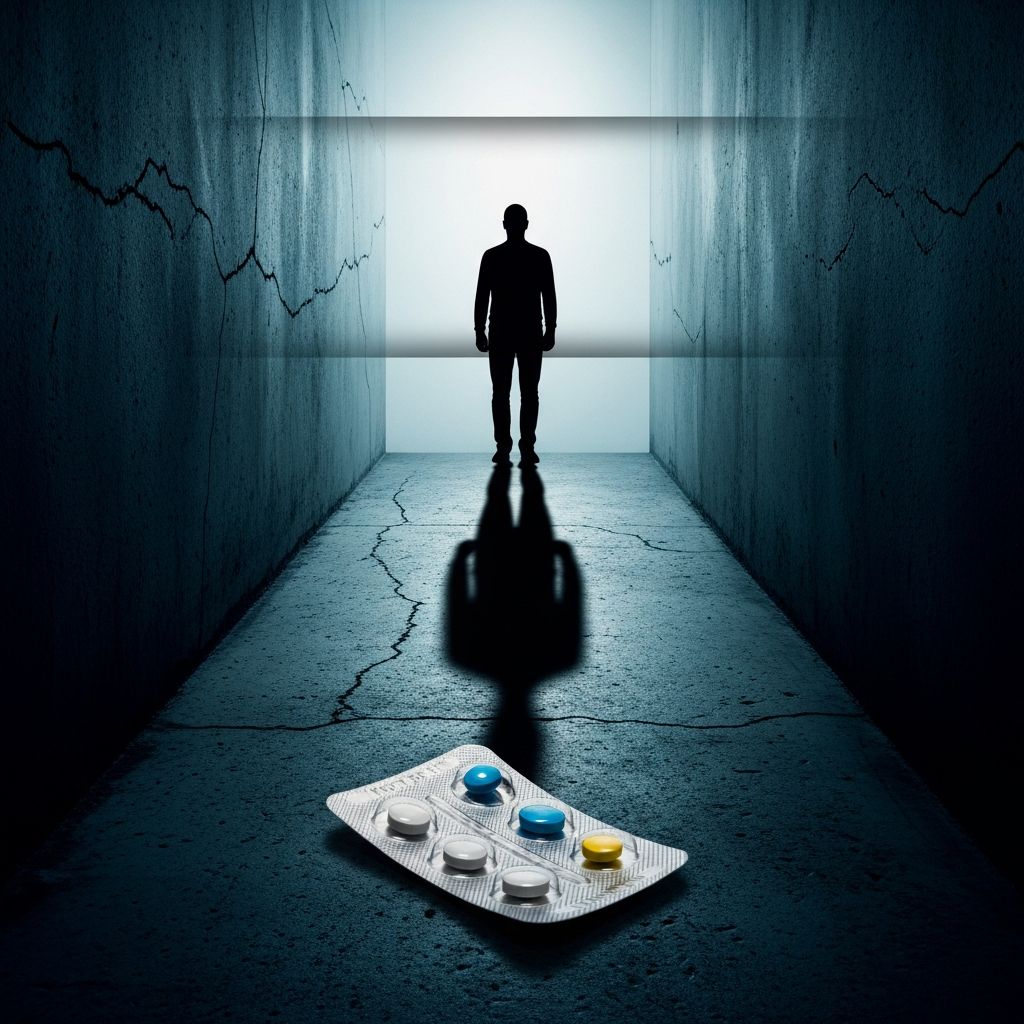
Stigma surrounding mental health treatments, particularly antidepressants, remains a significant barrier to effective care, rooted in misconceptions and societal attitudes that discourage people from seeking or continuing medication. Despite advances in understanding mental health, many view antidepressants as a sign of weakness or a simplistic solution, leading to reluctance in starting treatment and high rates of premature discontinuation.
What is stigma around antidepressants?
Stigma around antidepressants manifests as negative judgments associating medication use with personal failure, severe mental illness, or dependency, often amplified by cultural beliefs and misinformation. For instance, individuals report feeling ashamed when family or friends suggest they should manage symptoms through willpower alone, ignoring the biological basis of conditions like depression. Research among Latino patients reveals that antidepressant use is perceived as implying weakness, inability to cope, or equivalence to illicit drug use, fostering fears of social and occupational repercussions.
This stigma extends beyond the diagnosis to the medication itself, with patients worrying about side effects turning them into ‘zombies’ or altering their personality irreversibly. In reality, antidepressants work by balancing neurotransmitters like serotonin and noradrenaline to alleviate symptoms, allowing individuals to regain motivation and engage more fully in life. However, pervasive myths perpetuate the idea that needing medication equates to inadequacy.
Personal stories: ‘It’s embarrassing to insist that you need medication to feel normal’
Personal accounts vividly illustrate the emotional toll of stigma. Claire, who struggled with depression, shared how her medication brought relief, yet her mother questioned it, insisting positive thinking and exercise should suffice. “She felt like it should be something I can manage on my own,” Claire recounted, highlighting the pressure to ‘tough it out.’ A friend echoed this by suggesting outdoor activities over pills, underscoring the humiliation of advocating for pharmacological help.
“This is the stigma,” Claire emphasized. “It’s embarrassing to insist that you need medication to feel normal. It’s humiliating to have to fight for the right to take something that you don’t want to have to take.” Such experiences are common; Becky Barnes, 38, with bipolar disorder, described medication as wrongly viewed as a failure or weakness. These stories reveal how stigma isolates individuals, making them defensive about a treatment that stabilizes their lives.
‘Quick fix’
A prevalent myth portrays antidepressants as a ‘quick fix’ for mental health issues, implying instant results without effort. In truth, finding the effective medication often involves trial and error, with benefits emerging after weeks, frequently alongside therapies like counseling. This misconception discourages persistence, as patients expect rapid euphoria rather than gradual symptom relief.
Studies confirm that improper expectations fuel non-adherence; for example, in functional dyspepsia patients, stigma linked to viewing antidepressants as a hasty solution reduced compliance until clinician communication clarified their role. Addressing this myth requires education on the time-intensive process, emphasizing that medication supports, rather than replaces, holistic recovery.
Related Stories



‘Happy pills’
The term ‘happy pills’ is one of the most damaging myths, suggesting antidepressants induce artificial euphoria. Isabella Goldie, a mental health nurse and Mental Health Foundation director, clarifies: “Antidepressants don’t work in that way. It is a myth.” They instead liberate the brain from negative thought patterns, fostering motivation and coping skills.
Nia Charpentier from Rethink Mental Illness calls this label ‘dismissive and reductive,’ trivializing a potentially lifesaving intervention. Mechanistically, these drugs elevate neurotransmitter levels to normalize mood, not create highs. Psychoeducation studies show that reframing labels—e.g., describing atypicals as modulators rather than antipsychotics—reduces self-stigma and boosts acceptance in depression patients. Dispelling ‘happy pills’ rhetoric is crucial for validating treatment.
Why does stigma still exist?
Stigma endures due to lingering mental health prejudices, media portrayals, and fears of side effects or personality changes. While side effects occur, they often subside, and alternatives exist via GP consultation. Concerns of becoming emotionless overlook how relief from obsessions enhances authenticity and joy.
Cultural factors exacerbate this; among Latinos, antidepressant stigma ties to values of resilience, viewing use as social deficiency. Self-stigma correlates inversely with education and positively with higher doses, indicating internalized shame impacts dosing adherence. Recent research (2023-2024) stresses clinician communication as key to mitigation, with strategies lowering perceived stigma scores significantly. Persistent stigma reflects incomplete public understanding of mental illness as a medical condition.
Impact of stigma
Stigma’s consequences are profound: it deters GP visits, prompts early cessation, and elevates relapse risks. Charpentier notes people avoid or abandon effective treatments due to fear and misunderstanding. Goldie highlights relapse from premature discontinuation driven by shame.
Quantitative data supports this; in randomized trials, stigma reduced adherence in 42-92% of patients across shame, community disclosure, and job concerns, but communication interventions dropped these to 21-66%. Self-stigma links to poorer quality of life and treatment outcomes. Overcoming it via education and support is essential for recovery.
How to overcome stigma around antidepressants
- Educate yourself and others: Learn the science—antidepressants modulate brain chemistry, not induce dependency. Share facts to counter myths.
- Open conversations: Discuss experiences candidly with loved ones to normalize treatment, as Claire did to gain her mother’s support.
- Seek professional guidance: GPs can tailor meds, manage sides, and pair with therapy. Communication strategies alleviate stigma effectively.
- Challenge misconceptions: Refute ‘quick fix’ or ‘happy pills’ by noting gradual benefits and neurotransmitter roles.
- Build support networks: Join groups where medication use is destigmatized, reducing isolation.
- Advocate publicly: Share stories to shift societal views, emphasizing meds enable ‘true self’.
Implementing these fosters acceptance. Mayo Clinic advocates confronting stigma through awareness, as false beliefs harm those with mental conditions.
Frequently Asked Questions (FAQs)
Are antidepressants just ‘happy pills’?
No, they balance brain chemicals like serotonin to reduce negative thinking and improve motivation, not create euphoria.
Is taking antidepressants a sign of weakness?
Absolutely not; depression is a medical condition treatable like diabetes with insulin. Needing help shows strength.
Do antidepressants change your personality?
They alleviate symptoms, often helping you feel more like yourself by lifting intrusive thoughts.
How long do antidepressants take to work?
Typically 2-6 weeks for full effects; persistence and GP monitoring are key, not a quick fix.
Can stigma really affect treatment?
Yes, it leads to avoidance or early stopping, increasing relapse; communication reduces it.
Conclusion
Stigma around antidepressants persists through myths and fears but can be dismantled with education, open dialogue, and evidence-based understanding. By validating medication as a vital tool, we empower better mental health outcomes for all.
References
- Why is there still stigma around antidepressants? — Patient.info. 2023. https://patient.info/features/mental-health/why-is-there-still-stigma-around-antidepressants
- Improving Clinician-Patient Communication Alleviates Stigma in Patients with Refractory Functional Dyspepsia. — Journal of Neurogastroenterology and Motility. 2024-10-13. https://www.jnmjournal.org/journal/view.html?doi=10.5056/jnm20239
- A Qualitative Analysis of the Perception of Stigma Among Latinos Receiving Antidepressants. — Psychiatric Services (PMC). 2006-06-01. https://pmc.ncbi.nlm.nih.gov/articles/PMC2288553/
- Self-stigmatization and treatment preferences: Measuring the impact of label information for medications in depression (DISMISS-study). — PLOS ONE. 2024. https://journals.plos.org/plosone/article?id=10.1371/journal.pone.0309562
- Connection between self-stigma, adherence to treatment, and quality of life of patients with depression. — PMC (Epidemiology and Psychiatric Sciences). 2016. https://pmc.ncbi.nlm.nih.gov/articles/PMC4966500/
- The facts – and misconceptions – about antidepressant medications. — UCHealth Today. 2023. https://www.uchealth.org/today/the-facts-and-misconceptions-about-antidepressant-medications/
- Mental health: Overcoming the stigma of mental illness. — Mayo Clinic. 2023-11-13. https://www.mayoclinic.org/diseases-conditions/mental-illness/in-depth/mental-health/art-20046477
Similar Articles








Read full bio of medha deb