Why Your Booze Doesn’t Have a Nutrition Label
Discover why alcoholic beverages lack nutrition labels and explore the latest TTB proposals for mandatory Alcohol Facts panels and allergen disclosures.
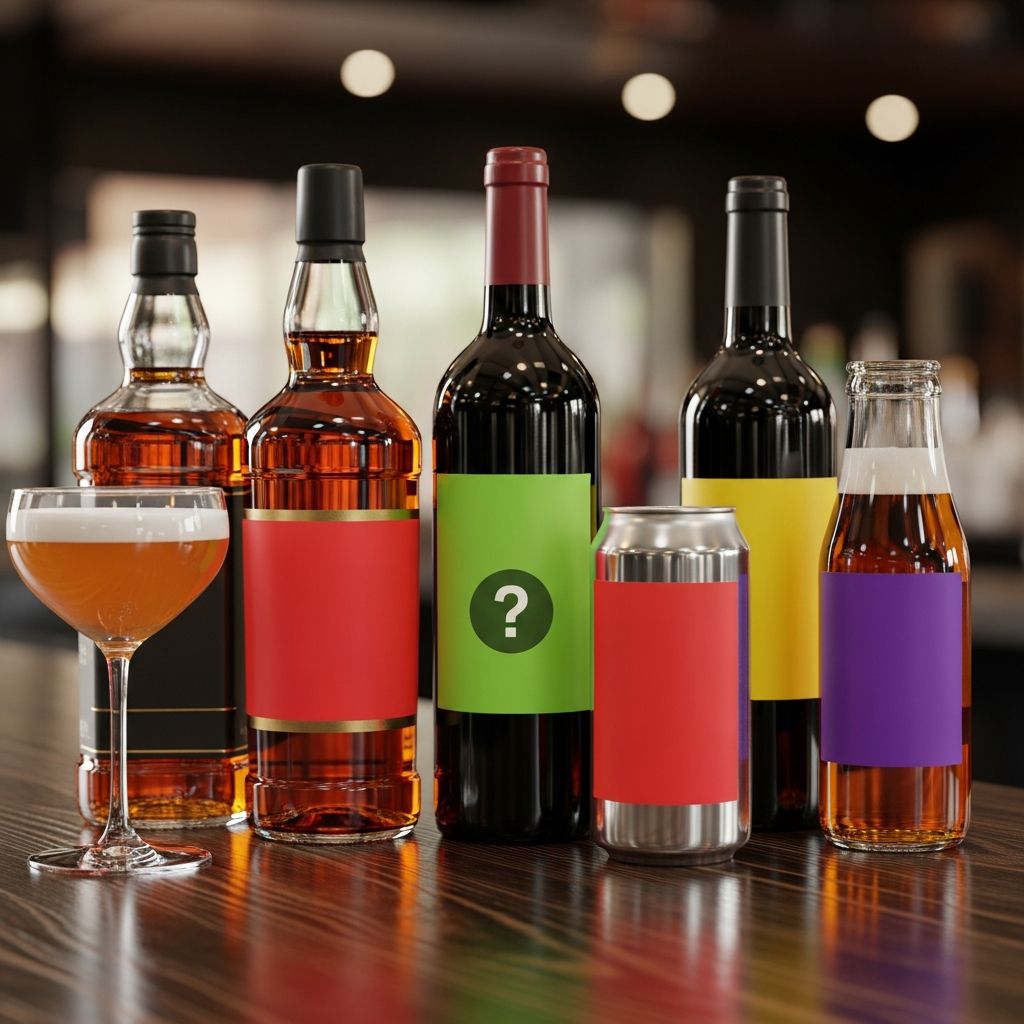
Alcoholic beverages stand out on store shelves for their lack of
Nutrition Facts
panels, unlike nearly every other packaged food and drink. This absence leaves consumers guessing about calories, carbs, sugars, and allergens in their beer, wine, or spirits. Regulated by the Alcohol and Tobacco Tax and Trade Bureau (TTB) under the U.S. Department of the Treasury rather than the FDA, alcohol has enjoyed an exemption from standard food labeling laws for decades.Recent developments signal change: In January 2025, the TTB proposed revolutionary rules mandating an
Alcohol Facts
panel and allergen disclosures on labels, responding to public health advocates and a 2022 Treasury report. These proposals, if finalized, would provide per-serving details on alcohol content, calories, carbs, protein, fat, and major allergens, bringing booze closer to food labeling standards. Public comments are open until August 15, 2025.The Regulatory Divide: Why Alcohol Skips Nutrition Labels
Food products must bear Nutrition Facts labels under the FDA’s Nutrition Labeling and Education Act (NLEA) of 1990, detailing serving size, calories, macronutrients, and more. Alcohol beverages, however, fall under the Federal Alcohol Administration (FAA) Act of 1935, administered by TTB. This separate jurisdiction creates ‘alcohol labeling exceptionalism,’ exempting booze from FDA nutrient disclosure rules.
TTB regulations prioritize preventing deception and ensuring ‘adequate information’ on identity, quality, and alcohol content, but do not require nutrient or allergen labeling. Voluntary statements like calorie counts or ‘Alcohol Facts’ have been allowed since TTB Ruling 2013-2, but only if accurate and non-misleading, often in formats like ‘Statement of Average Analysis’ or ‘Serving Facts’. Without mandates, most producers skip them to avoid costs and complexity.
The divide stems from alcohol’s historical treatment as a taxed commodity rather than food, compounded by industry lobbying. Wines over 7% ABV, distilled spirits, and malt beverages are TTB-regulated, while some low-alcohol beers fall under FDA. This patchwork confuses consumers tracking intake for health or dieting.
What’s Hiding in Your Drink? Calories, Carbs, and Alcohol Content
A standard 12-oz beer packs about 150 calories, mostly from alcohol and carbs; a 5-oz glass of wine has 120-150 calories; and a 1.5-oz shot of spirits averages 100 calories—all without labels to prove it. Alcohol provides 7 calories per gram, contributing significantly even in ‘light’ options.
| Beverage Type | Serving Size | Typical Calories | Carbs (g) | Alcohol (oz pure) |
|---|---|---|---|---|
| Light Beer | 12 oz | 100 | 6 | 0.45 |
| Regular Beer | 12 oz | 150 | 13 | 0.45 |
| Red Wine | 5 oz | 125 | 4 | 0.45 |
| Vodka Shot | 1.5 oz (80 proof) | 96 | 0 | 0.45 |
Note: Values are averages; proposed TTB rules would require exact per-serving disclosures.
Without labels, mixers add hidden sugars—a rum and coke can exceed 300 calories. The 2025 TTB Notice No. 237 proposes a standardized Alcohol Facts box with ABV, fluid ounces of pure alcohol, calories, carbs, sugar, protein, and fat per serving, in table or linear format. This mirrors FDA panels, aiding calorie counters and those managing diabetes or weight.
Allergens in Alcohol: An Overlooked Risk
Major food allergens—milk, eggs, fish, crustacean shellfish, tree nuts, peanuts, wheat, soybeans, sesame—must be declared on FDA-regulated foods. Alcohol skips this, despite risks from processing aids like fish bladder in wine fining or barley in beer for celiacs.
Related Stories



TTB Notice No. 238 (2025) proposes mandatory allergen labeling, aligning with FDA’s framework. Producers must list these if present or derived from them, protecting the 32 million U.S. allergy sufferers. Current rules allow voluntary disclosures via interim rules from 2006, but compliance is spotty. The five-year phase-in gives industry time to test and relabel.
- Wine: Potential fining agents (isinglass from fish, casein from milk).
- Beer: Wheat/barley for gluten-sensitive; hops or yeast traces.
- Spirits: Flavorings with nuts or soy.
Advocates hail this as ending exceptionalism, though full ingredient lists remain absent.
A Push for Change: From Advocacy to TTB Proposals
Public health groups, like Consumer Federation of America, have campaigned for decades for transparency. The 2022 Treasury report on beer, wine, and spirits markets recommended consistent disclosures for consumer choice. TTB’s 2024 listening sessions and 5,000+ comments fueled the 2025 notices.
Notice No. 237 mandates Alcohol Facts for wines ≥7% ABV, spirits, malt beverages; No. 238 adds allergens. Both offer five-year compliance from finalization, with comments due August 15, 2025. Industry faces lab testing, label redesigns, and dual FDA/TTB navigation for some products. Small brewers worry about costs, but advocates prioritize health.
Health Impacts: Informed Choices for Better Habits
Hidden nutrition fuels overconsumption—alcohol calories contribute to 10% of daily intake for heavy drinkers, linking to obesity, liver disease, and cancer. Labels could curb this, like cigarette warnings did for smoking. Tracking pure alcohol ounces helps avoid DUI limits; sugar disclosures aid low-carb diets.
For allergens, clear labels prevent anaphylaxis. Pregnant individuals and those on meds need ABV clarity. Studies show labeling reduces intake; Canada’s voluntary system saw modest adoption. U.S. mandates could save lives and healthcare costs.
Industry Challenges and Global Comparisons
Brewers Association notes ‘sweeping’ impacts, urging stakeholder input. Compliance involves nutrient analysis per AOAC/TTB methods, ensuring claims stay within tolerances. Global peers vary: UK mandates ABV and units; EU requires ingredients/allergens for some; U.S. lags.
Five-year window mitigates disruption, but backlogs loom. Cross-jurisdiction products (e.g., FDA beers) need harmonization.
Frequently Asked Questions (FAQs)
Q: Why don’t alcohol labels have Nutrition Facts like food?
A: Alcohol is regulated by TTB under FAA Act, exempt from FDA’s NLEA requirements.
Q: What would the new Alcohol Facts panel include?
A: Per-serving ABV, pure alcohol oz, calories, carbs, sugar, protein, fat—in table/linear format.
Q: Will allergens finally be listed on booze?
A: Yes, proposed for 9 major allergens if present, with 5-year compliance.
Q: When do these changes take effect?
A: If finalized, 5 years from publication; comments open until Aug 15, 2025.
Q: Can I still get voluntary nutrition info now?
A: Yes, via TTB-approved formats like Serving Facts, but rare on labels.
Q: Does this apply to all alcohol?
A: Wines ≥7% ABV, distilled spirits, malt beverages; some beers FDA-regulated.
This article synthesizes TTB proposals and regulations as of 2025, empowering readers to advocate and choose wisely amid evolving rules.
References
- Put nutrition fact labels on alcoholic beverages, U.S. agency says — STAT News. 2025-01-17. https://www.statnews.com/2025/01/17/nutrition-fact-labels-on-alcoholic-beverages-treasury-department-proposed-new-rule/
- Proposed Nutrition and Allergen Labeling Changes for Alcoholic Beverages: Key Takeaways — Morgan Lewis. 2025-04. https://www.morganlewis.com/blogs/welldone/2025/04/proposed-nutrition-and-allergen-labeling-changes-for-alcoholic-beverages-key-takeaways
- Alcohol Beverage Labeling – Wine — TTB.gov. Accessed 2026. https://www.ttb.gov/regulated-commodities/beverage-alcohol/wine/labeling-wine/alcohol-beverage-labeling
- Proposed Alcohol Labeling Requirements Offer Long Overdue Transparency — Consumer Federation of America. 2025. https://consumerfed.org/press_release/proposed-alcohol-labeling-requirements-offer-long-overdue-transparency-to-drinkers/
- Alcohol Beverage Labeling and Advertising — TTB.gov. Accessed 2026. https://www.ttb.gov/business-central/consumer/alcohol-beverage-labeling-and-advertising
Similar Articles








Read full bio of Sneha Tete