Wilson Disease: Causes, Symptoms, Diagnosis and Treatment
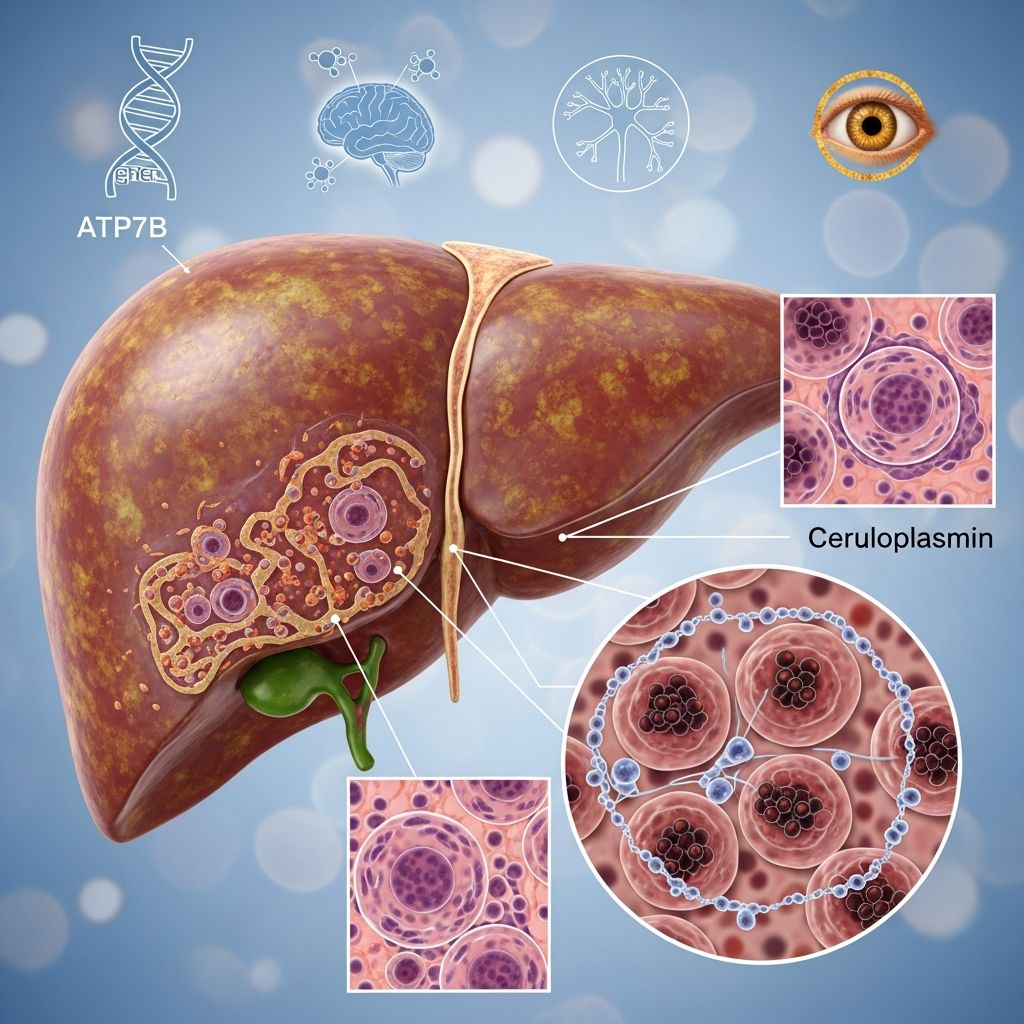
Understanding Wilson disease: A rare genetic disorder affecting copper metabolism and organ function.
What Is Wilson Disease?
Wilson disease is a rare, inherited genetic disorder characterized by the body’s inability to regulate copper metabolism properly. This condition causes copper to accumulate progressively in various tissues throughout the body, particularly in the liver, brain, and corneas of the eyes. If left untreated, Wilson disease can lead to severe liver disease, central nervous system dysfunction, and potentially fatal complications. However, when diagnosed early and managed appropriately, the prognosis is excellent, and serious long-term disability can be prevented.
The disease is inherited in an autosomal recessive pattern, meaning an individual must inherit mutated genes from both parents to develop Wilson disease. It affects approximately 1 in 30,000 people worldwide, though it is often underdiagnosed due to its rarity and variable presentation of symptoms.
Understanding the Genetics and Causes
Wilson disease results from mutations in the ATP7B gene, which encodes a copper-transporting ATPase protein. This protein is essential for copper excretion into bile and for incorporating copper into ceruloplasmin, a protein responsible for transporting copper through the bloodstream. When the ATP7B gene is mutated, the body cannot effectively transport copper out of cells, leading to impaired copper homeostasis and toxic accumulation of copper in tissues.
The liver is typically the first and most severely affected organ, as it is responsible for most of the body’s copper excretion. This dysfunctional copper metabolism causes oxidative stress and cellular damage, leading to inflammation and progressive liver disease. The accumulated copper can also cross the blood-brain barrier, causing neurological damage and psychiatric manifestations.
Clinical Presentation and Symptoms
Wilson disease presents with a diverse range of symptoms that vary significantly among patients, depending on which organs are primarily affected and the degree of copper accumulation. The disease can manifest as hepatic (liver) disease, neurological symptoms, psychiatric disturbances, or a combination of these presentations.
Hepatic Manifestations
Liver involvement can range from asymptomatic elevations in liver enzymes to severe liver disease. Patients may experience:
- Jaundice (yellowing of skin and eyes)
- Abdominal pain and swelling
- Fatigue and weakness
- Nausea and loss of appetite
- Dark urine and pale stools
- Ascites (fluid accumulation in the abdomen)
- Hepatomegaly (enlarged liver)
- Progressive cirrhosis and acute liver failure in severe cases
Neurological Symptoms
Brain involvement can lead to various neurological complications, including tremors, rigidity, dystonia, parkinsonism, and ataxia. Patients may experience difficulty with coordination, speech problems, and progressive loss of motor control.
Psychiatric and Psychological Symptoms
Many patients develop psychiatric symptoms such as personality changes, depression, anxiety, behavioral disturbances, and cognitive decline. These psychological manifestations can sometimes precede other recognizable symptoms of the disease.
Ophthalmic Findings
A characteristic finding in Wilson disease is the Kayser-Fleischer ring, a greenish-golden discoloration of the cornea caused by copper deposition. While not always present, this sign can be valuable in diagnosis when visible during slit-lamp examination.
Diagnosis of Wilson Disease
Diagnosing Wilson disease requires an integrated approach combining clinical features, biochemical markers, and genetic analysis, as no single test is definitively diagnostic in all patients. Early diagnosis is essential to prevent permanent organ damage.
Diagnostic Tests and Findings
The diagnostic evaluation typically includes:
- Ceruloplasmin levels: Serum ceruloplasmin is markedly decreased in Wilson disease, typically below 20 mg/dL. This is one of the most important diagnostic markers.
- Serum copper: Total serum copper levels are usually low because most copper is not bound to ceruloplasmin.
- 24-hour urine copper: Urinary copper excretion is markedly elevated in Wilson disease, typically exceeding 100 micrograms per 24 hours.
- Slit-lamp examination: Detection of Kayser-Fleischer rings provides supporting evidence for diagnosis.
- Liver biopsy: Hepatic copper content exceeding 250 micrograms per gram of dry weight supports the diagnosis.
- Genetic testing: DNA analysis of ATP7B mutations can confirm the diagnosis and is particularly valuable in family screening.
- Liver function tests: Assessment of transaminases, alkaline phosphatase, bilirubin, and prothrombin time (INR) helps evaluate liver function.
Related Stories



Diagnostic Algorithms
Diagnosis relies on clinical algorithms that incorporate clinical symptoms and signs along with the biochemical markers mentioned above. A high index of suspicion is particularly important in children and young adults presenting with unexplained liver, neurologic, or psychiatric symptoms. Family members of diagnosed patients should be screened, as early detection in asymptomatic relatives allows for preventive treatment.
Treatment Options for Wilson Disease
Treatment for Wilson disease focuses on lowering copper levels to stop damage to organs, reverse symptoms where possible, and prevent future copper buildup. It is crucial to understand that treatment must be lifelong to prevent relapse and disease progression.
Copper Chelation Therapy
Copper chelation is the standard-of-care initial therapy for symptomatic Wilson disease patients. Chelating agents bind to copper and promote its excretion through the urine. Common chelating agents include:
- Penicillamine: A traditional first-line agent that effectively reduces tissue copper levels but can cause side effects including allergic reactions, bone marrow suppression, and neurological deterioration in some patients.
- Trientine hydrochloride: An alternative chelator with a potentially better safety profile than penicillamine, particularly for patients who cannot tolerate penicillamine.
Zinc Supplementation
Zinc salts are used to prevent copper absorption in the gastrointestinal tract and promote fecal copper excretion. Zinc therapy works through a different mechanism than chelation therapy and is often used as maintenance therapy after initial chelation or as first-line therapy in asymptomatic patients. Zinc is generally well-tolerated and has fewer side effects than chelating agents.
Liver Transplantation
Liver transplantation is indicated in selected cases, particularly for patients with acute liver failure, decompensated cirrhosis unresponsive to medical therapy, or fulminant hepatic failure. Transplantation effectively cures the underlying metabolic defect, as the transplanted liver produces functional ATP7B protein.
Emerging and Investigational Therapies
Several novel treatment approaches are currently being investigated in clinical trials and preclinical studies:
- Tetrathiomolybdate salts: New agents showing promise in clinical trials for copper chelation with potentially improved safety profiles.
- Methanobactin: A peptide produced by bacteria that can remove excess copper from mitochondria and prevent liver failure in animal models.
- Gene therapy: Delivering a functional ATP7B gene to replace the defective gene. While promising in animal models, challenges include efficient delivery to all affected tissues and achieving adequate hepatocyte expression levels.
Ongoing Monitoring and Management
Patients with Wilson disease require regular medical oversight to ensure treatment efficacy and prevent complications. Recommended assessments include:
- Liver function tests performed twice yearly
- INR (international normalized ratio) monitoring
- Complete blood count
- Routine urinalysis, especially for patients on chelation therapy
- Neurological and psychiatric evaluations as needed
Supportive treatments address neurological and psychiatric symptoms through medications and therapies including physical therapy, occupational therapy, and speech therapy to improve quality of life and functional capacity.
Prognosis and Outcomes
With early diagnosis and consistent treatment adherence, the prognosis for Wilson disease is good. Many patients experience significant improvement or stabilization of symptoms with appropriate therapy. However, the key to optimal outcomes is diagnosing patients before the onset of serious, irreversible organ damage. Advances in screening methodologies and increased clinical awareness may bring earlier diagnoses and further improvements in patient outcomes.
Living with Wilson Disease
Patients with Wilson disease must commit to lifelong treatment and regular medical monitoring. Dietary considerations, such as limiting high-copper foods including nuts, shellfish, and chocolate, may provide additional benefit. Strict medication adherence is essential to prevent disease progression and complications.
Frequently Asked Questions
Q: At what age does Wilson disease typically appear?
A: Wilson disease can present at any age but typically manifests between ages 5 and 50, with most cases appearing in adolescents and young adults. Some patients may remain asymptomatic and are identified through family screening.
Q: Is Wilson disease hereditary?
A: Yes, Wilson disease is inherited in an autosomal recessive pattern. An individual must inherit mutated ATP7B genes from both parents to develop the disease. Children of two carrier parents have a 25% chance of having Wilson disease.
Q: Can Wilson disease be cured?
A: While not curable in the traditional sense, Wilson disease can be effectively managed with lifelong treatment. Copper chelation therapy and zinc supplementation can halt disease progression and reverse many symptoms if started early. Liver transplantation offers a definitive cure but is reserved for severe cases.
Q: What foods should I avoid with Wilson disease?
A: Patients should limit high-copper foods including nuts, shellfish, organ meats, chocolate, and dried fruits. A dietitian experienced in Wilson disease management can provide personalized dietary recommendations.
Q: How often should I have check-ups if I have Wilson disease?
A: Regular assessments twice per year are recommended, including liver function tests, INR monitoring, complete blood count, and urinalysis. Frequency may increase based on disease severity and treatment response.
Q: Can treatment side effects be managed?
A: Yes, side effects from chelation therapy can often be managed through dose adjustments, changing medications, or using supportive medications. Close communication with your healthcare team is essential to optimize treatment tolerability.
References
- Wilson disease — Johns Hopkins University, Pure Research Portal. 2024. https://pure.johnshopkins.edu/en/publications/wilson-disease/
- Wilson disease — PubMed, National Center for Biotechnology Information (NIH). 2018. https://pubmed.ncbi.nlm.nih.gov/30190489/
- Wilson Disease – Symptoms, Causes, Treatment — National Organization for Rare Disorders (NORD). 2024. https://rarediseases.org/rare-diseases/wilson-disease/
- Wilson Disease: Update on Pathophysiology and Treatment — Frontiers in Cell and Developmental Biology. 2022. https://www.frontiersin.org/journals/cell-and-developmental-biology/articles/10.3389/fcell.2022.871877/full
- Wilson disease: Copper Metabolism, Liver Damage & Genetics — Britannica. 2024. https://www.britannica.com/science/Wilson-disease
- A Multidisciplinary Approach to the Diagnosis and Management of Wilson Disease: 2022 Practice Guidance — Johns Hopkins University, Pure Research Portal. 2022. https://pure.johnshopkins.edu/en/publications/a-multidisciplinary-approach-to-the-diagnosis-and-management-of-w-2/
- Wilson Disease: Update on Pathophysiology and Treatment — PubMed, National Center for Biotechnology Information (NIH). 2022. https://pubmed.ncbi.nlm.nih.gov/35586338/
Similar Articles








Read full bio of medha deb