Wilson Disease Guide: Causes, Symptoms, Diagnosis & Treatment
Inherited disorder causing toxic copper accumulation in liver, brain, and eyes, treatable with early diagnosis and lifelong therapy.
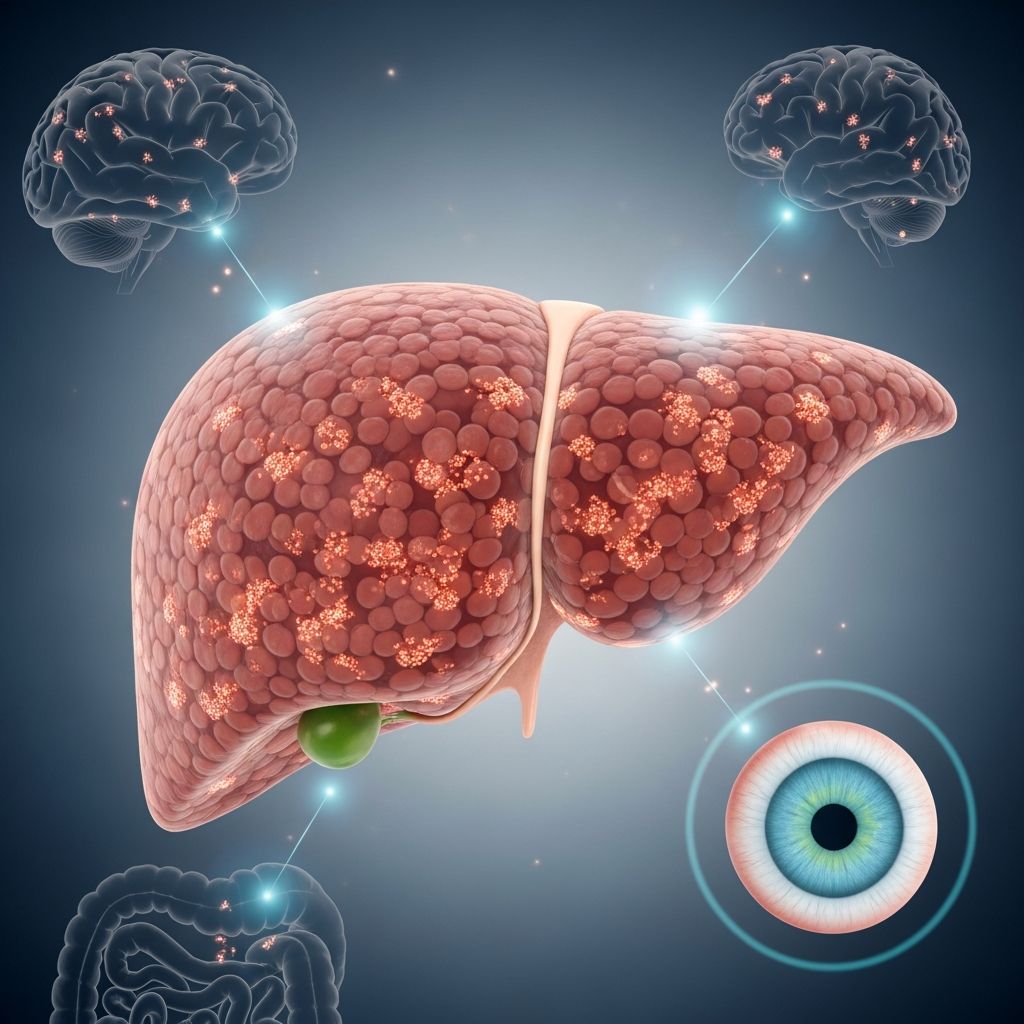
Wilson disease, also known as hepatolenticular degeneration, is a rare autosomal recessive genetic disorder caused by mutations in the ATP7B gene on chromosome 13. This gene encodes a copper-transporting ATPase essential for incorporating copper into ceruloplasmin and excreting excess copper into bile. Dysfunction leads to progressive copper accumulation primarily in the liver, followed by the brain, eyes, kidneys, and other organs, causing severe multisystem damage if untreated.
Prevalence is approximately 1 in 30,000 individuals worldwide, with higher rates in certain populations like Sardinians and Ashkenazi Jews due to founder mutations. The condition is present at birth but symptoms typically emerge between ages 5 and 40, though pediatric and late-onset cases occur. Without intervention, it progresses to cirrhosis, neurological deficits, psychiatric illness, or acute liver failure, but early treatment decoppering therapy can normalize life expectancy.
What is the cause of Wilson disease?
Wilson disease results from biallelic pathogenic variants in ATP7B, impairing hepatocyte copper handling. Normally, dietary copper (from foods like shellfish, nuts, and chocolate) is absorbed in the intestine, bound to albumin, taken up by the liver via CTR1, and either incorporated into ceruloplasmin by ATP7B in the Golgi or excreted into bile for fecal elimination. In Wilson disease, defective ATP7B causes copper to accumulate in hepatocytes, inducing oxidative stress, mitochondrial damage, apoptosis, and eventual spillover into blood, depositing in extrahepatic tissues.
Over 500 ATP7B mutations are identified, with common ones including H1069Q (Europeans), R778L (Asians), and p.Met769Val (Sardinia). Most patients are compound heterozygotes. Carriers (heterozygotes) have 50% ATP7B function and remain asymptomatic with normal copper metabolism. Environmental factors like high copper intake may accelerate onset, but genetics predominate.
Clinical features
Manifestations vary by age, copper burden, and organ involvement. Hepatic presentation predominates in children (<15 years), neurological/psychiatric in young adults (15–40 years), while asymptomatic cases are detected via screening.
Hepatic presentation
The liver is the initial site of copper overload. Acute liver failure occurs in 5–20% of cases, often in adolescents/young adults with hemolytic anemia, renal failure, and low alkaline phosphatase (ALP)<40 IU/L. Chronic liver disease progresses silently to cirrhosis (20–30% at diagnosis), portal hypertension, ascites, varices, and splenomegaly. Symptoms include:
- Fatigue and weakness
- Anorexia, nausea, vomiting
- Jaundice, easy bruising, coagulopathy
- Abdominal pain, ascites, edema
- Enlarged liver/spleen
Up to 25% present with cirrhosis at diagnosis despite normal liver tests.
Neurological presentation
Copper deposition in basal ganglia (putamen, globus pallidus) causes extrapyramidal and cerebellar signs in 40–50% of symptomatic adults. “Wing-beating” tremor (proximal, episodic at rest, worsens with posture) is pathognomonic, alongside:
- Rigidity, dystonia, choreoathetosis
- Bradykinesia, hypomimia (Parkinsonian)
- Ataxia, dysarthria, dysphagia
- Head dropping, myoclonus
- Cognitive impairment
MRI shows “face of the giant panda” in midbrain. Symptoms may improve with treatment but residual deficits persist in 20–30%.
Psychiatric presentation
Up to 30% have behavioral changes as initial or sole manifestation, including depression, anxiety, personality shifts, psychosis, and neuroses. Suicidality and organic psychosis mimic schizophrenia.
Ocular features
Kayser-Fleischer (KF) rings—golden-brown copper deposits in Descemet membrane—are diagnostic in neurological Wilson disease (95–100%) and 50–60% of hepatic cases. Absent in pure hepatic or presymptomatic disease. Sunflower cataracts (copper in lens) are rarer. Slit-lamp exam is essential.
Dermatological features
Although primarily hepatological/neurological, Wilson disease features subtle skin changes:
- Azure lunulae: Slate-blue proximal nail lunulae due to copper deposition (specific but insensitive, <20%)
- Hyperpigmentation (face, legs)
- Acrocyanosis, telangiectasias
These aid dermatological suspicion[original DermNet context].
Other features
- Haematological: Coombs-negative haemolytic anaemia, thrombocytopenia
- Renal: Fanconi syndrome, aminoaciduria, nephrocalcinosis
- Skeletal: Osteoporosis, arthritis, fractures
- Cardiac: Cardiomyopathy, arrhythmias
- Endocrine: Hypoparathyroidism, amenorrhoea
Rare: pancreatitis, pulmonary fibrosis.
Diagnosis
High suspicion in young patients with unexplained liver disease, neuropsychiatric symptoms, or family history. Leipzig score integrates clinical/biochemical/genetic data (≥4 = diagnostic).
| Parameter | Criteria | Points |
|---|---|---|
| KF rings | Present | 2 |
| Neuropsych symptoms | Severe | 2 |
| Ceruloplasmin | <0.1 g/L | 2 |
| 24h urinary copper | >1.6 μmol/d (>100 μg/d) | 1–2 |
| Liver copper (dry wt) | >5 μmol/g (>250 μg/g) | 2 |
| Rhodanine stain | Positive | 1 |
| ATP7B mutation | 2 mutations | 4 |
Investigations
- Serum ceruloplasmin: Low (<0.2 g/L) in 85–90% (not diagnostic alone)
- 24h urinary copper: Elevated >1.6 μmol/d (gold standard screening)
- Serum copper: Low total, high free (non-ceruloplasmin bound)
- Liver biopsy: Copper >250 μg/g dry wt, rhodanine/orsenic acid stain
- Slit-lamp: KF rings
- Genetics: ATP7B sequencing (diagnostic if biallelic)
- Imaging: MRI brain, US liver
First-degree relatives require screening.
Treatment
Lifelong decoppering is curative if initiated early. Goals: remove excess copper, prevent reaccumulation, manage complications.
Chelators
- D-penicillamine: 1–2 g/d (divided), pyridoxine 50 mg/d. Mobilizes copper for urinary excretion. 20% neurological worsening initially; 10–50% intolerance (rash, nephrotoxicity)
- Trientine: 1–2 g/d. Better tolerated, less neurotoxicity
Zinc therapy
Elemental zinc 150 mg/d (50 mg tds) induces metallothionein, blocking intestinal copper absorption. Maintenance or asymptomatic use; slower initial decoppering.
Symptomatic management
- Antioxidants: vitamin E
- Botulinum toxin for dystonia
- Psychiatry referral
- Avoid copper-rich foods, multivitamins
Liver transplantation
Indicated for acute liver failure, decompensated cirrhosis, or treatment failure. Corrects metabolic defect; 90% 5-year survival. Neurological improvement post-transplant.
Monitoring
Non-ceruloplasmin copper <10 μg/dL, urinary copper stable, normal LFTs/MRI. Annual 24h urine copper, LFTs, neuro exams.
Prognosis
Treated patients achieve normal lifespan. Untreated: fatal by age 30–40. Neurological recovery variable.
Frequently Asked Questions
Q: Who gets Wilson disease?
A: Anyone can, but equal male-female, onset 5–40 years. Family screening essential.
Q: Is Wilson disease fatal?
A: Yes if untreated; treatable with lifelong therapy. Liver transplant for advanced cases.
Q: Can Wilson disease be cured?
A: Managed lifelong; transplant cures metabolic issue.
Q: What is the life expectancy?
A: Normal with early treatment.
Q: Are KF rings always present?
A: In 95% neurological, 50% hepatic cases.
Q: Is genetic testing necessary?
A: Confirms diagnosis, guides screening.
References
- Wilson’s disease: overview — PubMed/NIH. 2023-01-24. https://pubmed.ncbi.nlm.nih.gov/36697289/
- Wilson’s Disease Treatment | Symptoms and Diagnosis — UChicago Medicine. 2025. https://www.uchicagomedicine.org/conditions-services/liver-diseases-hepatology/wilsons-disease
- Guide to Wilson’s Disease — Columbia Surgery. 2025. https://columbiasurgery.org/conditions-and-treatments/wilsons-disease
- Wilson’s disease – Symptoms and causes — Mayo Clinic. 2025-12-27. https://www.mayoclinic.org/diseases-conditions/wilsons-disease/symptoms-causes/syc-20353251
- Wilson Disease — NIDDK/NIH. 2025. https://www.niddk.nih.gov/health-information/liver-disease/wilson-disease
- Wilson’s Disease — MedlinePlus/NIH. 2025. https://medlineplus.gov/wilsondisease.html
- Wilson Disease: Symptoms & Causes — Cleveland Clinic. 2025. https://my.clevelandclinic.org/health/diseases/5957-wilson-disease
Similar Articles








Read full bio of Sneha Tete