Wiskott-Aldrich Syndrome: Causes, Symptoms & Treatment Guide
Rare X-linked immunodeficiency with thrombocytopenia, eczema, infections, autoimmunity, and malignancy risk.
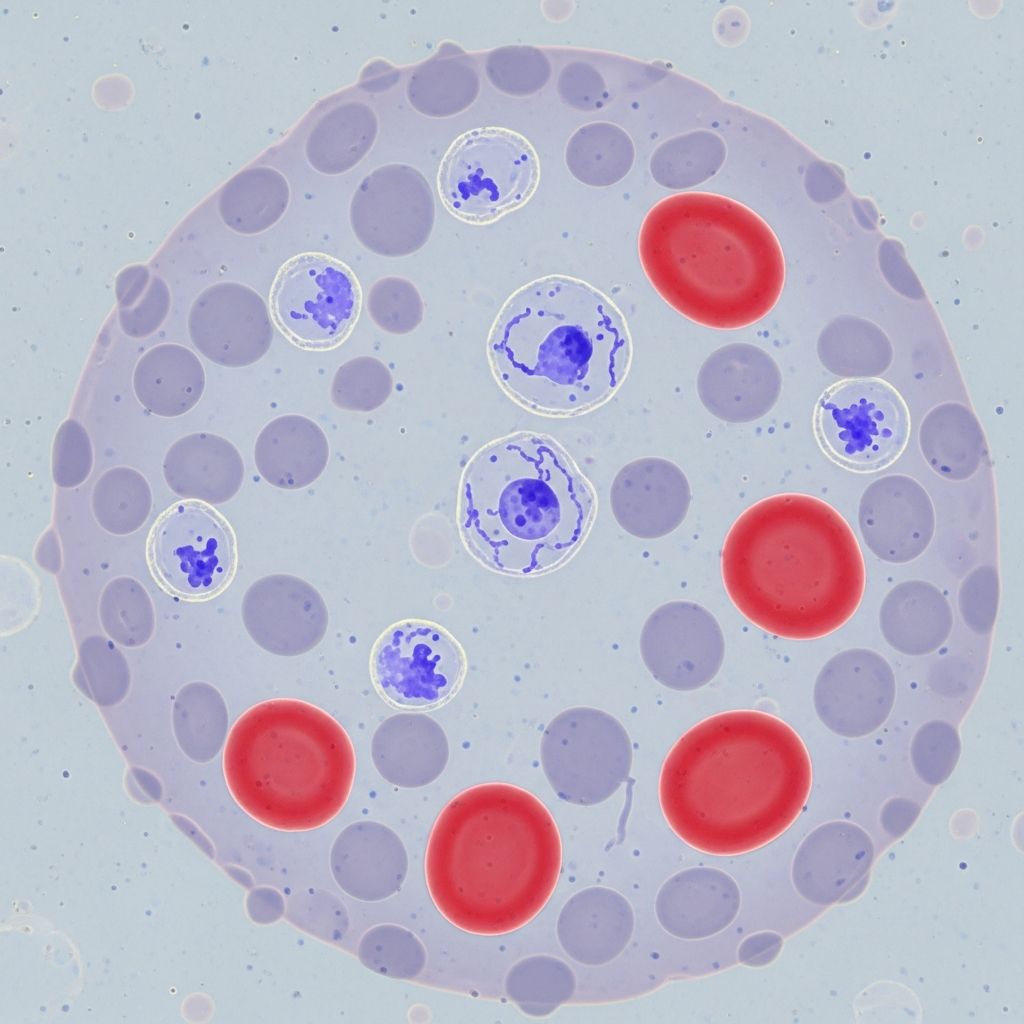
Wiskott-Aldrich syndrome (WAS) is a rare, X-linked primary immunodeficiency disorder characterised by the triad of microthrombocytopenia (small platelets and low platelet count), eczema, and recurrent infections due to combined B- and T-cell dysfunction. It also carries increased risks of autoimmunity and malignancy, particularly B-cell lymphomas and leukemias.
What is the cause of Wiskott-Aldrich syndrome?
Wiskott-Aldrich syndrome results from mutations in the WAS gene located on the X chromosome at Xp11.23, which encodes the Wiskott-Aldrich syndrome protein (WASP). This protein is crucial for actin cytoskeleton reorganization in hematopoietic cells, affecting immune synapse formation, cell migration, and platelet function. Over 300 mutations have been identified, leading to absent or dysfunctional WASP.
The disorder exhibits variable expressivity:
- Classic WAS: Complete WASP absence; severe triad plus autoimmunity (40-70%) and cancer (15-20%).
- X-linked thrombocytopenia (XLT): Milder mutations; isolated thrombocytopenia without significant immunodeficiency.
- X-linked neutropenia: Gain-of-function mutations causing congenital neutropenia with myelodysplasia.
Inheritance is X-linked recessive, primarily affecting males (incidence 1:100,000-1,000,000 live male births). Female carriers may show mild thrombocytopenia. First described in 1937 by Alfred Wiskott in three affected brothers with thrombocytopenia, bloody diarrhoea, eczema, and fatal infections.
Who gets Wiskott-Aldrich syndrome?
WAS predominantly affects males of all ethnicities, with symptoms manifesting in infancy. Nearly all classic WAS patients present by age 2 years. Family history may reveal affected male relatives. Carrier females are typically asymptomatic but can have skewed X-inactivation leading to mild symptoms.
What are the clinical features of Wiskott-Aldrich syndrome?
The classic triad emerges early:
Thrombocytopenia and bleeding
Present at birth or within weeks, with platelet counts <50,000/μL (often 10,000-30,000/μL) and mean platelet volume <5 fL (normal 7-11 fL). Platelets are small and dysfunctional, causing:
- Bloody diarrhoea (common in infancy)
- Petechiae/purpura
- Epistaxis (prolonged nosebleeds)
- Bleeding gums, hematuria
- Post-circumcision or vaccination haematomas.
Eczema
Severe, atypical atopic dermatitis-like rash, often starting at 3-6 months, affecting flexures. Itchy, leading to secondary bacterial infections (e.g., Staphylococcus aureus). Associated with elevated IgE.
Infections
Due to T-cell defects (low CD8+ counts, poor proliferation), B-cell dysfunction (poor antibody responses), and combined immunodeficiency:
- Common: Otitis media, sinusitis, pneumonia (bacterial: Haemophilus, Streptococcus).
- Opportunistic: Pneumocystis jirovecii pneumonia (PJP), CMV, VZV, HSV, molluscum contagiosum.
- Vaccine responses impaired, especially to polysaccharides.
Autoimmunity
Affects 40-72%; common manifestations:
- Autoimmune haemolytic anaemia (AIHA)
- Neutropenia
- Inflammatory bowel disease
- Arthritis, vasculitis, nephritis.
Malignancy
13-22% lifetime risk; EBV+ non-Hodgkin lymphoma (most common), leukaemia, myelodysplasia. Risk rises with age; median survival without transplant ~15 years.
How is Wiskott-Aldrich syndrome diagnosed?
Suspected in male infants with thrombocytopenia + eczema/infections. Diagnostic approach:
| Test | Findings in WAS |
|---|---|
| Full blood count | Thrombocytopenia (<50×109/L), small platelets (MPV <6 fL), variable anaemia/neutropenia |
| Blood film | Microthrombocytes, absent large platelets |
| Immunoglobulins | High IgA/IgE, low/normal IgM, poor vaccine antibodies |
| Lymphocyte subsets/FACS | Low CD8+, reduced naive T cells, poor proliferation |
| WASP expression (flow cytometry/Western blot) | Absent/reduced in lymphocytes/platelets |
| WAS gene sequencing | Pathogenic variant confirms diagnosis |
Related Stories



Flow cytometry for intracellular WASP is highly sensitive. Genetic testing identifies carrier status. Differential: ITP, IPEX, other PIDs.
What is the treatment for Wiskott-Aldrich syndrome?
Multidisciplinary; curative option is haematopoietic stem cell transplantation (HSCT) ideally <5 years old with matched sibling donor (90-100% success). Alternatives: matched unrelated (70-90%), haploidentical with TCRα/β depletion.
Symptomatic management:
- Bleeding: Platelet transfusions (HLA-matched if alloimmunized), avoid aspirin/NSAIDs.
- Infections: Prophylactic trimethoprim-sulfamethoxazole (PJP), IVIG (0.4-0.6g/kg monthly), aciclovir for HSV/VZV.
- Eczema: Topical steroids/emollients, wet wraps; treat superinfections.
- Autoimmunity: Steroids, rituximab, sirolimus.
- Supportive: Vaccinations (live vaccines contraindicated post-HSCT prep), splenectomy (controversial, increases infection/malignancy risk).
Gene therapy trials show promise, with autologous HSCT of WASP-corrected stem cells achieving immune reconstitution.
What is the outcome for Wiskott-Aldrich syndrome?
Without HSCT, median survival 15 years; death from bleeding (infancy), infection (childhood), malignancy/autoimmunity (adolescence). HSCT cures >90% if early. Post-HSCT, eczema/thrombocytopenia resolve quickly; immunity improves over years. Long-term: monitor for graft-vs-host disease, malignancy.
Frequently Asked Questions (FAQs)
Who is at risk for Wiskott-Aldrich syndrome?
Primarily males with family history of X-linked thrombocytopenia, eczema, or early male deaths from bleeding/infection. Incidence 1-4 per million male births.
Can females get Wiskott-Aldrich syndrome?
Rarely; symptomatic carriers with skewed X-inactivation or homozygous females in consanguineous families.
Is Wiskott-Aldrich syndrome curable?
Yes, via HSCT, especially before age 5 with matched donor. Gene therapy emerging as alternative.
Why do platelets stay small in WAS?
WASP deficiency impairs megakaryocyte cytoskeletal dynamics, preventing normal platelet release and size.
How to prevent infections in WAS patients?
Prophylactic antibiotics (TMP-SMX), IVIG, avoid live vaccines, prompt treatment of fevers.
References
- Wiskott-Aldrich syndrome (WAS) — Immune Deficiency Foundation. 2023. https://primaryimmune.org/understanding-primary-immunodeficiency/types-of-pi/wiskott-aldrich-syndrome-was
- Wiskott-Aldrich syndrome: a comprehensive review — Massaad MJ et al., Ann N Y Acad Sci. 2013-04-25. https://pubmed.ncbi.nlm.nih.gov/23527602/
- Recent advances in understanding the pathophysiology of Wiskott-Aldrich syndrome — Ochs HD & Thrasher AJ, Blood. 2009-06-18. https://ashpublications.org/blood/article/113/25/6288/25690/Recent-advances-in-understanding-the
- Wiskott-Aldrich Syndrome — Merck Manual Professional Edition. 2024. https://www.merckmanuals.com/professional/immunology-allergic-disorders/immunodeficiency-disorders/wiskott-aldrich-syndrome
- Wiskott-Aldrich Syndrome: Symptoms, Genetics & Treatment — Cleveland Clinic. 2023. https://my.clevelandclinic.org/health/diseases/wiskott-aldrich-syndrome
Similar Articles








Read full bio of Sneha Tete