A Workout for Your Brain: Exercises to Boost Mental Performance
Discover scientifically-proven exercises and strategies to strengthen your brain and enhance cognitive performance.
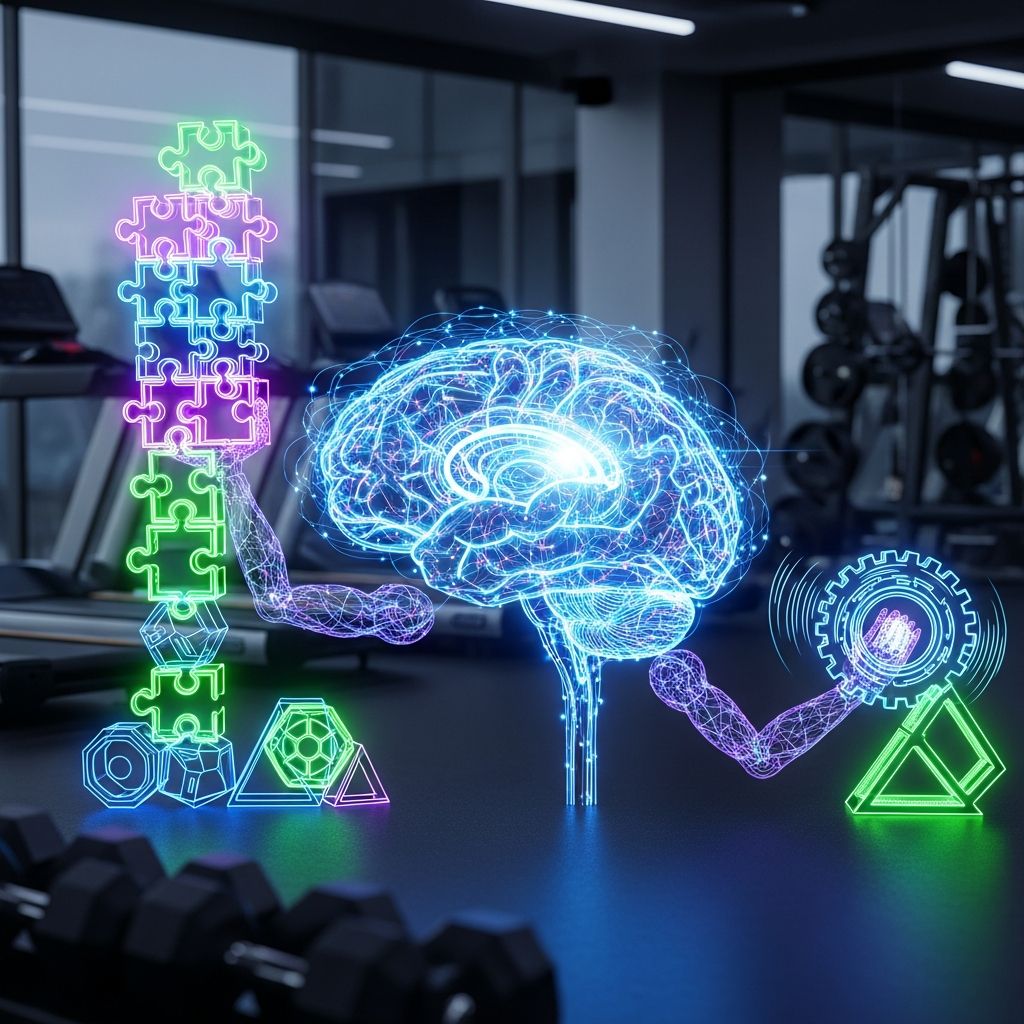
Just as physical exercise strengthens your muscles and cardiovascular system, engaging in targeted mental activities can enhance your brain’s capacity, resilience, and performance. The concept of a “brain workout” has gained substantial scientific validation over the past two decades, with researchers demonstrating that deliberate cognitive training, combined with physical exercise, can lead to measurable improvements in memory, attention, processing speed, and executive function. This comprehensive guide explores the evidence-based strategies you can use to optimize your brain’s performance and maintain cognitive vitality throughout your life.
Understanding Brain Plasticity and Mental Training
The foundation of brain workouts rests on a revolutionary understanding of how the brain functions: neuroplasticity. Unlike the once-prevailing belief that the brain was fixed after early adulthood, modern neuroscience has demonstrated that the brain maintains the ability to reorganize itself by forming new neural connections throughout life. This remarkable capacity means that through targeted training and deliberate practice, you can literally reshape your brain’s structure and function.
Research has shown that strategic training regimens produce improvements in attention, memory, and reasoning tasks. When properly designed, these training programs incorporate key characteristics that maximize learning effectiveness, including progressive task difficulty, motivational engagement, and constructive feedback mechanisms. The critical insight is that your brain responds to challenge and develops new capabilities when placed under the right conditions.
The Science Behind Cognitive Training
Cognitive training has demonstrated measurable benefits across multiple domains of mental function. Studies examining training for specific cognitive abilities have found that when individuals engage in structured mental exercises, they can achieve substantial improvements that persist for extended periods. Research tracking participants over five years found that cognitive training gains remained stable, suggesting that the neural changes produced by training are durable.
However, an important distinction exists between task-specific learning and generalized improvement. While your brain readily learns the specific task you train on, the benefits don’t automatically transfer to other areas of cognition. For example, studies have shown that visual training improvements can be specific to the trained orientation, with diminishing transfer effects at different angles. This means that comprehensive brain fitness requires engaging with diverse mental activities rather than repeating a single exercise.
Key Characteristics of Effective Brain Training
Effective brain workouts share several common characteristics that maximize their benefits:
Progressive Difficulty: Your brain adapts to challenges. Workouts must continuously increase in difficulty to maintain cognitive demand and prevent adaptation plateaus.
Focused Attention: Mental training requires genuine concentration. Distracted practice produces minimal benefits compared to engaged, focused effort.
Immediate Feedback: Your brain learns most effectively when you receive prompt information about performance, allowing rapid adjustment and optimization.
Motivational Engagement: The famous “Hawthorne effect” demonstrates that individuals who experience genuine interest in their performance show greater improvements than those without such engagement. Your mindset and motivation significantly influence training outcomes.
Physical Exercise: The Ultimate Brain Workout
While cognitive training directly targets mental skills, physical exercise may provide the most comprehensive benefits for brain health. Extensive research over multiple decades has established that aerobic exercise produces broad-ranging cognitive benefits, particularly for older adults. Cross-sectional studies consistently show that individuals who regularly engage in aerobic activity demonstrate superior cognitive performance compared with sedentary peers.
Related Stories



The improvements from physical exercise span multiple cognitive domains, including dual-task performance, executive attention, and distraction rejection. Beyond behavioral improvements, aerobic fitness correlates with measurable neuroanatomical changes, including increased gray matter volume in the prefrontal and temporal areas, changes in cerebral blood volume in the hippocampus, and enhanced functional brain activity in superior parietal areas and the anterior cingulate cortex.
How Exercise Transforms Brain Structure
Physical exercise produces tangible changes in brain architecture. The hippocampus, a region critical for memory formation and emotional regulation, demonstrates increased volume in individuals who maintain aerobic fitness. This structural change has profound implications: a larger hippocampus correlates with better memory performance and greater cognitive resilience.
Regular aerobic exercise also increases blood flow and oxygenation to the brain, enhancing overall cognitive function, improving memory performance, and boosting mental clarity and focus. These physiological changes explain why individuals who exercise regularly often report improved concentration, better decision-making abilities, and enhanced productivity in both personal and professional contexts.
Optimizing Your Brain State for Different Types of Work
Modern neuroscience has identified that your brain operates optimally at different activation levels depending on the type of work you’re performing. Understanding these states allows you to strategically manage your physiology to support different cognitive demands.
The Norepinephrine Balance
A critical neurotransmitter called norepinephrine follows an “upside-down U-curve” in its effects on cognitive function. Too little norepinephrine produces sluggishness and poor focus; too much produces reactive, high-speed but error-prone thinking; the optimal “Goldilocks zone” in the middle provides ideal alertness and focused attention.
Contemporary work culture often pushes us into a high-norepinephrine state characterized by rapid reaction, quick email responses, and fast information processing. While this state feels productive, it actually impairs accuracy, reduces nuanced thinking, and increases susceptibility to errors and distractions. In this elevated state, the prefrontal cortex—the region responsible for deliberate planning, strategic thinking, and considering long-term consequences—cannot fully engage.
Strategic Breaks and Environmental Changes
When you find yourself stuck on a problem or unable to concentrate, this signals a mismatch between your current brain state and the task demands. The solution involves deliberate environmental and physiological changes. One simple yet powerful technique: when stuck on a problem for ten minutes, leave your desk and take a walk.
Walking creates an optimal brain state through multiple mechanisms: it aligns your brain and body physiology, maintains appropriate alertness without drift or lethargy, and crucially, prevents rumination because your attention cannot fixate on a single problem while navigating your physical environment. This combination of physical movement and divided attention often produces the cognitive flexibility necessary for creative problem-solving and novel insights.
Music Training and Cognitive Development
Beyond exercise and standard cognitive training, certain specialized activities produce exceptional cognitive benefits. Research examining children aged 3-4 years who received six months of keyboard instruction found significantly larger improvements in spatiotemporal reasoning compared with computer training or no-training control groups. This finding suggests that musical training engages multiple cognitive systems simultaneously, producing transfer effects to non-musical cognitive abilities.
Building Your Personal Brain Workout Program
Creating an effective brain workout regimen involves combining multiple evidence-based elements tailored to your specific goals and current cognitive strengths and weaknesses.
Foundational Elements
Aerobic Exercise (3-5 times weekly): Aim for at least 30 minutes of moderate-intensity aerobic activity. This provides the foundational cognitive and neurobiological benefits that support all other mental performance improvements.
Cognitive Training (3-4 times weekly): Engage with progressively challenging mental exercises targeting specific cognitive domains relevant to your goals—memory, attention, reasoning, or processing speed.
Strategic Rest and Recovery: Schedule regular breaks, particularly when facing challenging cognitive problems. Use environmental changes, walks, or meditation to reset your brain state.
Sleep Optimization: Prioritize 7-9 hours of quality sleep nightly. Sleep consolidates learning and supports cognitive restoration essential for peak mental performance.
Measuring Your Brain Workout Progress
Effective brain workouts require tracking progress to maintain motivation and ensure continued challenge. Consider measuring:
Performance on specific tasks: Document improvements in puzzles, memory challenges, or cognitive games you regularly practice.
Functional improvements: Note enhancements in daily life—better memory for names and details, improved focus during important tasks, faster decision-making.
Physical fitness markers: Track exercise capacity, resting heart rate, and aerobic endurance, which correlate with cognitive improvements.
Subjective mental clarity: Regularly assess your sense of focus, mental energy, and cognitive sharpness throughout the day.
Common Brain Workout Mistakes to Avoid
Relying on a single activity: Cognitive benefits are often specific to trained tasks. Comprehensive brain fitness requires diversity in mental challenges.
Neglecting physical exercise: While cognitive training has benefits, physical exercise provides uniquely broad cognitive advantages that should form the foundation of your brain workout program.
Practicing without focus: Distracted practice produces minimal cognitive benefits. Genuine engagement and concentration are essential.
Ignoring motivational factors: Your belief that training will improve your performance significantly influences actual outcomes. Cultivate genuine interest in your cognitive development.
Expecting immediate transfer: Cognitive improvements typically don’t automatically transfer to untrained areas. Expect domain-specific benefits from targeted training.
Frequently Asked Questions About Brain Workouts
Q: At what age should I begin brain workouts?
A: Brain workouts benefit individuals across all age groups. While neuroplasticity declines somewhat with age, the brain maintains substantial capacity for improvement throughout life. Starting brain training earlier establishes beneficial habits, but it’s never too late to begin.
Q: How long before I notice cognitive improvements?
A: Cognitive improvements typically begin within weeks of consistent training, though substantial gains usually require 2-3 months of regular practice. Physical fitness improvements and associated cognitive benefits often appear within 4-6 weeks of consistent aerobic exercise.
Q: Can brain training prevent cognitive decline with aging?
A: Regular cognitive training and physical exercise demonstrate strong associations with better cognitive function in older adults and may help maintain cognitive abilities longer than would occur without training. While they cannot completely prevent age-related changes, they substantially reduce cognitive decline rates.
Q: What’s the optimal duration for daily brain workouts?
A: Most research suggests 30-45 minutes of physical exercise combined with 20-30 minutes of focused cognitive training daily, or distributed across 4-5 days weekly, produces optimal benefits without excessive time investment or burnout.
Q: Do brain training apps and games actually work?
A: Brain training applications work for improving performance on the specific tasks they train, following the principle of task-specific learning. However, their benefits often don’t transfer broadly to other cognitive domains. Their primary value lies in providing convenient, progressively challenging cognitive exercises combined with motivational engagement.
References
- A Review of Human Brain Plasticity and Training-Induced Learning — National Center for Biotechnology Information (NCBI), National Library of Medicine. 2009. https://pmc.ncbi.nlm.nih.gov/articles/PMC2896818/
- Training Your Brain to Work More Effectively — Harvard Business Review, Neuroscientist Mithu Storoni. 2024-09. https://hbr.org/podcast/2024/09/training-your-brain-to-work-more-effectively
- The Brain-Body Connection: How Exercise Boosts Mental Health — Sunny Health & Fitness. 2024. https://sunnyhealthfitness.com/blogs/health-wellness/brain-body-connection-how-exercise-boosts-mental-health
- How Does Exercise Improve Mental Health? — HelpGuide.org. 2024. https://www.helpguide.org/wellness/fitness/the-mental-health-benefits-of-exercise
Similar Articles








Read full bio of medha deb