Wound Dressings: Selection and Application
Comprehensive guide to selecting appropriate wound dressings for optimal healing outcomes.
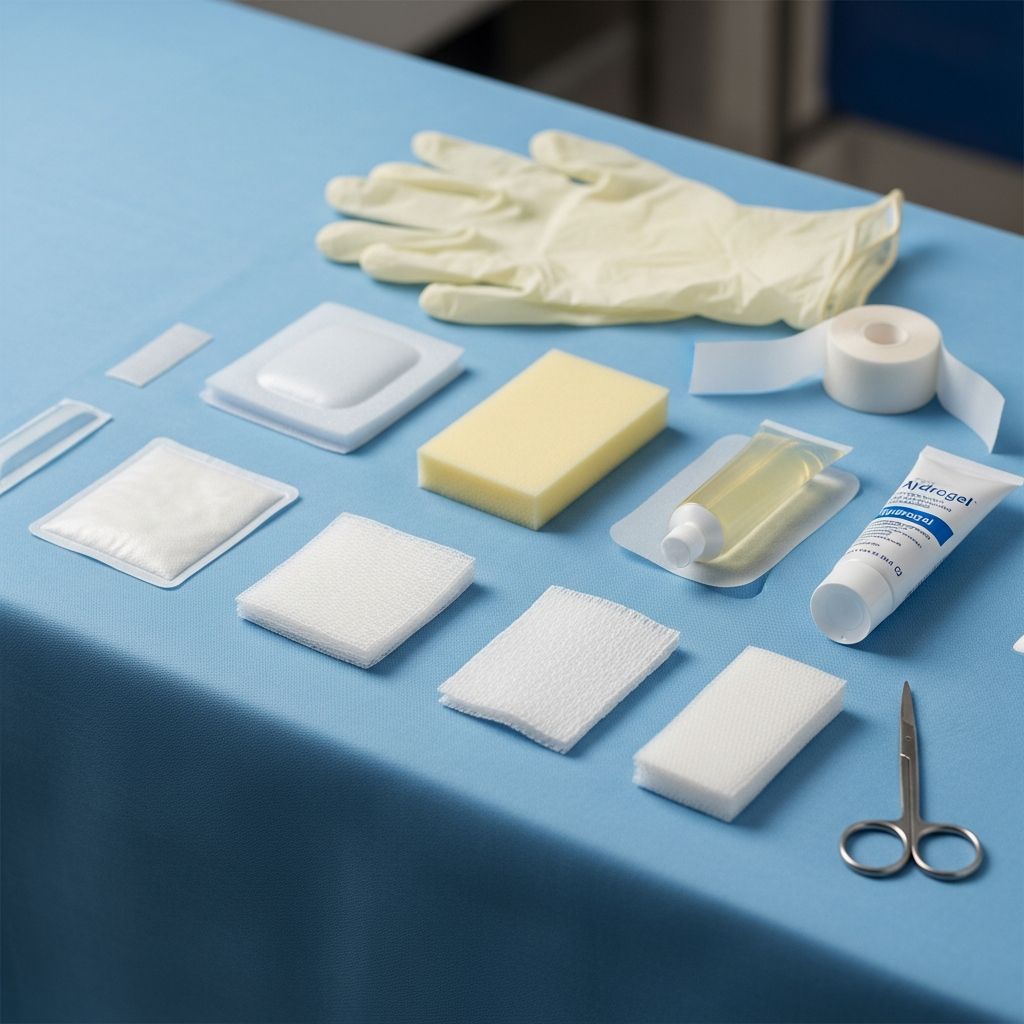
Wound dressings play a critical role in the healing process by creating an optimal environment for tissue repair and protecting the wound from contamination. The selection of an appropriate dressing depends on multiple factors including wound type, exudate level, location, and patient tolerance. Understanding the characteristics and applications of different dressing types enables healthcare providers to make evidence-based decisions that enhance healing outcomes and minimize complications.
The Ideal Wound Dressing
An ideal wound dressing should achieve several key objectives to support optimal healing. Modern dressing standards have been established based on decades of clinical experience and research into wound healing physiology.
The ideal dressing must:
- Control exudate to achieve and maintain a moist wound environment
- Prevent maceration of the peri-wound skin
- Eliminate any dead space through cavity filling when necessary
- Maintain optimal temperature and pH levels
- Prevent contamination by foreign bodies and microorganisms
- Allow gaseous exchange for tissue oxygenation
- Remain free of matter or toxic components that could delay healing
- Be acceptable to the patient in terms of comfort and appearance
- Provide cost-effectiveness without compromising quality of care
No single dressing type meets all these criteria universally. Therefore, dressing selection requires careful assessment of the individual wound characteristics and clinical context.
Dressing Layers and Structure
Effective acute wound management typically employs a layered dressing system comprised of three distinct components working together to optimize healing.
The bottom contact layer is a non-adherent layer that prevents the dressing from sticking to the wound bed. This layer maintains contact with the wound surface while allowing exudate to move upward into the absorptive layers. Common materials include paraffin gauze, silicone-coated fabrics, and specialized non-stick polymers.
The middle absorptive layer absorbs wound exudate and may also exert gentle pressure to control bleeding and reduce edema. This layer can be made of gauze, cotton, foam, or specialized absorbent materials designed to manage varying levels of drainage.
The outer protective layer consists of tape, netting, or rolled bandages that hold the inner layers in place, provide compression, and prevent external contamination. This layer must be permeable enough to allow moisture vapor escape while maintaining a barrier against bacteria.
Dressing Selection for Different Wound Types
The most suitable dressing depends fundamentally on the type of wound, its stage of healing, exudate level, and clinical context. Different wounds require different approaches to achieve optimal healing.
Acute Surgical Wounds
Acute wounds from surgery require dressings that keep the wound clean, prevent contamination, and encourage hemostasis. In the immediate post-operative period, dressings should absorb blood and serum while maintaining a protective barrier. Within 2-3 days after surgery when drainage has significantly decreased, vapor-permeable dressings are often suitable. These dressings maintain moisture without excessive absorbency, supporting the moist wound healing environment that promotes epithelialization.
For post-operative wounds with mild to moderate exudate, film dressings with Safetac technology offer minimal trauma on removal and optimize exudate management while maintaining flexibility for patient mobilization.
Granulating Wounds
Wounds in the granulation phase of healing require moisture retention combined with exudate management. Hydrocolloid dressings work effectively for these wounds as they retain moisture while absorbing mild to moderate exudate. These dressings can typically be worn for three to seven days without changing, providing convenience while supporting the healing environment.
Related Stories



Slough-Covered Wounds
Wounds with moist slough require dressings that promote debridement while absorbing fluid and protecting surrounding skin. Absorbent dressings such as alginates and foam materials effectively manage exudate while maintaining moisture that facilitates autolytic debridement. These dressings should be changed regularly as they absorb exudate.
Necrotic or Dry Wounds
Dry, necrotic wounds require hydration to promote separation of the dead tissue. Hydrogels containing up to 80% water can rehydrate the wound while absorbing any exudate that forms. These should be covered with a perforated plastic film or absorbent dressing to manage any drainage. Hydrocolloid dressings also effectively rehydrate dry wounds while providing a moist healing environment.
Infected Wounds
Infected wounds require antimicrobial dressings that manage odor and exudate while supporting healing. Semi-occlusive dressings should be avoided in infected wounds as they may trap bacteria. Instead, absorbent antimicrobial dressings such as alginates or silver-containing dressings are often appropriate. Regular assessment and dressing changes are essential.
Epithelializing Wounds
Clean wounds in the epithelialization stage with medium to high exudate benefit from dressings that maintain moisture while managing excess fluid. Hydrocolloid and foam dressings work well at this stage. For clean, dry, low-exudate epithelializing wounds, foam dressings provide gentle protection and padding without unnecessary absorbency.
Types of Wound Dressings
Gauze and Absorbent Pads
Gauze dressings consist of woven or knitted pads of viscose or gauze material. While cost-effective, gauze is not suitable as a primary dressing for any open wound because it does not maintain the moist healing environment and can adhere to the wound, causing trauma on removal. Gauze is useful as a secondary cover for highly exudating wounds where it absorbs excess drainage, but it must always be used over a non-adherent contact layer.
Tulle Dressings
Tulle dressings are open-weave, water-repellent fabrics impregnated with paraffin or similar substances. Non-medicated tulles provide a low-adherent contact layer suitable for minor burns or trauma wounds. Medicated tulles contain antiseptics or antibiotics such as povidone-iodine or chlorhexidine. Tulle dressings reduce adhesion to wounds and maintain a moist healing environment, but they do not absorb exudate and therefore require a secondary dressing. They are low-cost and easy to use but may induce allergy or delay healing in some cases.
Absorbent Cellulose Dressings
One-piece multilayer highly absorbent dressings wick exudate away from the wound surface. These dressings are specifically designed for heavily exudating wounds and can be placed directly onto the wound without a contact layer. Examples include Mesorb and Exu-dry dressings. They excel at exudate management and are appropriate when significant fluid drainage is present.
Hydrogel Dressings
Hydrogel dressings consist of a starch polymer containing up to 80% water. They have the unique ability to absorb wound exudates or rehydrate wounds depending on the moisture balance. These dressings are particularly valuable for dry, necrotic wounds where rehydration is needed to facilitate debridement. Hydrogels should be covered by an absorbent layer of gauze or cotton and an outer layer of tape, netting, or roll bandage. They require sufficient exudate to form a gel and should not be moistened before application to the wound.
Hydrocolloid Dressings
Hydrocolloid dressings are a mixture of hydrophilic base and adhesive, often with an outer covering of polyurethane. These dressings adhere directly to the wound and do not usually require a secondary dressing. They absorb mild to moderate wound exudate and can be worn for three to seven days without changing. Hydrocolloids provide painless removal and maintain moisture effectively. However, they may cause malodor and potential allergic contact dermatitis in sensitive patients.
Foam Dressings
Polyurethane foam dressings with an adhesive layer are moist, highly absorbent, and protective. They work well for superficial and dry wounds, particularly after ablative resurfacing procedures and for chronic ulcers, as they provide padding that relieves pressure over bony prominences. Foam dressings can be used to pack cavities effectively. However, a set size of foam may limit use in certain wound sizes, and daily changes may be necessary for highly exudative wounds.
Capillary Dressings
Made from polyester filaments and polycotton fibers, capillary dressings absorb exudate into the middle layer and wick laterally in a capillary action pattern. This design effectively manages exudate while maintaining a moist wound environment suitable for various wound types.
Transparent Film Dressings
Thin transparent film dressings are not very absorptive, making them unsuitable for wounds with significant exudate. However, they are useful for keeping other dressings in place as a top layer of an acute surgical wound dressing. They are commonly used to cover sites of intravenous insertion, superficial abrasions, and as temporary dressings over local anesthetic cream prior to venepuncture. Their transparency allows wound visualization without removing the dressing.
Fixation Sheets
Porous polyester fabric with adhesive backing (such as Fixomull, Hypafix, and Mefix) can be used directly on wound sites. These sheets conform to body contours, provide good pain relief, and control edema. They remain permeable, allowing exudate to escape and be washed and dried off the wound. Dressing changes can be left for 5-7 days, though the dressing requires washing with soap and water and pat-drying twice daily. Removal requires application of oil, ideally with overnight soaking in oil wrapped in cling film.
Calcium Alginate
A natural polysaccharide derived from seaweed, calcium alginate dressings are excellent for moderately to highly exudative wounds and situations requiring hemostasis. The alginate converts to a gel as it absorbs exudate, maintaining a moist healing environment. However, alginate dressings are unsuitable for dry wounds or those with hard eschar, as they require moisture to function properly.
Considerations in Dressing Selection
Beyond wound type and healing stage, several practical factors influence dressing choice. Wound location and size affect which dressings can be applied effectively. Some dressings are easier to use and remove than others, impacting both patient comfort and clinician efficiency.
Modern dressings are relatively hypoallergenic and non-adherent, but sensitization may occur to iodine, antibiotics, rubber, adhesives, and preservatives. Patients with known sensitivities should be identified before dressing application. Additionally, tape cannot be applied if the skin is treated with emollients or topical steroid creams, as adhesion will be compromised.
Cost and availability must be considered within healthcare systems, balancing effectiveness with resource constraints. Some dressings may be more expensive but provide better outcomes through extended wear time or reduced pain on removal.
Topical Agents and Ointments
Ointments such as petroleum jelly may be applied to limit surface bacterial growth and prevent the dressing from sticking to the wound. Topical antibiotics containing single or multiple antibiotics such as bacitracin, neomycin, or polymyxin B may be useful in contaminated wounds. However, these should be avoided in clean wounds because of the increasing rate of bacterial resistance to these agents and the potential for sensitization.
Dressing Changes and Maintenance
If a wound is discharging fluid (serum), the dressing should be changed often to minimize bacterial growth and maintain the optimal moist wound environment. After drainage has stopped and the wound transitions to later healing stages, there may be no need for a dressing, allowing the wound surface to air.
For cavity wounds, seek advice before inserting dressings where you cannot see the base of the wound. Use rope dressings and fill to three-quarters of wound space without overpacking. For deep cavity wounds, leave a long wick protruding from the wound to facilitate drainage and prevent abscess formation.
Frequently Asked Questions
Q: Why is gauze not recommended as a primary dressing for open wounds?
A: Gauze does not maintain the moist wound healing environment and can adhere to the wound surface, causing tissue trauma on removal. It is only suitable as a secondary cover for highly exudating wounds when placed over a non-adherent contact layer.
Q: How long can hydrocolloid dressings be worn without changing?
A: Hydrocolloid dressings can typically be worn for three to seven days without requiring a change, depending on exudate levels and the specific product used.
Q: What is the purpose of the contact layer in wound dressings?
A: The non-adherent contact layer prevents the dressing from sticking to the wound bed, reducing trauma on removal while allowing exudate to move upward into the absorptive layers above.
Q: Can foam dressings be used for cavity wounds?
A: Yes, foam dressings can be used to pack cavities effectively, though you should seek advice before inserting dressings into cavities where the base cannot be visualized.
Q: Why are transparent film dressings unsuitable for highly exudative wounds?
A: Transparent film dressings are not very absorptive and cannot effectively manage significant amounts of wound drainage. They are better suited for low-exudate wounds or as a protective outer layer.
Q: What should be done if a patient has sensitivity to dressing components?
A: Identify known sensitivities to iodine, antibiotics, rubber, adhesives, and preservatives before selecting dressings. Choose hypoallergenic alternatives or consult with dermatology or wound care specialists for appropriate substitutes.
References
- Dressing Selection: Current 2018 — New Zealand Wound Care Society. 2018. https://www.nzwcs.org.nz/education
- Synthetic Wound Dressings — DermNet New Zealand. https://dermnetnz.org/topics/synthetic-wound-dressings
- Clinical Practice Guidelines: Wound Dressings – Acute Traumatic Wounds — Royal Children’s Hospital Melbourne. https://www.rch.org.au/clinicalguide/guideline_index/wound_dressings_acute_traumatic_wounds/
- Dressings and Topical Agents for Surgical Wounds Healing by Primary Intention — National Center for Biotechnology Information. https://pmc.ncbi.nlm.nih.gov/articles/PMC8407283/
- Wound Care: Te Maimoatanga ō ngā Taotū (Frailty Care Guides 2023) — Health Quality and Safety Commission New Zealand. 2023. https://www.hqsc.govt.nz/resources/resource-library/wound-care-te-maimoatanga-o-nga-taotu-frailty-care-guides-2023/
- Therapeutic Wound and Skin Cleansing: Clinical Evidence and Practice — Wounds International. 2025. https://woundsinternational.com
Similar Articles








Read full bio of medha deb