Wound Infections: Diagnosis, Prevention & Treatment
Comprehensive guide to identifying, preventing, and managing wound infections effectively.
Wound Infections: Comprehensive Clinical Management
Wound infections represent a significant complication in clinical practice, affecting healing outcomes and patient morbidity. Understanding the pathophysiology, recognition of clinical indicators, and implementation of appropriate management strategies is essential for healthcare professionals involved in wound care. This guide provides evidence-based recommendations for assessing, preventing, and treating wound infections across various clinical settings.
Understanding Wound Infections
A wound infection occurs when pathogenic microorganisms colonize and proliferate within a wound environment, overwhelming the host’s local and systemic immune defenses. The transition from bacterial colonization to clinical infection depends on multiple factors, including bacterial burden, wound characteristics, and patient-specific variables. Accurate identification of infection versus colonization is critical, as colonization alone does not necessarily warrant antimicrobial intervention.
Pathophysiology of Wound Infection
Microorganisms typically enter wounds through direct contamination at the time of injury or during surgical procedures. The development of infection involves several stages: initial bacterial adherence to wound surfaces, proliferation within the wound microenvironment, and biofilm formation. Biofilms are structured communities of microorganisms encased in a self-produced extracellular matrix, which significantly increases antimicrobial resistance and complicates treatment. Recognition of biofilm presence is crucial for selecting appropriate cleansing solutions and dressing strategies.
Clinical Signs and Symptoms of Wound Infection
Early recognition of wound infection signs enables timely intervention and prevents progression to systemic complications. Local and systemic indicators must be differentiated to guide treatment decisions.
Local Infection Indicators
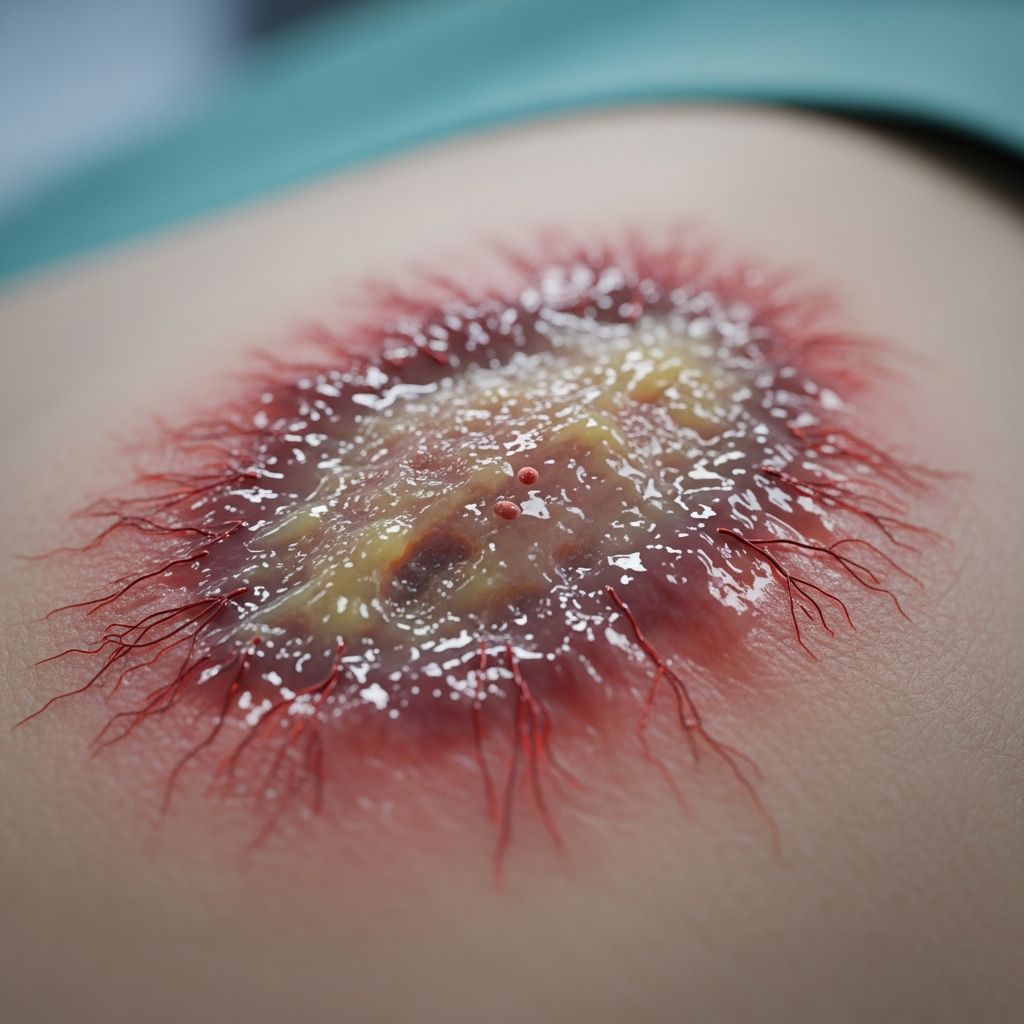
- Increased erythema (redness) extending beyond the immediate wound margins
- Edema and induration of surrounding tissue
- Purulent exudate or change in exudate character
- Delayed wound healing or wound breakdown
- Increased pain or tenderness at the wound site
- Malodor from the wound
- Friable or unhealthy-appearing granulation tissue
Systemic Infection Indicators
- Elevated body temperature (fever ≥38.5°C)
- Tachycardia (heart rate >110 beats/minute)
- Leukocytosis (elevated white blood cell count >12,000/µL)
- General malaise or systemic symptoms
- Bacteremia or sepsis in severe cases
Causative Organisms in Wound Infections
The microbial pathogens involved in wound infections vary depending on infection type, wound location, and patient factors. Common causative organisms include Staphylococcus aureus, including methicillin-resistant strains (MRSA), beta-hemolytic streptococci, Streptococcus pyogenes, and gram-negative bacilli. In immunocompromised patients and following open trauma, enteric gram-negative organisms may predominate. Polymicrobial infections are common in chronic wounds and necrotizing soft tissue infections.
Diagnostic Approach to Wound Infection
Accurate diagnosis requires integration of clinical assessment, microbiological culture, and imaging studies when indicated.
Clinical Assessment
Comprehensive wound assessment includes documentation of wound location, size, depth, base characteristics, surrounding skin condition, and exudate nature. Careful examination of interdigital toe spaces is particularly important in lower-extremity cellulitis, as fissuring, scaling, or maceration in these areas may harbor pathogenic colonization and increase recurrent infection risk.
Related Stories



Microbiological Culture
Culture of wound material should be obtained before initiating antimicrobial therapy when possible. Blood cultures are recommended for patients with systemic signs of infection or suspected bacteremia. Culture results guide targeted antimicrobial therapy and document antimicrobial susceptibilities, enabling optimization of treatment regimens. For recurrent abscesses, early drainage and culture are strongly recommended to identify causative pathogens and guide therapy.
Imaging Studies
Repeat imaging studies should be performed in patients with persistent bacteremia to identify undrained foci of infection or deeper involvement that may require surgical intervention. Imaging helps differentiate superficial from deep soft tissue infections and guides drainage procedures.
Prevention of Wound Infections
Prevention strategies focus on reducing infection risk through appropriate wound care, perioperative prophylaxis, and management of predisposing factors.
Preoperative Antimicrobial Prophylaxis
Preemptive early antimicrobial therapy for 3–5 days is recommended for specific patient populations including those who are immunocompromised, asplenic, have advanced liver disease, have preexisting or resultant edema, have moderate to severe injuries (especially to hand or face), or have injuries penetrating the periosteum or joint capsule. For clean surgical procedures, antibiotics should cover skin flora, primarily staphylococci. For clean-contaminated procedures, coverage should extend to gram-negative rods and enterococci, with common choices including cefazolin 2 grams (weight-adjusted) or vancomycin 15 mg/kg combined with metronidazole, cefoxitin, or ertapenem.
Wound Care and Environmental Control
Proper wound cleansing with appropriate solutions followed by selection of suitable dressings is fundamental to infection prevention. Elevation of the affected area and treatment of predisposing factors such as edema or underlying cutaneous disorders are recommended. For recurrent Staphylococcus aureus infections, a 5-day decolonization regimen may be considered, including twice-daily intranasal mupirocin, daily chlorhexidine washes, and daily decontamination of personal items including towels, sheets, and clothes.
Treatment of Established Wound Infections
Treatment strategies vary based on infection severity, location, and causative organisms, employing a combination of local wound care and systemic antimicrobial therapy when indicated.
Local Infection Management
For localized infections without systemic involvement, topical treatment using antiseptics or antimicrobial dressings is recommended. Topical antibiotics are not recommended as they increase the risk for allergic responses and emergence of resistant microbes. Wound cleansing followed by topical antimicrobial dressing effectively manages biofilm-associated infections. The treatment approach should prioritize tissue debridement, infection control, moisture balance maintenance, and appropriate wound edge management—principles summarized as the TIME approach.
Systemic Antimicrobial Therapy
For spreading or systemic infections, a combination of topical antiseptics or antimicrobial dressings with systemic antibiotics (oral or intravenous) is recommended. The recommended duration of antimicrobial therapy is generally 5 days, but treatment should be extended if infection has not improved within this timeframe. For most bacterial skin and soft tissue infections, treatment duration of 7–14 days is recommended. Documented clinical and microbiologic infections should be treated based on antimicrobial susceptibilities of isolated organisms. Vancomycin is recommended for initial empirical therapy, with additional agents active against enteric gram-negative bacilli considered for immunocompromised patients or those with open trauma affecting muscle tissue.
Surgical Intervention
Incision and drainage represent essential components of infection management, particularly for abscess formation. For superficial wound infections, treatment may be limited to local wound care involving opening the incision, examining the wound, draining infected fluid collections, and debriding all necrotic tissue—procedures typically performed at bedside or in office settings. If deeper involvement is evident, drainage may be conducted via interventional radiology or in the operating room. Suture removal plus incision and drainage should be performed for surgical site infections.
Special Clinical Scenarios
Surgical Site Infections
Adjunctive systemic antimicrobial therapy is not routinely indicated for surgical site infections, but when combined with incision and drainage, may benefit infections with significant systemic response—defined as erythema and induration extending greater than 5 centimeters from the wound edge, temperature above 38.5°C, heart rate exceeding 110 beats/minute, or white blood cell count above 12,000/µL. Antibiotics should be administered intravenously initially; however, once the patient is clinically improved, oral antibiotics are appropriate for patients in whom bacteremia has cleared promptly and there is no evidence of endocarditis or metastatic abscess. Two to three weeks of therapy is recommended in these cases.
Recurrent Abscesses
Recurrent abscesses should be drained and cultured early in the infection course. Following culture results, treatment with a 5- to 10-day course of antibiotics active against identified pathogens is recommended. Adult patients with recurrent abscesses beginning in early childhood should be evaluated for neutrophil disorders, as immune dysfunction may predispose to recurrent soft tissue infections.
Infections Involving Foreign Material
Infections associated with mesh in hernias typically necessitate drainage (potentially percutaneously), antimicrobial administration, wound debridement, and potential mesh removal. If no improvement occurs within 10–14 days, more aggressive intervention may be required, including surgical exploration with likely removal of the foreign body. Management of infections involving orthopedic hardware may include bone debridement, antibiotic wound therapy, long-term antibiotics, and removal of orthopedic implants and associated cement. Infected vascular grafts generally require removal of the affected section with alternative vascular augmentation using uninfected tissue.
Chronic Wound Infections
In chronic wounds, bacterial burden significantly influences infection status. Infected tissue with bacterial counts of 10⁶ CFU/g or greater, or any presence of beta-hemolytic streptococci, requires treatment with topical antimicrobials or systemic antibiotics. Systemically administered antibiotics do not effectively decrease bacterial levels in granulating wounds as effectively as topical approaches. Minimizing tissue bacterial levels to preferably ≤10⁵ CFU/g with no beta-hemolytic streptococci is recommended prior to attempting surgical closure by skin graft or skin flap.
Frequently Asked Questions
Q: How long should antibiotics be used for wound infections?
A: The recommended duration is typically 5 days, but treatment should be extended if infection has not improved. For most bacterial skin and soft tissue infections, 7–14 days of therapy is standard. Recurrent abscesses typically require 5–10 days of antibiotic therapy after culture-directed identification of pathogens.
Q: When are topical antibiotics recommended for wound infections?
A: Topical antibiotics are generally not recommended for wound infections as they increase allergy risk and antimicrobial resistance development. Instead, topical antimicrobial dressings and antiseptics are preferred for local infection management.
Q: Should all colonized wounds receive antimicrobial treatment?
A: No. Bacterial colonization alone does not require treatment. Only wounds meeting clinical infection criteria should receive antimicrobial therapy. Distinguishing colonization from infection prevents unnecessary antibiotic exposure and resistance development.
Q: What role does debridement play in wound infection management?
A: Debridement of necrotic and devitalized tissue is essential for infection management and healing. Combined with drainage procedures, debridement removes infected material and improves antimicrobial penetration and effectiveness.
Q: When is surgical intervention necessary for wound infections?
A: Surgical intervention is indicated for abscess drainage, necrotizing soft tissue infections, infections with deep involvement, and removal of infected foreign material when medical management fails or infection is severe.
Conclusion
Effective wound infection management requires accurate clinical assessment, appropriate diagnostic testing, and evidence-based therapeutic intervention. Integration of local wound care, systemic antimicrobial therapy when indicated, and surgical intervention for complicated cases optimizes outcomes and reduces morbidity. Adherence to current clinical guidelines and consideration of individual patient factors ensure optimal management of this common but potentially serious complication.
References
- Skin and Soft Tissue Infections — Infectious Diseases Society of America (IDSA). 2014. https://www.idsociety.org/practice-guideline/skin-and-soft-tissue-infections/
- Guideline: Assessment, Prevention & Treatment of Wound Infection — Community Living & Wellness Knowledge (CLWK). 2024. https://www.clwk.ca/get-resource/wound-infection-guideline/
- Postoperative Wound Infections — StatPearls, National Center for Biotechnology Information (NCBI). 2024. https://www.ncbi.nlm.nih.gov/books/NBK560533/
- Practice Guidelines for the Diagnosis and Management of Skin and Soft Tissue Infections — Clinical Infectious Diseases, Oxford University Press. 2014. https://academic.oup.com/cid/article/59/2/e10/2895845
- Chronic Wounds: Evaluation and Management — American Academy of Family Physicians (AAFP). 2020. https://www.aafp.org/pubs/afp/issues/2020/0201/p159.html
- Wound Infection in Clinical Practice: Principles of Best Practice — Wounds International. 2022. https://woundsinternational.com/consensus-documents/wound-infection-in-clinical-practice-principles-of-best-practice/
Similar Articles








Read full bio of medha deb