Wrist Artery: A Safe Approach to Heart Surgery
Discover how radial artery grafts from the wrist offer a safer, more durable alternative for coronary artery bypass surgery.
Coronary artery disease remains one of the leading causes of adult mortality, affecting millions of people worldwide. When plaque accumulates inside coronary arteries, it restricts blood flow to the heart muscle, causing angina (chest pain) and increasing the risk of heart attacks. For patients with severe coronary artery disease that cannot be managed through medications or lifestyle changes alone, coronary artery bypass grafting (CABG) offers a surgical solution to restore adequate blood flow to the heart.
Traditionally, cardiac surgeons have relied on internal thoracic arteries and saphenous veins harvested from the legs to create bypass grafts. However, emerging research and clinical experience have demonstrated that the radial artery—a blood vessel located in the forearm near the wrist—represents a superior alternative for many patients. This approach, known as radial artery grafting, offers numerous advantages in terms of graft durability, patient outcomes, and long-term survival rates.
Understanding Coronary Artery Bypass Surgery
Coronary artery bypass grafting is a surgical procedure designed to restore blood flow past blocked or severely narrowed coronary arteries. The procedure works by creating a new pathway, or bypass, that allows oxygenated blood to reach the heart muscle beyond the area of obstruction. During CABG surgery, a surgeon harvests a healthy blood vessel from another part of the patient’s body and attaches it to the coronary artery below the blockage, effectively circumventing the narrowed section.
The success of bypass surgery depends significantly on the quality and longevity of the graft material used. For decades, surgeons primarily utilized two types of grafts: the internal thoracic artery (ITA), which is located inside the chest, and the greater saphenous vein, which runs along the inside of the leg. While these grafts have proven effective in many cases, they each have limitations. The ITA, though durable, is a single vessel that limits the number of bypasses that can be performed. Saphenous veins, though readily available, tend to develop blockages over time due to atherosclerosis and have demonstrated inferior long-term patency rates compared to arterial grafts.
The Rise of Radial Artery Grafts
The radial artery represents a significant advancement in coronary artery bypass surgery. Located in the forearm on the same side as the thumb, the radial artery is an easily accessible vessel that can be harvested with minimal morbidity to the patient. Research conducted at Harvard Medical School and other leading cardiac centers has demonstrated that radial artery grafts exhibit superior durability and patency rates compared to saphenous vein grafts, particularly in long-term follow-up studies.
One of the key advantages of radial artery grafting is its structural composition. Unlike veins, which are designed to carry low-pressure blood back to the heart, arteries are muscular vessels built to withstand the high pressures of systemic circulation. This fundamental physiological difference makes arteries inherently more resistant to the development of atherosclerosis and intimal hyperplasia—the pathological processes that lead to graft failure over time.
Advantages of Radial Artery Grafts
Numerous clinical studies have documented the benefits of using radial artery grafts in coronary artery bypass surgery. The following represent the primary advantages:
Superior Long-Term Patency
Radial artery grafts demonstrate significantly higher patency rates at 5, 10, and even 15 years post-operatively compared to saphenous vein grafts. Studies have shown that approximately 90% of radial artery grafts remain patent at 10 years, compared to only 50–60% of saphenous vein grafts. This superior durability reduces the need for repeat interventions and improves long-term patient outcomes.
Reduced Atherosclerosis Development
Radial artery grafts experience significantly less atherosclerotic disease compared to venous grafts. The arterial wall structure provides natural resistance to the development of intimal hyperplasia and accelerated atherosclerosis, which are common causes of graft failure in saphenous vein grafts.
Improved Quality of Life
Because radial artery grafts remain patent longer and require fewer reinterventions, patients experience an improved quality of life with sustained symptom relief and reduced risk of recurrent angina or myocardial infarction.
Accessibility and Ease of Harvesting
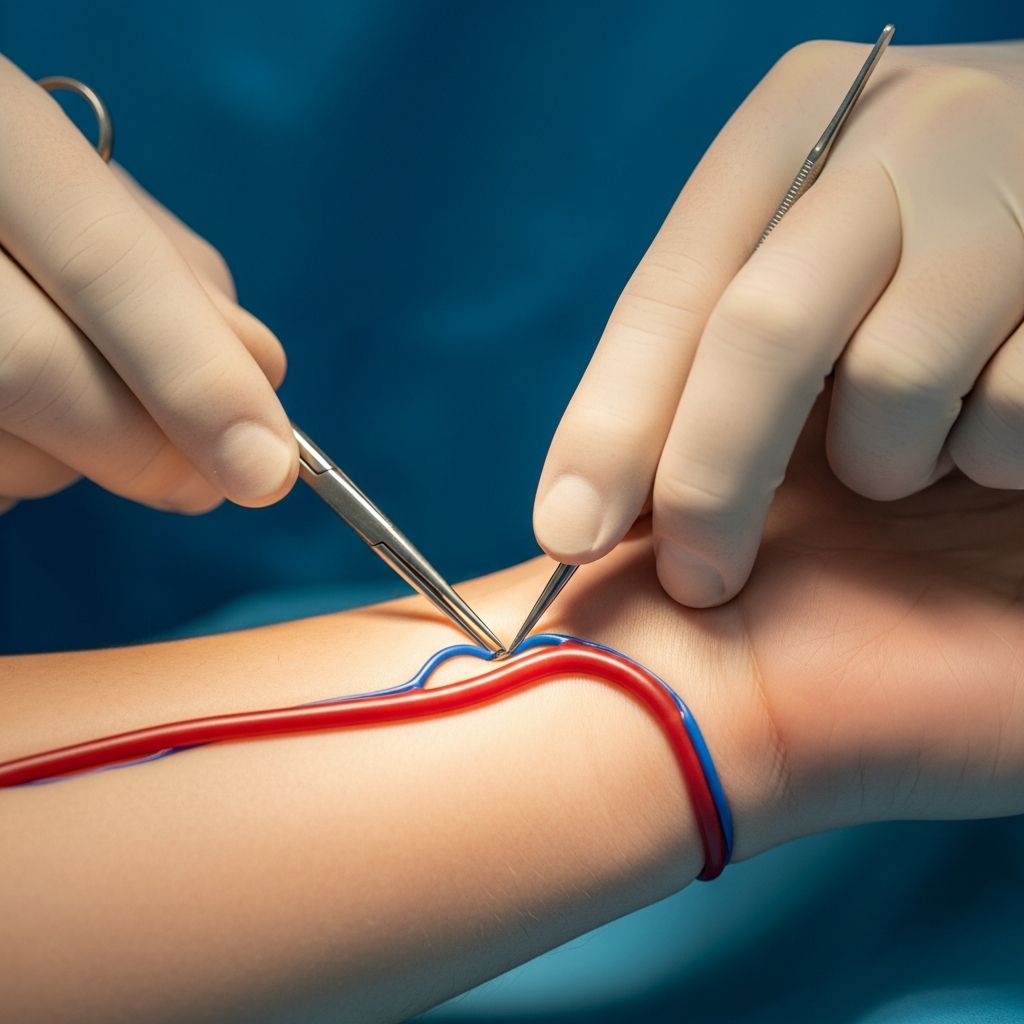
The radial artery is superficially located in the forearm, making it easily accessible for surgical harvesting. The procedure requires only a small incision and causes minimal tissue trauma. Additionally, the hand maintains adequate blood supply from the ulnar artery, which typically provides sufficient collateral circulation to prevent ischemic complications.
Multiple Graft Potential
Because surgeons can harvest radial arteries from both arms, multiple high-quality arterial grafts become available for patients requiring extensive revascularization. This represents a significant advantage over the limited options provided by a single internal thoracic artery.
Technical Considerations in Radial Artery Harvesting
Before harvesting the radial artery, surgeons must perform the Allen test to ensure adequate collateral circulation to the hand through the ulnar artery. This simple bedside test involves occluding both the radial and ulnar arteries while the patient makes a fist, then releasing pressure on the ulnar artery while observing the return of color to the palm. A positive Allen test indicates that the ulnar artery alone can adequately perfuse the hand, making radial artery harvesting safe.
The radial artery is harvested using an open technique, typically under local anesthesia with sedation or general anesthesia. The vessel is carefully dissected away from the surrounding tissue, including venae comitantes and the radial nerve, which runs alongside the artery. Special attention must be paid to avoid injury to these adjacent structures. Once harvested, the radial artery is stored in a heparinized saline solution to maintain its viability until it is attached to the coronary circulation.
Preventing Radial Artery Spasm
One early concern with radial artery grafts was the tendency of this muscular vessel to undergo vasospasm, which could compromise graft flow and increase the risk of thrombosis. However, modern techniques have largely overcome this problem through the use of pharmacological vasodilators administered both systemically and locally to the harvested radial artery. Perioperative administration of calcium channel blockers and other vasodilatory agents has become standard practice, effectively preventing spasm-related complications.
Comparison of Graft Options
The following table compares the characteristics of the primary graft materials used in coronary artery bypass surgery:
| Characteristic | Internal Thoracic Artery | Radial Artery | Saphenous Vein |
|---|---|---|---|
| 10-Year Patency Rate | ~95% | ~90% | 50–60% |
| Atherosclerosis Risk | Very Low | Low | High |
| Availability | Single vessel | Bilateral available | Multiple segments |
| Harvesting Morbidity | Moderate (chest wall) | Minimal | Moderate (leg wound) |
| Ease of Harvesting | Moderate | High | High |
| Vasospasm Risk | None | Low (with prevention) | None |
Clinical Outcomes and Research Evidence
Research from Harvard Medical School and major cardiac surgery programs worldwide has consistently demonstrated the superiority of radial artery grafts for coronary artery bypass surgery. Long-term follow-up studies spanning 10–15 years have shown that radial artery grafts provide durable revascularization with significantly lower rates of graft failure, repeat cardiac interventions, and recurrent angina compared to saphenous vein grafts.
These findings have led many cardiac surgery programs to adopt radial artery grafting as a standard component of their bypass grafting strategy, particularly in younger patients expected to have a long post-operative life expectancy and in patients with extensive coronary artery disease requiring multiple grafts.
Who is a Candidate for Radial Artery Grafting?
Most patients undergoing coronary artery bypass surgery are candidates for radial artery grafting. Specific considerations include:
Ideal Candidates:
- Patients under 70 years of age with expected long survival
- Patients with extensive coronary artery disease requiring multiple grafts
- Patients with contraindications to saphenous vein grafting
- Patients with prior saphenous vein harvesting
- Younger patients where graft durability is particularly important
Relative Contraindications:
- Patients with a negative Allen test (inadequate ulnar artery collaterals)
- Patients with severe atherosclerotic disease of the radial artery
- Patients with Raynaud’s phenomenon or connective tissue disorders
- Patients with prior radial artery access for coronary angiography (potential scarring)
Post-Operative Outcomes and Patient Recovery
Patients who receive radial artery grafts during coronary artery bypass surgery experience outcomes comparable to those receiving other types of grafts in terms of operative mortality and morbidity. The incisions required for radial artery harvesting are small and heal quickly with minimal scarring. Patients typically experience minimal sensory changes in the forearm, and hand function remains normal thanks to the preserved ulnar artery circulation.
The key distinction with radial artery grafts emerges in long-term follow-up, where the superior graft patency translates into sustained symptom relief, fewer repeat procedures, and improved overall survival compared to saphenous vein grafting.
Frequently Asked Questions
Q: Is my hand at risk if the radial artery is removed?
A: No. The Allen test performed before surgery ensures that the ulnar artery can adequately supply blood to your hand. Once the radial artery is removed, the ulnar artery provides sufficient circulation through collateral vessels, and your hand function remains completely normal.
Q: Are there any restrictions on arm use after radial artery harvesting?
A: Most patients can resume normal arm activities after recovery from surgery. Your surgeon will provide specific guidance based on your individual circumstances, but restrictions are typically minimal compared to saphenous vein harvesting from the leg.
Q: How long do radial artery grafts last?
A: Studies show that approximately 90% of radial artery grafts remain open and functional at 10 years post-surgery, compared to only 50–60% of saphenous vein grafts. The superior durability of arterial grafts translates to fewer repeat procedures and longer-lasting symptom relief.
Q: What happens if the radial artery graft fails?
A: If a radial artery graft develops stenosis or occlusion, treatment options include medical therapy, percutaneous intervention (angioplasty or stent placement), or repeat bypass surgery. However, the high patency rates of radial artery grafts mean that graft failure is relatively uncommon.
Q: Are there any disadvantages to radial artery grafts?
A: The primary limitation is the potential for radial artery vasospasm, though modern preventive techniques have largely eliminated this concern. Additionally, the radial artery is sometimes smaller than ideal in certain patients. In these cases, alternative graft options may be preferred.
Q: Can both radial arteries be used?
A: Yes. In patients requiring extensive revascularization, both radial arteries can be harvested, providing multiple high-quality arterial grafts. This represents a significant advantage over the single internal thoracic artery option.
References
- Coronary Artery Bypass Grafting – Impossible to Routine — Harvard Business School. 2020. https://www.hbs.edu/ris/download.aspx?name=20-010.pdf
- A Cardiac Conundrum — Harvard Magazine. 2013-02. https://www.harvardmagazine.com/2013/02/a-cardiac-conundrum
- Heart Advances from Harvard: Radial Artery Grafts Prove Durable — Harvard Heart Letter. 2012-12-01. Gale Academic OneFile.
- National Heart, Lung, and Blood Institute – Coronary Artery Bypass Grafting — U.S. Department of Health and Human Services. Accessed 2025. https://www.nhlbi.nih.gov
- Society for Vascular Surgery – Guidelines on Arterial Reconstruction — Society for Vascular Surgery. 2024. https://www.vascularweb.org
Similar Articles








Read full bio of Sneha Tete