Wrist X-Ray: Anatomy, Procedure & What to Expect
Learn about wrist X-rays, their uses, procedure, risks, and what to expect during and after the test.
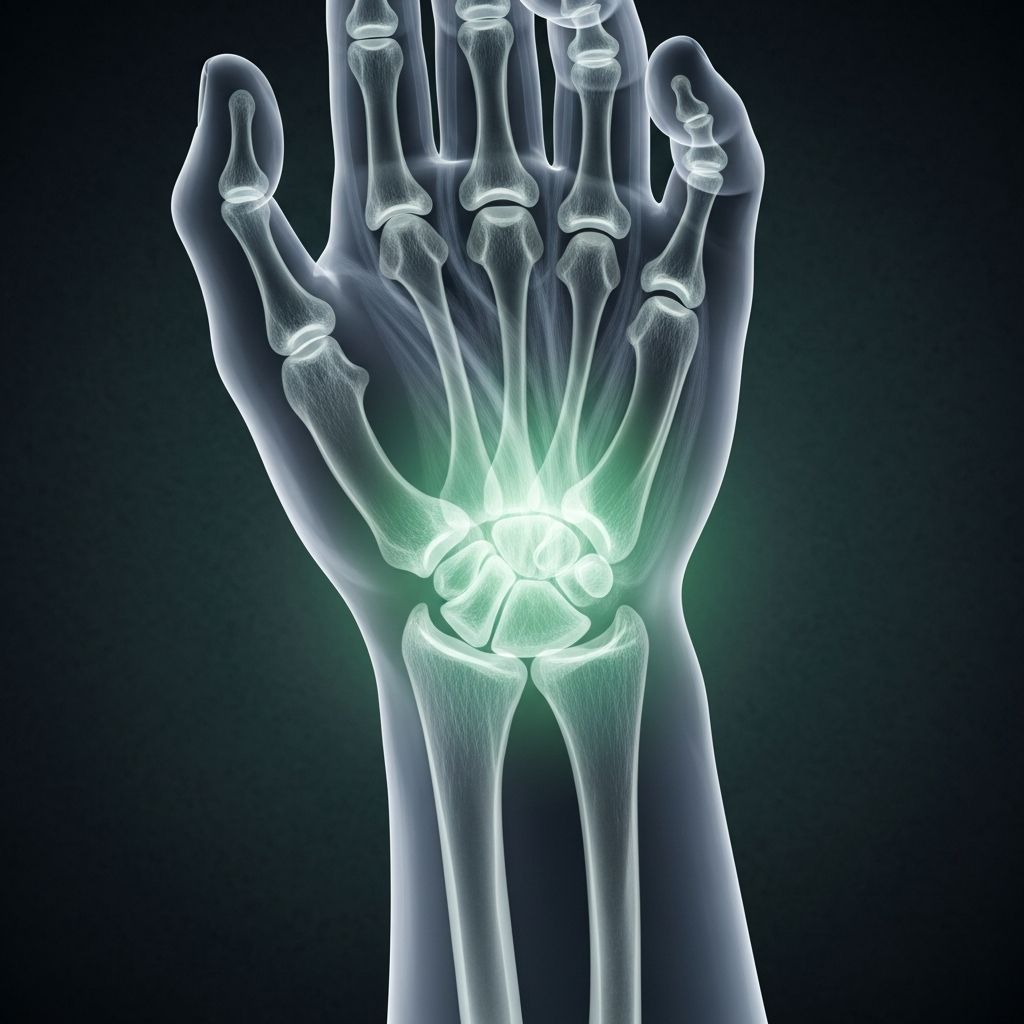
What Is a Wrist X-Ray?
A wrist X-ray (radiograph) is a diagnostic imaging test that produces a black-and-white image of the inside of your wrist. This non-invasive procedure allows healthcare providers to visualize the bones and joints of the wrist, helping to diagnose and treat various medical conditions. Wrist X-rays are quick, easy, and painless, making them one of the most commonly used imaging tests in medicine.
Wrist Anatomy Shown on X-Ray
A wrist X-ray reveals the following structures:
- Radius and Ulna: The two long bones of the forearm that connect to the wrist.
- Carpal Bones: Eight small bones arranged in two rows of four bones each, forming the base of the hand.
- Metacarpals: The bones that connect the wrist to the fingers.
- Joint Spaces: The spaces between bones, which can indicate arthritis or other joint conditions.
Why Is a Wrist X-Ray Performed?
Healthcare providers use wrist X-rays to diagnose and monitor a variety of conditions, including:
- Fractures (broken bones)
- Dislocations
- Arthritis
- Soft tissue swelling
- Post-surgical evaluation
- Monitoring bone growth and development in children
Common Reasons for a Wrist X-Ray
A wrist X-ray may be ordered for the following reasons:
- To investigate the cause of wrist pain, swelling, or tenderness.
- To confirm the diagnosis of a suspected fracture or dislocation.
- To evaluate the alignment of bones after a fracture has been set.
- To monitor healing after a wrist injury or surgery.
- To assess bone age in children with growth concerns.
- To rule out other conditions, such as tumors or infections.
How Is a Wrist X-Ray Performed?
The wrist X-ray procedure is straightforward and typically takes less than 15 minutes. Here’s what to expect:
- You will be asked to remove any jewelry or metal objects from your wrist.
- You will sit or stand next to the X-ray table and place your wrist on the imaging plate.
- The radiologic technologist may use sponges or positioning aids to keep your wrist in the correct position.
- You will be asked to remain still and may be asked to hold your breath briefly to prevent motion blur.
- The technologist will take multiple images from different angles, including:
- Posteroanterior (PA) view: Palm facing down, image taken from above.
- Lateral view: Side view of the wrist.
- Oblique view: Image taken at an angle.
- The technologist will check the images for clarity and may retake any that are unclear.
What Happens After a Wrist X-Ray?
After the X-ray is complete:
- You can resume normal activities immediately.
- The images will be reviewed by a radiologist, a doctor specialized in interpreting medical images.
- The radiologist will send a report to your healthcare provider, who will discuss the results with you.
- If further imaging is needed (such as a CT scan or MRI), your provider will let you know.
What Can a Wrist X-Ray Show?
A wrist X-ray can reveal:
- Fractures or breaks in the bones.
- Dislocations or misalignments of the bones.
- Arthritis, including osteoarthritis and rheumatoid arthritis.
- Soft tissue swelling or joint effusion.
- Healing progress after a fracture or surgery.
- Abnormal bone growth or development in children.
Related Stories



Limitations of Wrist X-Rays
While wrist X-rays are excellent for visualizing bones, they have some limitations:
- They do not clearly show ligaments, tendons, or soft tissues.
- Small fractures or hairline cracks may not be visible on X-ray.
- Further imaging, such as MRI or CT scans, may be needed for a more detailed evaluation.
Risks and Safety of Wrist X-Rays
Wrist X-rays are considered very safe, but there are a few considerations:
- The amount of radiation exposure is minimal and not harmful for most people.
- Pregnant women should inform their healthcare provider before having an X-ray, as radiation can pose risks to the developing fetus.
- Children may require special precautions to minimize radiation exposure.
Preparing for a Wrist X-Ray
No special preparation is needed for a wrist X-ray. However, you should:
- Wear comfortable clothing.
- Remove any jewelry or metal objects from your wrist.
- Inform your healthcare provider if you are pregnant or suspect you might be.
- Let the technologist know if you are in pain or have difficulty positioning your wrist.
Interpreting Wrist X-Ray Results
Wrist X-ray results are interpreted by a radiologist, who looks for:
- Normal alignment of bones.
- Fractures, dislocations, or other abnormalities.
- Joint space narrowing, which may indicate arthritis.
- Healing progress after injury or surgery.
When Are Additional Imaging Tests Needed?
If the X-ray does not provide enough information, your healthcare provider may order:
- CT Scan: For more detailed images of bones and joints.
- MRI: To evaluate soft tissues, ligaments, and tendons.
- Ultrasound: To assess soft tissue injuries or fluid accumulation.
Wrist X-Ray in Children
Wrist X-rays are commonly used in children to:
- Assess bone age and growth.
- Diagnose fractures or injuries.
- Monitor healing after injury or surgery.
- Rule out congenital abnormalities.
FAQs About Wrist X-Rays
Is a wrist X-ray painful?
No, a wrist X-ray is not painful. You may feel some discomfort if you have an injury, but the procedure itself does not cause pain.
How long does a wrist X-ray take?
The procedure typically takes less than 15 minutes.
Can a wrist X-ray show a sprain?
A wrist X-ray cannot directly show a sprain, but it can rule out fractures and help identify bone misalignment that may suggest a ligament injury.
Do I need to prepare for a wrist X-ray?
No special preparation is needed. Just remove any jewelry or metal objects from your wrist.
Are wrist X-rays safe during pregnancy?
Wrist X-rays are generally safe, but pregnant women should inform their healthcare provider before the test.
Summary Table: Wrist X-Ray Overview
| Aspect | Details |
|---|---|
| Purpose | Diagnose fractures, dislocations, arthritis, and other wrist conditions |
| Procedure Time | Less than 15 minutes |
| Radiation Exposure | Minimal |
| Preparation | Remove jewelry, inform provider if pregnant |
| Results | Reviewed by radiologist, discussed with healthcare provider |
| Limitations | Does not show soft tissues; may miss small fractures |
References
- Wrist X-Ray: Anatomy, Procedure & What to Expect — Cleveland Clinic. 2023. https://my.clevelandclinic.org/health/diagnostics/22328-wrist-x-ray
- ACR Appropriateness Criteria® Chronic Hand and Wrist Pain — American College of Radiology. 2024. https://pubmed.ncbi.nlm.nih.gov/38823956/
- Broken Wrist (Wrist Fracture): Symptoms & Recovery Time — Cleveland Clinic. 2023. https://my.clevelandclinic.org/health/diseases/broken-wrist-wrist-fracture
Similar Articles








Read full bio of medha deb