X-Linked Hyper-IgM Syndrome: What You Need To Know
Rare genetic immunodeficiency causing recurrent infections, elevated IgM, and severe complications in males.

Authoritative facts about X-linked hyper-IgM syndrome from high-quality medical sources: what it is, clinical features, investigations, management, and prognosis.
What is X-linked hyper-IgM syndrome?
X-linked hyper-IgM syndrome (XHIM or HIGM1) is a rare, life-threatening primary immunodeficiency disorder that almost exclusively affects males. It is characterized by normal or elevated serum immunoglobulin M (IgM) levels with profoundly low or absent immunoglobulin G (IgG), IgA, and IgE due to a defect in immunoglobulin class-switch recombination (CSR). This genetic condition arises from mutations in the CD40LG gene on the X chromosome (Xq26), which encodes CD40 ligand (CD40L or CD154), a surface protein essential for T-cell dependent B-cell activation, germinal center formation, somatic hypermutation, and CSR.
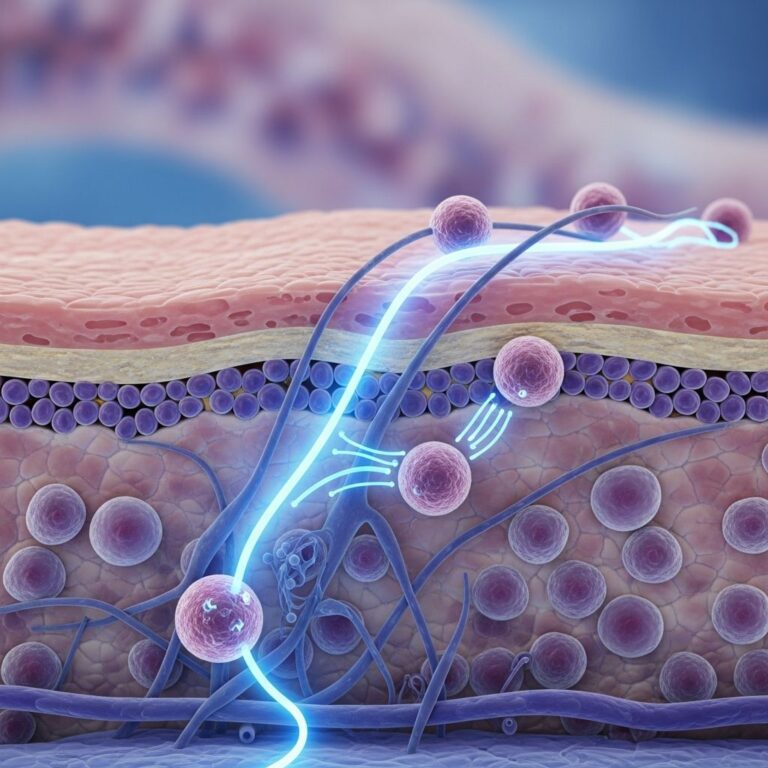
The CD40L protein is transiently expressed on activated CD4+ helper T cells and interacts with CD40 receptors on B cells, macrophages, and dendritic cells. This interaction is crucial for signaling B cells to switch from producing IgM to other isotypes (IgG, IgA, IgE) and for T-cell priming and macrophage activation. Without functional CD40L, patients exhibit recurrent sinopulmonary bacterial infections, opportunistic infections (e.g., Pneumocystis jirovecii, Cryptosporidium parvum, Toxoplasma gondii), neutropenia, autoimmunity, liver disease, and increased malignancy risk.
XHIM accounts for about 50% of hyper-IgM syndromes and is the most common form of class-switch recombination defect. Over 100 unique CD40LG mutations have been identified, including missense, nonsense, splice-site variants, deletions, and insertions, predominantly in exon 5. Most patients (80-90%) show absent or reduced CD40L expression on activated T cells.
Who gets X-linked hyper-IgM syndrome?
XHIM follows an X-linked recessive inheritance pattern, primarily affecting males who inherit the mutated gene from their carrier mothers. Females are typically asymptomatic carriers due to X-chromosome inactivation, though rare skewed inactivation can cause mild symptoms in females. Incidence is estimated at 1 in 1,000,000 live male births, with diagnosis usually between 1-2 months and 1 year of age due to early-onset infections.
Carrier mothers may show mosaic CD40L expression (bimodal pattern) on flow cytometry. Family history often reveals affected male relatives. The condition is pan-ethnic, with reports from diverse populations including North India, where unique features like pulmonary alveolar proteinosis and Mycobacterium infections have been noted.
What causes X-linked hyper-IgM syndrome?
Mutations in CD40LG (Xq26.3-27.1) disrupt CD40L protein function or expression, impairing CD40-CD40L signaling. This leads to:
- Failure of B-cell CSR and somatic hypermutation, resulting in absent class-switched memory B cells (CD19+CD27+IgM-IgD-).
- Defective T-cell help to B cells and impaired activation of macrophages/dendritic cells.
- High IgM (normal/elevated) with low/absent IgG, IgA, IgE.
Common mutation types include missense (e.g., c.G500A in exon 5), splice-site, and large deletions. Functional defects may show normal expression but absent binding to chimeric CD40-Ig fusion proteins.
What are the clinical features of X-linked hyper-IgM syndrome?
Clinical onset is typically in infancy with severe, recurrent infections due to combined B- and T-cell immunodeficiency. Key features include:
- Recurrent infections (90-100%): Sinopulmonary (otitis media, sinusitis, pneumonia), often bacterial (Streptococcus pneumoniae, Haemophilus influenzae). Opportunistic: P. jirovecii pneumonia (PCP, 50-80%), chronic diarrhea from Cryptosporidium (leading to sclerosing cholangitis), Toxoplasma, CMV, Mycobacterium spp.
- Neutropenia (50-70%): Chronic or intermittent, often improving with age; may be autoimmune.
- Liver disease (20-50%): Cryptosporidium-induced cholangitis, cirrhosis, hepatocellular carcinoma.
- Autoimmunity (10-20%): Autoimmune hemolytic anemia, thrombocytopenia, arthritis.
- Malignancy (10-20%): Lymphoma, gastrointestinal tumors.
- Other: Oral ulcers, sclerosing cholangitis, neurologic issues (CNS infections), pulmonary alveolar proteinosis (rare).
Related Stories



Without treatment, mortality is high by adolescence from infections or malignancy.
How is X-linked hyper-IgM syndrome diagnosed?
Diagnosis combines clinical suspicion, serology, flow cytometry, and genetics:
- Serum immunoglobulins: High/normal IgM, low/absent IgG/IgA/IgE.
- Flow cytometry (gold standard): Absent/reduced CD40L on activated CD4+ T cells (CD3+CD8-CD69+CD154+); CD40-Ig binding assay for functional defects. Carrier females show 50% mosaicism.
- Lymphocyte subsets: Low class-switched memory B cells; normal/elevated IgM+ B cells.
- Genetic testing: CD40LG sequencing confirms mutations.
- Exclude other HIGM forms: Autosomal recessive (e.g., AID, UNG mutations).
| Test | Finding in XHIM |
|---|---|
| Ig levels | ↑ IgM, ↓ IgG/A/E |
| CD40L expression | Absent/reduced on activated T cells |
| Memory B cells | Absent class-switched |
| Genetic | CD40LG mutation |
How is X-linked hyper-IgM syndrome treated?
Treatment is supportive and curative via hematopoietic stem cell transplantation (HSCT):
- Immunoglobulin replacement: IVIG (400-600 mg/kg every 3-4 weeks) reduces bacterial infections.
- Prophylaxis: TMP-SMX for PCP; azithromycin for Cryptosporidium; G-CSF for neutropenia.
- HSCT: Curative if performed early (before age 5, ideally <1 year); matched unrelated donor acceptable with good outcomes (>80% survival).
- Manage complications: Antifungals, antiretrovirals, ursodeoxycholic acid for cholangitis; monitor for malignancy.
Gene therapy trials are emerging but not standard.
What is the prognosis for X-linked hyper-IgM syndrome?
Untreated, prognosis is poor (median survival <10 years) due to infections, liver failure, malignancy. With IVIG/prophylaxis/HSCT, long-term survival exceeds 80-90%. Early HSCT yields best outcomes, preventing autoimmunity and cancer. Neutropenia often resolves with age.
Frequently asked questions about X-linked hyper-IgM syndrome
Is X-linked hyper-IgM syndrome curable?
Yes, allogeneic HSCT is curative, restoring normal immune function.
Can females get X-linked hyper-IgM syndrome?
Rarely; carriers are usually asymptomatic, but skewed X-inactivation can cause mild disease.
What infections are common in X-linked hyper-IgM?
Bacterial sinopulmonary, PCP, Cryptosporidium diarrhea, Toxoplasma.
How do you test for CD40L deficiency?
Flow cytometry on activated T cells with anti-CD40L or CD40-Ig binding.
Does X-linked hyper-IgM cause cancer?
Yes, increased risk of lymphoma and GI tumors due to immune dysregulation.
References
- X-Linked Hyper IgM Syndrome, Blood — Mayo Clinic Laboratories. Accessed 2026. https://pediatric.testcatalog.org/show/XHIM
- Hyper-IgM Syndrome — Merck Manual Professional Edition. 2023. https://www.merckmanuals.com/professional/immunology-allergic-disorders/immunodeficiency-disorders/hyper-igm-syndrome
- X-linked Hyper IgM syndrome (HIGM) — Great Ormond Street Hospital. Accessed 2026. https://www.gosh.nhs.uk/file/140/download
- Clinical and molecular features of X-linked hyper IgM syndrome — NIH/PMC. 2019-07-01. https://pmc.ncbi.nlm.nih.gov/articles/PMC6666391/
- X-linked hyper IgM immunodeficiency syndrome test information — Cincinnati Children’s Hospital. Accessed 2026. https://www.cincinnatichildrens.org/-/media/Cincinnati-Childrens/Home/service/d/diagnostic-labs/molecular-genetics/test-disorder/X-linked-hyper-IgM-Immunodeficiency-test-information.pdf
- X-linked hyper IgM syndrome — MedlinePlus Genetics. Accessed 2026. https://medlineplus.gov/download/genetics/condition/x-linked-hyper-igm-syndrome.pdf
Similar Articles








Read full bio of Sneha Tete